
Introduction
The banking industry has made increased use of technology to process, store and provide banking solutions. This has led to additional issues with security. Banks are vulnerable to external hacking, staff having compromised accounts, malicious staff and third party vulnerabilities. Banks no longer have the option of using security solutions that automatically trusts staff members. Having one compromised account can lead to access to sensitive information, banking systems and vital banking operations. To help combat this, financial institutions are starting to implement additional security measures where they can ensure that each request to gain access is verified. This can help reduce the chance of unauthorized access.
What is Zero Trust Security?
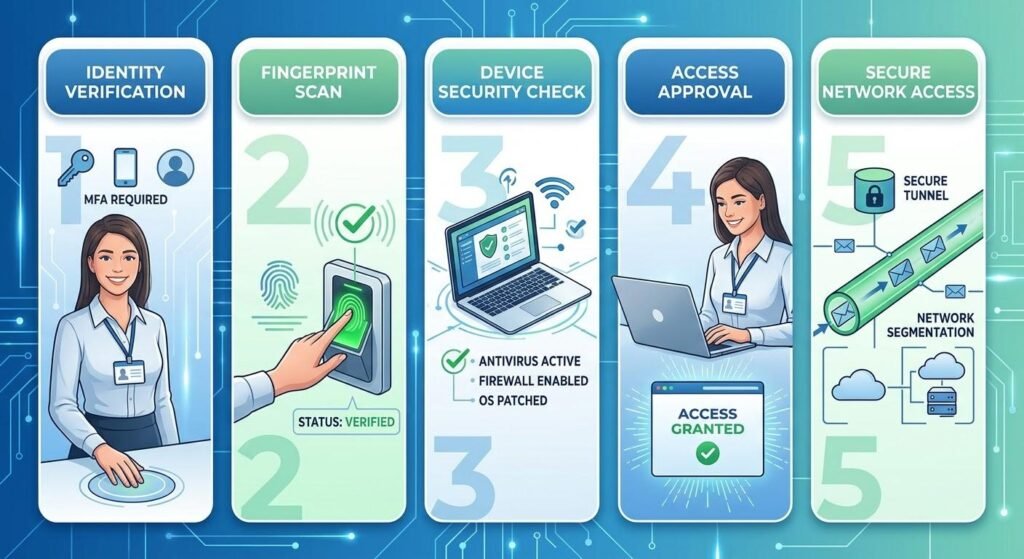
Zero trust security is a security solution that does not automatically trust any users, devices, applications or connections. This means that all users (including staff) must be verified continually. This is an important solution for banks as there may be several people accessing your banking systems staff, contractors, customers and third parties. The zero trust models is based on the idea that security is not based on where the user is, but what they have been verified for. You can learn more about the set up and implementation of zero trust security below.
How Banks Implement Zero Trust Security
Banks will store sensitive financial data, customer details, payment details and confidential details. This makes them a target for cyber criminals. Even though external threats can be a big issue, insider threats can also be a huge problem. Staff or contractors will have access to your systems. This means that you may have staff deliberately using confidential information, or staff unknowingly giving your banking systems away. With traditional security solutions, if one account is compromised, attackers can easily access other systems within your internal network. Zero trust security reduces this risk by ensuring that users must be verified each time they want to access something. You can also limit the permissions each user has, making it harder for attackers to gain access to sensitive information.
1. Least Privilege Access
One of the main principles of zero trust security is least privilege access. This means that staff will only have the rights they need to complete their role. For example, if you have a customer service member, they may need access to customer support details but should not have automatic access to change financial reporting systems or large transactions. If you have an accounting member of staff, they should only have access to the financial systems they need. To improve this, banks can ensure that they regularly review staff permissions and limit their access. This helps reduce the chances of insider threats, and limits the damage cyber criminals can do if they gain login details.
2. Continuous Authentication
Traditional authentication can rely on verifying the user when they first log-in. However, if they pass this, there is no guarantee the same person will be accessing the system throughout. Cyber criminals can steal login details, hijack sessions or access through compromised devices. Continuous authentication helps reduce this risk by ensuring that each request is verified. You can take into consideration where they have logged in from, any unusual activity, time of access, transaction activity and device activity. If the request looks suspicious, the system can ask for further verification, limit access or disconnect. This helps financial institutions identify any unusual activity quicker, and stop unauthorized users from continuing to use the system.
3. Device Verification
Verifying devices is an important part of zero trust security. Just because a user has a legitimate account, it does not mean all devices they are using are secure. Staff can log-in to banking systems using their office computer, own devices, laptops and mobile phones. This can pose different security risks. If they have a device that has malware or is missing key security updates, even with a legitimate login, they can put confidential information at risk. Zero trust systems will look at the identity of the device, security settings, updated software, encryption and other factors. Banks can also limit access from unknown or non-compliant devices. If staffs are trying to access sensitive applications remotely, extra security checks can be applied. This reduces the chances of compromised endpoints.
4. Network Segmentation
Segmenting your network is an important part of zero trust security. If an attacker was able to get into one part of your internal network, they may try to access other systems with more valuable information. Zero trust architecture helps reduce this risk by segmenting your sensitive applications, databases, payments and admin systems. For example, you may have a customer information database, but this does not mean staffs have access to your transaction processing system. All connections must meet certain security requirements. This makes it harder for attackers to move around your banking systems if they have compromised an employee, and can help your security team identify any suspicious activity.
5. Privileged Accounts
Privileged accounts should always be considered. These give users extra access to important systems, databases and admin. Staff members who manage your banking infrastructure may have extra permissions to change security settings, access sensitive information and manage critical applications. Zero trust security can help by implementing privileged access management. Banks can ask for additional verification for admins, limit what they can do during their session and keep detailed logs of sensitive activities. They can also monitor for any unusual activity such as accessing unknown databases, downloading large amounts of information or trying to change security settings. This helps you identify any malicious insiders.
6. Protection from Compromised Logins
A common way attackers will try to gain access to your network is by stealing staff logins. This can make their actions look legitimate. Staff may fall victim to phishing emails, malware, social engineering and password sharing. Zero trust security can help protect your organization by implementing multi-factor authentication, verifying identities, devices, least privilege, and monitoring. Even if attackers have gained an employee’s password, there may be additional security requirements to stop those accessing sensitive systems. If there are any unusual login attempts, this can raise an alert. Segmentation can also help reduce this threat as just because they have access to one application, they cannot automatically access everything. This helps financial institutions to limit the damage.
7. Improved Security in Cloud Systems and Remote Banking
As banks are increasingly using cloud systems, digital systems and remote working, it is essential to have security in place to protect systems. You may have customer databases, financial systems, transaction systems and business intelligence in the cloud. Zero trust security helps protect your systems by verifying identities, limiting access and monitoring. Staff will have the same requirements to access systems remotely as they would in the bank. You can also use secure access solutions to ensure only certain users can connect, based on their identity, device and what they are trying to access. This means banks can use cloud systems but do not have to rely on old assumptions that your internal systems are safe.
8. Third Party Access
Banks will often work with external technology companies, software developers, payment processors, consultants and other businesses. Whilst this can help with innovation and efficiency, it can pose additional security risks. If third parties have too much access, or their access is not monitored properly, they could have a compromised account. Zero trust principles can help by ensuring they have verified identities, approved devices and only have access to what they need for their role. Banks should also ensure they give third parties limited access for a certain amount of time. You should monitor third parties and regularly review their access. If their service agreement ends or they no longer need access due to a business need, their unnecessary access should be removed.
Conclusion
Implementing zero trust security should be done in a structured way. Firstly, identify what your most valuable digital assets are. This can include customer databases, payment systems, financial information and admin systems. Next, look at your current users, devices, access and third parties to see where you may have vulnerabilities. Next, you can implement additional identity verification, multi-factor authentication, least privilege, segmentation and monitoring. You should also have processes in place to identify suspicious activity, respond to incidents and regularly review access. You should also train your staff as human error can still put your systems at risk. Implementing in stages and regularly reviewing will help increase your security whilst keeping your banking efficient.
Zero trust security can help financial institutions to increase the security of their sensitive information, reduce insider threats and reduce exposure to cyber-crime. By verifying each request to access systems, you can identify any suspicious activity and limit unauthorized access. The main principles of zero trust include least privilege, continuous authentication, device verification, segmentation and privileged account monitoring. This can help protect your systems in the cloud, with remote working and with third parties. As financial institutions continue to expand their digital offerings, it will become increasingly important to implement zero trust principles to keep your operations secure, protect customer information and keep the public confident in modern banking.
Get more well researched information about Zero Trust Security here.