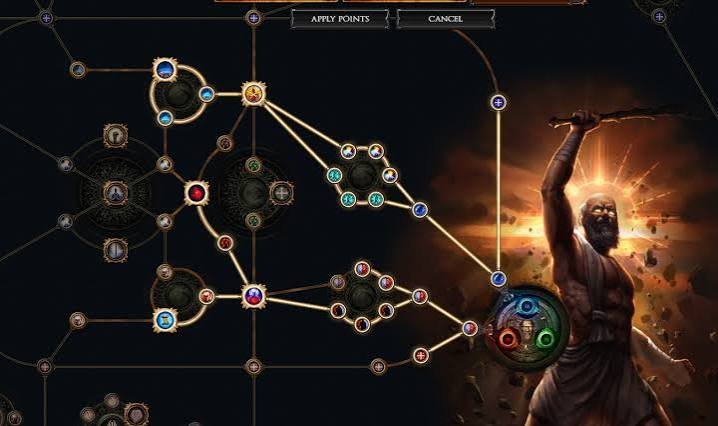
Path of Exile is a complex action role-playing game that offers players countless opportunities to customize their characters, develop unique playstyles, and experiment with different combat strategies. One of the most important aspects of character development is the passive skill tree. With hundreds of interconnected nodes, numerous character attributes, and different progression paths, choosing the right passive skills can significantly influence a character’s performance. For both new and experienced players, navigating this extensive system can become challenging. This is where a PoE Node Finder can make character planning more organized and efficient.
Finding the right passive nodes is not simply about increasing damage or collecting as many skill points as possible. Players must consider their character’s defensive capabilities, offensive potential, resource management, and overall build requirements. A carefully planned passive tree can make progression smoother and help players avoid unnecessary investments. Tools designed to simplify this process offer a practical way to explore different possibilities before committing valuable passive points.
Understanding the Importance of Passive Skill Nodes
The passive skill tree is one of the defining features of Path of Exile. Unlike traditional character progression systems, where players follow a relatively straightforward upgrade path, Path of Exile provides an extensive network of interconnected passive skills. Each node offers specific benefits, ranging from increased life and elemental resistance to attack speed, critical strike chance, spell damage, and specialized character bonuses.
This freedom allows players to develop highly personalized characters. However, it also creates an important challenge: every passive point should contribute meaningfully to the overall build.
For example, a character focused on dealing physical damage may benefit from nodes that improve weapon damage, attack speed, and critical strike effectiveness. Meanwhile, a spellcaster might prioritize increased spell damage, cast speed, elemental modifiers, or energy shield.
Selecting unrelated nodes can result in wasted points and an inefficient character. Understanding how different passive skills work together is therefore essential for building a character capable of handling increasingly difficult encounters.
What Is a PoE Node Finder?
A PoE Node Finder is a specialized build-planning utility designed to help players identify efficient routes through the passive skill tree. Instead of manually examining every possible connection, players can use an optimization tool to explore paths that satisfy their selected objectives.
The main purpose is to simplify passive skill allocation while helping players balance multiple character requirements. These requirements might include improving maximum life, increasing damage output, reaching important jewel sockets, or obtaining specific keystone passives.
Rather than focusing on a single statistic, an optimization approach can consider several objectives simultaneously. This is particularly useful because successful Path of Exile builds generally depend on a combination of offensive and defensive investments.
A well-planned route can also reduce unnecessary travel across the passive tree, allowing players to spend more points on valuable character improvements.
How PoE Node Finder Helps Improve Build Planning
Planning a character requires more than identifying powerful individual nodes. Players must understand how their selected skills, equipment, attributes, and passive investments interact.
A dedicated planning tool can make this process easier in several ways.
1. Finding Efficient Passive Tree Routes
One of the biggest challenges in Path of Exile is determining the shortest and most useful route between important passive skills. Some powerful nodes are located far from a character’s starting area, requiring several connecting points to reach them.
An inefficient route can consume valuable passive points without providing meaningful improvements.
A node optimization tool helps players explore alternative routes and identify paths that meet their selected requirements. This makes it easier to prioritize important nodes while avoiding unnecessary investments in less useful areas.
2. Balancing Offensive and Defensive Statistics
Damage is important, but survivability is equally essential. Players who concentrate entirely on offensive upgrades may struggle when facing powerful enemies or challenging endgame encounters.
A balanced build might require increased maximum life, energy shield, resistances, armour, or other defensive benefits alongside damage improvements.
Using multiple optimization objectives helps players approach these requirements more systematically. Instead of selecting nodes based on individual bonuses, they can consider how different investments contribute to the character as a whole.
3. Supporting Different Character Builds
Path of Exile offers numerous character classes, ascendancies, skills, and equipment combinations. Consequently, there is no universal passive tree that works equally well for every character.
A melee build may prioritize physical damage and attack speed, while a minion build requires bonuses that support summoned creatures. Similarly, elemental spellcasters often benefit from specialized offensive and defensive combinations.
A flexible node-finding approach makes it easier to experiment with these different requirements and investigate alternative character development strategies.
Exploring PoE Node Finder as a Build Optimization Tool
Players looking for a more organized way to plan their characters can explore PoE Node Finder, a dedicated Path of Exile passive tree optimization and build-planning utility.
The platform is designed to help players identify efficient passive tree routes based on multiple objectives. Rather than manually calculating every possible connection, users can explore an automated approach to finding suitable combinations of passive skills.
One useful aspect of this approach is the ability to consider several objectives together. For instance, a player might want to improve life while also reaching important jewel sockets. Evaluating these requirements together can provide a more practical solution than optimizing each statistic independently.
The platform also supports Path of Building-related workflows, allowing players to work with existing build information rather than always starting their planning process from scratch. Players can explore starter builds, work with imported build data, and use optimization features to refine their passive tree.
For anyone who enjoys experimenting with different character setups, having these planning options available in one place can make build development more convenient.
Why Multi-Objective Optimization Matters
One of the most interesting aspects of passive tree planning is that different character requirements often compete for limited passive points.
Consider a character that needs more maximum life, increased damage, and access to a particular jewel socket. Choosing the most direct route toward one objective might make reaching the other two more expensive.
This is where multi-objective optimization becomes particularly valuable.
Instead of treating every requirement separately, an optimizer can evaluate different combinations and look for routes that satisfy multiple goals efficiently.
This approach offers several advantages:
- Better point allocation: Players can investigate routes that avoid unnecessary passive investments.
- Improved character balance: Multiple offensive and defensive requirements can be considered together.
- More efficient planning: Automated route evaluation reduces the need for repeated manual calculations.
- Greater flexibility: Players can experiment with different objectives depending on their preferred playstyle.
- More informed decisions: Comparing possible routes helps players understand the trade-offs involved in build development.
These benefits are particularly relevant for advanced players who want to refine an existing character rather than simply follow a popular build guide.
Reducing Mistakes During Character Progression
Passive skill points are valuable resources, and making poor allocation decisions can create problems later in the game. Although players can adjust their passive trees through respec mechanics, changing an established build may require additional resources and considerable planning.
New players are especially vulnerable to this problem. They may select attractive-looking nodes without understanding whether those bonuses actually support their primary skills.
For instance, investing heavily in critical strike chance might not be worthwhile for a character designed around damage over time. Similarly, selecting defensive bonuses that do not complement the character’s equipment or existing mechanics may produce disappointing results.
A node finder provides an opportunity to evaluate possible routes before making permanent progression decisions. This encourages players to think about their builds more carefully and reduces unnecessary experimentation.
Making Build Planning Easier for Beginners
Path of Exile can initially feel overwhelming because of its extensive character customization options. Beginners must learn how different attributes work, understand passive skill categories, explore equipment modifiers, and identify suitable combinations of abilities.
Following a build guide is one common way to overcome this learning curve. However, simply copying another player’s passive tree does not always explain why particular nodes were selected.
Using a planning utility alongside a build guide can help beginners develop a better understanding of character progression.
They can examine important passive clusters, investigate alternative connections, and observe how different objectives influence the final tree. Over time, this process can improve their ability to make independent build decisions.
It also makes experimenting with new character ideas less intimidating.
Useful for Experienced Players and Theorycrafters
While beginners benefit from structured guidance, experienced players often have more demanding optimization requirements.
Theorycrafters regularly investigate alternative passive tree routes, compare different character configurations, and look for small improvements that can produce meaningful results.
Even a few additional passive points can make a difference when developing a highly specialized build. Finding a more efficient route may allow those points to be invested elsewhere.
An optimization tool can support this process by evaluating combinations that would otherwise require considerable manual work.
Players can also use these tools when testing unusual skill combinations, adapting builds for different equipment setups, or exploring alternative defensive strategies.
This makes passive tree optimization relevant throughout the character development process, rather than only during the initial planning stage.
Tips for Getting Better Results From Passive Tree Optimization
Although automated tools can simplify build planning, players should still understand their character’s requirements before accepting any suggested route.
Here are some practical considerations:
Start with your primary skill. Identify the main ability responsible for your character’s damage or gameplay strategy. This provides a foundation for selecting relevant passive bonuses.
Set realistic objectives. Avoid trying to maximize every available statistic. Focus on the attributes that genuinely support your character.
Consider survivability. Defensive investments should remain part of the planning process, particularly when preparing for challenging content.
Evaluate equipment compatibility. Your weapons, armour, accessories, and other equipment can influence which passive nodes provide the greatest benefit.
Compare alternative routes. A shorter path is not automatically the best path. Sometimes taking additional points to reach more valuable bonuses produces better overall results.
Review your build regularly. As you acquire better equipment and unlock additional passive points, your original priorities may change.
Combining these practices with a suitable optimization utility can help create more consistent and effective character progression.
The Future of Smarter Path of Exile Build Planning
As Path of Exile continues to offer players increasingly diverse build possibilities, planning tools are becoming an important part of the overall gaming experience.
The growing complexity of character customization makes it difficult to evaluate every possible combination manually. Automated optimization, build importing, and objective-based planning can help players spend less time calculating routes and more time enjoying the game.
However, these tools should complement player knowledge rather than replace it. Understanding game mechanics, skill interactions, equipment requirements, and defensive priorities remains essential for creating a successful character.
The most effective approach combines automated assistanc



naturally like your web site however you need to take a look at the spelling on several of your posts. A number of them are rife with spelling problems and I find it very bothersome to tell the truth on the other hand I will surely come again again.