Introduction
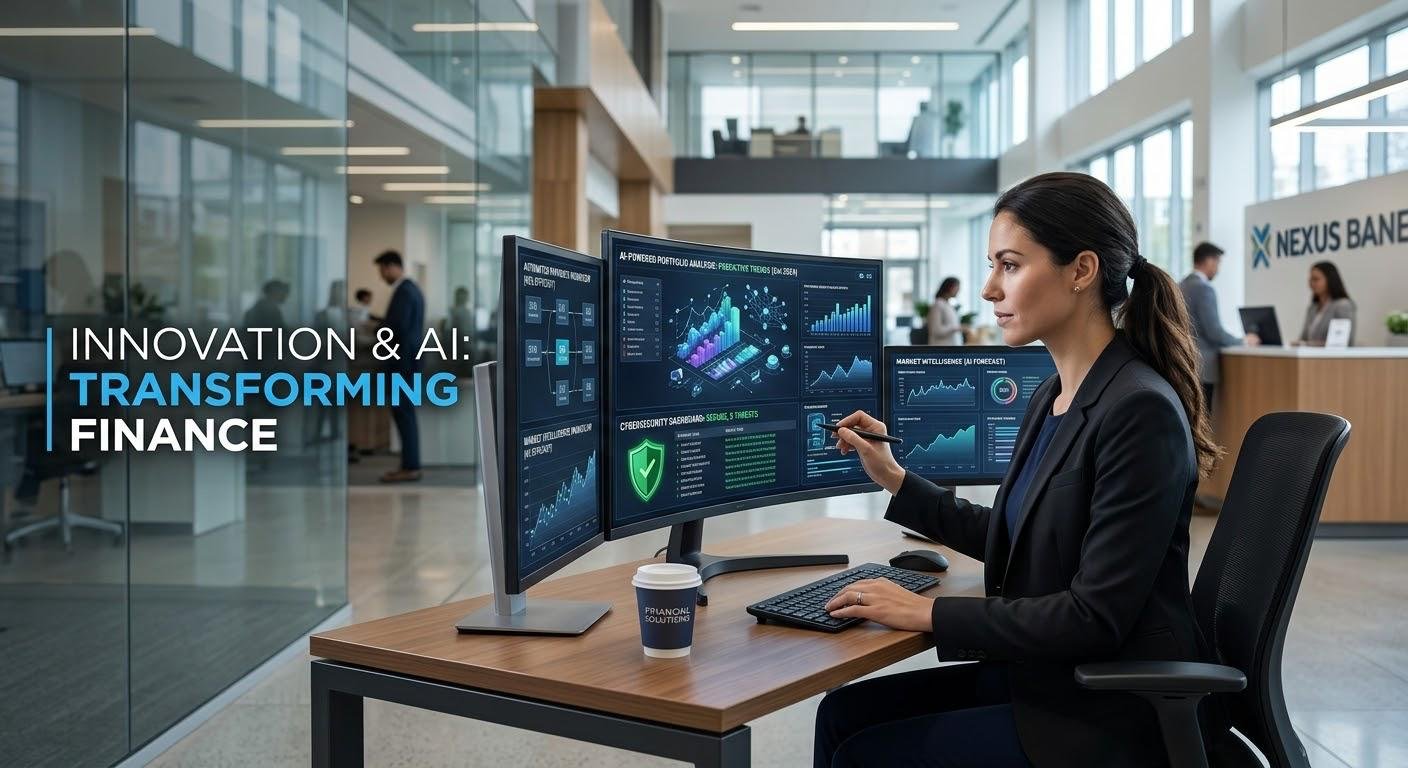
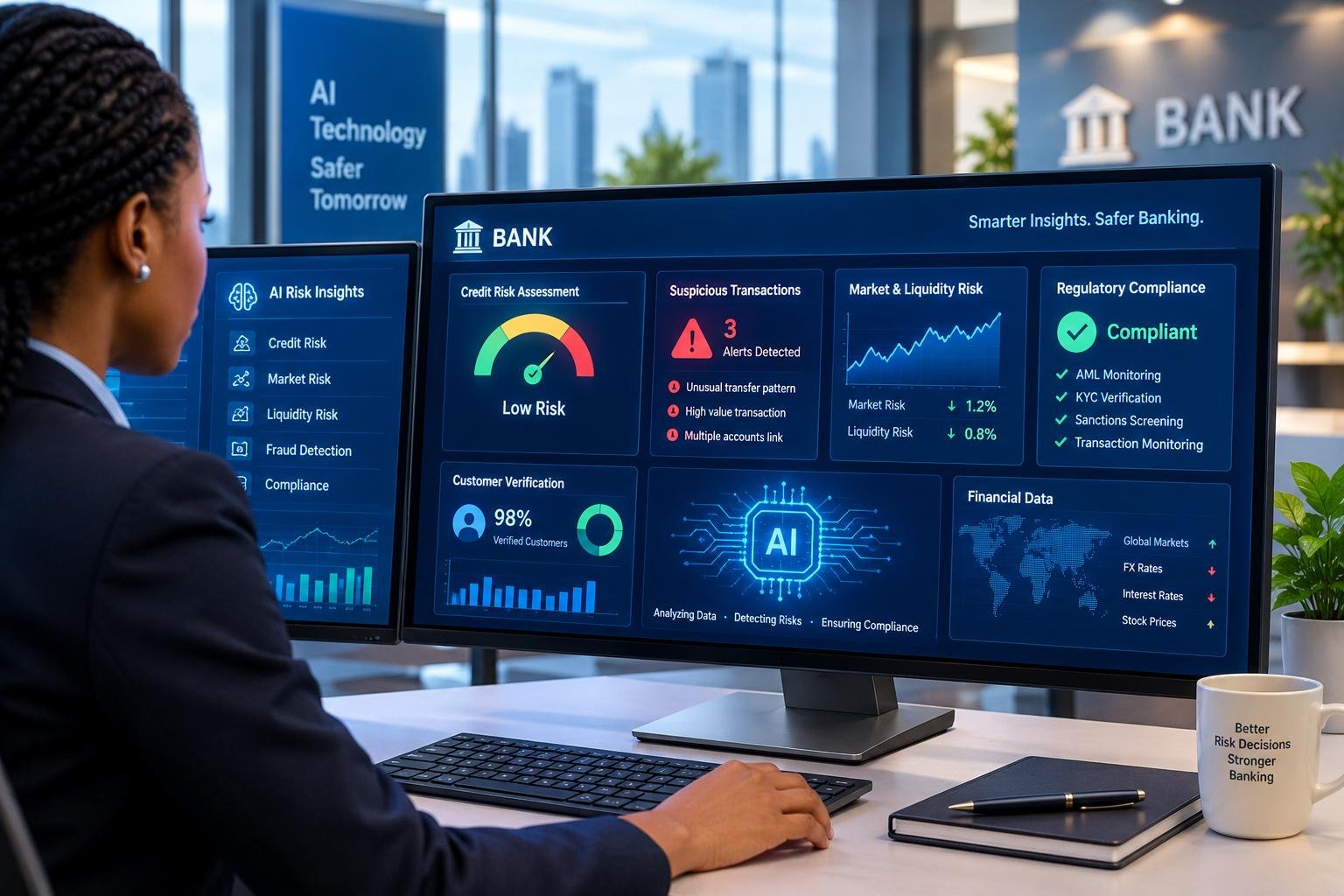
Financial risks, frauds and cyber threats, alongside the regulatory requirements, remain constantly changing in the banking environment. Financial institutions have to detect potential issues at an early stage and ensure the compliance of their operations with the relevant legislation to ensure financial stability and customers’ safety. Manual reviews, predetermined rules, and historical reports are two of the traditional methods that can make it challenging to identify complex patterns in large amounts of financial data. The more sophisticated solution is that of artificial intelligence (AI), which can assist banks to process data, flag odd transactions and make decisions. AI can enhance banks’ financial risk management capabilities by empowering them to predict losses, track financial exposures, and comply with regulatory requirements through effective financial risk management. By leveraging AI, banks can bolster their financial risk management capabilities, enabling them to better predict losses, monitor financial exposure, and meet compliance standards. While intelligent systems are designed to improve efficiency and accuracy, they rely on the quality of the data they are presented with, the models they are used to develop, oversight, and responsible implementation.
The use of AI in Banking Risk Management
AI is the use of technologies that allow a computer to carry out tasks that normally would need human intelligence such as pattern recognition, prediction, and the interpretation of information. AI can be employed in various ways by banks, including the use of machine learning, natural language processing, and anomaly detection to analyze financial transactions and detect suspicious activity. Machine learning models are capable of learning from past data to make predictions about future events, and natural language processing can be used to analyze documents, regulations, and customer communications. The technologies enable financial institutions to assess information quickly as compared to many other traditional processes. AI can’t, however, remove the uncertainty or ensure accurate predictions. It’s main use is to aid the risk professional in giving timely insights, identifying unusual behavior and aiding in prioritizing investigations. While automated tools are useful, human intervention is still crucial in interpreting results and determining the actions to take when measuring financial risks.
AI’s Role in Improving Credit Risk Modeling
To borrowers, credit risk is the risk that they will not be able to repay a loan or fulfill financial obligations. The way this risk is traditionally analyzed is by credit history, income, debt, collateral, and ability to pay back the loan. AI has the potential to help enhance this process by examining more data and uncovering patterns that traditional scoring systems might not detect. Machine learning models can analyze repayment history, account activity, debt amounts and other legally allowed financial data to predict the risk of non-repayment. This information enables lenders to evaluate loan applications, make adjustments to the loan process, and discover customers who are already in their system that may need assistance. When appropriate, other non-traditional data is available, AI could assist individuals and small businesses who do not have traditional credit histories. However, banks have to prove models are not unfairly discriminatory, the information used to calculate the model must be correct and the result be explained appropriately. Where automated assessments may have a major impact on a customer’s eligibility for credit, human review is a key component.
Application of AI in Market Risk and Liquidity Monitoring
Market risk occurs when the interest rates, exchange rates, share prices and other market conditions change in a manner that has an adverse impact on a bank’s finances. AI can also contribute to market risk analysis by analyzing market data, identifying trends, and analyzing the potential impact of various economic events on investments and trading activities. Predictive models can be used by banks to assess the potential losses of different situations, but of course not every unexpected situation is captured by the predictive model. AI also can be used to track liquidity risk, the risk that a bank may not be able to fulfill its financial obligations as and at the time they are due. Intelligent systems can detect the possibility of liquidity pressure based on the analysis of deposits and withdrawals, payment flows, costs of funding and expected cash needs. The knowledge gained helps treasury and risk management to explore the unusual movements and to make corrective action. But to be ready for sudden market turmoil, banks need to take a holistic approach and integrate AI forecasts with traditional stress testing, liquidity assessment frameworks, and human expertise.
Monitoring of Anti-Money Laundering and Suspicious Transaction
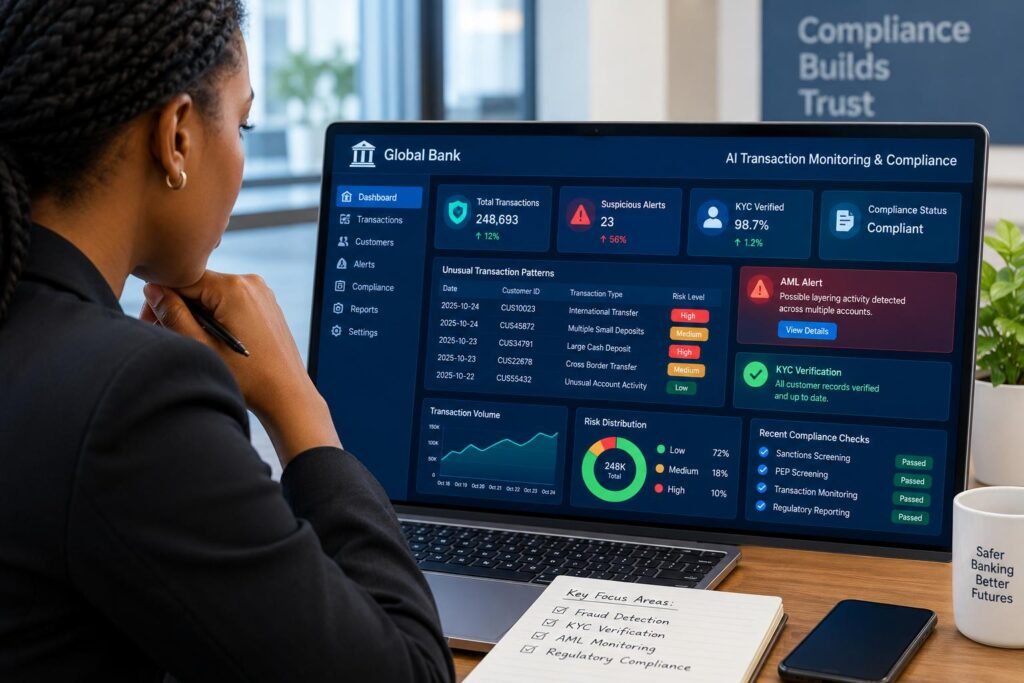
The “Money Laundering” is the act of concealing the origin of illegally obtained money and the “Terrorist Financing” is the process of supplying financing for terrorist activities. Banks are responsible for monitoring transactions and reporting it as per the laws in force. The traditional monitoring systems are usually based on pre-defined thresholds and rules, and can trigger numerous alerts without capturing sophisticated patterns. Key features that AI can detect include transaction volume, frequency, account connections, geographic patterns, and past activity to flag potential fraud. For instance, a system can be declared if it has an account group that continually roots money around between a numbers of intermediaries before transferring to an account set up somewhere else. When investigating individual activities, machine learning can also be used to link them together, making seemingly unrelated activities appear related. These features enable compliance teams to focus on cases that need a deeper investigation. But just a strange deal is not necessarily a crime. The decision on what to do next will be based on the information available to trained investigators who will study the evidence, then record their findings and report as necessary.
Enhancing KYC Procedure
Know Your Customer (KYC) procedures can assist banks in verifying customer identities, gaining insight into the customer’s financial activities and determining financial crime exposure. AI technologies can assist with this by inputting data from your identity documents, verifying photos, if it is allowed by law, to see if they have been altered, and comparing photos to identify inconsistencies in customer records. NLP can also aid in filtering out relevant public data and matching with sanctions databases or PEP databases. These tools can facilitate banking processes, and make the process of onboarding more efficient, while also offering the bank a method to select and target more risky transactions for the need for extra review. AI can also aid in continuous customer monitoring if new data is gathered. However, identity verification systems can be prone to false positive and false negative results due to low quality images, inconsistent records, and/or biased recognition performance. Banks should offer other ways to verify, safeguard information, and have systems in place to correct inaccurate information. If the identity matches are not certain and/or a decision might unfairly limit legitimate customers, human review is required.
Automated Compliance Monitoring
The banking regulations include branches of banking like data privacy, financial reporting, anti-money laundering controls, banking capital, and customer protection. It can be difficult to stay up to date with these duties due to the variable nature of rules and requirements from jurisdiction to jurisdiction. AI can be invaluable in analyzing regulatory documents, pinpointing changes, cross-referencing internal policies with regulatory requirements, and collecting evidence for audits.AI can be extremely useful for compliance teams when reviewing regulatory documents, identifying changes, comparing internal policies to regulatory requirements and gathering evidence for audit. It also can have a record of activities that would be considered an operation that may be in violation of established activities. For example, a system can alert you if a customer’s paperwork is missing, if they access certain information in a way you don’t expect, or if they make transactions that exceed the company’s internal approval thresholds. Automation can help compliance professionals focus on the more complex cases while minimizing repetitive work. Regulations, however, must be interpreted with the help of authoritative legal and regulatory sources, and these interpretations can only be done by using AI. Banks will still be on the hook for fulfilling their duty to keep accurate records and obligations.
Challenges of AI’s Adoption in Banking
While AI offers numerous benefits, banks also face some challenges to navigate. Data Quality is one of the critical issues. Partially complete, out-of-date, inconsistent or incorrect data can lead to inaccurate forecasts and false alerts. It is essential for banks to have robust data governance procedures in place, to ensure that data is gathered, stored and utilized correctly.
The problem of false-positive is another one. False positives will happen when legitimate transactions or customers are mistakenly identified as suspicious. Too many false alerts can lead to over-burdened investigative efforts and delays in legitimate payments and/or customer inconvenience. Often false negatives can also be hazardous as real risks will be missed. Regular testing of their systems, updating of thresholds, assessment of system performance and an analysis of missed cases should all be examined as a way of enhancing detection by the bank.
Transparency of the model is also crucial. There are some high-tech systems that are nigh impossible to understand, and for which it is hard to explain why the loan application was denied or the transaction was flagged. The financial institutions should employ appropriate explainability techniques, keep documentation and provide for review of decisions. They are also responsible for handling cyber security issues, safeguarding sensitive financial information, and ensuring that it is not accessed by unauthorized people.
Regulatory Expectations and the Importance of Human Oversight
Banks are not liable to pass on their legal liabilities to AI systems. The focus of regulatory expectations is usually good governance, accountability, proper risk management, data security and effective monitoring. These exact specifications will vary in accordance with the jurisdiction, the nature of the activity and the various regulatory bodies. Financial institutions need to have clear procedures in place to approve AI models, understand their limitations and monitor the outcomes of AI models, and take action when they fail.
These decisions that take place in the financial sector are especially critical ones such as loan denials, suspicious activity investigations and customer account restrictions, and these decisions require human oversight. Staff should be able to challenge the recommendations that are generated by the system, follow-up on any unusual results and escalate cases when needed. It is possible to validate the models independently to determine if they do what they are supposed to do and if there are any weaknesses. Banks must also be able to demonstrate audit trails of its key decisions. Such protections, which enhance accountability, assist in maintaining that AI is used to enable rather than supplant professional judgment.
The Future of AI in Banking Risk Management and Compliance
As banks create and refine their analytics tools and governance structures, AI is expected to further permeate banking operations. As real-time analytics technology evolves, banks could potentially identify new threats quicker; and as document processing evolves, it might be easier to report on regulatory requirements or investigate internally. AI systems can also enable institutions to integrate data from various departments for a more holistic view of financial exposure. As automation increases, however, employees will need ongoing training, cyber security and model validation and responsible data management will need to be invested in. Banks need to make sure that innovation is not compromising on the aspects of customer privacy, fairness or regulatory responsibility. AI can be effectively leveraged by institutions with a clear strategy, policies and professionals. The aim is to do more than automate more tasks, but to build more robust and dependable risk identification and financial stability safeguarding systems.
Conclusion
The application of AI is transforming the way that banks are identifying, assessing and dealing with financial risks and assisting with regulatory compliance. It can be used for credit risk modeling, market analysis, liquidity monitoring, anti-money laundering investigations, customer verification, suspicious transaction detection, automated compliance checks, and more. AI can process vast amounts of data and detect intricate patterns, enabling banks to anticipate and address potential issues promptly and efficiently. But it will only work if information is correct, decision making is transparent, testing is regular and human supervision is correct. However, there are several critical issues to consider, such as false positive results, model bias, privacy issues, and regulatory requirements that must always be taken into account when using these technologies. In the end, AI is most effective when it becomes a carefully-managed decision support tool which enhances the human touch. By integrating the intelligent systems with responsible oversight, banks can enhance their operational efficiency, safeguard customer information, and foster a more secure and responsible financial landscape.
Get more well researched information about AI in Banking Risk Management and Compliance here.