Of all the faults that can affect a home heating system, low pressure is among the most common and the most misunderstood. The boiler shuts down, the display flashes a code, and the gauge on the front reads close to zero. Many owners top it up, find it works for a few days and then watch it drop again.
For readers who want a step-by-step breakdown of causes and responses, Olia’s Plumbing & Heating, a Gas Safe registered business in London, has published a practical page on a boiler losing pressure at https://oliasplumbingandheating.co.uk/mag/boiler-losing-pressure/. This article provides the background: how a sealed system works, why pressure matters and what the usual culprits are.
What is a sealed heating system?
Most modern homes in the UK have a sealed central heating circuit. The pipes, radiators and boiler form a closed loop filled with water. The loop is topped up from the mains through a filling mechanism, usually a small braided hose called a filling loop, and then isolated.
Because the system is closed, the water inside is pressurised. This pressure allows the pump to circulate water to every radiator, helps prevent air from being drawn in, and keeps the boiler’s sensors working correctly. When the system is cold, the gauge normally reads somewhere between 1 and 1.5 bar, although the exact range depends on the manufacturer. As the water heats, it expands and pressure rises, typically to around 2 bar at most. An expansion vessel inside or beside the boiler absorbs this change.
Why pressure matters
Boilers have a minimum pressure below which they will not fire. This is a protective feature: running a burner with too little water in the heat exchanger can cause overheating. When the pressure is too high, a pressure relief valve is designed to release water through an external pipe to prevent damage.
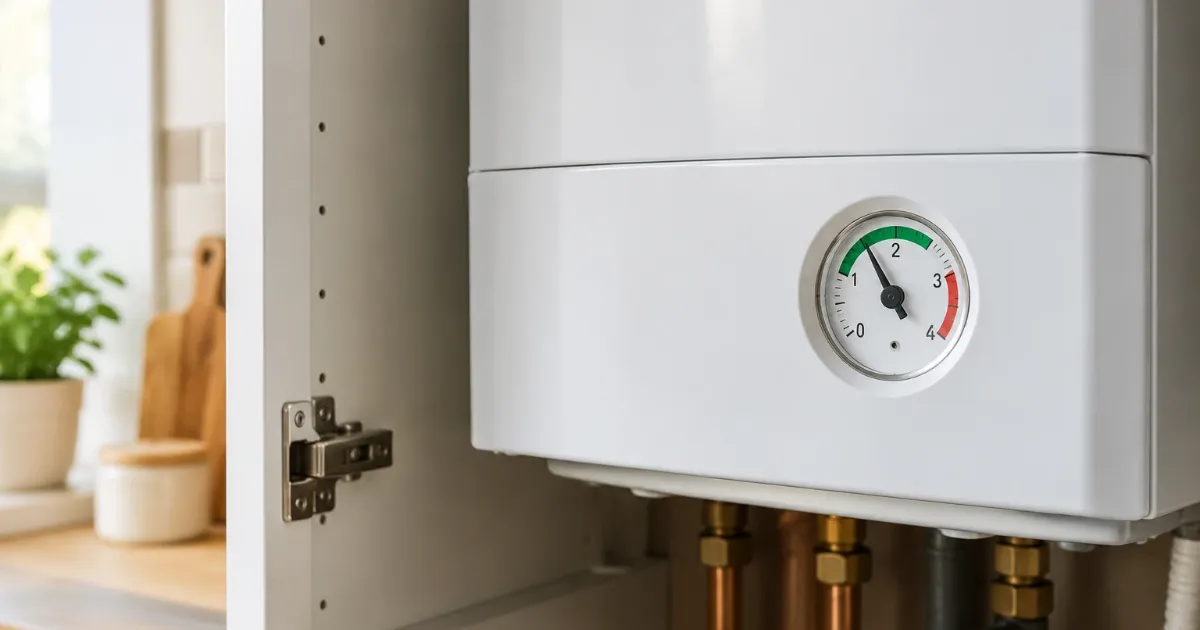
In either case, the boiler is giving you information. Low pressure means the system is short of water or the pressure is not being maintained; high pressure usually points to an expansion problem.
The usual reasons pressure drops
A leak
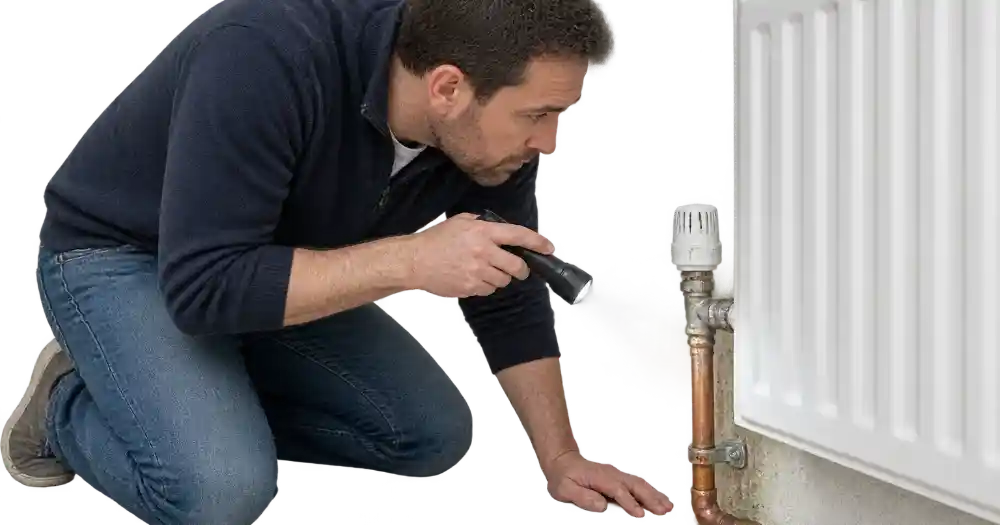
The most straightforward cause is water escaping from the system. It can be a weeping radiator valve, a joint in the pipework, a leaking pump seal or a failing component inside the boiler. Small leaks may not leave puddles, since water can evaporate from a warm surface or run behind a wall. Look for damp patches, stained carpet, rust on valves and corrosion on pipe joints.
Recent bleeding
Bleeding a radiator releases air and a little water, so pressure falls afterwards. This is normal; top up to the cold-system level described in the manual and check it again after a day. If the pressure holds, there is no problem.
A faulty pressure relief valve
If the pressure relief valve has opened because of overpressure, it may not seat properly afterwards and can drip. Check the external discharge pipe, which usually exits through an outside wall near the boiler, for drips or staining.
Expansion vessel problems
The expansion vessel contains a rubber diaphragm with air or nitrogen on one side. If the air charge is lost or the diaphragm fails, the vessel can no longer cushion expansion. The system pressure then climbs excessively when hot, the relief valve opens, and when the system cools the pressure falls well below normal. Typical signs are pressure that rises sharply during heating and drops overnight.
Air in the system
Air pockets can interfere with the pressure readings and circulation. A system that is regularly vented through an automatic air vent, or that has a minor leak at the vent, can lose water over time.
What you can safely do
A homeowner can:
- Check the gauge when the system is cold and compare it with the range in the instruction manual.
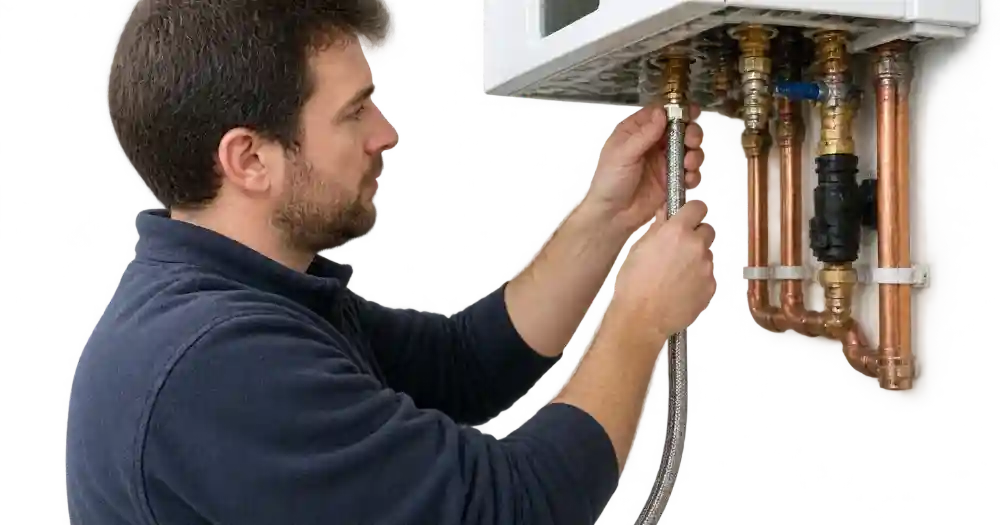
- Repressurise using the filling loop if the manual shows how: connect both ends, open the valves slowly, watch the gauge and close them when the needle reaches the cold-fill figure. Disconnect the loop afterwards if the manufacturer advises it.
- Check for obvious leaks at radiators, valves and visible pipework.
- Look at the pressure relief discharge outside the property.
- Record what happens: how quickly the pressure drops and whether it rises when the heating is on. This is very useful information for an engineer.
If the pressure keeps dropping after one or two top-ups, stop. Repeatedly adding fresh water introduces oxygen and can increase corrosion inside the system, so persistent loss is worth investigating rather than managing.
What to leave to a professional
The following are jobs for a registered heating engineer:
- opening the boiler casing or handling internal components;
- replacing or recharging an expansion vessel;
- replacing a pressure relief valve;
- repairing leaks on the boiler’s internal pipework or heat exchanger;
- locating a concealed leak using pressure testing or thermal imaging equipment;
- any work on gas components.
Gas work in Great Britain must legally be carried out by an engineer on the Gas Safe Register. Ask to see their ID card, which lists the appliance types they are qualified to work on.
A note on safety
If a leak is near electrical equipment, switch off power at the consumer unit before attempting to deal with it, and avoid standing in water around electrical sockets. If you smell gas, do not use switches or flames, open doors and windows, and call the National Gas Emergency Service on 0800 111 999. Also learn the warning signs of carbon monoxide poisoning, which the NHS explains in detail.
How to reduce the chance of pressure problems
- Have the boiler serviced every year; an engineer will check the expansion vessel and pressure behaviour.
- Check the gauge occasionally, particularly at the start of winter.
- Do not ignore small drips on valves, because they usually worsen.
- Keep records of when the system needed topping up.
- Fit a system filter and use inhibitor to reduce corrosion and the pinhole leaks it causes.
Summary
A sealed heating system depends on a stable pressure. When the gauge falls, the cause is usually a leak, a recent radiator bleed, a relief valve that has opened or an expansion vessel that has lost its charge. Checking the gauge, repressurising once and watching for a pattern are sensible first steps. Pressure that will not stay up needs a professional diagnosis, and anything inside the boiler casing belongs with a registered engineer.