Introduction
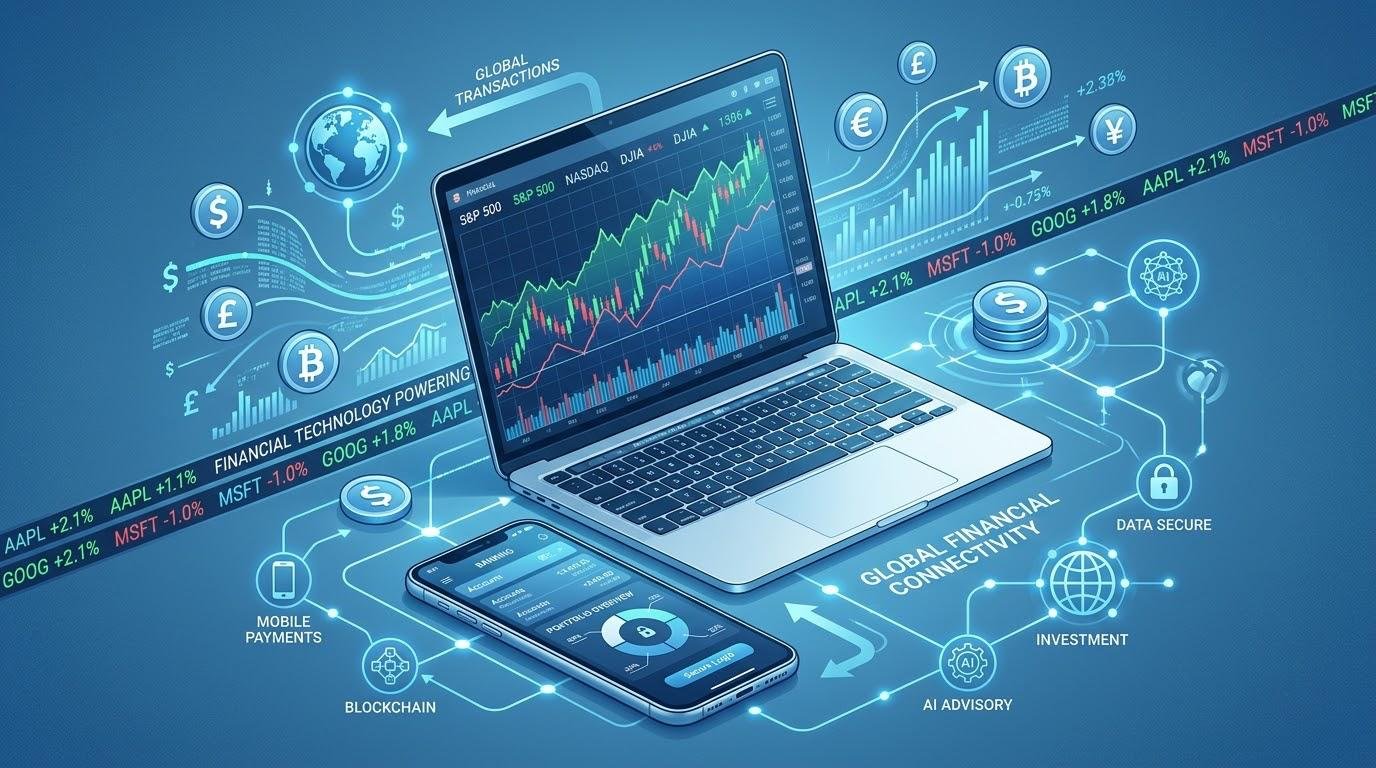
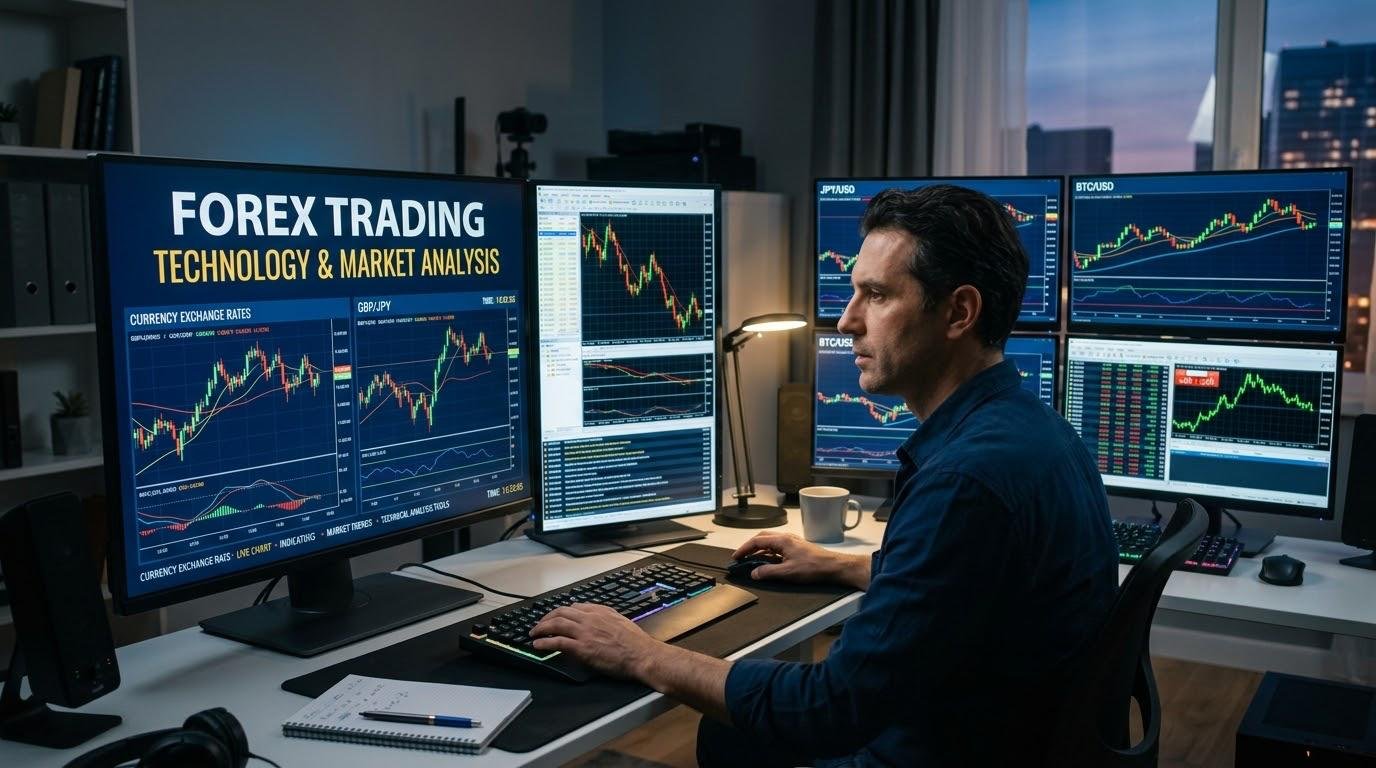
The foreign exchange (forex) market is an international exchange where foreign currencies are exchanged, which allows traders to trade money, conduct business, conduct investments, tour, and commercial and financial transactions with others from other countries. Forex is not run by a central exchange as are traditional stock exchanges. Rather, it depends on a network of banks, brokers, financial institutions, providers of liquidity and electronic trading systems, which are distributed and connect participants from around the world, different time zones. With the modern technology, the trader can log in to the price of currency, interpret the movement of the market, place orders and handle trades via electronic communication networks. The trading platforms, data feeds, automated algorithms and execution networks that crunch the numbers within milliseconds lie behind these activities. Beginners can gain valuable insights into the infrastructure, its mechanisms, and its impact on trading execution, fees, and risk by understanding it.
Forex Trading Platforms and their Functions.
A Forex trading platform is the software program that allows traders to observe the prices of various currencies, analyze charts, make trades, and manage their trading accounts. Common platforms are MetaTrader 4, MetaTrader 5, and cTrader and any platform which has been built by the broker themselves. These are the currency pairs that are displayed, e.g., EUR/USD, GBP/USD, USD/JPY, and the amount of one currency needed to buy a unit of another. Technical analysis tools, drawing, economic calendars and order-management tools are available for traders to assist in their analysis. Most platforms will also show you details of your account, such as available margin, equity, open positions and your unrealized profit or loss. But, a platform is not the complete forex marketplace. It’s the part that the user sees of a larger technical system that receives prices from a broker, passes instructions to its servers and provides execution data. Thus its value relies in part on how reliable the broker’s platform is and how well he provides data.
How Currency Quotes Reach Traders
Buyers and sellers of currency are connected with each other and technology companies through a series of market participants and technology firms. Liquidity providers such as banks, non-bank financial institutions, electronic venues, etc., add bid and ask prices to trading networks. The Ask is the rate at which a market participant will offer to sell a pair of currencies, the Bid is the rate at which the market participant will buy it. Brokers get quotes from one or more sources, add in their pricing and risk-management considerations then publish the resulting prices to their clients via trading platforms. Market-data systems continuously pass information when exchange rates adjust to economic news, expectations for interest rates, political events and the volume of buying and selling. The volatile nature of market activity is reduced and prices are shown on a trader’s screen in a matter of seconds with fast connections and efficient servers. However, during volatile times, quotes shown on the display may change and the price that will be displayed at the time of entering an order may differ from the price actually executed.
Liquidity Providers and Electronic Communication Networks
Liquidity providers facilitate currency trading by providing prices and offering to trade under certain conditions. All major commercial banks, investment banks, specialized banks and non-banking market makers can be liquidity providers. They vary in transaction sizes and markets that they can accommodate and can accept different prices. Brokers can interface with multiple providers to get multiple quotes, potentially improving quotes given to clients. Electronic communication networks are another aspect of this infrastructure, electronically linking traders and matching the buy and sell interests. Electronic venues and matching systems can be used to connect banks, brokers, funds and other professional players in forex. Not all forex brokers operate in the same way and the decentralized over-the-counter market doesn’t have a single order book, however. Liquidity will vary according to the currency pair, trading session, market conditions and relationships that each trading provider establishes.
The Execution of Forex Orders.
After the trader enters an order to trade a currency pair, it is the order execution process that comes into play. The order is sent to the platform, which passes it on to the broker’s server, which evaluates the conditions such as permissions for the account, available margin, order size and instructions for price. The broker then executes the order as per the order execution model. The broker can be counterparty to the deal or deal the trade through the broker’s own price risk and procedures. Orders can go to an external liquidity provider/venue in an agency or straight-through processing. There are some brokers who have a hybrid model. Generally, market orders are executed immediately at the price that is available, while limit orders set what price to buy or sell an item at. The price condition is executed as soon as the price meets the specified level, but is not necessary at the price level specified in the stop order. When the actual price of the trade is different from the theoretical price, especially when trading during a high-volume trading environment or when market conditions are tight, it’s called slippage.
Understanding Spread and Trading Cost.
One of the primary costs that traders have to face is the spread which is the difference between the bid and the ask price of a currency pair. For instance, the spread between EUR/USD at 1.08500 bid and 1.08512 ask is 0.00012 or 1.2 pips (conventional definition of 1 pip for this currency pair). Market liquidity, volatility, competitiveness of providers, order size and the broker’s pricing model are the factors affecting spreads. Active trading hours typically result in tighter spreads in major currency pairs as there is significant trading volume in these pairs, whereas less active pairs could lead to wider spreads. There are some brokers who will offer a variable spread, but will not have a separate dealing fee, and some brokers who will give a raw or near raw spread, and will charge a dealing fee per trade. Other fees and charges that can be included in the effective cost include overnight financing, currency conversion fees, and slippage. Therefore, traders need to evaluate the total expenses of trading instead of the broker’s offered minimum spread.
Automated Trading Systems and Algorithms
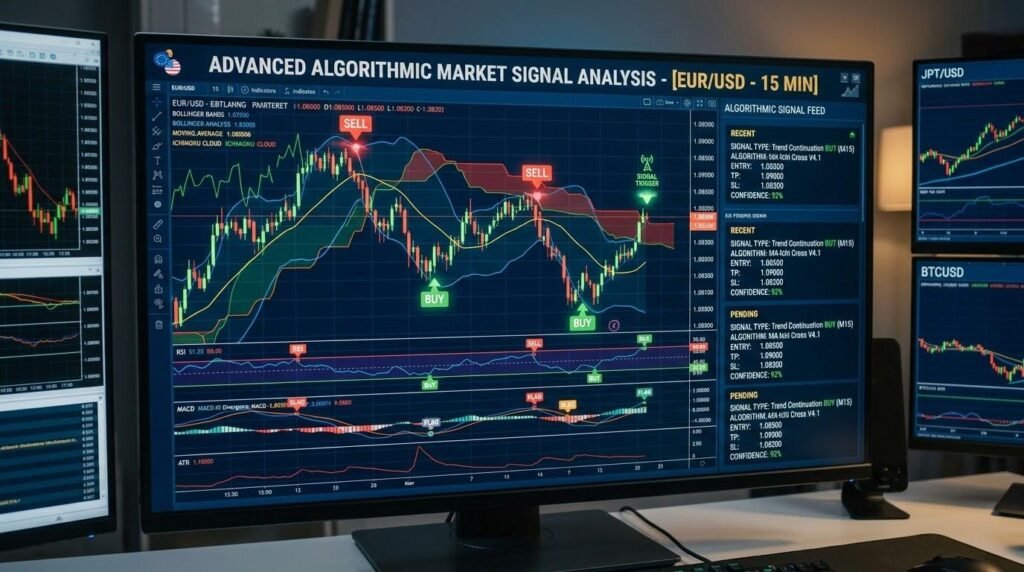
Automated trading systems rely on predetermined rules to help interpret market data and place and/or execute trades when approved with minimal human input. These can be based on technical indicators, price breakouts, statistical relationships, or market condition responses that have been programmed. Expert advisors for MTs and trading bots created using broker APIs are examples. An algorithm can keep track of a number of currency pairs, follow the same rules and respond quicker than a man. More sophisticated systems could include some machine learning to detect trends in historical and real-time data. But algorithms are no more reliable than their assumptions, data and implementation and risk controls. Even systems that are successful based on past prices can fail when prices change and under-designed systems can place too many orders or too many losses. Therefore, backtesting, forward testing, transaction-cost modeling, monitoring and emergency shutdown procedures are crucial components of responsible automated trading.
How Algorithms are used to optimize Marketing Strategies.
Algorithms also assist traders with manual trading decisions. Technical-analysis tools are employed to analyze important indicators like moving averages, average true range, and relative strength index, assisting users in examining trends, momentum, and volatility. Economic calendars, interest-rate announcements, inflation reports, employment data and central-bank statements are some of the data points analyzed by fundamental-analysis systems. With quantitative models, you can use currency movement against the interest-rate differentials, historical relationships, or market sentiment. AI can be used to classify news, summarize reports and detect connections between vast amounts of data, and statistical tools can be used to build estimates of the potential risk in various market scenarios. The insights provided are dependent on the accuracy, time available and the relevance of the information provided. Algorithms can also misinterpret rare events, respond to false data or detect patterns that don’t exist in the data set upon which they were trained. It is important that analytical technology is used in conjunction with sound judgment and diligent risk management, not instead of critical evaluation.
Marketplace and Venues
A forex broker is the entity that runs the technical systems that enable clients to access prices, services and order execution. It can have its infrastructure made up of trading servers, pricing engines, account databases, liquidity connections, monitoring, and backup facilities. Application programming interfaces (APIs) enable software systems to communicate and provide accepted instructions in a programmatic way. They can integrate trading bots, portfolio systems, risk dashboards, and analytical systems with trading brokers, provided that they are authenticated and granted access. Cloud computing helps companies put a scalable computing infrastructure in place, process large amounts of data, and continue services in distributed environments. However, cloud systems and high-speed servers are not enough to guarantee outages, latency or execution issues don’t go away. Traders should review whether the broker is properly regulated, how the orders are executed, the security measures they have in place, whether the service is reliable and how they deal with technical issues. The two platforms can give different results, due to different broker arrangements, liquidity, rules for execution and location of servers.
Currency Market Data and Data Providers.
Market-data providers gather, arrange and share market data like bid and ask prices, historical candles and trading volumes (where available), and economic announcements. In the decentralized spot forex market there is no single consolidated tape and each trade or quote is found no matter which participant it’s from. This means that the price may vary slightly from broker to broker and/or data vendor to data vendor, depending on the liquidity sources and update frequencies for each. While historical data can be useful for charting, strategy development and back-testing, traders should be aware if the data is a full or indicative price or a smaller feed from the market. Time stamps, gaps, missing data, and bid-ask quotes are all factors that can impact an analysis. Other economic data and news services give further context, but that of timing and interpretation is also important. Reliable data can assist traders make better informed evaluations, but it can’t eliminate uncertainty or ensure previous trends will recur.
Risk Management and Cybersecurity
Traders can utilize risk-management tools to manage risk as prices move against their trades. Some of the most popular features are stop-loss orders, take-profit orders, margin monitoring, position-size calculators and limits on total exposure. While a stop loss can help set an exit point, price fluctuations or gaps in the market may result in a different price point of execution. Leverage is amplified gains and losses and too much leverage can lead to your account getting depleted quickly or you being forced into liquidation. Cybersecurity also plays a vital role due to the sensitive information regarding personal and financial details that are shared in trading accounts. To minimize the risk of unauthorized access, brokers and traders implement a variety of security measures, such as encryption, multi-factor authentication, access controls, secure APIs, and suspicious-activity monitoring. To safeguard their trading accounts, traders should use strong passwords, secure authentication codes, ensure that devices are kept up to date, and refrain from sharing account information with untrusted services. Technical safeguards mitigate some risks, but not all; risks of fraud, operational failure, market volatility and poor trading decision are not mitigated.
Conclusion
The Forex trading industry relies on an interconnected digital platform that offers quotes, connects liquidity providers, executes trades and provides analytical and risk-management solutions for traders. Trading platforms offer the trading interface, while the brokers control the execution of the transactions and access to the platform by clients, market-data providers disseminate the information and electronic networks facilitate transactions between market participants. These systems are more connected and efficient through APIs, cloud computing and the use of automated algorithms; and cybersecurity and risk controls are designed to ensure the protection of accounts and minimize exposure. Knowing what constitutes a spread, how orders are routed and why there can be price differences provides a beginners’ edge in assessing trading services and the activity of the market. However, the financial risks of currency speculation do not go away with the introduction of technology. To participate successfully, one must have realistic trading goals, select brokers wisely, size their positions, and recognize that no trading platform or algorithm or data feed has the magic key to success.
Get more well researched information about Forex trading technology here.