Introduction
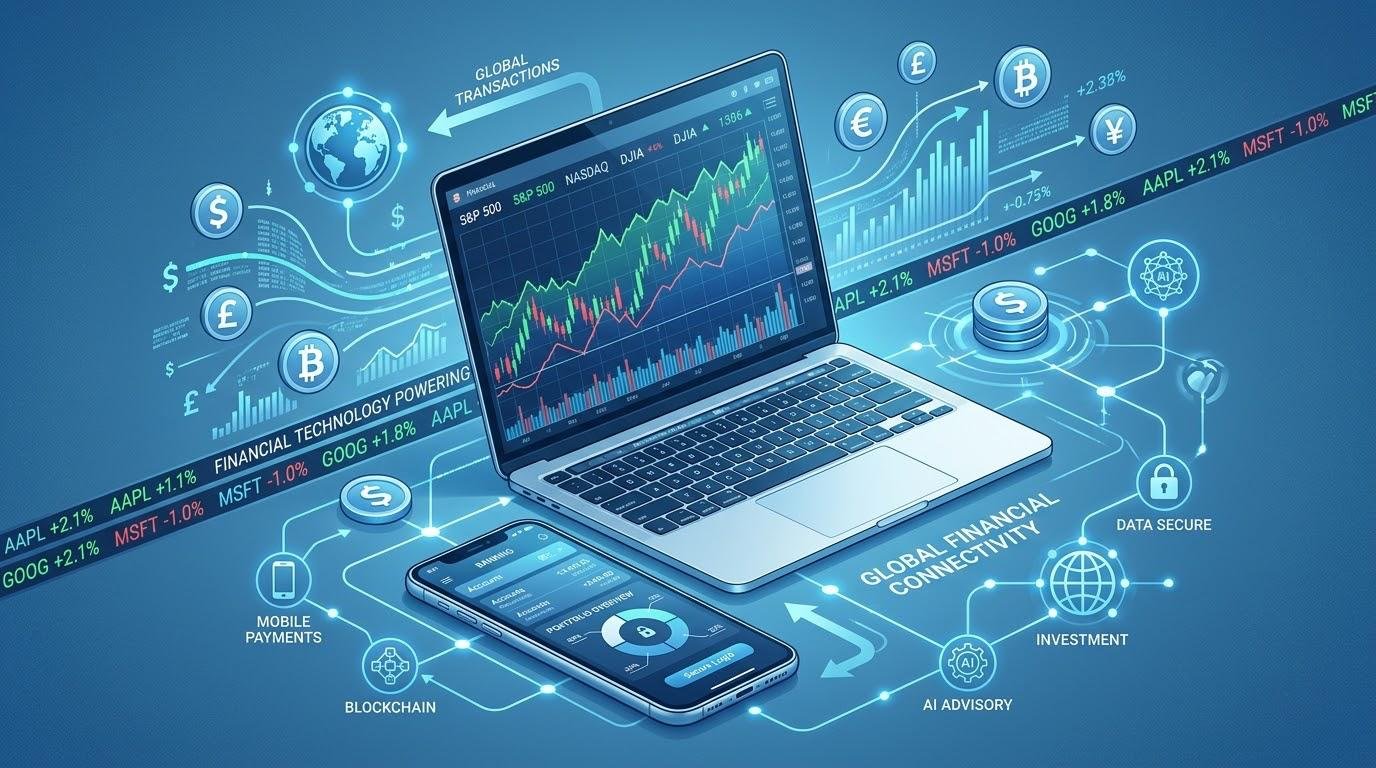
The digital becomes part of daily life and revolutionizes the financial services sector. Individuals can now make transfers, pay bills, convert currencies, buy shares, deal with investments and research real property ownership via digital platforms. The developments are driven by financial technology, also known as FinTech, which is using technology to improve, automate and expand financial services. Financial services firms are going paperless, paperless systems, and even physical branches, to deliver more effective service to their customers using software, secure digital networks and interconnected databases. In addition, FinTech acts as an interconnector for different components of the financial system, allowing financial data to be shared and business to be conducted between financial institutions, investment intermediaries (banks, brokers, investment firms, and other entities), businesses and payment service providers. The knowledge of how they work enables novices to gain a clear notion of the importance of technology in the lives of financial institutions and those who save, borrow, invest or send money.
Basic Concepts of FinTech.
FinTech means finance and technology, which brings better speed, availability and ease into managing financial activities. It’s capable of being applied in mobile banking, electronic payments, algorithmic trading, digital lending, online investment management and much more. A banking app can show a user’s account balance, verify a transaction and process the changes within seconds, for instance. The software behind the interface interfaces with the banking databases, verifies account details, implements security guidelines, and dispatches directions using payment networks. It’s these operations, however, that must work together in the objective of delivering a dependable experience. While some financial institutions won’t be replaced by FinTech, how and with whom they interact with their customers will be. Bank deposits remain with the banks, securities are traded by security exchanges and the investment manager is still responsible for assessing financial risks. Digital technology can improve the information capacity, reduce repetitive activities, and offer new ways to deliver services in the activities below.
Essential Technologies for Modern Finance
Artificial Intelligence and Big Data
Artificial intelligence helps financial systems to analyze information, identify patterns and assist decision making. AI tools in banks can be used to identify transactions that don’t seem normal, evaluate some credit risks, and answer customer queries via chatbots. Investment platforms may employ algorithms to consider market details and assist investors assess securities, but forecasts do not always come with 100% precision. Big data complements AI by feeding the vast amount of data related to transactions, market prices, customer activity and economic reports. With responsible analysis, these datasets can be used to detect fraud, gain insight into customer requirements and evaluate the market dynamics. Bad data can provide misleading results and algorithms can be biased and result in unfair decisions, however. Financial organizations should thus have the appropriate data governance, human control, and responsibility over the automated analysis so that it aids in making sound financial decisions, and not make decisions in isolation.
Application Programming Interfaces (APIs) and Cloud Computing.
Application Programming Interfaces (APIs) are rules that enable different software systems to communicate with each other. For instance, a payment application can make an API call to request a bank transfer, confirmation and show the result to the customer without the customer have to go to the bank. APIs also can link brokerage platforms, identity-verification services, financial data services, and payment processors. Another key building block of cloud computing is that it enables organizations to use computing services, storage, and software via a cloud infrastructure, instead of having them on-site. Financial institutions can leverage cloud to scale up, power digital applications and handle increasing transaction volumes. However, it is essential that data access, system availability, third party provision and regulatory requirements are carefully managed for these benefits to be achieved. By securing APIs and well-governed cloud infrastructure, financial services can become connected digital systems and not just separate technological spaces.
Blockchain and Automation with Cybersecurity
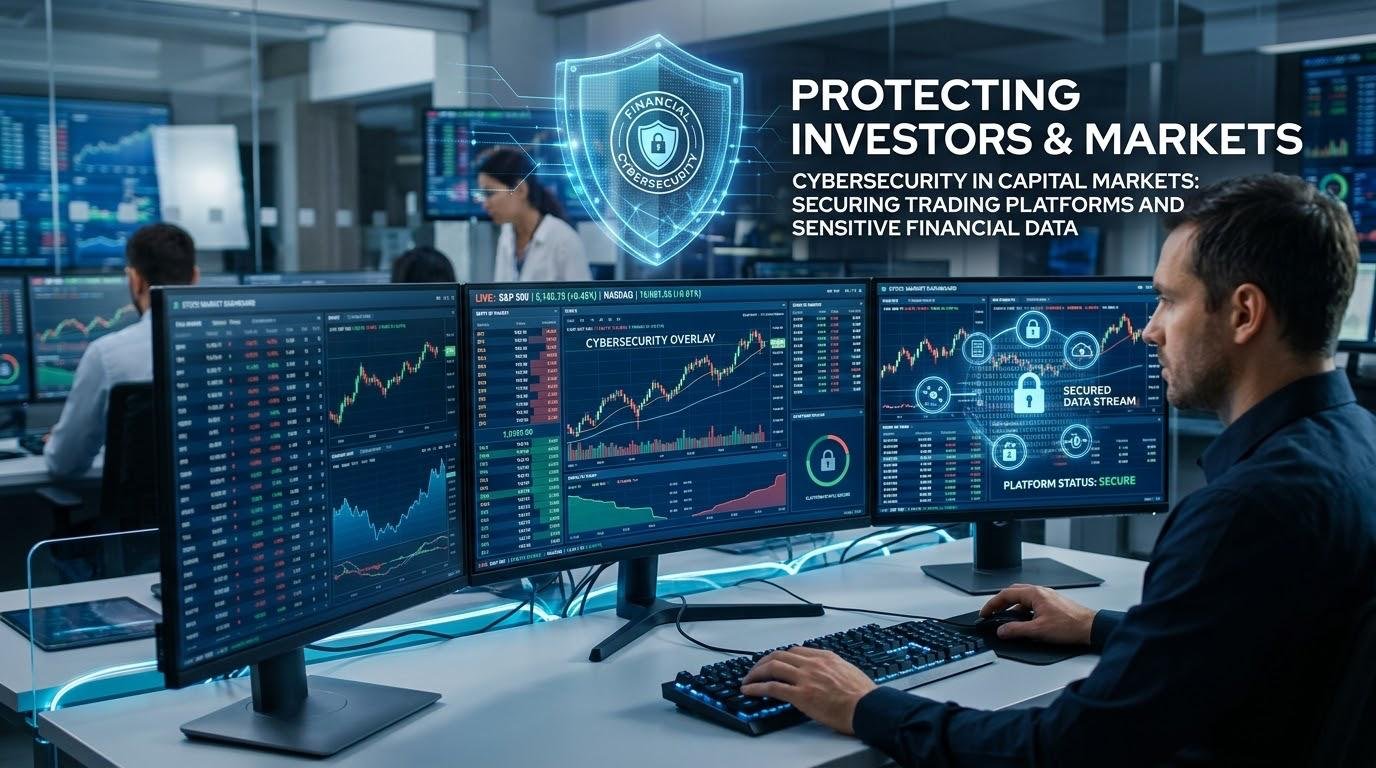
Blockchain is a distributed ledger that keeps track of transactions through a network based on the rules agreed upon by the network. It can enhance transparency in records, depending on its design, and enable the verification of transactions without relying completely on a single database. Blockchain is also used in some financial applications, such as experiments with tokenized securities and with settlement. Automation, on the other hand, enables software to accomplish repetitive jobs like reconciling accounts, validating documents, calculating charges, and making reports. This can help to save processing time and minimize manual errors, but improperly designed automation processes can also make mistakes on a large scale. Financial systems are shielded from such threats as account theft, phishing, malware, and unauthorized access by cybersecurity. Typical security measures are transactions monitoring, access controls, regular security testing, encryption and multi-factor authentication. These technologies complement each other: automation enhances efficiency, blockchain can be used to maintain specific transaction logs, and cybersecurity can safeguard systems and data vital to today’s financial world.
How FinTech can help Various Financial Markets.
Banking and Digital Payments
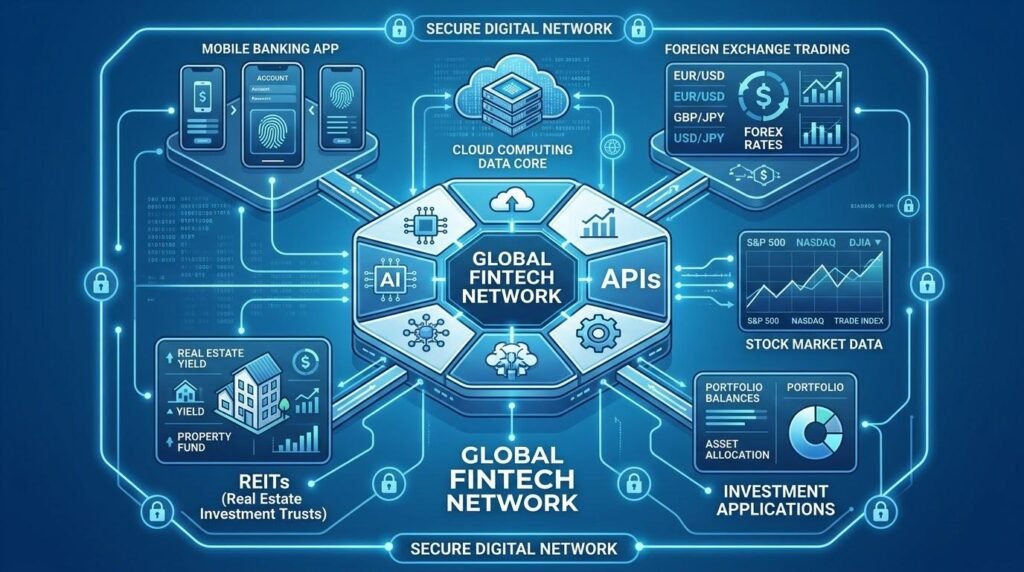
One of the most common examples of the use of FinTech is in the banking sector. Mobile banking apps allow customers to access their accounts, transfer money, pay bills and view their histories without having to go to a physical bank branch. Digital payment systems also enable merchants to accept electronic payments, and banking software makes it easy for banking institutions to handle deposits, loans, compliance checks, and customer records. Multiple systems can function together to validate the funds, verify the funds available, communicate with the payment network and update the records when a customer transfers money. The actual settlement time varies according to the method of payment, participating institutions and rules. These services can enhance the convenience and financial inclusion, especially for those living in remote areas, which cannot easily access bank branches. But having the right device to access, connection to, and understanding of digital technologies, and access to services at an affordable cost is still relevant.
Foreign Exchange Trading
The foreign exchange (forex) market is the market for the exchange of one currency to another. It is utilized by businesses for international transactions, travellers for travel or for currency conversions, and investors or traders for currency exposure management or pursuing market opportunities. Digital trading platforms show currency prices, execute trades and offer tools to analyze the market movements. APIs can be used to transfer trading applications to brokers and LPs, while algorithms can be programmed to perform trades based on specific rules. The information in market data systems is constantly being processed as a result of interest rates, inflation, business announcements and worldwide events. With these technologies, currency trading becomes easier, but does not eliminate financial risks. Foreign exchange rates can fluctuate quickly, fees can negatively impact profit, and high-risk trading can cause losses to mount. Any novice will want to know what orders, spreads, margin requirements and currency pairs are before putting any money into the forex market.
Stock Exchanges and Brokerages
Stock exchanges offer a structured environment in which securities fit for trading can be exchanged according to predetermined guidelines. Brokerages provide the investor with access to these markets and place orders with the market where traders are willing to trade. Brokerages accept orders from investors route them to the appropriate market place and report back to the investor on the execution. Digital brokerage apps enable users to do research on companies, track their portfolios, place orders, and analyze their performance. These interfaces are supported by electronic trading platforms that match up orders that are compatible, and market data platforms that provide pricing and trading data. Risk controls and regulatory technology assist companies to keep track of transactions and fulfill relevant responsibilities. Automation can speed up execution and while it may differ from displayed prices, it will not be as high as it would if the market was moving slowly. Brokers also charge fees and taxes, and some stocks are more liquid than others. Investors should also know about any stock risks, as well as brokerage fees and taxes. While technology has minimized the “practical” hurdles to being involved in the financial markets, investment decisions must be made based on research, realistic expectations, and one’s personal financial objectives.
Money Markets and Short-Term Finance
The money markets focus on the short-term lending and borrowing, typically of securities with a maturity of one year or less. The participants are banks, governments, corporations and institutional investors who are looking to control liquidity or to get short-term financing. Treasury bills, commercial paper, certificates of deposit and repurchase agreements are examples of money market instruments. Digital systems assist with these activities by providing a display of prices, transaction processing, monitoring of counterparty exposure and reconciliation of payments. Automated treasury platforms assist organizations to predict cash needs and when they might need cash in hand. Electronic trading and reporting systems also facilitate the ability to keep track of transactions and market conditions. Money market instruments may be relatively conservative investments compared to shares, but are not completely risk-free. The value and reliability of these may be influenced by credit quality, interest rate fluctuations, liquidity conditions and financial strength of the issuers.
Retail Investing and AI-powered Investing.
Research, portfolio tracking and investment services are all combined within one digital application for investment. Some applications offer educational information, provide the ability to buy eligible investments, and some robo-advisers offer to make recommendations or manage investments based on a person’s financial goals, time horizon and risk tolerance. Auto investing can also enable periodic investing and rebalancing of portfolios, which can help the investors maintain a consistent investing approach. Financial data can be summarized and patterns detected using AI, but this might not capture the full picture or be accurate. Purchasers must be aware of the costs and investments of an application, its withdrawal conditions, and whether it’s regulated or not before they invest in it. Access does not equal investment results and past performance is no guarantee of future investment results. Responsible use of investment technology involves having a good grasp of the risk of losing money, independent research, diversification and using the efficient tools that technology offers.
Real Estate Investment Trusts (REITs)
Many individuals invest in real estate investment trusts (REITs), which enable investors to invest in a portfolio of eligible real estate without the responsibilities of buying and owning actual real estate. A REIT can hold income-generating assets like offices, residential buildings, warehouses or shopping centres or finance real estate. Usually publicly traded REITs can be purchased and sold through the stock exchange, such as listed shares. Prices, company reports, distribution history and portfolio information are available on digital platforms. Investors can use data analytics to analyze the trends of the real estate market, rental income, occupancy rates, and operating costs. Another aspect of property management that benefits from technology is digital rent collection. Digital rent collection is another area of property management that is aided by technology. But REITs investments are still subject to the ups and downs of the property market, borrowing costs, management choices and market prices. Investors should look at what assets the trust owns, the amount of debt, how well those assets are distributed and any fees that may be associated with the trust.
Connecting Financial Systems through Digital Infrastructure
In the era of modern finance, there is a growing sense that it is a network of services than is independent. A customer may get a paycheck from a bank, change money on a digital exchange or service, send money to a monetary brokerage, and purchase shares or REITs by means of an investment application. APIs are used to communicate between compatible services, and cloud infrastructure to power applications and data processing. Identity-verification systems can assist in ensuring that institutions are dealing with the right customers, while automated compliance systems can monitor transactions for any unusual activity or aid in regulatory reporting. Not every digital asset is adopted and integrated into blockchain-based networks, but this technology can offer solutions to record and transfer a number of digital assets. Such links can help to cut down on admin delays and enhance the customer experience, yet they likewise produce dependencies. Services that are connected are likely to be impacted by an outage, security breach or error from one provider. For effective integration, infrastructure, permissions and a coordinated approach to managing risks are essential.
Challenges, Benefits and the Future of FinTech
FinTech brings several advantages to the table, such as quick transactions, access to financial services, reduced administrative costs and increased access to financial information. Digital platforms can provide an avenue for small businesses to accept payments, individuals to handle savings, and investors to discover markets which they wouldn’t have been able to access otherwise. Automation can minimize repetitive work, and data analysis can enable institutions to get insights to help them make informed decisions. These benefits, however, pose problems relating to cybersecurity, privacy, digital exclusion, algorithmic bias and reliance on technology vendors. People can be tricked by financial scams and rely on familiar apps and platforms for this purpose; complex digital products can also make it tempting for users to take risks that they don’t understand. Thus, regulating and protecting the consumer is a must. With the continued advancement of AI, cloud computing, digital identity and tokenization, financial institutions must strike a balance between innovation and transparency and accountability.
Conclusion
Many activities of today’s financial world rely on financial technology as their digital infrastructure, including currency trading, securities markets, money markets, investment applications, REITs, international payments and every element of normal banking. These services are powered by technologies like AI, APIs, cloud computing, blockchain, big data, automation and cybersecurity to facilitate information and money flow. Together, they create more connected, accessible, efficient financial services and new operational and security challenges. These systems are crucial for novice investors to grasp in order to make informed decisions about their investments. While technology can help make financial services more accessible and offer handy analytical tools, it does not remove uncertainty, ensure financial returns and replace good judgment. Digital literacy, coupled with financial literacy and prudent risk-taking, empowers people to enhance their understanding of the functioning of modern financial systems and responsibly apply their capabilities.
Get more well researched information about Financial Technology here.