Introduction
Skincare in 2026 can be anything but a lengthy routine of multiple products and steps. The first step towards a good skin care regime is to know just what your skin requires and picking products that fit the bill. There are four types of skin that are widely accepted, however, one may have more than one skin concern. These are oily, dry, combination, and sensitive skin. Other factors like age, climate, hormones, lifestyle and the use of products can also affect the way the skin reacts. The best strategy for beginners is to concentrate on three basics: gentle cleansing, proper moisturizing and regular sun protection. Other products can be added as there is a specific need for them and not because they are popular online. This way, skincare is more simple to understand and more affordable, as well as not overwhelming the skin.
It is important to recognize the Four Common Skin Types.It is critical to know the Four Common Skin Types.
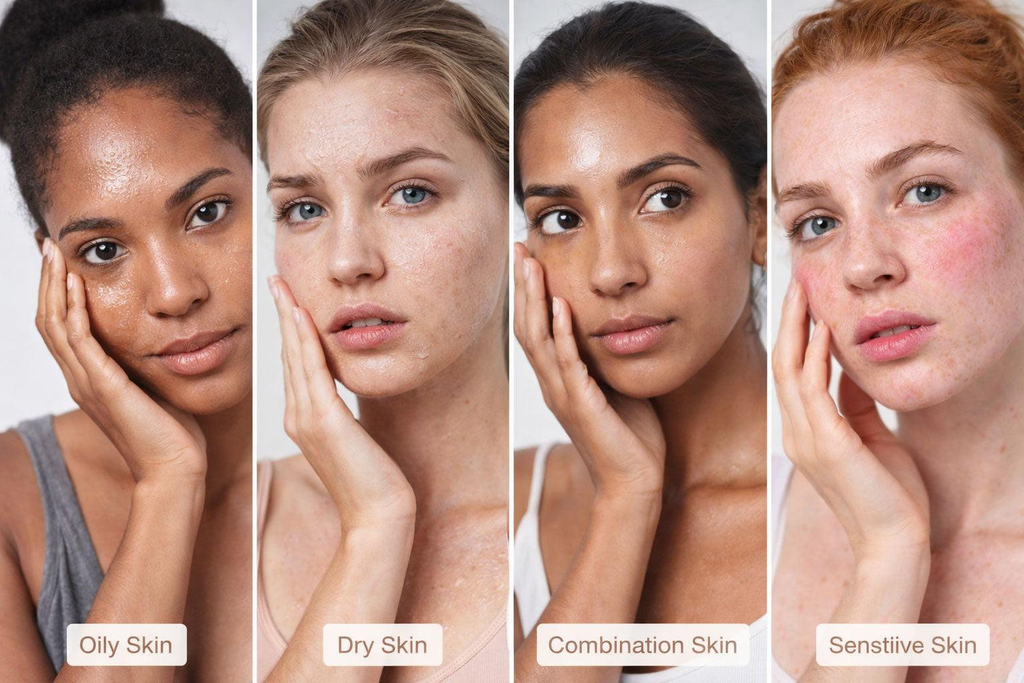
It is helpful to know a little bit about the four common types of skin prior to developing a skin care regimen. Oily skin makes more sebum, the natural oil that the skin produces, which can make the skin shiny and cause blocked pores. Dry skin tends to produce less oil and can be tight, rough, flaky or uncomfortable, particularly after cleansing. Combination skin is a mix of both – more oil around the forehead, nose and chin, and normal or dry elsewhere. Sensitive skin is not the same as oily skin, and sensitivity indicates the sensitivity of the skin to various products or environmental factors, not the amount of oil produced. As a result, a person may be oily, dry or combination sensitive. This is significant because the recommendation to care for skin will differ depending on skin type and each person’s tolerance and should not be based on a single universal skin care routine.
How to Identify Your Skin Type
For most novices, deciding on the type of skin can be done without expensive equipment or professional tests. First, wash off the face with a mild cleanser, and refrain from using skin care products for a while and see how the skin reacts. If you find that your face is suddenly looking shiny and oily, you could be having oily skin. If you feel a bit tight, rough, or uncomfortable and notice some areas of flaking on your face, dryness may be more noticeable. If the skin is oily on the forehead, nose, and chin, but not so on the cheeks, you might have a combination skin type. Your skin might be sensitive if products often stimulate the skin, causing stinging, burning, redness, itching or discomfort. Temporary changes don’t necessarily indicate permanent skin type changes, though. The behavior of skin can be temporarily changed by weather, dehydration, harsh products, excessive cleansing and more. However, if the irritation is continuous or the skin issues are severe, it’s better to seek expert dermatological recommendations than run through a cycle of product swaps.
The 7 Rules of Skincare That Everyone Can Stick To!
The basic steps of cleansing, moisturising and sun protection can be used to create a simple routine for all skin types. Cleansing gets rid of sweat, excess oil, dirt, makeup and other substances that build up on the skin during the day. Regardless of skin oil production levels, moisturizing will help maintain healthy skin barrier function and provide comfort. Wearing sun creams is essential as UV radiation may lead to the early ageing of the skin and other skin damage. For more information on basic skin care, refer to the American Academy of Dermatology’s skin care tips, which provides expert advice from a dermatologist. What’s crucial to remember is that these three steps do not require a sophisticated array of serums, masks, exfoliants and treatments to make them happen. A routine that is the same each day and uses just one or two products is usually easier to adhere to and to monitor than one that involves several products being used simultaneously.
A skin care routine for people with greasy skin.
Oily skin people can use products which are made to take away excess sebum without stripping the skin excessively. Some gentle foaming or gel cleanser may be helpful, especially if the face is oily after sleeping or at the end of the day. But frequent cleansings with heavy soaps or very abrasive cleansers can irritate and damage the skin, and make keeping the skin barrier healthy more challenging. Even though an oily skin may seem moisturized, moisturizer is still vital; because oily equals hydrated does not equal hydrated. For many, a moisturizer with little to no grease (non-comedogenic) will give them the moisture they need without making them feel “heavy.” During the day, sunscreen should be applied as the last step in skincare before applying makeup (if used.) Lightweight, oil free, or non-comedogenic products might sound attractive for those with oily skin, but with different people reacting to products in different ways, it is important to remember that labels are a guide not a guarantee. A dermatologist can help decide a treatment plan if you have persistent acne or excessive oiliness.
The following is a skin care regimen specifically designed for dry skin.
Unless the skin is very dry and in need of more hydration, most of the time an irritating barrier disruption is the main cause of poor barrier function, and the skin will benefit from a skincare strategy that minimizes unnecessary disruption of the skin barrier while supplying adequate moisture. A gentle, non-abrasive cleanser can help to clean the face without causing excessive tightness. People that have dry skin may favor creamy or lotion based cleaners, which are less harsh than thick foaming cleaners. Especially in moisturizer, it is crucial, as this will help the skin to retain water and fortify the barrier. Some examples of common ingredients in moisturizers are glycerin, ceramides, hyaluronic acid, and more that are meant to bind to water or enhance the barrier’s performance and sensation. An even creamier texture can be better for very dry skin, and a lighter lotion for less severe dryness. Wearing a sun protection product is still advised when skin is dry. Those with dry skin are advised to also avoid using more than one exfoliating product as over-exfoliation may lead to further discomfort and irritation. With severe cracking, ongoing itching or inflammation, the best thing to do is get a professional evaluation.
Skincare Routine for Combination Skin
Combination skin can be challenging because different parts of the face may have different needs. Instead of treating the entire face as either oily or dry, people with combination skin can adjust their routine according to individual areas. A gentle cleanser can be used across the face, while moisturizer can be applied more generously to dry areas and more lightly to areas that become oily. A lightweight moisturizer may work well across the entire face if it provides enough hydration without creating an uncomfortable feeling around oilier areas. Sunscreen should still be applied evenly rather than avoiding oily sections because every exposed area needs protection. People with combination skin may also be tempted to use strong oil-control products on the entire face, but this can leave the drier sections irritated. A better strategy is to keep the basic routine consistent and make small adjustments when necessary. If one particular area repeatedly develops acne, excessive dryness, redness, or irritation, that specific concern can be addressed separately rather than constantly changing the entire skincare routine.
Skincare Routine for Sensitive Skin
Sensitive skin requires particular attention to product tolerance because some ingredients, fragrances, preservatives, or strong active ingredients may cause discomfort for certain individuals. A sensitive-skin routine should therefore begin with simplicity. A gentle cleanser, a straightforward moisturizer, and broad-spectrum sunscreen can form the foundation before additional products are considered. It is useful to introduce new products one at a time rather than changing several products simultaneously. This makes it easier to determine which product may be responsible if irritation develops. Fragrance-free products may be worth considering for people whose skin reacts easily, although “natural,” “organic,” or “clean” labels do not automatically mean that a product will be suitable for sensitive skin. A patch test can also provide useful information about tolerance, although it cannot guarantee that a product will never cause irritation when used on the entire face. Persistent burning, swelling, severe redness, or other significant reactions should not simply be ignored or covered with additional skincare products; professional medical advice may be appropriate.
Useful Skincare Ingredients in 2026
Understanding common ingredients can make shopping for skincare less confusing because consumers can focus on what a product is designed to do rather than relying only on attractive packaging or online trends. Glycerin is a humectant that helps attract water and is commonly included in moisturizers. Hyaluronic acid is another hydrating ingredient that can help improve the skin’s water content and the feeling of dryness. Ceramides are lipids associated with the skin barrier and are commonly used in moisturizers intended to support barrier function. Niacinamide, a form of vitamin B3, is used in many skincare products and may support several aspects of skin appearance and barrier function depending on its concentration and formulation. Salicylic acid is an exfoliating ingredient frequently used in products intended for oily or blemish-prone skin, while retinoids are vitamin A derivatives that can have important dermatological uses but may cause irritation and require thoughtful introduction. These ingredients should not be treated as magic solutions, and more active ingredients do not automatically mean better skincare. Product formulation, concentration, frequency of use, and individual tolerance all matter.
Choosing the Right Products
Choosing skincare products becomes easier when the decision is based on skin needs rather than advertising claims. Start by asking what the product is supposed to accomplish. A cleanser should clean without leaving the skin excessively uncomfortable, a moisturizer should provide appropriate hydration, and sunscreen should provide reliable broad-spectrum protection. People with oily skin may prefer lighter textures, while people with dry skin may find creams more comfortable. Those with sensitive skin may want simpler formulations and fewer potentially irritating ingredients. It is also helpful to introduce one new product at a time and give the routine enough time to assess how the skin responds. Purchasing many products simultaneously makes it difficult to determine which one is helping or causing irritation. Beginners should also be cautious about copying routines from social media influencers because a product that works well for one person may not work equally well for another. Good skincare is personal, and effective product selection depends more on individual skin needs and tolerance than on popularity.
Simple Morning Skincare Routine
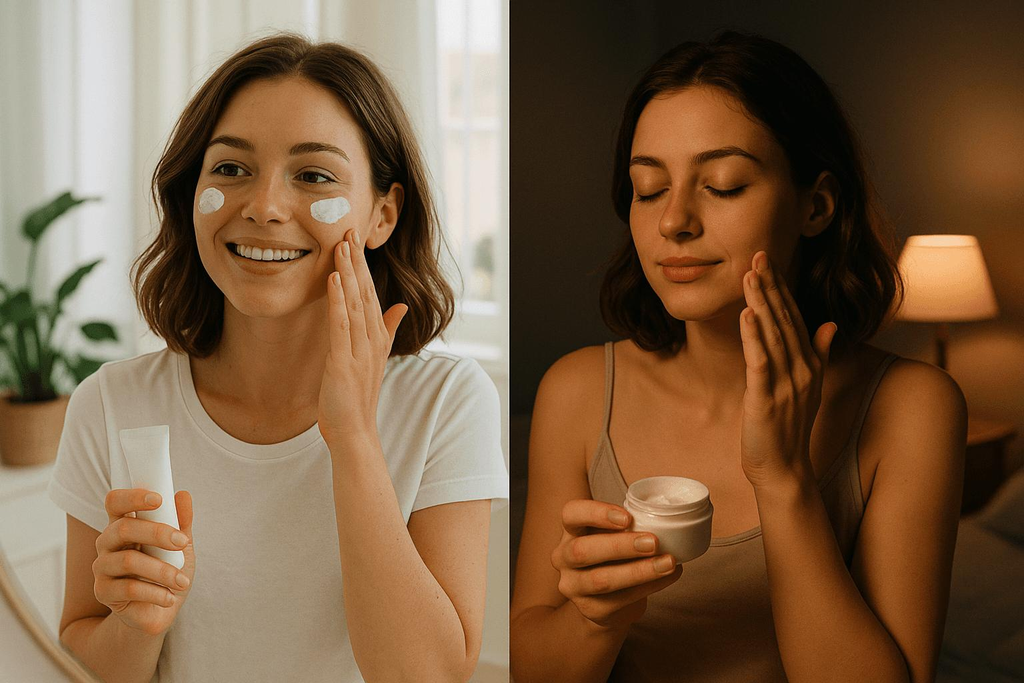
A practical morning routine can be surprisingly short. Begin with a gentle cleanser if cleansing in the morning feels appropriate for your skin; some people with very dry or sensitive skin may prefer a gentler approach depending on how their skin feels after waking. Follow cleansing with moisturizer if your skin needs additional hydration. The final and especially important daytime step is sunscreen. Choose a broad-spectrum sunscreen with an appropriate sun protection factor and apply it generously enough to provide the protection indicated on the product label. Reapplication may be necessary depending on outdoor exposure, sweating, swimming, and other circumstances. Makeup, if used, generally comes after skincare and sunscreen. There is no requirement to use several serums before these basic steps. For beginners, a morning routine that can be remembered and followed consistently is often more useful than a complicated routine that is abandoned after a few days. The routine can later be adjusted when a specific skin concern needs additional attention.
Simple Evening Skincare Routine
The evening routine provides an opportunity to remove the day’s buildup and support the skin’s normal overnight recovery processes. Start by removing makeup or sunscreen when necessary and cleansing the face gently. After cleansing, apply a moisturizer suited to your skin type. People who have a specific concern may eventually introduce a treatment product, such as a product containing an exfoliating ingredient or a retinoid, but beginners should not feel pressured to add these immediately. Active ingredients can sometimes cause irritation, particularly when several are combined or used too frequently. Introducing one active product at a time allows the user to understand how the skin responds. A simple evening routine can therefore consist of cleansing and moisturizing, with treatment products added only when there is a clear reason to use them. The goal is not to perform the maximum number of skincare steps every night. Instead, the goal is to create a routine that supports the skin while remaining practical enough to follow consistently.
Common Skincare Mistakes to Avoid
Several common skincare mistakes can make a routine unnecessarily complicated. One is using too many products at once, which makes it difficult to identify the source of irritation and can expose the skin to more active ingredients than it needs. Another mistake is over-cleansing or aggressively scrubbing the face in an attempt to remove oil, dirt, or dead skin cells. Excessive exfoliation can also leave the skin uncomfortable and disrupt its protective barrier. Skipping moisturizer because the skin is oily is another common misunderstanding, because oil production and hydration are different concepts. Ignoring sunscreen is also a major weakness in a daytime routine. People should additionally be careful about believing dramatic online claims that promise immediate transformation. Skincare generally requires patience, and results vary from person to person. Finally, constantly switching products can make it impossible to understand what works. Establishing a simple baseline routine first makes it easier to evaluate additional products later.
How to Keep a Skincare Routine Simple in 2026
The skincare industry continues to introduce new products, ingredients, technologies, and trends, but beginners do not need to follow every new development. A useful approach in 2026 is to separate essential skincare from optional skincare. Cleansing, moisturizing, and sun protection can form the basic foundation, while products such as serums, exfoliants, masks, and specialized treatments can be considered according to individual needs. This distinction can also reduce unnecessary spending because consumers are less likely to purchase products simply because they are trending. Another useful principle is to make changes gradually. If a person introduces five new products at once and develops irritation, it becomes difficult to identify the cause. If products are introduced individually, the routine becomes easier to understand. Skincare should also fit the person’s lifestyle, climate, budget, and tolerance. The best routine is not necessarily the longest or most expensive one; it is the routine that addresses genuine needs and can be followed consistently without creating unnecessary complexity.
When to Seek Professional Advice
A basic skincare routine can help people care for their skin, but skincare products are not a substitute for professional diagnosis when there is a persistent or serious problem. People should consider speaking with a dermatologist or other qualified healthcare professional when they experience ongoing inflammation, severe or persistent acne, unexplained rashes, significant itching, painful skin changes, recurring reactions, or other concerns that do not improve with a simple routine. Professional advice can also be useful when someone is considering stronger active ingredients or has a diagnosed skin condition that requires specific treatment. It is important not to assume that every skin problem is caused by using the wrong moisturizer or cleanser. Conditions such as eczema, rosacea, acne, psoriasis, and allergic reactions can require different approaches. Seeking appropriate advice can prevent people from repeatedly experimenting with products that may make the problem worse. Good skincare therefore includes knowing when self-care is reasonable and when professional guidance is the safer and more effective choice.
Conclusion
Building an effective skincare routine in 2026 does not require perfection, dozens of products, or unrealistic expectations about appearance. The most useful starting point is to identify whether the skin is primarily oily, dry, combination, sensitive, or a mixture of these characteristics and then choose products that address its actual needs. For most beginners, gentle cleansing, appropriate moisturizing, and consistent sun protection provide a practical foundation. Additional ingredients such as glycerin, ceramides, niacinamide, salicylic acid, or retinoids may have useful roles, but they should be selected according to individual needs and introduced carefully. It is equally important to avoid over-cleansing, excessive exfoliation, unnecessary product combinations, and exaggerated promises from online skincare trends. Skin naturally varies between people and can change over time, so there is no single routine that works identically for everyone. A successful skincare routine is therefore one that is simple enough to maintain, appropriate for the individual’s skin, and based on realistic expectations rather than the pursuit of an unrealistic idea of perfect skin.