Introduction
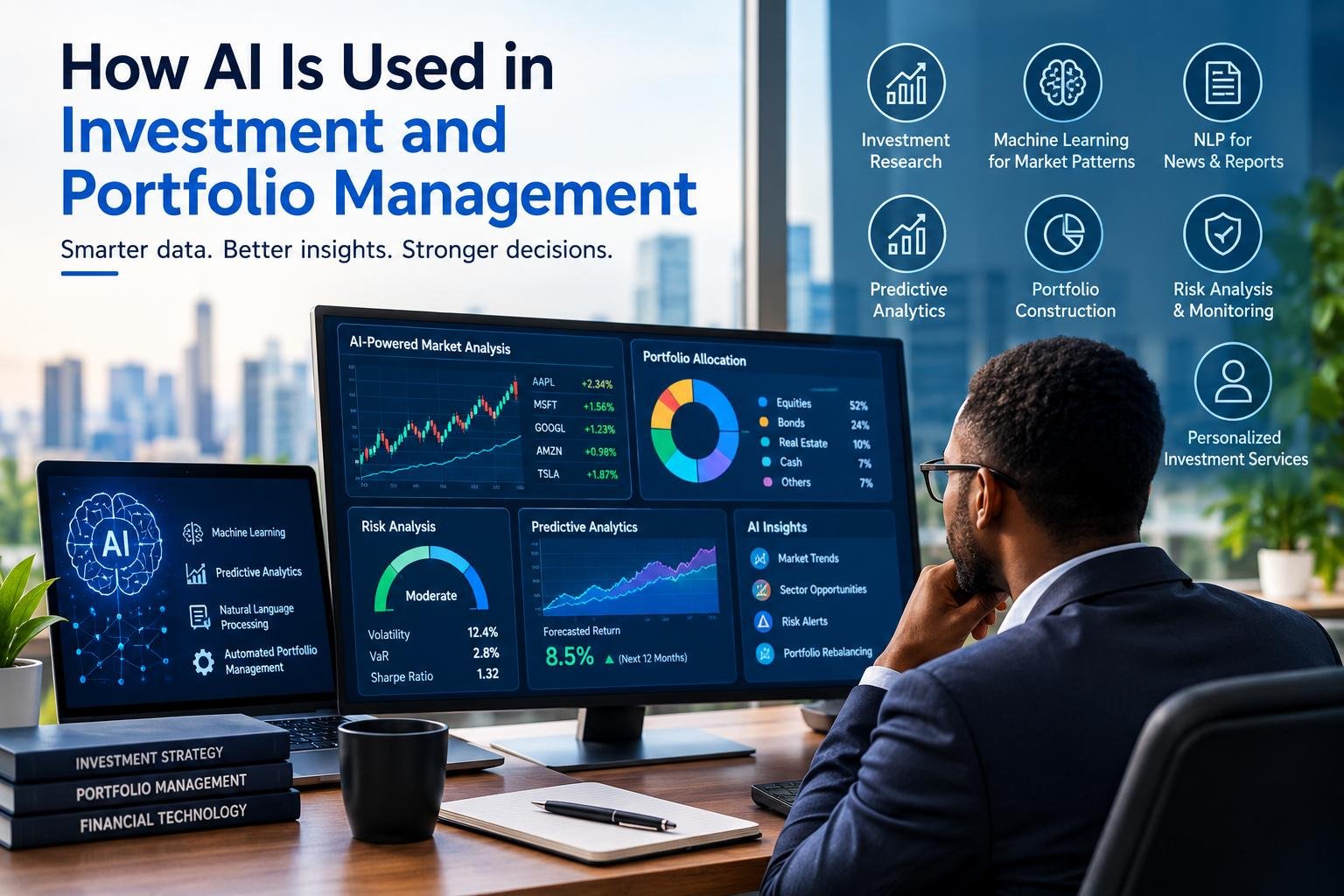
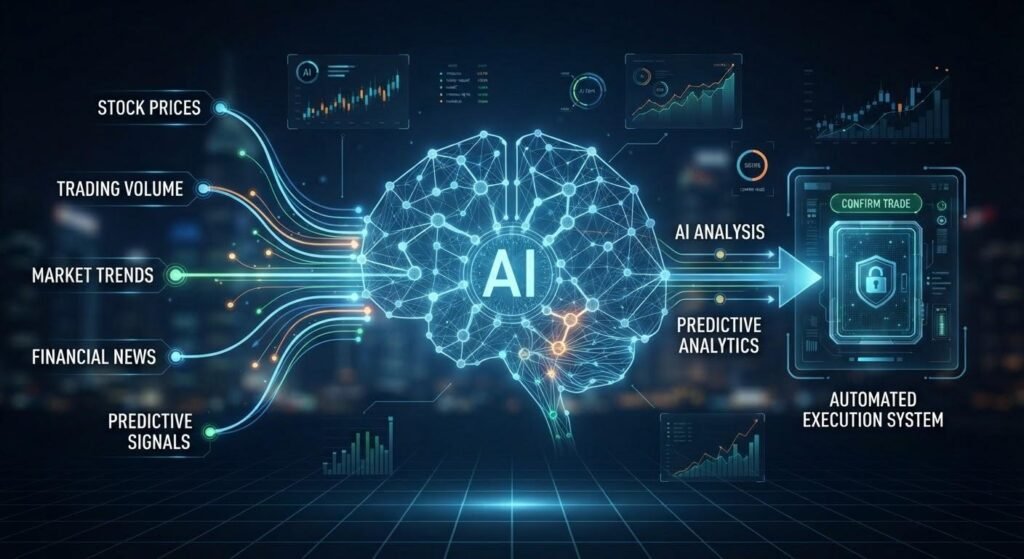
In the modern financial landscape, traders are constantly overwhelmed by vast amounts of data coming from a myriad of sources, making it challenging to keep track of it and make informed decisions. AI plays a crucial role in this scenario, bolstering traders with the ability to analyze and interpret a wide array of information. In today’s financial landscape, traders are constantly inundated with massive amounts of data from various sources, making it difficult to navigate and make informed decisions. AI plays a significant role in this scenario by helping traders analyze and interpret a large volume of data. The price history, order book, the activity of investors, financial news, economic reports, company announcement and stock exchange can be taken into account for analyzing whether to make the trade or not. This will involve market-data analysis, where they will analyze the price, trading volume, market activity and more to find signs that may be helpful. Then, they can be fed into more advanced systems, which can be fed by AI that can process and analyze these inputs quicker than any one trader could and make quicker decisions. AI isn’t going to take away investment risk and certainty, or make financial markets predictable. It provides technologies which can help the market actors to organize the information, find the patterns, consider various possible situations and put in place trading schemes depending on the situation.
AI for stock trading isn’t solely technology, but rather a range of technologies. History can be analyzed using machine learning techniques; algorithms can be used to analyze values and find connections between them; natural language processing (NLP) can be used to process and interpret decisions in the text of the order and an automated system can be used to convert decisions to orders. This will provide a series of activities to gather, consider, understand and respond to information in a low involvement way. The traditional approaches to stock investing depend more upon human research and financial statements of the companies in which they have invested when valuing a stock, when assessing the economy of the stock and when they have a long-term vision of the company. But these techniques can be used for AI-driven trading strategies and to process and analyze vast amounts of data (which keeps changing). There’s more to it than just the replacement of investors by AI. Simply put, AI can be seen as a set of tools that can help traders analyze data, try out various strategies, keep track of market activity and apply various trading rules. The tools are based on their design, testing, monitoring and integration with the right risk controls.
Important of AI to Algorithmic Trading.
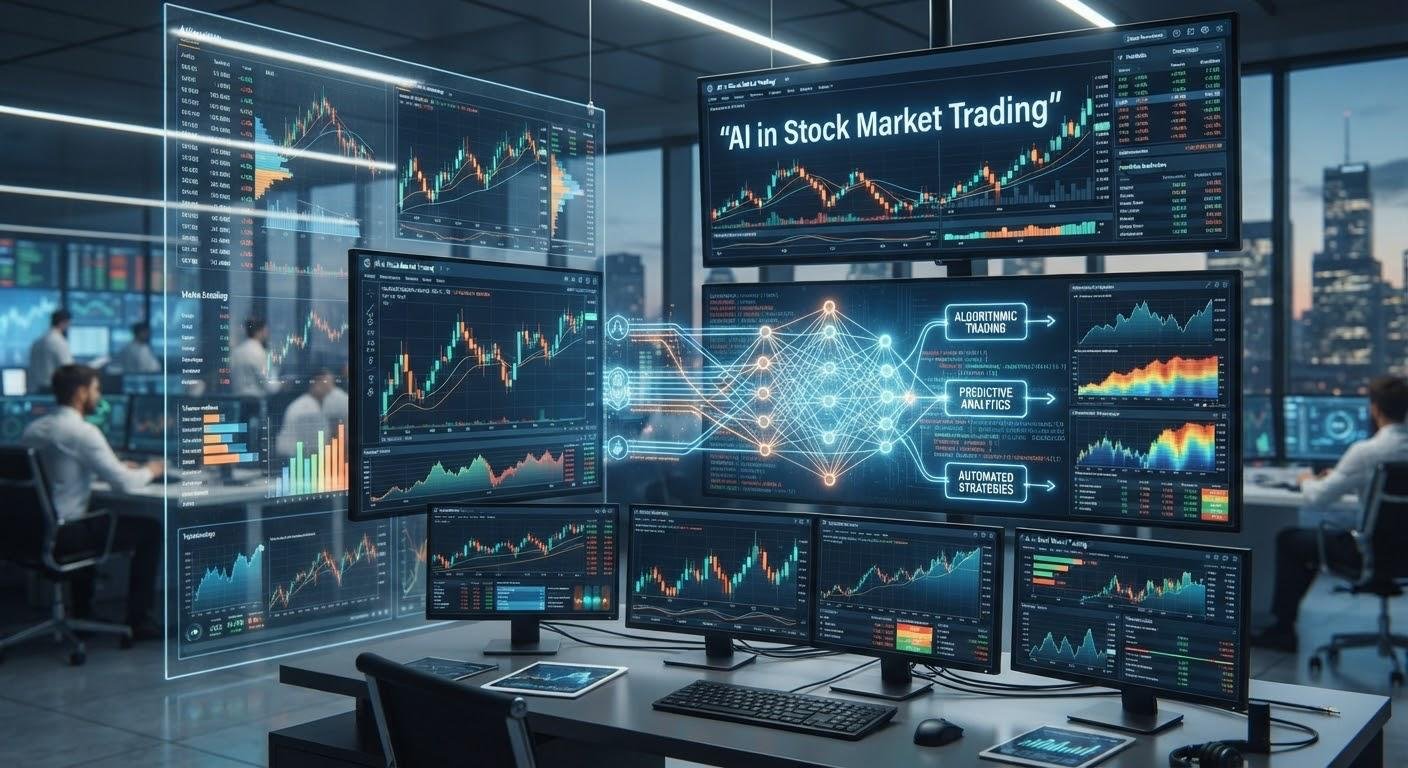
Algorithmic trading involves computer programs to execute trading instructions for financial instruments. These systems can be made more adaptive using AI systems which can discover relationships within data and act on changing inputs. The trading model can examine various factors like price changes, volume, volatility, technical indicators, etc., and determine when to buy or sell a trade. When that signal is triggered, it can be passed, for instance, to an execution engine that then observes the trading rules and orders that have been observed. This is possible very quickly in an automated environment. The time delay between signal identification and action from algorithmic trading can be shortened with the help of AI. It can impose uniform rules as well, but the effectiveness of this relies on the strategy, data, infrastructure and protection. A system that performs well in the instructions it gets will reduce some kinds of human failures; consistency is not a measure of correctness of a strategy.
Analysis and Pattern Recognition of Market Data
A powerful capability of AI is the ability to analyze vast amounts of data and uncover patterns that might be hard to spot through human analysis. A model can handle a variety of data including historical prices, trading volume, volatility, correlations among securities, and more. These pattern recognition algorithms can look for similar relationships, given specific market conditions. For example, a model could detect patterns of price changes and trading patterns that have historically led to certain results. This is not to say that the same results will follow every time, because markets are subject to the alterations of conditions and human nature. Rather, the model generates statistical indicators which can be utilized within a larger strategy. The prime advantage is scale and speed the computer will monitor large numbers of observations, without fatigue and without loss of concentration. These functionalities can help traders sift through markets, look for signals, and decide which stocks to pursue, yet know that statistical trends may not hold true when markets shift.
Predictive Analytics in Trading
Predictive analytics is a process that uses statistical and machine learning to forecast potential future outcomes. In stock trading, models can be used to determine the likelihood of price movements, volatility shifts, or other events that can be measured based on past data. These methods involve regression modeling, decision trees and neural networks and other machine learning. The model has no idea of what the market will do next and it makes an estimate based on relationships that it has learned from past data. These estimates can be used in conjunction with other factors such as risk limits, portfolio rules, valuation analysis, and more. When many variables are relevant, predictive modeling can be useful, but will only work if there are historical relationships to be exploited. A model developed in one market may not work as well in a different market depending on rate and liquidity conditions, regulations, investor action or economic conditions. Thus, a prediction should be considered in the context of evidence available at the time of the prediction, and not as a statement of facts as to what will or will not occur with a stock or the market.
Sentiment Analysis and Financial News
Another benefit of AI is that it can process information that is not easily quantifiable. NLP can be used to analyze and categorize content like news articles, corporate announcements, earnings reports, research documents, and more, spotting themes and sentiment. The sentiment model might recognize the sentiment as a positive or a negative, or more sophisticated systems can determine the focus of a message and whether it is relevant to a company or industry. This may assist traders to process lots of written information efficiently. But, there are qualifications, uncertainty, technical terms, and statements that are dependent on context in financial language. If the system does not capture the “big picture”, then it will give a false signal. Therefore, sentiment analysis should be used as one factor among many and shouldn’t be regarded as a simple forecasting tool for price movements. News items can be negative but have already been expected by investors, and seemingly positive news announcements could have a muted impact if the expectations had been even higher.
Accessibility of Data and Speed Execution
Once the AI system generates a trading signal, another technological layer is needed to execute the signal and make the trade. Rules that can be applied to automated execution systems include order size, price, timing, liquidity, and trading conditions. They can break up big orders into smaller parts or use a variety of methods to execute them depending on set goals. The separation is important because an efficient order execution can lead to good results when applied to a good signal. Trading infrastructure consists of data connections, servers, order-management systems, risk controls and trading-venue connections. The low latency systems are important for strategies that are based on the fast change of the market. Fast isn’t necessarily good in all situations or for all investors and strategies. A fast system can also have errors quicker if the model or instructions are incorrect.
AI-Assisted Trading Compared With Traditional Investing
The key difference between AI-assisted trading and the conventional investment approach lies in the way information is utilized and the steps taken to execute the trades. A traditional investor can take a lot of time to read the financial statements, to learn about the competitive position, to study management, economic conditions and formulate a long term thesis. Using an AI-assisted trader, traders might take advantage of thousands of securities, or data points, and receive signals based on measurable factors. These strategies do not necessarily have to be mutually exclusive. Human investors can leverage AI in the screening process, research, monitoring, and analyzing their portfolio, without losing control of their decision-making process. Quantitative models can also be used in conjunction with some manual trading and fundamental analysis in a professional trading firm. Some analytical and operational activities are inextricable and can be accomplished with systematic work done at a scale and speed that would be hard to do manually. It alters the processes without taking away judgment and risk management. The relevance of human interpretation is that models are subject to their design, data and program objectives whereas markets may create situations that are inherent to the design but not contained in the data or programmed objectives.
AI Trading Systems and Data Quality
AI Trading Systems are as reliable as the information and assumptions that make them. Financial data may contain missing data, wrong prices, duplicate prices, differences in timing, corporate action adjustments and other errors. Historical data may not be indicative of unusual market conditions. The model can detect false correlations if it learns from false information. Therefore, it is crucial to ensure that data is of high quality in AI trading, rather than just an afterthought. There might be cleaning, validation, updating and monitoring procedures to be performed on systems before using models. It’s also important to be able to differentiate between information known at the time of a historical choice from information learned thereafter. Otherwise, it’s likely to lead to false findings and a false sense of security about a strategy. While high-quality data cannot reduce the uncertainty in financial markets, good data and a well-constructed data set can help models address the conditions in which a trading strategy would have actually worked.
The Concepts of Model Risk, Overfitting and Unexpected Markets
Another constraint is model risk; a model can make bad decisions due to the design, assumptions, implementation or usage of the model. A worry in machine-learning is overfitting. Because a model can explain well historical data but not on new data, it learned noise or unusual relationships and not patterns. Testing can identify this issue if it occurs on data it has not seen before, but even excellent testing can’t ensure that performance will be good in the future. Events that are not part of historical datasets can also occur on markets, such as political events, financial crises, liquidity crises, natural disasters, or surprise events of companies. As market action turns significantly, past reliable relationships break down. Therefore, relying on historical performance is not enough, and it is important to monitor, validate and set limits on AI systems. There is a need for frequent assessments of the appropriateness of an assumption and the continued validity of the model’s behavior by the developer and users of the model.
The Risks of Cybersecurity and Operational Risks
Automated trading brings with it cybersecurity and operational issues as well. AI powered platforms are reliant on software, network connections, data feeds, authentication frameworks, cloud or server systems and links to financial services or trading venues. Activity in trading can be interrupted by a security breach, compromised account, malicious data manipulation, software defect or a communication failure. Additionally, automated systems can magnify errors in operation, as a faulty instruction could be repeated many times across numerous transactions, and only become apparent to humans with hindsight. Access control, authentication, monitoring, audit logs, transaction limits, emergency shutdown procedures, and independent testing are among the responsible trading infrastructure elements that can be incorporated. Automated environments are not immune from cybersecurity risk and can very well impact the successful operation of a strategy. To minimize the risk of systems failing or unauthorized transactions being made, strong controls must be in place, and they can be implemented as systems that trade independently make a series of financial transactions without requiring a person to approve each one.
Why AI Cannot Guarantee Profitable Trading
While AI is potent in analysis, it does not promise lucrative trading results. Uncertainty exists in stock markets because the price in the market is not fixed and the price changes according to the change in information, expectations, liquidity, competition, economic conditions as well as decision of many participants. Losses can occur in a model even if it’s performed well in the past. Also, common strategies can lose their effectiveness if numerous players learn to play them and use them. Other factors, such as transaction costs, taxes, spreads, market impact and execution time may also further diminish the gap between the theoretical strategy return and actual return. Investors need to, therefore, separate out the capability to pass data from the capability to forecast future. While AI can enhance the swiftness, uniformity, and volume of analysis, it cannot eradicate financial risk. Good risk management, sensible testing, diversification as required and supervision of people are also necessary components of responsible trading. The uncertainty of financial markets remains, the technology can aid in making decisions.
Conclusion
AI is transforming the way participants in the financial markets gather information, look for trends, create trade signals and conduct trades. Computer systems can process vast amounts of information and respond to specific conditions in a relatively quick fashion by using algorithmic trading, predictive analytics, pattern recognition and sentiment analysis and automatic execution. These features can be utilized for a variety of professional trading activities and for retail investors who are trading with AI powered financial tools. AI also shouldn’t be considered a ‘predictive machine’, however. These can all diminish performance, or lead to losses, if the data is poor, the model is overfitted, and there are model errors, cyber security issues, unexpected market conditions, or execution issues. It’s important to recognize that AI in stock-market trading is a valuable tool for analysis and automation, rather than an assurance of profitable investments. Ultimately, the value of its data, models, infrastructure, controls, and decision making around its outputs is what matters.
Get more well researched information about AI in stock market trading here.