What Is Ammunition?
Ammunition – a broad term that refers to material that is intended for use by a firearm or other weapon system to create a projectile or other intended action. To help the newcomer, the idea is to consider ammunition as the consumables of a firearm system and the firearm as the mechanical system that receives and uses the ammunition. The word is used to describe a variety of munitions and cartridges; it is not limited to “a bullet.” The terms ammunition, cartridge and bullet are used interchangeably in regular use; however, they refer to distinct meanings. A cartridge usually includes the cartridge case along with several components; the projectile is the part that is supposed to come out of the cartridge. These differences clarify the following discussions of the history of firearms, sporting goods, military technology and safety.
Basic Components of Ammunition
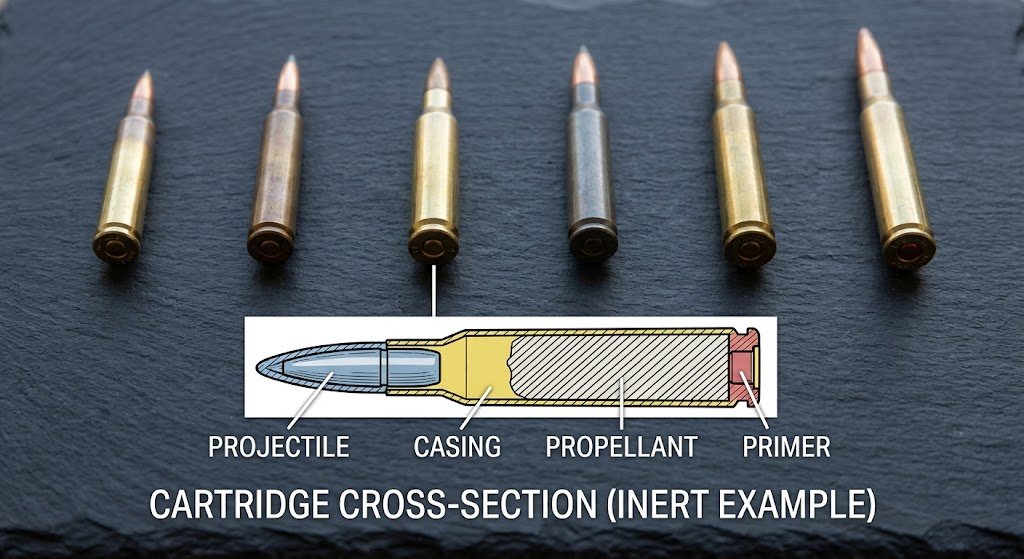
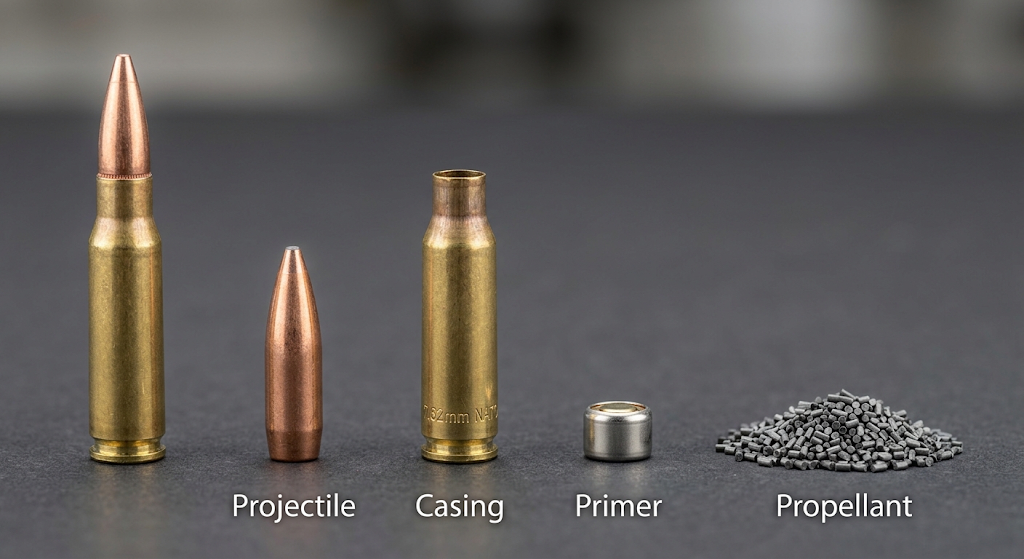
There are a number of main parts of the typical small arms cartridge that constitutes a unit. Typically, it entails the projectile, casing or cartridge case, the propellant, and the primer. The part which moves when the cartridge operates is called the projectile. The casing is used to keep the rest of the components in place and gives the cartridge its basic structure. The propellant is the portion of the material that is a source of energetic gases upon burning, and the primer is the material responsible for initiating the burning. The descriptions are deliberately general, as the actual construction of ammunition is very variable from design to design and application to application. Certain military ammunition, ammunition larger in size and certain specialized systems do not have the regular small arms cartridge configuration. The key beginner’s concept to be understood is that munitions are not just a projectile, but an engineered assembly.
Understanding the Cartridge
A cartridge is a complete ammunition piece for a specific type of firearm or system. Typically, the cartridge is a complete unit that contains all of the following: the projectile, case, primer, and propellant. This system became more significant when modern guns were being developed, because it integrated a number of things which were previously distinct into a standardised unit. The use of cartridges also helped to change the way things were done in the world of firearms, logistics, storage, and military organization. To make this distinction, it is helpful to differentiate between the words “cartridge” and “bullet.” There are many common cartridges that contain a bullet or other projectile. Likewise, the term “casing” or “case” is typically used to denote the outer casing which encloses the other parts of the cartridge, not the entire cartridge. These are some of the first ammunition terms that are exposed to a new shooter.
How Ammunition Works
The General Function of a Cartridge
In general a cartridge has the purpose of transforming chemical energy into the energy of a projectile. The cartridge’s initiating component generates a fire ignition, which results in a fast burning of the propellant once a compatible firearm system is activated. The gases expand as a result in the cartridge and gun chamber, which then exert pressure on the projectile and drive it down the gun barrel. The cartridge case is still a crucial component in this process, helping to maintain pressure and isolate the energy and separating it from the surrounding gun mechanism. This description is a concise explanation of the basic physics, but not an instruction set. Ammunition is not a set of parts that can be interchanged, but is a system with the specifics of engineering differing widely depending on the design of the cartridge, the type of cartridge gun, the pressure needed, and its intended use.
The role of the Projectile, the Casing, the Primer and the Propellant
The general purpose of each of the major components of a cartridge. The term projectile is used to describe the piece designed to move away from the gun, but its shape depends on the type of ammunition. The other parts of the cartridge are contained and supported by the casing. The propellant provides the expanding gases that are used to drive the projectile, and the primer is the element that starts the process. They must fit together and be compatible with the firearm system to which the cartridge is intended. One of the reasons for ammunition identification and safety is this compatibility. A cartridge is more than just powder and a bullet: It is a designed set of dimensions, materials, pressure, and others. Failing to recognize this difference between different cartridges, and assuming that they are all interchangeable, can be dangerous.
Understanding Caliber
What is meant by the word “caliber”?
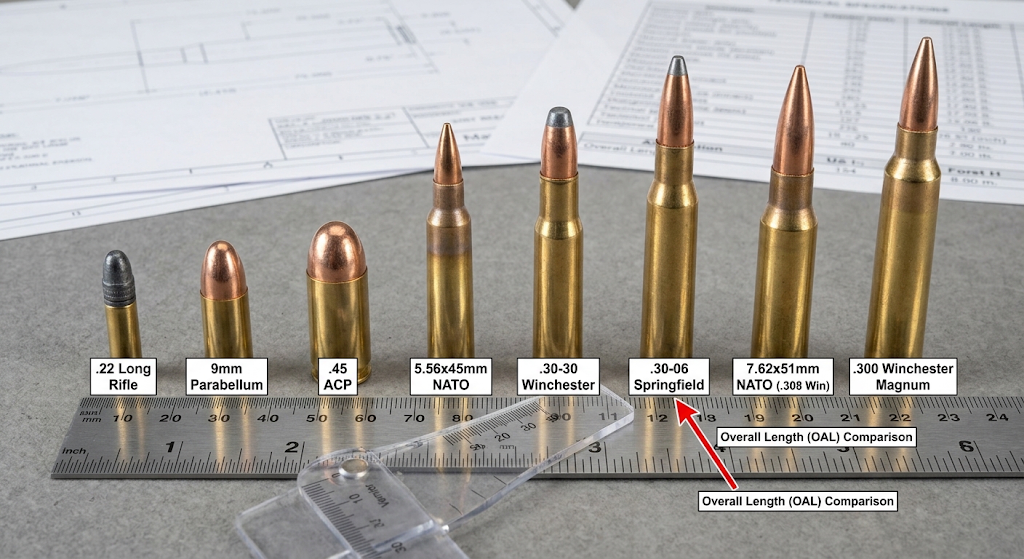
The term ‘caliber’ is used to refer to the approximate inner diameter of a gun’s barrel, or to the nominal diameter of a specific ammunition or bullet designation. It is typically stated in either inches, millimeters or in the name of a cartridge. For instance, one of them can be in millimeters and the other in decimal inches. However, not all the time caliber is a clear-cut measurement of one physical dimension. Multiple industries, historical traditions and ammunition specifications have resulted in various naming methods. In certain areas the term can mean bore diameter, projectile diameter, or a “nominal” designation set forth by a specific cartridge specification. For this reason, novices should consider caliber a key identifier when it comes to calibrating, and not assume that each number means one component.
The reasons why Caliber Names can be confusing.
The nomenclature of caliber can be confusing due to the variety of measurement systems used and the historical background in which the ammunition was named. A designation given in inches may not be the same as a designation given in millimeters and two different cartridges with the same number designation may be two different cartridges. There are also other numbers or words in some ammunition names that designate case dimensions, historical standards, manufacturers, and specific cartridge families. This general caliber is then possible in a number of different cartridge designs. That’s why it is important to identify ammunition by the complete designation and not by just one number. The best advice for the novice is to think of the cartridge name as a full technical designation and not to assume that two seemingly similar cartridges are interchangeable. Knowing the names can be beneficial in learning, history and safety, but technical identification should only be attempted by appropriate and qualified adults and sources.
Major Types of Ammunition
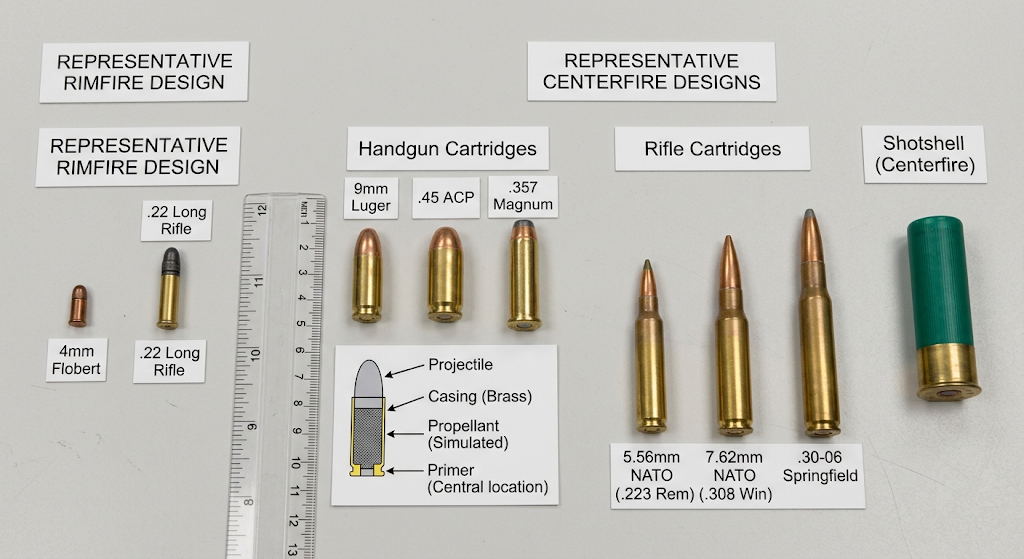
Centerfire vs Rimfire Ammunition.
There are two general types of small-arms cartridges, one being the location and type of primer system. The point where the primer will burst is at the center of the base of the cartridge case in centerfire cartridges. Rimfire cartridges, on the other hand, have a priming compound in the rim of the case. Both systems are the result of different types of cartridge design and have been significant in the development of firearm technology. Rimfire ammunition was thus associated with smaller cartridges, and the centerfire designs were gaining popularity across a wide range of different types of firearms. The difference is relevant since it represents the fundamental structure of the cartridge, not its use. It is not meant to be a safe operating guide for a gun, however. There are many different types of modern ammunition and the only way to be sure is to use authoritative information, not appearance.
Different Projectile and Cartridge Categories
Ammunition may be divided by type of projectile or type of cartridge construction. For instance, one type of ammunition has the single shot whereas other types of ammunition have multiple small projectiles or a single larger one, depending on the type of ammunition. Military ammunition may contain various types of ammunition for specific purposes, or sporting ammunition could be developed based on the needs of a particular activity. Large ammunition packages can vary even more from normal small arms cartridges, and may include parts and configurations that are not similar to conventional cartridges. These categories represent the wide technological scope of the term “ammunition.” Two types of ammunition may look alike on the outside, but be very different in size, make, material, and use.
Ammunition for Different Applications
Ammunition is not universal; it is designed for a given firearm system and intended use rather than for all systems and uses. There have been a variety of ammunition needs through generations of sporting, hunting, military, law-enforcement, and training applications. Ammunition development can be affected by factors like firearm system, projectile design, environmental conditions, reliability requirements, and regulations. Military ammunition can be manufactured to formal specification and logistics of manufacture, and sporting ammunition can be manufactured around the requirements of specific sports. Hunting ammunition has also evolved according to various types of game and legal considerations. These variations illustrate an important rule: Ammunition classification is not solely based on size. The complete cartridge design and its compatibility with a particular system are significant. Ammunition should never be considered interchangeable and should never be used if it does not have the same gunpowder or powder charge, even if the cartridge looks alike or has a similar name.
Ammunition can be used in a variety of ways.
Sporting and Recreational Contexts.
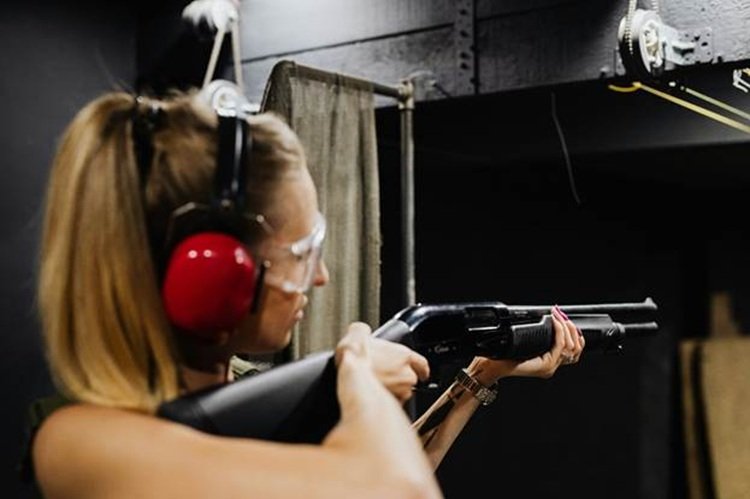
The term ammunition, historically connected to shooting sports and sporting events in general, has been linked to organized shooting sports for the purposes of target disciplines and other regulated shooting sports environments. The use of ammunition is part of a system of equipment standards, ammunition rules, range rules, supervision and safety procedures in these environments. Depending on the sport, there may be multiple types of guns and bullets available for your sport as they are tailored to specific needs and requirements. The history of sporting ammunition also shows that some sporting uses affected the development and popularity of specific cartridge designs. In some instances sporting use and military use are discussed separately but technologies can overlap historically since the development of technology in one use has affected another. Any sport which involves the use of a firearm should only be conducted within appropriate adult supervision, under the condition of legal requirements and under appropriate safety procedures.
Hunting Applications
Another historic use for ammunition is hunting. Depending on the local regulations, environmental factors and the type of game species hunted, various firearm and ammunition systems have been employed by different hunting traditions. Typically, the ammunition for a hunting system is not a standard product, but is designed to meet the requirements of the specific system. There are also laws on hunting which may be applied to specific species or seasons for a specific type of firearm and ammunition. As such, ammunition terminology is particularly significant for legal and educational contexts. The beginner’s view is that hunting ammunition is a specialized type of a very broad category. Understanding cartridges is not the only element of responsible hunting. There is also the need to know what is legal, what training is required, how to respect the wildlife and follow the safety rules.
Civilian and Law-Enforcement Contexts
In the past, ammunition has been produced for standard equipment, logistics, training, and operational needs for military and law enforcement units. In particular, the term “military ammunition” may include a wide variety of categories of ammunition, ranging from small arms to much larger types of ordnance. Military Ammunition Management may include formal identification systems, markings, packaging standards and storage procedures. Ammunition for law enforcement has also been designed within institutional and legal structures. The applications show how ammunition relates to other technology, organization, supply and regulatory systems. They also demonstrate that technical ammunition vocabulary can be quite large. Learning about the history of ammunition in these institutions does not involve learning how to use ammunition; it is a matter of technology, terminology, logistics and a matter of how military and public-safety systems have developed historically.
A concise history of gunpowder, bullets, and shells.
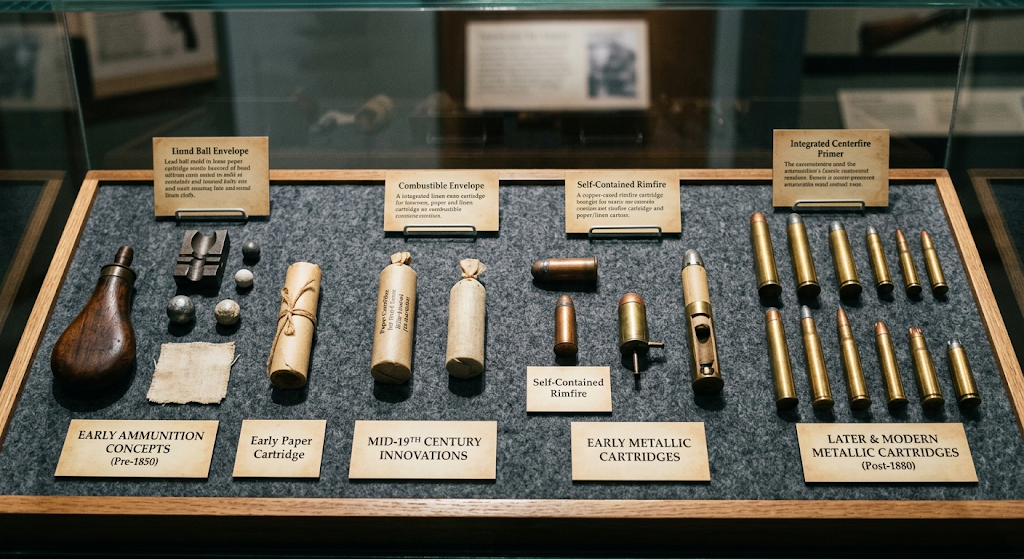
Early Ammunition
The story of ammunition goes way back and is not limited to the modern cartridge. The early guns were component guns where the propellant and the projectile were separate. This was the drawback of this system, as it was slower and more complex to load than the following ones based on cartridges. As the years went on, however, technology evolved and the projectile and propellant were slowly being incorporated into more tightly coupled ammunition packages. Early cartridges came in a variety of shapes and the development of metallurgy, chemistry, manufacturing, and gun design saw a gradual standardization of systems. The change from the old ammunition to metallic cartridges was a significant advance, because the old ammunition could be replaced by a cartridge that could serve several different purposes. This also impacted on military logistics, transport, storage, and organization on the battlefront. The history of ammunition is thus intimately linked with the history of industrial technology.
Development of Modern Cartridges
During the nineteenth century, metallic cartridge technology developed rapidly, particularly as firearms moved toward breech-loading systems. Brass cartridge cases became especially important because of their combination of strength, manufacturing characteristics, and ability to function as part of a cartridge system. The development of reliable primers and smokeless propellants later contributed to further changes in ammunition technology. Historical military records describe major transitions from black powder to smokeless propellants during the late nineteenth century, followed by continuing changes in projectile and cartridge design. By the twentieth century, ammunition had become highly standardized in many military and civilian contexts. These developments helped establish many of the terminology and classification systems still encountered today, although modern ammunition continues to evolve in response to technological, logistical, environmental, and regulatory considerations.
Ammunition Safety and Responsible Handling
Why Ammunition Must Be Handled Responsibly
Ammunition contains energetic materials and should therefore be treated as potentially hazardous even when it is not being used. People who encounter ammunition should not experiment with it, dismantle it, alter it, or attempt to determine its function through testing. Ammunition can also become dangerous when damaged, improperly stored, incorrectly identified, or exposed to unsuitable conditions. For beginners, the most important safety principle is simple: do not handle ammunition as a toy, curiosity, or science experiment. If ammunition or an unfamiliar cartridge is discovered, the appropriate response is to avoid unnecessary handling and inform a responsible adult or relevant local authority. Safety guidance should always come from qualified professionals and applicable local regulations because laws and procedures differ between jurisdictions.
Storage, Identification, and Legal Considerations
Safe ammunition management involves appropriate storage, accurate identification, and compliance with applicable laws. Different jurisdictions establish different rules concerning possession, transportation, storage, and use, so there is no universal legal standard that applies everywhere. Identification is also important because cartridges that look similar can have different specifications and may not be compatible with the same firearm system. Beginners should therefore avoid relying on appearance, informal descriptions, or guesses when identifying ammunition. Instead, questions involving a specific cartridge should be referred to qualified professionals and authoritative safety information. Proper storage and handling are likewise matters for responsible adults and trained personnel. The educational value of ammunition terminology comes from understanding what the words mean, not from experimenting with physical cartridges or attempting to operate a firearm.
Conclusion
Ammunition is a broad technological category that includes many different types of cartridges and other systems designed to produce a particular effect through a firearm or related weapon system. For beginners, the most useful concepts are the distinctions between a complete cartridge and its individual components, including the projectile, casing, primer, and propellant. Caliber is another important term, but it should be understood as a designation that can follow different historical and technical conventions rather than assuming that every caliber number represents one simple measurement. Ammunition can also be classified according to primer arrangement, cartridge design, projectile characteristics, firearm compatibility, and intended application. Its history reflects centuries of development in metallurgy, chemistry, manufacturing, military logistics, and firearm technology. Most importantly, ammunition should always be treated as a potentially hazardous material. Learning its terminology and history can be valuable, but responsible education must emphasize safety, lawful conduct, accurate identification, and respect for the risks associated with energetic materials and firearm systems.