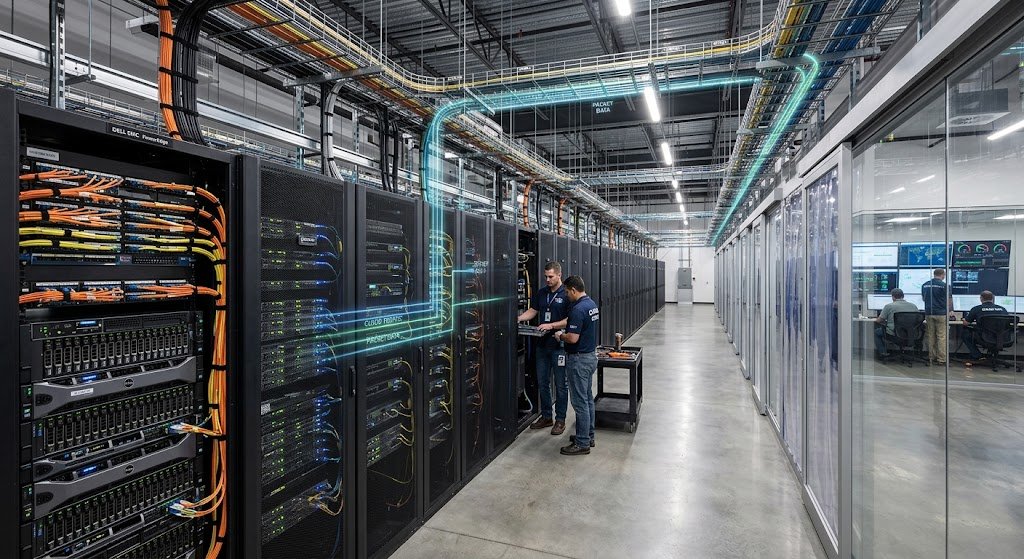
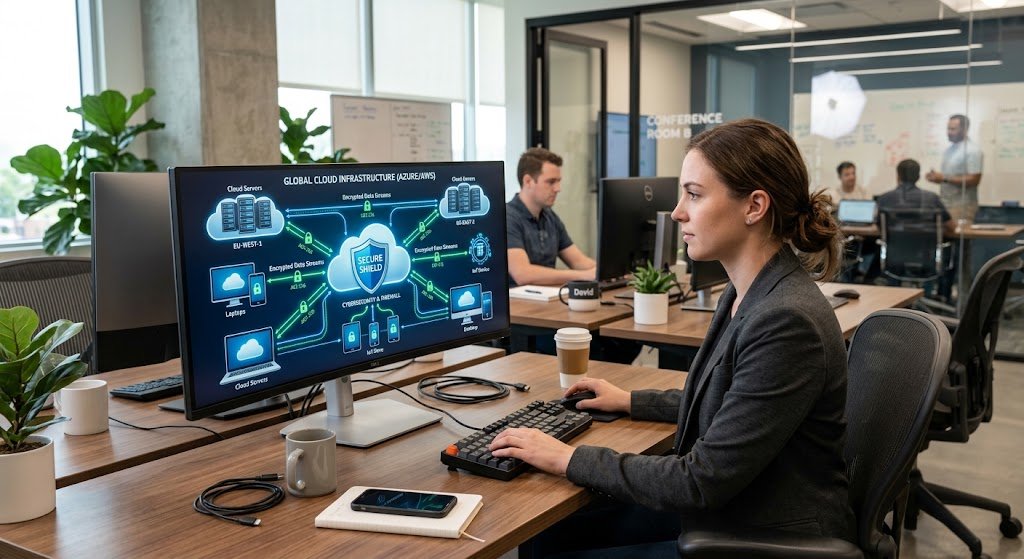
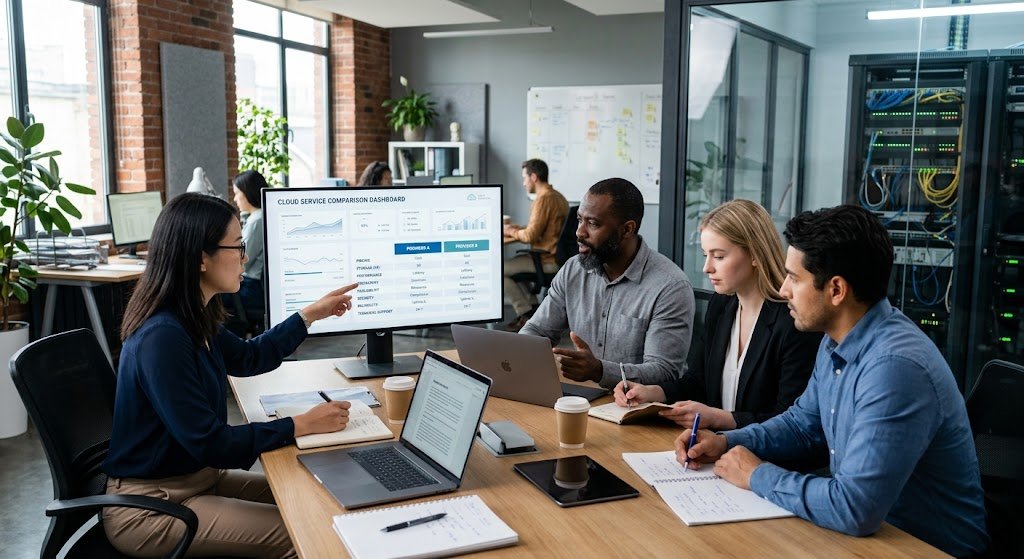
Computing is among the most significant bedrock of modern society as it entails using computers, software, networks, data and related technologies to solve problems, perform tasks, communicate information and create useful digital services. While desktop PCs and laptops are usually the first things that come to mind when people think of computing, the industry is broader and encompasses smartphones, servers, cloud platforms, databases, artificial intelligence systems, embedded devices, and more.
Therefore, the knowledge of computing is useful for students, professionals, business owners and anyone who wants to understand how modern digital systems operate. Fundamentals of computing includes the basic definition of computing, development of computers, components of computer systems and the importance of computing to human activities.
What Is Computing?
Computing is the representation, processing, storage, retrieval and communication of information using computational systems and processes. The most basic definition of computing is to provide a system with instructions to receive data, apply operations to the data, and yield useful results. Because a computer executes instructions given by software, it can calculate, sort information, execute programs, show pictures, interact with other computers and devices, and do repetitive tasks. Computing is not just about the machine, but the software, algorithms, networks, data and people that are part of the design and use of a computational system. This broad definition is the reason that computing is related to computer science, information technology, software engineering, cyber security, data science, networking, artificial intelligence and numerous other technology related topics.
Computing is a process that primarily deals with the transformation of data to information that can be used for a specific purpose. Data can be numbers, words, pictures, recordings of sounds, videos or any other type of digital content. It is fed into a computing system via some input, manipulated by programmed instructions, and outputted as an observation, storage, communication, or other type of process for another computing system. If a student enters answers in an online examination system, for instance, the computer acts as a data input to the system, applies programmed rules to the data, saves the results in a database, and delivers a score as output. This simple input-process-output model is used in basic calculators and in very complex systems such as banks, hospitals, universities, transportation and governments.
History and Development of Computing
The history of the computer dates back well before the first electronic computers were invented. Humans have been making tools for a long time to make counting calculations and information manageable. The abacus is a counting tool that was used by various ancient civilizations, as an early example. Mathematicians and inventors later found mechanical calculating devices with the idea of automating complex calculations. In the seventeenth century, Blaise Pascal and Gottfried Wilhelm Leibniz invented mechanical calculating machines that could add, subtract, multiply and divide. While these were somewhat primitive by today’s standards, they illustrated a fundamental principle: a machine could execute calculations by following regular steps.
In the nineteenth century, Charles Babbage had envisioned machines that had concepts that resemble today’s computers. His Difference Engine would automate mathematical calculations, and his more ambitious Analytical Engine had concepts similar to that of a processor, memory, input and output. Although the Analytical Engine was never built as it was originally planned, its design showed that it could be programmed to perform more than one calculation. He was deeply involved in the development of Babbage’s work; perhaps most importantly, Ada Lovelace wrote an algorithm for the Analytical Engine, and realized that it could be used to process things other than numbers, such as symbols and operations. These advances brought new concepts to the field of programmable computers.
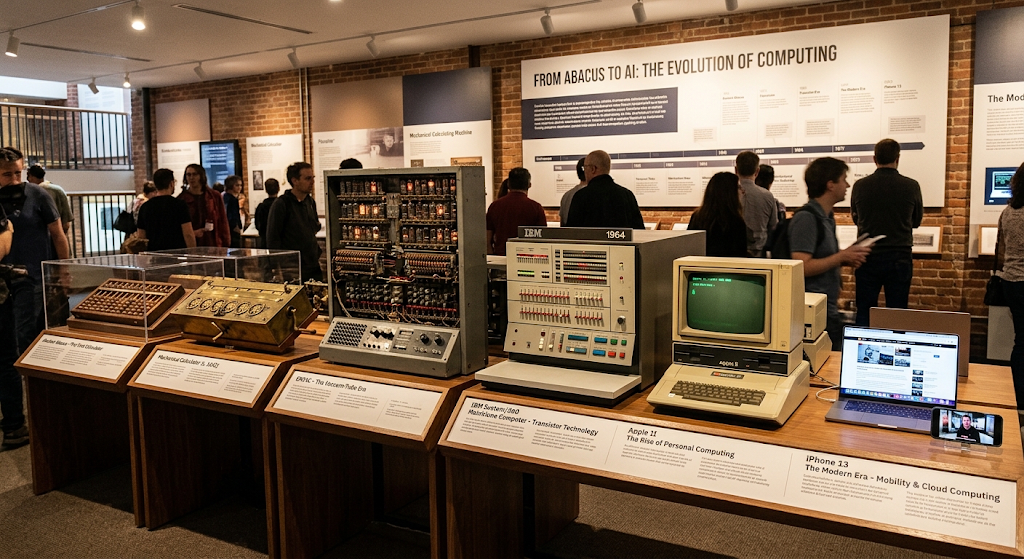
Many changes occurred in the 20th century, when computers changed from mechanistic to electronic devices. In the early days of the electronic computer, large rooms were used, and a lot of electricity was consumed. The electronic computers, like ENIAC, proved the possibilities of electronic computation by doing calculations much faster than mechanical or manual calculations. But early computers were costly and hard to use, and were used primarily by governments, universities, research institutions and big organizations. This situation changed in mid-twentieth century when transistors were developed, which were smaller, more reliable, and more efficient than the vacuum tube electronics found in many earlier electronic machines.
The invention and development of integrated circuits sped up the revolution in computing technology. Instead of having to assemble electronic systems from a large variety of discrete components, engineers would be able to mount many electronic parts on a small semiconductor chip. This enabled the computer to become more compact, faster, more reliable, and more of a bargain. With the development of microprocessors, the industry was again radically changed with the advent of having the main central processing functions of a computer on a single chip. As the technology advanced personal computers were more and more widely used in homes, schools, offices and businesses. Computing progressively became a standard facet of daily living instead of being a special task assigned to institutions.
Another giant leap in the development of computing was the advent of the Internet and World Wide Web. Computers were no longer individual machines, but could be connected to other computers in a network and share information nearly instantaneously. Internet, e-mail, online banking, online marketplaces, social networking sites and online learning services altered the way people accessed information and organizations. The mobile computing era further extended this change with the advent of mobile phones and tablets that enable people to run applications and operate online services virtually anywhere. In recent years, advances in cloud computing, artificial intelligence, machine learning, edge computing, and other areas have further fueled the ability of computing systems to do more.
Major Components of Computing
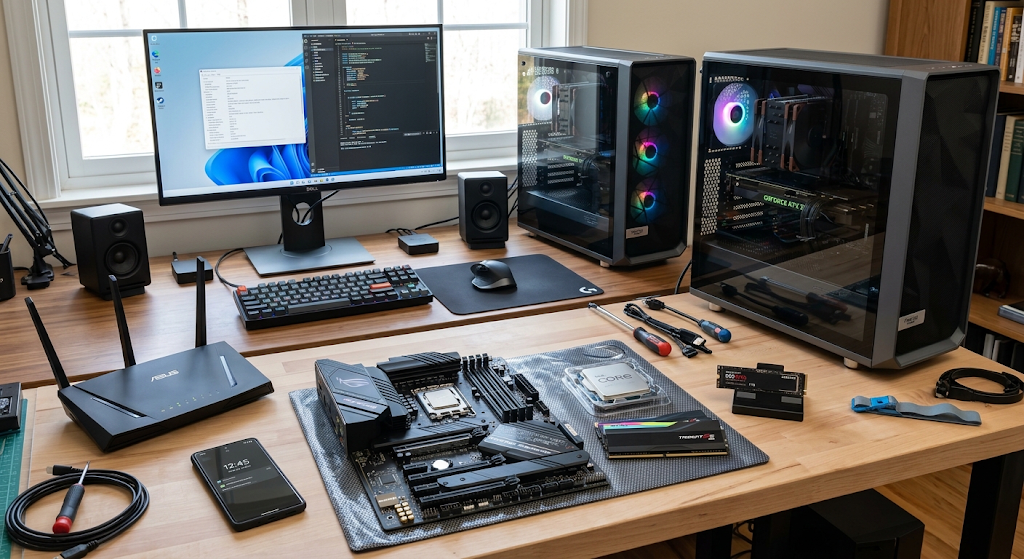
Hardware
Hardware: The physical components of a computing system that can be seen and felt. Standard hardware parts consist of the central processing unit, memory, storage, motherboard, keyboard, mouse, monitor, printer, cameras, speakers and networking devices. All components have a specific function but in today’s computing systems many functions are integrated into the small device.
In a smartphone, for instance, all processing power, memory, storage, cameras, sensors, communications and display are combined into one package. Recognising the importance of understanding what hardware is because the physical characteristics of a computing system can affect how it performs, how much storage capacity it has, how it connects to others, and the types of software that can be used on it.
Software
A software is the programs and instructions which gives instructions to computer hardware. Most computer hardware would not be able to carry out a useful function without software. The OS, including applications and hardware, normally run on operating systems like Windows, macOS, Linux, Android, and others. Application software enables the user to undertake a particular task like writing documents, editing images, browsing online, managing finances, communicating with others, playing games or anything else.
Specialized software for scientific research, medical diagnosis, engineering, education, manufacturing and business management are also part of the software.
Data
Data is another underlying aspect of computing, since the purposes of computational systems are to gather, manipulate, store, and disseminate information. Data can be presented in a variety of ways such as text, numbers, pictures, sounds, video, measurements, and records. A school can keep data regarding students, courses, grades and attendance and a hospital can keep data regarding patients, appointment information, medical images and laboratory results.
If data is not organized and processed properly, it will not be useful. An information management technology such as a database can be used to store large amounts of data and to retrieve information that is required.
Networks
Computers and other digital devices can communicate with each other on a computer network. A network may span only a small area, like a classroom or an office, or it can extend from one city to another, from one country to another. The Internet is the largest connected network in the world and powers services like websites, email, video communications, online gaming, cloud-based apps and digital commerce.
Networking technologies transfer data from one device to another, through the use of specialized hardware and communication protocols. Many of the services that people use daily wouldn’t be possible or as widespread without networks.
People and Procedures
However, people and procedures as well as machines and software are also essential to computing. Programmers create the code, system administrators control the computing environment, network administrators keep the network running, cybersecurity professionals fend off threats, data professionals analyze information, and users use technology to get things done.
Procedures give instructions on the use, maintenance, security, and management of systems. The operating system might be very advanced and sophisticated but without implementation of proper policies and processes within the organization the computer system will not be able to deliver value to the organization. Humans and human knowledge and decision making are thus still not dispensable components of computing.
Operation of a Computer System
Typically, a computer system works on a cycle of input, processing, output and storage. Input is when information is supplied to the system using input devices like keyboard, touch screen, microphone, camera, sensors or network connection. The processing stage is a stage in which the computer executes instructions, through its processor, memory and software. After processing, the system may output via screen, speaker, printer, network connection or another device. The data and results can also be archived for future use. This may seem straightforward but modern computers can execute millions, or even billions, of individual operations in a short amount of time so that users can perform complex calculations in seconds.
One of the most significant parts of the computer is the central processing unit or CPU which runs a lot of the instructions needed by software. Storage is where files, applications, and information are placed for a more long-term period, while memory is used to temporarily hold information and instructions that are being used by the computer. Current systems could include solid states, hard disks, memory cards and other storage methods. These components do not operate independently, but rather synergistically. For example, when a user launches an application, the operating system loads it into memory, fetches the information the application needs, and tells the processor to run the instructions in the program.
Importance of Computing in Education
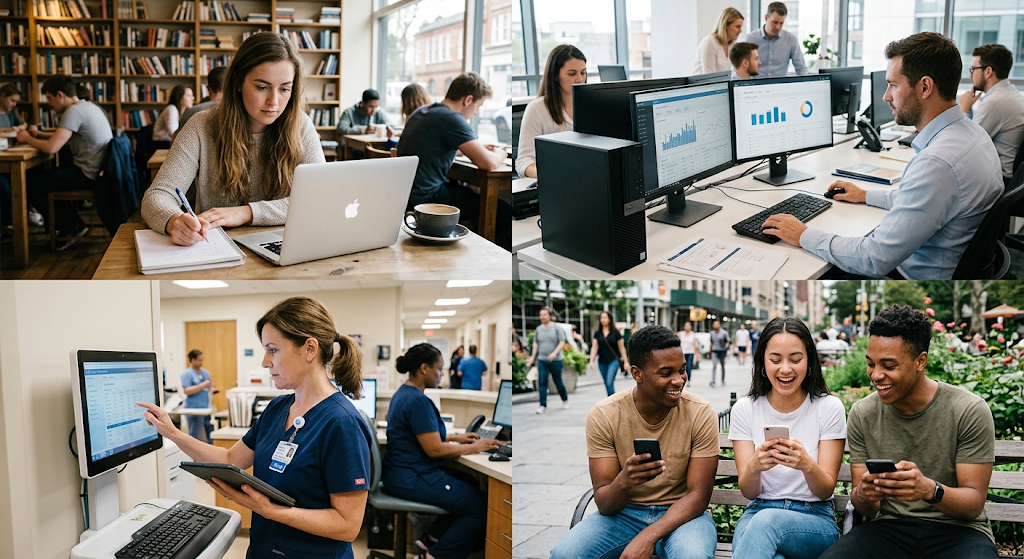
Education has been revolutionized by computing, which has given students and teachers access to information, communication, collaboration, and creation of learning materials in new ways. Digital textbooks and learning management systems, educational websites, online courses, simulations and virtual laboratories, productivity applications and mobile devices can all enable access to educational resources. Using digital tools, students can research topics, make assignments, analyse information, make presentations and communicate with teachers and peers.
Distance learning is also enabled through computing, where a school can deliver lessons and resources to students who are not on-site. Digital literacy is becoming an increasingly important skill in the workplace and learning basic computing skills prepares students for further learning and future employment.
Computing in Business
Computing plays a vital role in business for managing, communicating with customers, analysing, transacting and creating products and services. Computers are utilized to handle accounting, payroll, inventory management, customer relationship management, marketing, communication, document management, and business analytics by organizations. Online systems can be used to sell products and services to customers from different geographic areas and cloud-based applications can be used to help employees have access to working resources from different devices and locations.
Computing can also make certain tasks repetitive, thus eliminating the manpower needed in certain processes. Effective data utilization can enable companies to spot trends, comprehend consumer behaviour, make better decisions, and adapt swiftly to shifting market dynamics.
Computing in Communication
Computing technology is essential to modern communications. People can communicate across vast distances using email, instant messaging, social networking websites, video conferencing, online forums and collaboration software. That message that used to take a day or a week to get to someone can now be transmitted in seconds. People can also conduct meetings, classes, interviews, and discussions via video communication without having to physically be in the same place.
Computing has therefore overcome many of the geographical constraints on communication that were previously encountered. Meanwhile, the use of digital communication is widespread, which means it is more important than ever to engage in responsible technology use, to be conscious of privacy issues, to be aware of cybersecurity issues, and to critically reflect on information accessed online.
Computing in Healthcare
Computing systems are used to manage, schedule, store, handle, process, bill and communicate patient information, patient appointments, medical records, lab results, imaging, medical communication, etc. Digital systems can be used to enable healthcare professionals to access relevant information in a more efficient manner and ensure coordination between departments and services. Computers also are used in medical research, data analysis, medical imaging, monitoring devices, and in the creation of technologies that aid in diagnosis and treatment.
A large dataset can also be analyzed to identify patterns, and specialized software can also help professionals analyze complex information. While the potential to benefit healthcare is great, there is a need to consider the accuracy, privacy, security, reliability, and professional oversight of computing systems in this environment.
Computing in Entertainment
Computing has also revolutionized entertainment. Digital technologies can be used for streaming, video games, animation, music creation, photography, film making, digital art and interactive media. Today’s video games are powered by high-performance processors and graphics systems that produce a rich virtual world, and digital filmmaking lets filmmakers edit video, create visual effects and integrate computer-generated footage with real footage.
Music production software is the software that is required to record, edit, arrange and process music with a computer. Streaming services have also revolutionized how people watch movies, TV shows, listen to music and enjoy other digital media. Creating new entertainment and new opportunities for creative professionals in the process.
How Computing Influences Everyday Life
For many, computing is so inbuilt into their day-to-day life, that it may be easy to overlook its presence. Smartphones are used for communication, navigation, taking pictures, banking, shopping, education, transportation, and information. People use computers to write documents, to deal with their personal finances, to be able to communicate with family members, save photographs and access online services.
Computing also is embedded in machines which don’t necessarily resemble computers, such as smart televisions, cars, household appliances, security systems, wearable devices, and automated machinery. Most of the technologies include processors and software that enable them to gather data, make programmed decisions, interact with other systems and react to users.
Why Learning Computing Matters
Learning computing has a greater purpose than the use of the computer. It provides an understanding of how digital systems work and contributes to the development of individuals becoming more confident and responsible users of technology. Students can grasp concepts like files, software, networks, data, algorithms and cybersecurity with a basic understanding of computing. Further advanced work can result in careers in software development, information technology, computer science, networking, cyber security, data analysis, artificial intelligence, cloud computing and other emerging fields. A knowledge of computing is relevant to other aspects of life, such as education, employment, finance, communication, health, and decisions, and is useful for those who are not seeking careers in technology.
Computational thinking is especially useful because it is a way of thinking that encourages people to think systematically when solving problems. It includes dividing problems into smaller ones, finding patterns, formulating logical procedures and considering potential solutions. These skills also extend beyond the field of technology, as structure, organization, and analysis are effective in many real-world situations that involve making decisions. Understanding the workings of computing systems can also help you to identify technological challenges, its implications and to be more effective in using online services. In this context, computing education not only helps students to acquire technical skills but also helps them to gain problem-solving skills.
The Future of Computing
Computing futures will likely continue to see advancements in processing power, connectivity, automation, artificial intelligence, cloud computing and specialized computing devices. AI is already being applied in areas like language processing, image analysis, recommendations, scientific research, and automation. By using cloud computing, an organization or individual can access computing resources through a network and not totally rely on the local infrastructure. The computing power can be deployed in close proximity to the devices and systems producing data, which can be beneficial for applications that require quick responses. New developments in computing hardware are also enabling more complex simulations, scientific discoveries, communications and digital services.
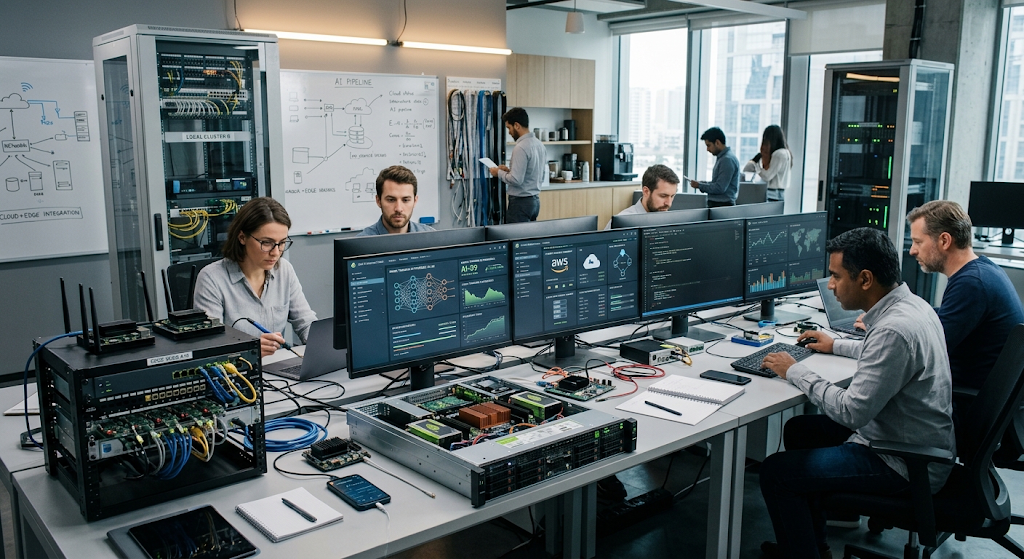
Just as computing becomes more powerful and more pervasive, an understanding of its social and ethical implications will grow. Problems with privacy, cyber security, misinformation, digital access, responsible AI, job security and personal data use must be taken into account. The impact of technology is not inherent, but depends on how the technology is designed, used, regulated, and implemented. This means that future computer professionals and users will be required to have technical knowledge and a sense of responsibility. This pairing will help to ensure that technological advances benefit people, organizations and society.
Conclusion
Computing is the basis of many aspects of the digital world, including processes, people, networks, data, and software, as well as hardware. It has evolved from basic counting devices and mechanical calculators to powerful electronic computers, personal computing devices, networked devices, cloud based platforms and increasingly smart systems. This history is important because it helps to understand how the current technology of computing has become smaller, faster, more accessible, and more powerful than previous generations of technology. Digital systems consist of hardware, software, data, networks, and human users, all of which collaborate to render digital systems useful and practical.
Computing is a part of everyday life, entertainment, healthcare, communication, education and business. It is a fundamental tool and resource used by students for learning, research and discovery, by businesses to run and communicate, by healthcare providers for information management and healthcare services, and by individuals for many daily activities. Learning computing, therefore, is not just a matter of learning how to use a computer for students who are just beginning to learn computing. It’s about knowing the technology that is becoming a part of the modern world. Good programming skills will contribute to the academic, career, problem-solving, responsible use of digital technology, and lifelong learning.