Introduction
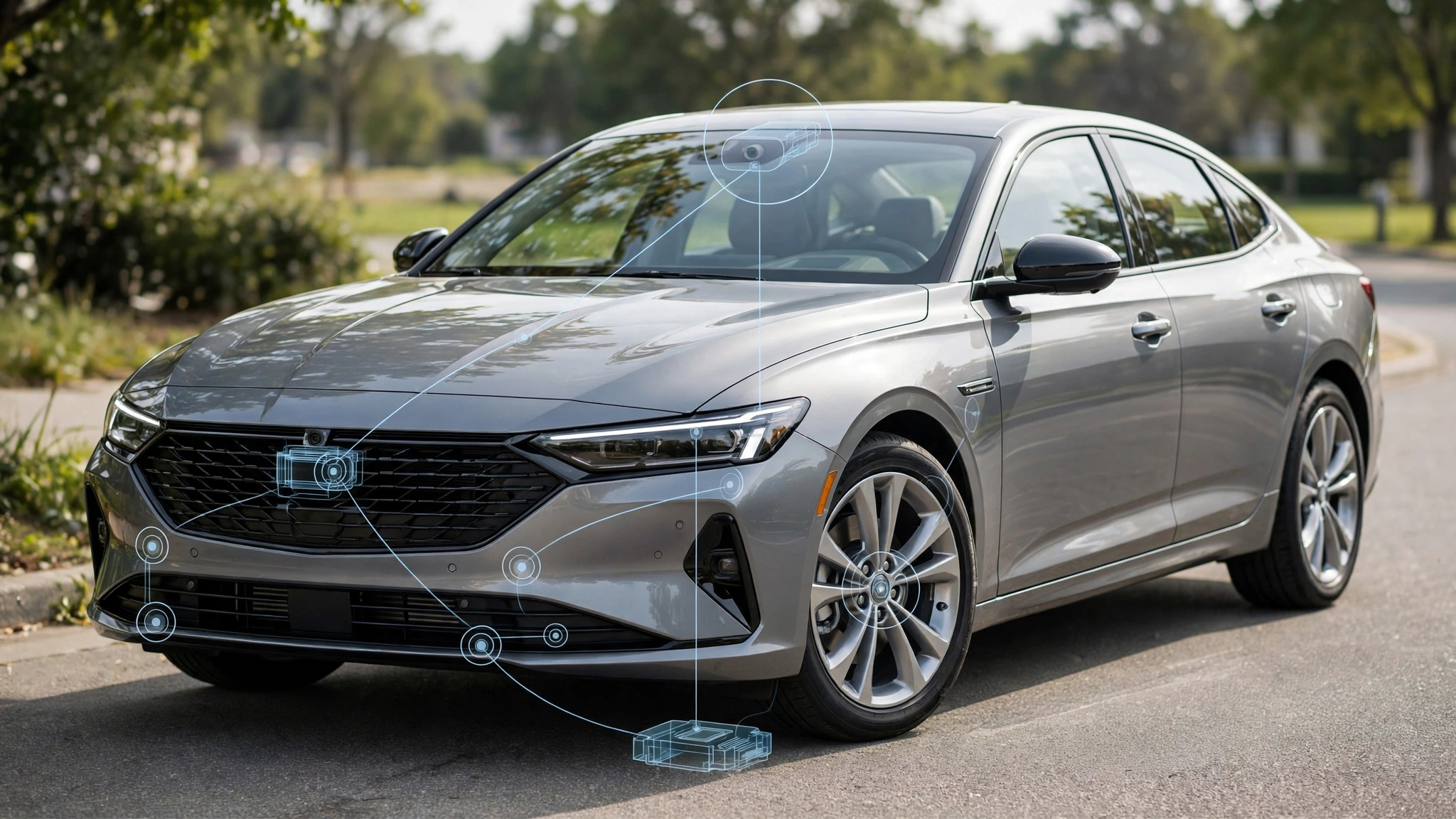
Car Sensors are vital to modern vehicles, tracking the environment, temperature, pressure, road conditions, wheels, and engine. These tiny pieces of equipment are continually gathering data and broadcasting it to the vehicle’s computers, which in turn take the data to govern critical systems. Sensors control fuel delivery, engine performance and emissions, braking, stability control and parking assistance, and advanced safety. Many electronic systems in modern automobiles would not function properly without proper sensor data. Knowing how these components work can enable vehicle owners to identify potential warning signs and know the meaning of dashboard warning lights.
There are many common automotive sensors, and each of these is designed for a particular function. Some of these measure conditions within the engine, and others measure the wheels or sense objects around the car. A dirty, damaged, or electrically faulty sensor can lead to low fuel efficiency, engine stalling, lights and indicators, lower performance, or safety systems being turned off. If a diagnosis is needed, an understanding of the functions of the major sensors will help you understand the problems and communicate better with a technician.
Oxygen Sensors
In the exhaust gas, the oxygen sensors measure the level of oxygen. This data is fed to the engine control module to indicate the fuel/air ratio. This facilitates efficient combustion of the fuel and helps to control emissions. Most cars have two oxygen sensors, one ahead of and one behind the catalytic converter. The sensor on the upstream side aids in air-fuel ratio adjustments, and the downstream sensor aids in monitoring the performance of the catalytic converter.
If the oxygen sensor fails, the vehicle may be hard to start, lack adequate powertrain responsiveness, have a check-engine light, or run poorly, run with hesitation, or use excessive fuel and emissions. The symptoms are not necessarily indicative of a faulty sensor, however. Symptoms can also be caused by exhaust leaks, faulty wiring, fuel-system issues, or other engine problems. Before replacing an oxygen sensor, therefore, it is important to take part in the proper diagnostic test.
Mass Airflow Sensors
The mass airflow sensor (MAF sensor) is used to determine the amount of air entering the engine. This information is sent to the engine computer to determine the amount of fuel needed to be supplied to the engine. The engine performs at best with accurate MAF readings; however, since airflow varies with engine speed and acceleration, it is important to have accurate readings. A typical location for the sensor is in the air-intake system close to the air filter housing.
If the MAF sensor is dirty or faulty, it may result in rough idling, hesitation, lack of acceleration, poor fuel economy, trouble starting, or a check-engine warning. It can be affected by dirt, oil contamination, damaged intake components, and electrical issues. However, several problems can have similar symptoms; therefore, proper inspection and testing of the sensor rather than replacement on the basis of a symptom should be done.
Throttle-Position Sensors
The throttle-position sensor (also known as the TPS) senses the position of the throttle body. It provides information to the electronic engine control unit on how much the throttle is open and helps the computer interpret the driver’s desire for increased acceleration. This data is combined with other signals generated by the accelerator pedal sensors and other systems in modern motor vehicles with electronic throttle control systems to regulate motor response. Additionally, the throttle system can impact fuel delivery, transmission functioning, and emission control.
The throttle-position system may be faulty, which will lead to hesitation, unstable idling, poor throttle response, inconsistent acceleration, or a warning light. Some vehicles may enter reduced-power mode if the computer detects an unsafe or inconsistent throttle signal. There are many possibilities as to what could be wrong, such as the sensor, throttle body, wiring, accelerator pedal sensor, or something else. It is important to make sure that you diagnose the problem correctly.
Wheel-Speed Sensors
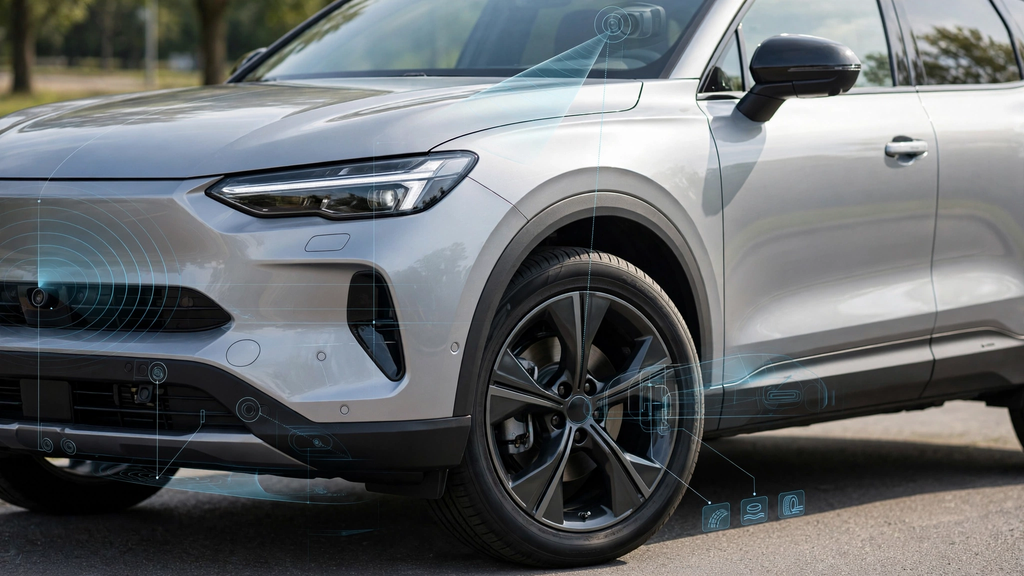
Wheel-speed sensors detect the speed of individual wheels. They play a crucial role in anti-lock braking systems, traction control, and electronic stability control. The car can tell when one of its wheels is getting close to locking up when it slows down or spinning when it speeds up. This information can then be used to alter braking or engine control, thus helping to maintain stability and traction.
Damage to the wheel-speed sensor can result in ABS, traction-control, or stability-control warning lights. Damage to wiring, corrosion, dirt, physical damage, or problems near the wheel hub could cause problems. As these sensors are situated near the road, they can be subjected to harsh conditions. This ABS or stability-control warning is not something to be overlooked.
Parking Sensors
Parking sensors assist drivers in identifying objects that are close to the car while parking/reversing. The front or rear bumper is the location of many systems that rely on ultrasonic sensors. These sensors transmit and receive signals to calculate the distance between a vehicle and an object. As the vehicle approaches an obstacle, the driver is alerted by an audible warning, a visual warning, or both.
Dirty, damaged, blocked, or misaligned parking sensors can cause them to malfunction. A malfunctioning sensor can generate a constant warning or not sense the object. Parking sensors shouldn’t be seen as a system, though, but an assistance system. Mirrors, windows, cameras, and direct observation should still be used by drivers, as sensors may not detect all obstacles.
Temperature Sensors
Temperature sensors are used in vehicles to check the various systems. The engine computer relies on the temperature of the engine coolant sensor in particular to determine the temperature of the engine. This information may impact fuel delivery, cooling fan operation, emissions control, and other engine functions. Intake air, transmission components, exhaust gases, batteries, and vehicle interior are among the other temperature sensors that can be used.
Worn-out temperature sensors can lead to poor fuel economy, difficult starting, rough running, or incorrect cooling-system behavior. If climate-control systems are not operating effectively, the temperature sensors may not be registering the correct temperatures. The typical diagnosis is to compare the temperature reported by the sensor with the actual temperature and inspect the wiring and connections on the sensor.
Pressure Sensors
Pressure sensors measure the amount of pressure in various parts of the vehicle. They are used in a variety of applications, including tire-pressure monitoring systems, engine intake systems, fuel systems, air-conditioning systems, and more. For instance, a tire-pressure sensor can help the vehicle know if there is a loss of air pressure in a tire. An engine pressure sensor can deliver the data on the states in intake and engine load.
Warning lights, inaccurate readings, poor performance, or less operation of the system may be the result of a pressure-sensor problem. But it is crucial to differentiate if the issue is a result of the sensor or an actual pressure-related issue. For instance, a low-pressure warning could be due to low tire pressure, not a failing sensor. Prior to replacing a sensor, actual pressure should be determined.
Cameras
Today, cameras play an increasing role in automobiles. Drivers are provided with a view behind the vehicle through the use of a reversing camera, and front and surround-view cameras can assist with parking and other driver-assistance functions. The camera can also be used to detect lane markings, traffic signs, vehicles, pedestrians, and other objects. These systems enable the vehicle’s computers to process and interpret visual information and to deliver warnings or support.
Dirt, rain, poor visibility, glare, or physical damage could have an impact on camera performance. In certain systems, the system may temporarily disable itself if the camera can’t get a clear view. Additionally, a camera could need professional calibration following some repairs, especially if it has been re-mounted at a different position. Drivers need to be mindful of warnings for camera-based safety features.
Radar Sensors
Radar sensors are used to identify objects and relay information, including distance and relative motion. They’re frequently employed in systems like adaptive cruise control, blind-spot monitoring, and collision warning. The advantage of radar is that it can give information about objects near one even if the line of sight is not perfect. In today’s vehicles, cameras and radar work together to enhance the function of driver-assistance systems.
Damage, contamination, incorrect sensor installation, or repairs around the sensor mounting area can impact the radar sensors. Calibration may occasionally be necessary after an accident or bumper repair. If a vehicle indicates that adaptive cruise control or another function using radar is not available, then check this. It is also important to note that radar-based assistance doesn’t take the place of attentive driving; it merely enhances it.
A Few Indicators for Sensor Failure
Sensor issues can manifest in a myriad of ways, as sensors are linked to critical vehicle systems. Common symptoms are warning lights, low fuel economy, rough engine, hesitation, reduced engine power, inaccurate gauges, ABS lights, traction-control lights, or driver-assistance lights going out. A few of the sensor failures can result in noticeable issues; some can just impact efficiency or trigger an intermittent warning.
Although a diagnostic trouble code can give helpful information, it does not necessarily indicate that a specific sensor has failed. For example, an oxygen-sensor code could be caused by an exhaust leak or wiring problem. Likewise, the wheel-speed sensor, wiring, or other parts can be the cause of an ABS code. The type of sensor, wiring, components, and conditions under which it is used should therefore be part of the diagnosis.
Maintaining Vehicle Sensors
Many sensors can be protected by keeping the vehicle well maintained. Properly cleaning the air filters and intake systems can prevent airflow-associated components from becoming contaminated. Properly inflating tires also helps to maintain tire-pressure monitoring systems. Drivers shouldn’t ignore warning lights, as there can be a minor issue with the sensor, and this can impact larger systems or other components in the vehicle may not work.
Appropriate replacement of the sensor should also be carried out with the proper part and installation method. Cameras and radar sensors for some high-tech systems may need to be calibrated following replacement or some repair work. The tiny sensors can make a huge difference to engine performance, braking, safety, and driver assistance. Professional diagnosis is recommended, therefore, when a warning appears on the screen due to a sensor.
Conclusion
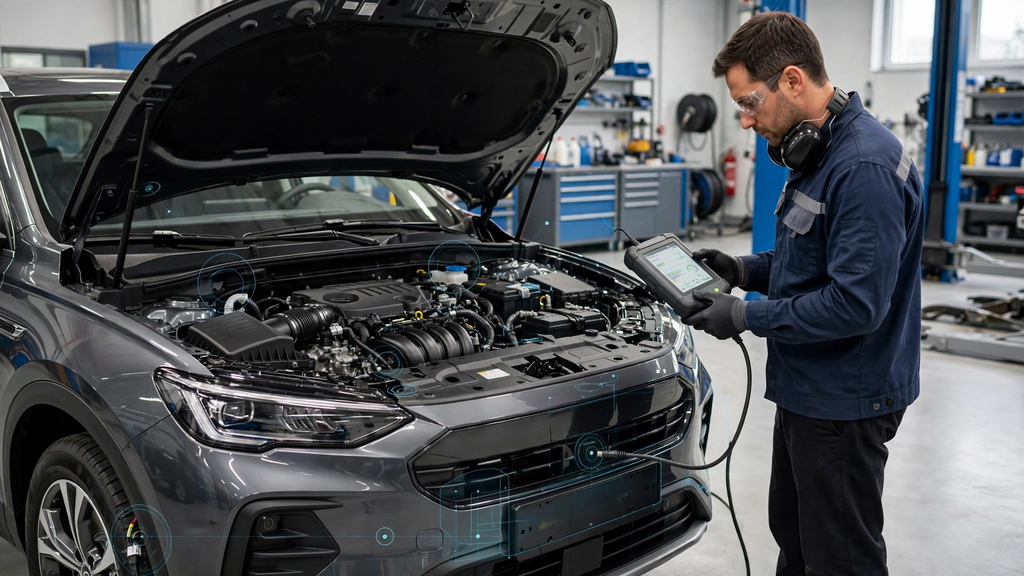
The car sensors enable modern vehicles to monitor conditions in the car and its surroundings, driving conditions, and temperatures of the vehicle, its wheels, and its engine. Oxygen, mass airflow, throttle-position, wheel-speed, parking, temperature, and pressure sensors are all critical to important mechanical and electronic systems, and cameras and radar sensors power modern safety and driver-assistance systems. These combine to enable vehicle computers to make rapid adjustments which enhance performance, efficiency, safety, and convenience.
A knowledge of the symptoms of sensors may assist the vehicle owner in addressing problems early. No warnings should be ignored, such as warning lights, poor fuel economy, rough running, unusual acceleration, inaccurate readings, and disabled safety features. Symptoms, however, are not always enough to diagnose the failed part. The cause can be found by proper diagnosis, either the sensor, the wiring, or any other vehicle component. Knowing about the role of the primary sensors in the contemporary vehicle can help the owners make better maintenance choices and help them keep their vehicle running reliably.