Introduction
Bookkeeping forms the backbone of any thriving business as it documents all financial deals, monitors cash flow and offers information that helps make well-informed business choices. From small online store owners to freelance individuals, from start-ups to well-established companies, the selection of the bookkeeping system can affect your financial management. Many new business owners will start off with an easy-to-understand record keeping strategy, but as the business grows, financial management will become more complex. This is where, the knowledge of single and double entry bookkeeping comes in handy. Each system comes with its own advantages, drawbacks, and best applications, so it’s essential to determine which one aligns with your business objectives. Investing in a system that is too elementary might result in problems with financial reporting and tax preparation. However, an unnecessarily complicated system could lead to unnecessary administrative burdens with little to no value. It outlines the difference between the single entry bookkeeping system and double entry bookkeeping system, the pros and cons of each and how to choose which one is right for your business.
What Is Bookkeeping?
Bookkeeping is the process of systematically recording, organizing and keeping financial transactions in a business. All receipts, expenses, purchases, and sales should be recorded, to allow the owner to have a clear idea of the financial status of the business. Good bookkeeping helps to keep income and expenses correctly on record, to prepare taxes properly, and to prepare financial statements as necessary. It also allows business proprietors to figure out how their cash is being spent, track profitability, and identify and spot blunders before they turn into an expensive issue. Bookkeeping may be done by hand with paper records or on a spreadsheet, but many businesses use accounting software to automate many aspects of bookkeeping. Either way, all bookkeeping systems are either single (or double) entry bookkeeping. Once you have a better grasp of how each system works, you’ll be better equipped to pick the best accounting system for your business.
To get a better understanding of the difference between single and double entry bookkeeping, along with the accounting principles and examples, it may be helpful to read more about the topic.
What is a single entry bookkeeping?
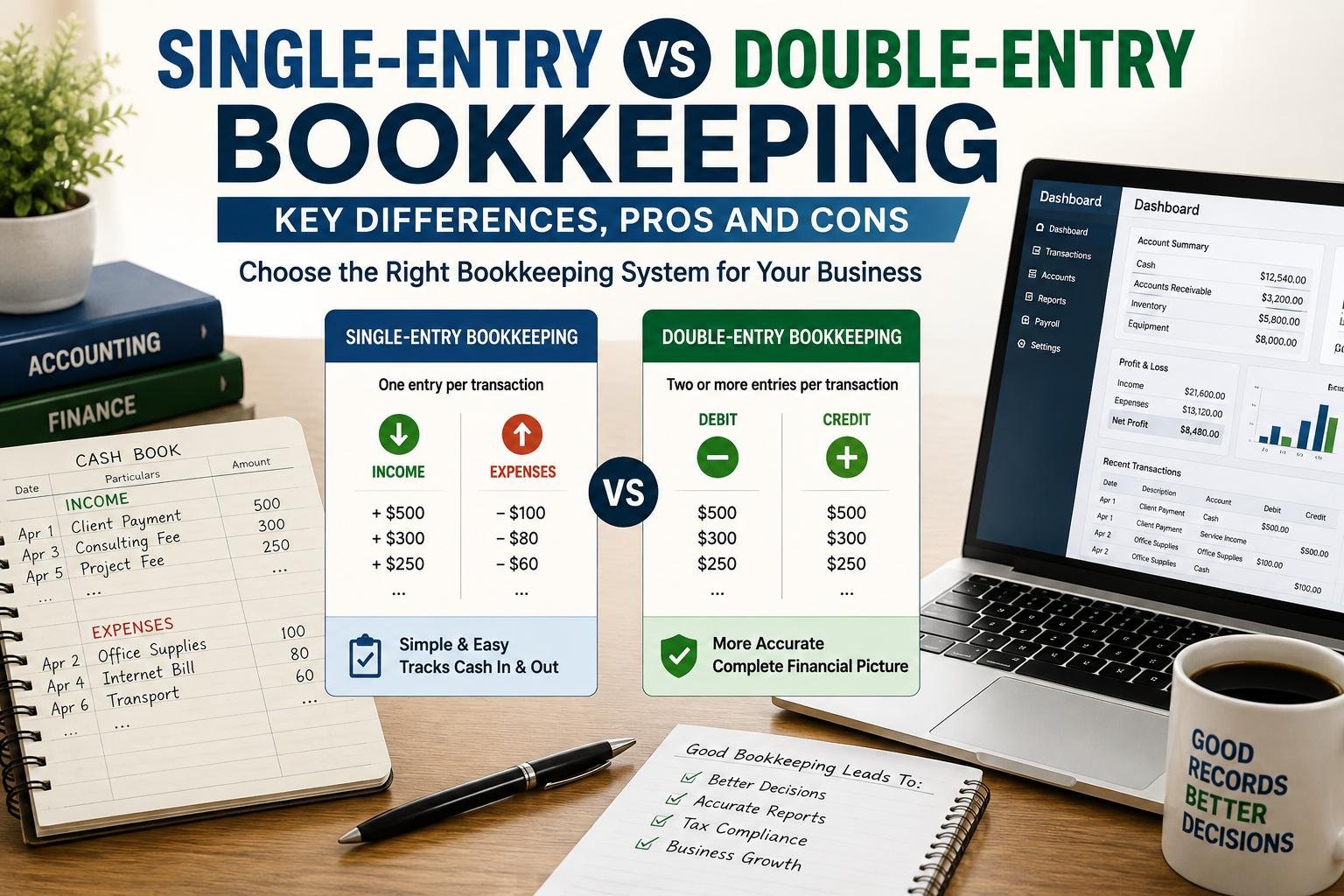
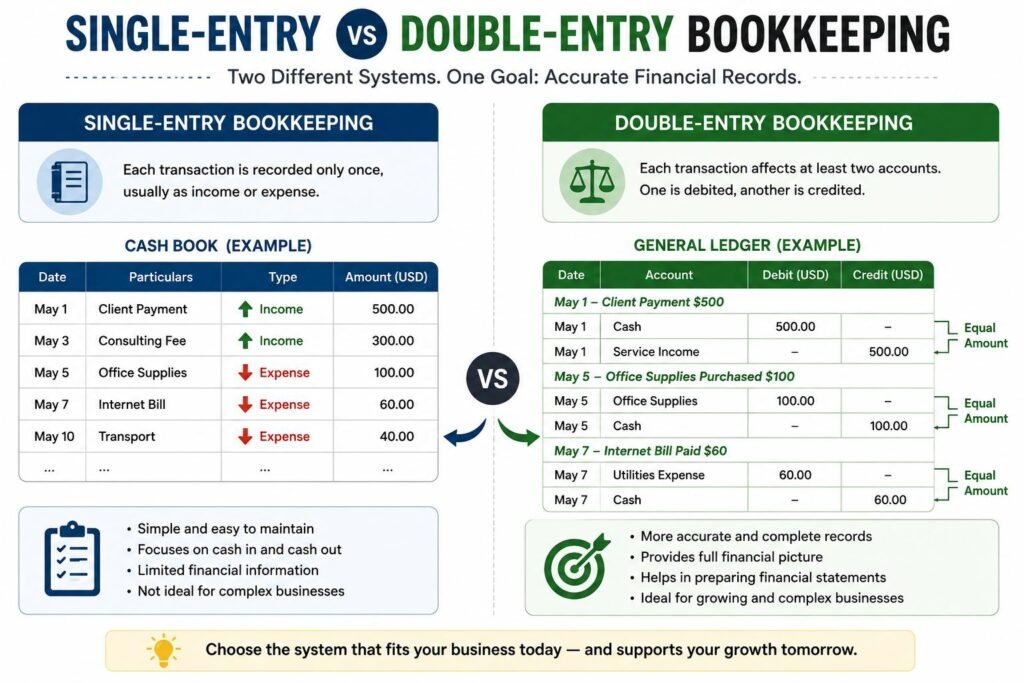
Single entry bookkeeping is the easiest type of bookkeeping system that can be used. This process is known as double entry bookkeeping; it is the typical system of bookkeeping. It’s similar to keeping an own check book, with the difference that income to the business is treated as revenue and expenditure from the business is treated as an expense. The system is primarily concerned with cash flow, rather than assets, liabilities, or owner’s equity, since each transaction involves only one transaction. Single-entry bookkeeping is appealing for freelance, consultant, sole proprietors and small companies having a small number of financial transactions per month. It’s a simple method that doesn’t involve a lot of accounting skills, and which can be managed through the use of notebooks, spreadsheets or basic accounting software. But its simplicity is offset by the lack of financial detail, which is not suitable for companies that need to have detailed balance sheets, complex taxation reporting or external financing.
How single entry book-keeping works.
In a single entry bookkeeping system, the relationship with many accounts is not considered, money is received or money is spent. A freelance graphic designer, for instance, earns $500 from a client; this is just money earned and entered into the books as income. The purchase of software by that designer for $100 will be only an expense if she later buys the same software for $100. No corresponding entry for cash, equipment or other accounts. Since only one side of the transaction is recorded, businesses can’t tell from these records alone what their full financial situation is. Equipment, inventory, and outstanding debts are assets that need to be accounted for separately from the bookkeeping records. This approach makes it easy to manage, but also makes it easier to miss out on critical financial data that may impact business decisions.
Double Entry Bookkeeping Definition
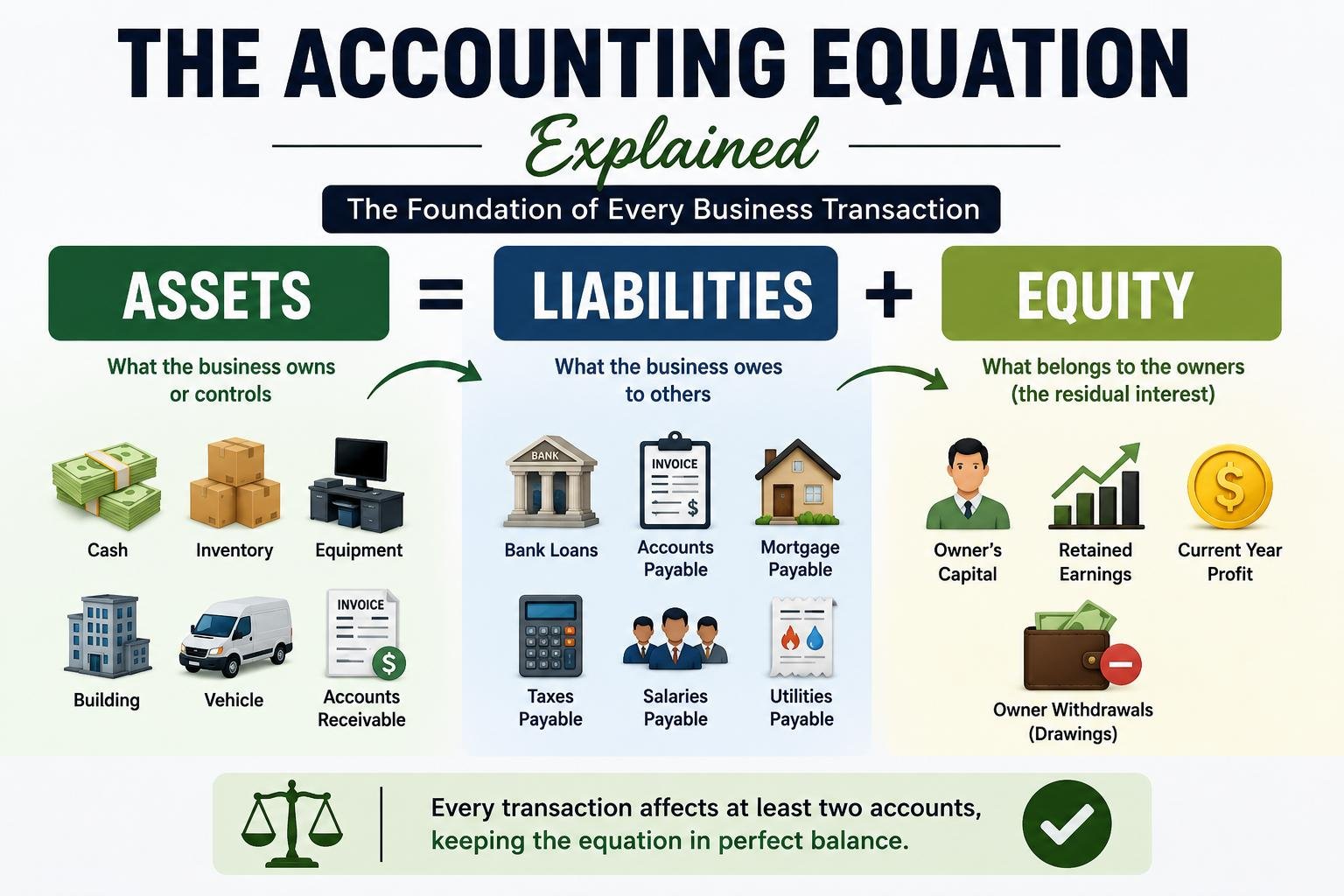
The accounting method that is practiced by business companies all over the world is the double entry bookkeeping. Each transaction has a minimum of two accounts. Debit and credit are assigned to one account, and the same amount is credited to another account, so that the accounting equation, Assets = Liabilities + Owner’s Equity is always in balance. This method will give a full financial picture as it will show assets, liabilities, and equity as well as income and expenses. Double entry Bookkeeping helps in preparing financial statements like the balance sheet, income statement, cash flow statement and is the most recommended book keeping system for businesses, corporations, partnerships and organizations that need to make accurate financial statements. While it’s more complicated than single-entry bookkeeping, today’s accounting software has made it much easier to keep track of double-entry bookkeeping.
Understand how to use Double-Entry Bookkeeping.
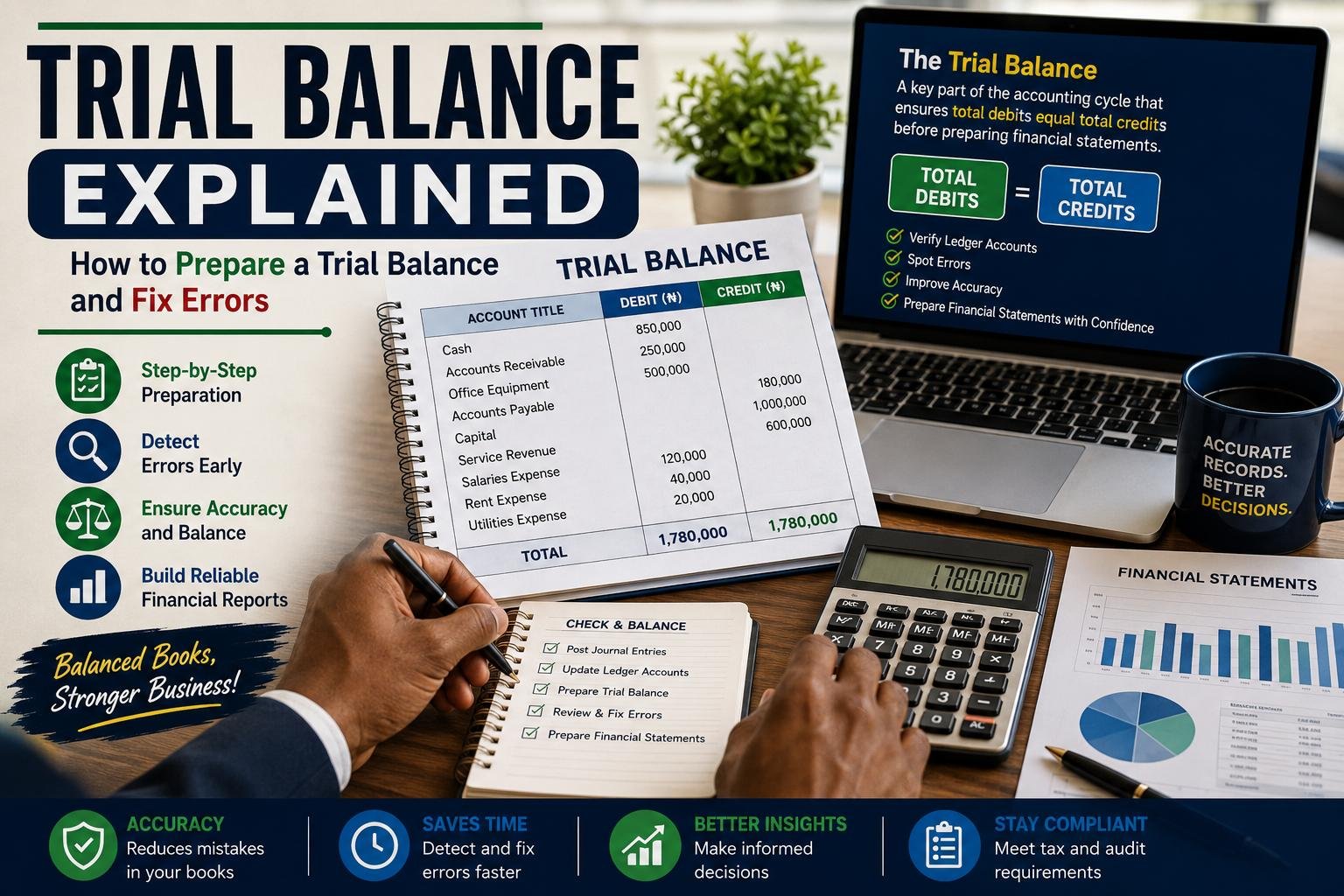
The business buys office furniture for $2000 cash. In the double entry bookkeeping system, the amount of $2,000 is credited to the furniture account and the amount of $2,000 is debited to the cash account. The two sides are accounted at the same time, balance accounting equation. Similarly, if an outstanding invoice is paid, the customer account will see a corresponding increase in the cash account and the accounts receivable account will be reduced. Each transaction can be expected to affect two or more accounts and the accountant can therefore follow the financial transactions accurately in the business. Errors can be identified more easily when preparing a trial balance, due to the fact that every debit is equivalent to a credit. This system can be used as an automatic verification system for double entry bookkeeping, which is much more reliable than single entry bookkeeping for businesses that deal in many financial transactions.
Differences between Single Entry and Double Entry Bookkeeping.
The biggest difference between these two bookkeeping systems is the way that transactions are recorded and the amount of financial data that is captured. Single entry bookkeeping only records one of the transactions and is primarily used for cash receipts and cash payments, while double entry bookkeeping records each transaction in at least two accounts to ensure balance and accuracy. This distinction impacts many financial management facets, such as reporting standards, error detection, tax filing, business analysis, and long-term scalability. A single entry accounting system may be problematic for businesses that have to prepare a full set of financial statements because they may not have information on liabilities, assets, and owner’s equity. Double-entry bookkeeping, by contrast, offers a complete bookkeeping system that can help with the audit, investor reporting, bank loan applications, and compliance with regulations. These disparities have become even more significant as businesses have expanded, given that transactions get more complicated as the business gets bigger.
Accuracy
One of the biggest benefits of double entry bookkeeping is accuracy. Each transaction will have an equal debit and credit entry, so the accounting records can be verified using a trial balance and reconciliation process. Errors like missing transactions, mismatching entries or posting errors can be more readily identified before a financial report is made. Single entry bookkeeping does not have this built-in validation mechanism because transactions are not recorded twice and it’s much easier for errors or omissions to not be noticed. Though this record keeping system can minimize errors, it does not offer automatic means to check for completeness and balance. The controls that come with the double entry accounting system are more useful to businesses that depend heavily on financial information.
Complexity
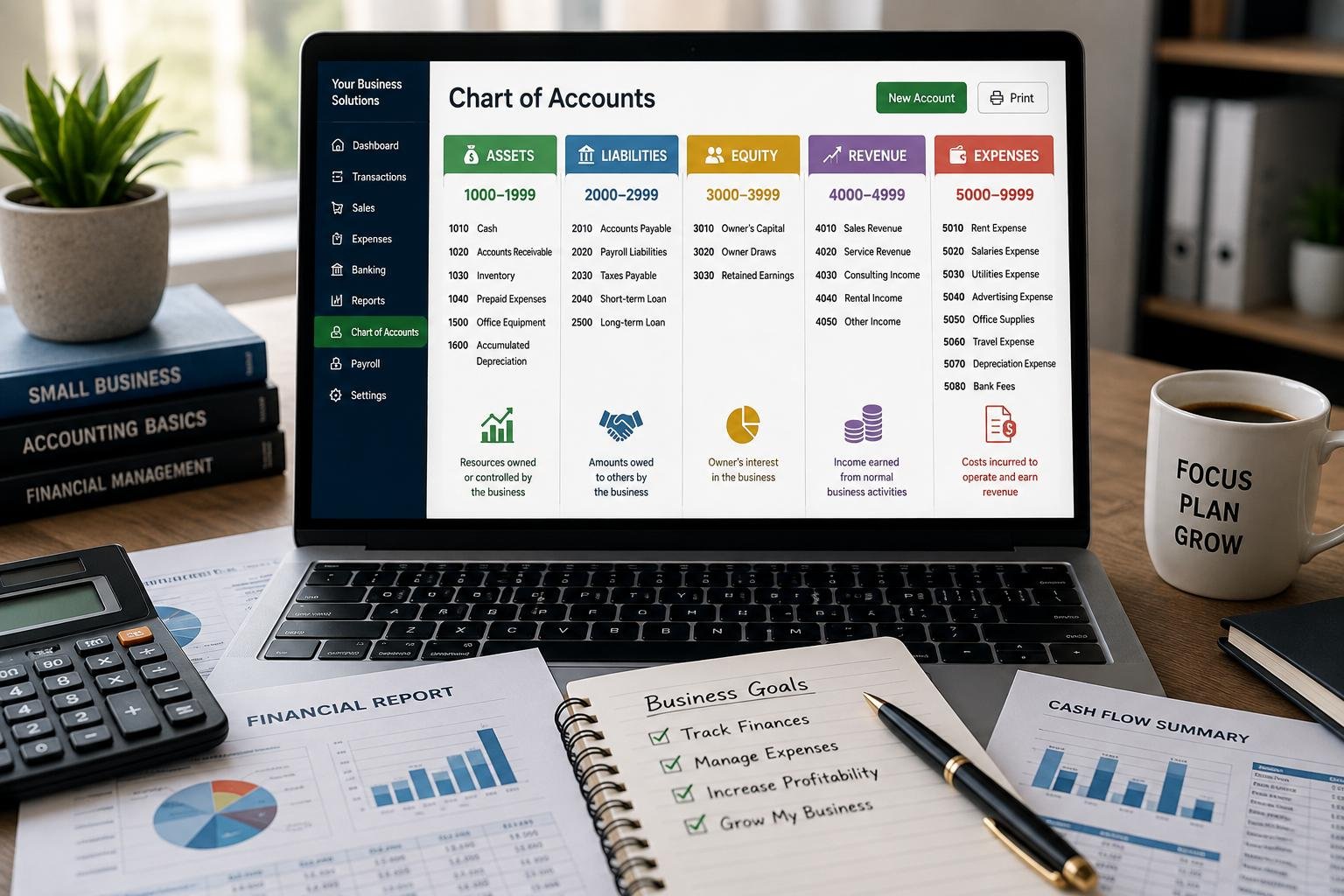
Single entry bookkeeping is much simpler to learn and keep up to date since transactions can only be posted as income and expenses. Without accounting experience, many business owners can keep these records in spreadsheets or simple accounting software. When using double entry bookkeeping, however, one must understand debits and credits, chart of accounts, posting to general ledger and accounting principles. While this may seem daunting at first, much of it becomes easier with the help of accounting software which automates all the matching entries. Consequently, even small businesses can now take advantage of double entry bookkeeping without having to have extensive accounting knowledge. The extra learning curve is frequently more than compensated for by the better financial accuracy and reporting.
Financial Reporting
The great benefit of double entry bookkeeping is that it allows for the production of complete financial statements. Using this system, businesses will be able to easily create their income statements, balance sheets, cash flow statements, trial balance, and other management reports. Reports are used by the owners to assess profitability, liquidity, operational efficiency and long-term financial status. Single entry bookkeeping, in general, is not able to provide these reports without a lot of manual adjustments as it does not contain enough financial information. As a result, a business owner might not be able to adequately assess the financial situation and present information to lenders and investors that can be trusted. This can make it difficult for the business owner to accurately determine the financial situation and present financial information to the lender and/or investors to obtain funding.
Business Suitability
The appropriateness of each bookkeeping system greatly relies on the size and complexity of the business. Single entry bookkeeping is suitable for freelance business owners, sole traders, independent contractors and businesses with very basic transactions and finances, such as very small businesses. This approach is suitable for businesses that do not have stock, wages or large pieces of equipment. But, if a company is getting bigger, handling employees, maintaining inventory, buying assets or looking to outside investment, double-entry bookkeeping is recommended. With the increased sophistication of business trading activities, it becomes more and more important to have a detailed financial record to manage and comply with an effective business.
Benefits of Single Entry Bookkeeping
Although the disadvantages of single-entry bookkeeping are apparent, there are a number of practical benefits. It is very simple to use, and makes it easy for the businesses to keep tracking their finances even without having in-depth knowledge regarding accounting or getting the help of an accountant. Administrative workload is reduced as only one entry is made for every transaction, reducing the amount of time that is needed for record keeping. There are also less start-up expenses as businesses might just require simple spreadsheets or cheap bookkeeping software. Some small businesses with little financial involvement may like the ease with which transactions can be recorded and the daily cash flow monitored. Moreover, the easy-to-use system helps employees learn how to use the software with ease, and minimizes the risk of any confusion amongst users who are not familiar with accounting concepts. These benefits may outweigh the drawbacks when a company is relatively small and has fairly straightforward financial transactions.
Disadvantages of Single Entry Bookkeeping
Though it is user-friendly, single-entry bookkeeping has a number of serious drawbacks that make it less effective in the growth of a business. It only captures one side of the transaction, which means it cannot automatically create comprehensive financial statements and doesn’t give a full financial picture. Accounting errors are more difficult to detect, as there is no balancing mechanism like debits and credits. There may be asset, liability, loan, depreciation, inventory, and owner’s equity records that are not integrated into the bookkeeping system, which can cause additional administrative work and the potential for inconsistencies. This method can also create problems for businesses seeking loans, investors, and tax filing, as their financial statements are thin and lack the depth and credibility that financial institutions demand. While these conveniences can be helpful in a simpler operation, they can eventually be outweighed by the limitations as operations grow more complex.
Benefits of Double Entry Bookkeeping
Double entry bookkeeping offers detailed financial data, aiding in making informed decisions throughout the business lifecycle. Because each transaction involves several accounts, businesses have a comprehensive view of the assets, liabilities, equity, income, and expenses. Financial reports are more accurate, and budgeting and forecasting, tax preparation and performance analysis are much easier. There are also internal checks for accuracy of the system, such as total debits equaling total credits. This will make auditing easier, lessen the chance of fraud, and enhance accountability of the money throughout the organization. In addition, double entry bookkeeping is recognized globally as the accounting standard; thus it is appropriate for companies that want to apply for financing, the government or the possibility of long-term expansion. The system needs to be more disciplined and organized, but the advantages are generally greater than the extra administrative work.
Double Entry Bookkeeping Disadvantages
The major drawback of double entry bookkeeping is that it is more complex than the single entry bookkeeping. Many small business owners might not fully grasp accounting principles, like posting ledger entries and debits and credits. Another important aspect of creating a successful chart of accounts is careful planning to ensure transactions are properly classified. Good record keeping will need professional bookkeeping assistance, especially in implementation. Also, double bookkeeping accounting software might require a subscription fee higher than simpler bookkeeping software. However, these drawbacks are gradually being reduced as more and more of the accounting process is automated with cloud-based accounting software, even for the smallest business, they can take advantage of some high-end accounting functions without any significant manual effort.
What Bookkeeping System to Use for your Business?
The choice of the best bookkeeping system will depend on the size of your business, your plans for its future growth, the amount of transactions you conduct and the reports you need to create. For those who are freelancer, independent consultant or sole proprietors who have limited transactions in a month and simple financials, single entry bookkeeping might be enough to give the simplicity without the high administrative costs. If your business anticipates growth, adding employees, managing your inventory, applying for financing or providing in-depth accounting records, however, then, it would be beneficial to use double-entry bookkeeping now rather than later. Small businesses start off with single-entry accounting and move into double-entry as they get more complex. You should compare your company to see how you’re doing and how you want to be in several years, and then pick the bookkeeping system that will help you get there.
Conclusion
One of the first financial decisions a business owner will make is of single entry vs. double entry accounting. Single-entry bookkeeping is simple and has minimal administration needs but offers little financial information and is not as useful for growing companies. While double entry book keeping is more complex and has a broader accounting knowledge requirement, it offers superior accuracy, complete financial reporting, enhanced internal controls and increased long term scalability. The decision between single entry and double entry bookkeeping depends on your business size, complexity, reporting requirements and business growth goals. For small businesses with less financial transactions, single-entry bookkeeping might be a better option at first, however, double entry bookkeeping allows businesses to have the best solid bases in sound financial management, making accurate decisions, complying with regulations, and prospering in the long run.
Get more well researched information about single vs double entry bookkeeping here.