The health care sector is in the midst of a large-scale change brought on by progress in digital technologies that are improving the ways in what we do with patient care, treatment, and follow up. In terms of which are the most impactful innovations we see the rise of the Internet of Things (IoT) which links smart devices, medical equipment, software platforms and health care systems together to collect and share very useful health info. Also unlike the past when we used to rely on periodic check ups and manual tracking, with the use of IoT we see health care providers’ access to continuous and real time patient data.
This is also seen to be helping doctors to make quicker decisions, to personalize care plans and in the end improve patient results. From wearable fitness trackers that watch over vital signs to very complex hospital systems that improve care delivery we are seeing a more connected and efficient health care environment. As tech becomes more accessible the role of IoT in health care will only grow, which in turn will present new opportunities for patients, medical professionals, and health care organizations worldwide.
How IoT is Transforming Patient Diagnosis and Treatment.
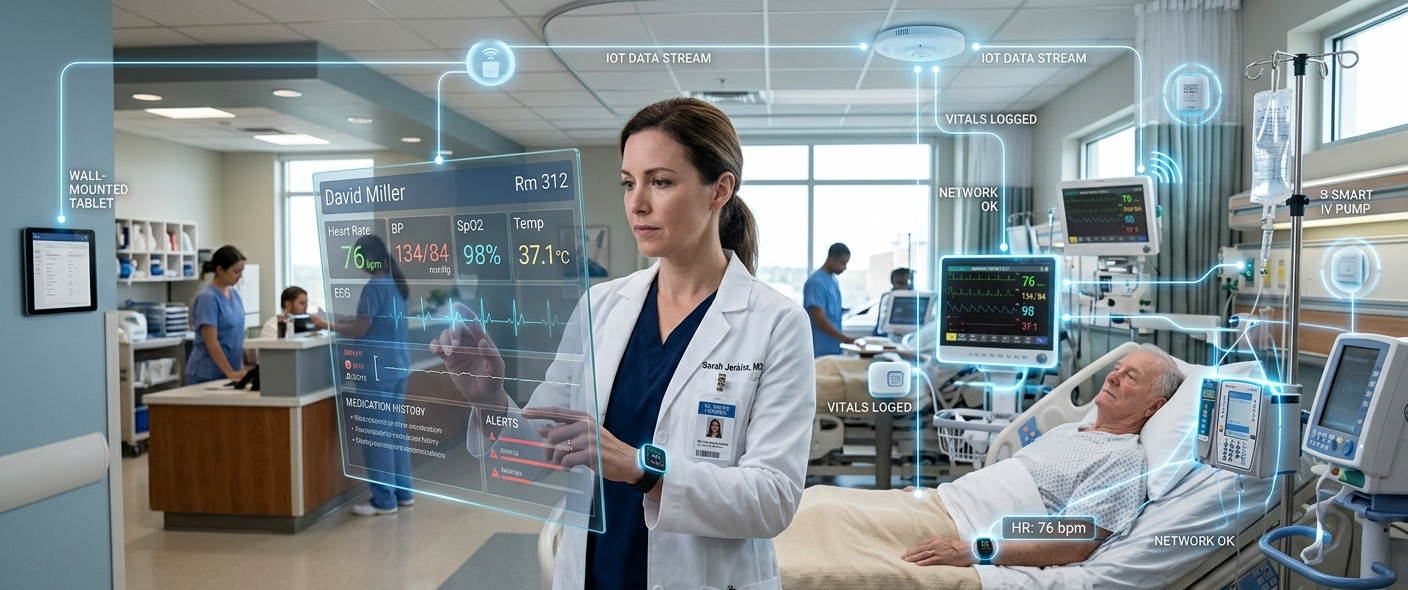
In the field of health care one of the great benefits of IoT is that it improves diagnosis and treatment via continuous data collection. In traditional medical practice we see that we rely on info which is gathered at the point of care which does not always present the full picture of a patient’s health outside of the clinical setting. What we see with IoT is that it overcomes this issue by giving health care professionals real time info on key health indicators like heart activity, blood pressure, oxygen levels, body temp, and glucose.
Also we see a constant flow of this info which in turn health care providers are able to identify out of the ordinary trends early and take preventive action before issues worsen. With chronic illnesses like diabetes, heart disease, or respiratory issues, what we are seeing is that IoT devices play a role in better disease management by which health care providers are able to track progress and adjust treatments based on that accurate health info. Also by use of connected devices in tandem with advanced data analysis we are to see health care shift from a reactive model of care to a more proactive and preventive health care.
Wearable Health Tech and Personal Health Care.
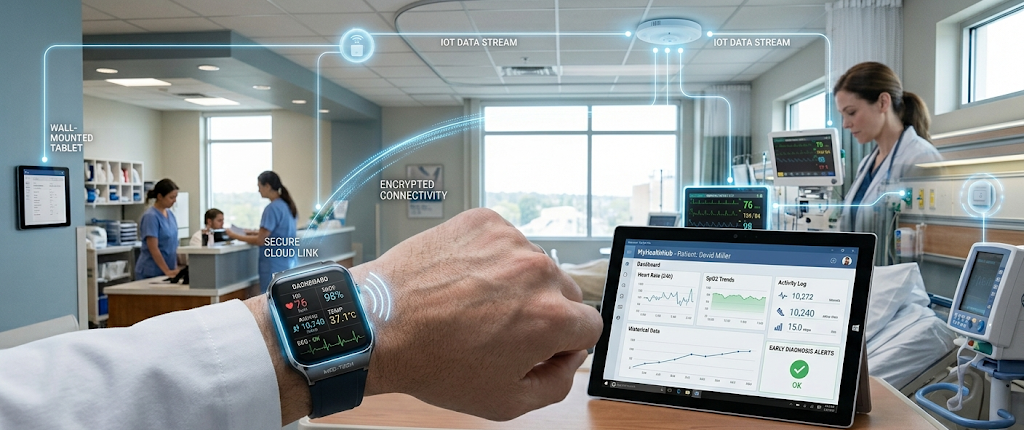
Wearable health tech is a very large segment of the growing IoT in health. We see in this area devices which are worn like watches, bands, or which are attached to the body which put out health related info constantly. Today’s wearables are able to track heart rate, physical activity, sleep patterns, blood oxygen levels and other health metrics which in turn gives the user a better picture of their health at any time. Also for health care providers these devices are a great resource which support early identification of health issues.
For instance if there is an atypical change in heart rate that may be a sign to take a patient in for a check up before a major issue presents. Also wear tech is getting individuals more involved in their health care by giving them instant reports of how their habits and daily activities are affecting their health. As we see wearables become more advanced we expect them to play a bigger role in preventive health care, which in turn will see people taking better care of their health which in turn puts less strain on health care facilities.
Remote Patient Care and Connected Health Services.
Remote in-home health care is also a very large element of what the Internet of Things is doing to health care as we speak. We see this through the use of connected devices which000 which are tracking patient info outside of the typical health care settings and then sending that information securely to health care providers. Also of great value is remote monitoring for our senior citizens, people with chronic conditions, and those which live in areas that do not have great access to health care. As opposed to requiring that patients report in to the hospital very often we see them using connected devices to take in health info from home while at the same time doctors are remote in their care.
This improves the convenience for the patient and also allows health care teams to identify issues right away. In situations which in person visits may be hard, remote patient care sees to it that the patients still get the health care they need. By reducing the number of unnecessary hospital visits and at the same time enabling early intervention we see that the health care system which is put forth by way of the use of IoT based remote care is more accessible, efficient and very much patient centered.
Smart Patient Care Systems
Hospitals are also seeing benefits from IoT in the form of smart hospital beds. What we have are advanced beds which in turn improve patient comfort and health care efficiency via use of sensors and automation. Smart beds which are able to report on patient movement, detect changes in position, measure weight, and alert staff when intervention is required. Also they report which in turn helps nurses and doctors to give better care which at the same time reduces the risk of complications from inactivity. In a busy hospital setting also we see that connected beds play a role in staff resource management by way of real time patient info and bed availability.
Also some smart beds are able to auto adjust position for better comfort and support in the recovery process. By what is put forth with automation and health care expertise these systems allow medical teams to put more of their energy into patient care. As health care institutions continue to adopt digital solutions, smart beds are a key element in the design of safer and more efficient health care settings.
Connected Health Technologies and Smart Health Care Systems.
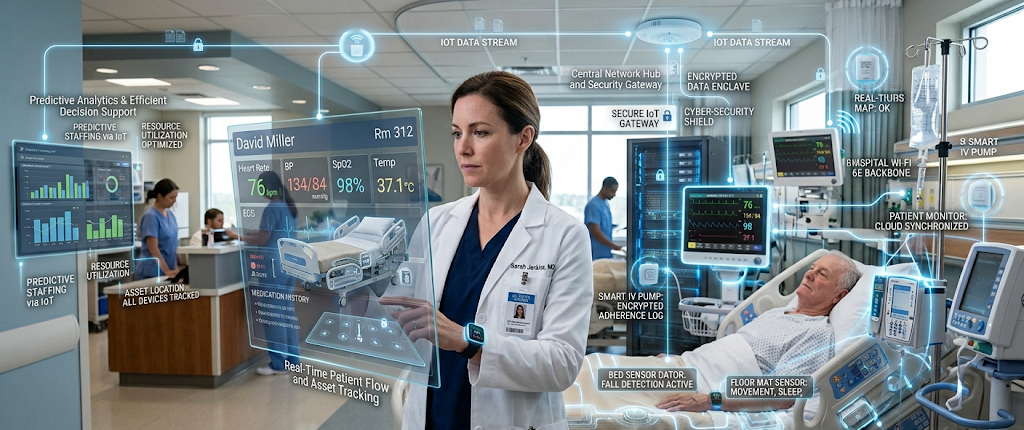
Connected in home health technology is a large area which is seeing growth via the IoT. We see that medical devices like imaging tech, infusion pumps, ventilators and monitoring systems are now on the network which in turn health care providers have access to info faster and more accurately. This connection also reduces the issue of manual data input which in turn reduces error and improves flow of work. For example connected infusion pumps which report on drug delivery and smart monitoring systems which alert health care workers to changes in a patient’s condition.
Also health care facilities are using IoT to track equipment use, do maintenance in a timely fashion and prevent unexpected break down. This in turn improves the reliability of the medical equipment and helps health care organizations better manage their resources. Through this connected equipment health care institutions are becoming more intelligent, responsive and are better able to put out high quality patient care.
Artificial Intelligence’s and Data Analysis’s role in Health care IoT.
Io IoT healthcare solutions are improved by artificial intelligence and advanced data analysis. We see that connected devices put out large sets of health info which AI systems may look at to present trends, predict risks, and support in medical decision making. For example AI powered tools may study info from wearables to identify health issues or help doctors see how patients do on certain treatments. Also data analysis allows health care providers to see trends in large groups of patients which in turn supports research and improves health care planning.
When you put AI together with IoT devices what you get is a very powerful system which plays a supporting role to medical professionals instead of a replacement. Doctors may use this info to make better informed decisions and to give out treatments that better suit individual patient needs. This mix of IoT and AI is a great step forward in personal health care and the direction health care management is going.
Challenges of Implementing IoT in Healthcare
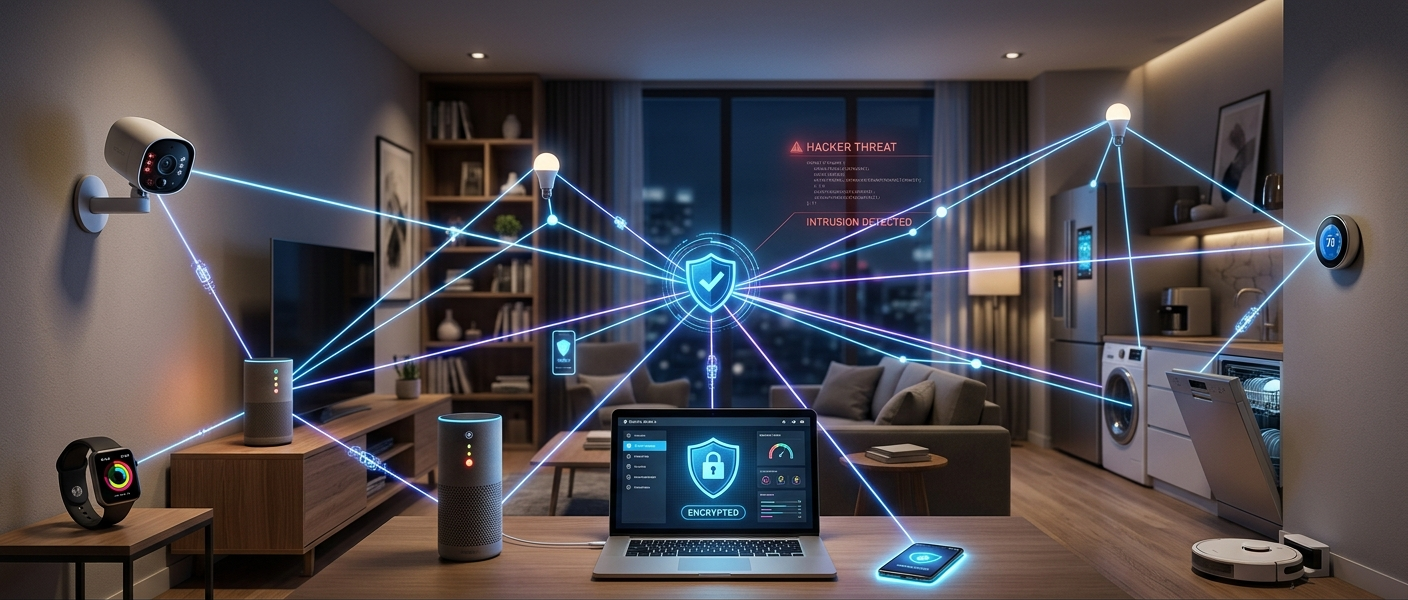
Although we see great value in what the Internet of Things has to offer, it also presents issues which must be dealt with before we see its full value play out. A very large issue is that of data security and patient privacy as health care devices which are all part of the network put out very private health info which must be secured against the wrong doers. Health care institutions require robust cyber security measures in place to avoid data breaches and to keep patient confidence. Also we see that different devices and health care systems do not always play well together.
We do not have in place proper standards of compatibility which if we had would see more efficient functioning of connected tech. Also the issue of cost of setting up this infrastructure is a barrier which in particular larger health care providers are having trouble with. Also health care staff require to be trained up in the use of this new tech. In order for the IoT solutions to be safe, reliable and to truly benefit both patients and medical professionals we must address these issues.
The Future of IoT in Healthcare
In the coming years we will see great advances in IoT for health as technology grows. We may see very small, very accurate and very integrated smart medical devices which will better enable people to track their health at home. Also we may note that hospitals implement more automated systems which in turn will improve performance, also remote health care will see widespread use among patients all over the world. We will also see inroads of smart implants, advanced wearable tech, and AI based health care platforms which will do much for in the area of early diagnosis and personal treatment.
As health care becomes more of a connected system patients will take on more of a role in what happens to them health wise and will have more access to their info. Also the growth of IoT will see health care focus more on prevention, access, and personal solutions. Through the connection of people, devices and health care professionals’ IoT is in the process of a large-scale transformation of how technology plays a role in health.
Conclusion
IoT is transforming healthcare through the connection of smart devices and digital systems which in turn improve diagnosis, treatment, and patient management. We see wearable health monitors, remote patient care solutions, smart hospital beds, and connected medical equipment in which health care providers are able to give faster, more accurate, and more personalized care. Also these techs allow medical professionals to have continuous patient monitoring, early issue identification, and better decision making based on present info.
While we have issues like security, cost, and system compatibility which still stand, we are seeing that ongoing innovation is in fact solving some of those issues. As IoT grows we will see it play a larger role in health care, which will in turn support both patients and professionals. The integration of connected tech into medicine is a large step toward a smarter, more efficient and patient centered health care future.