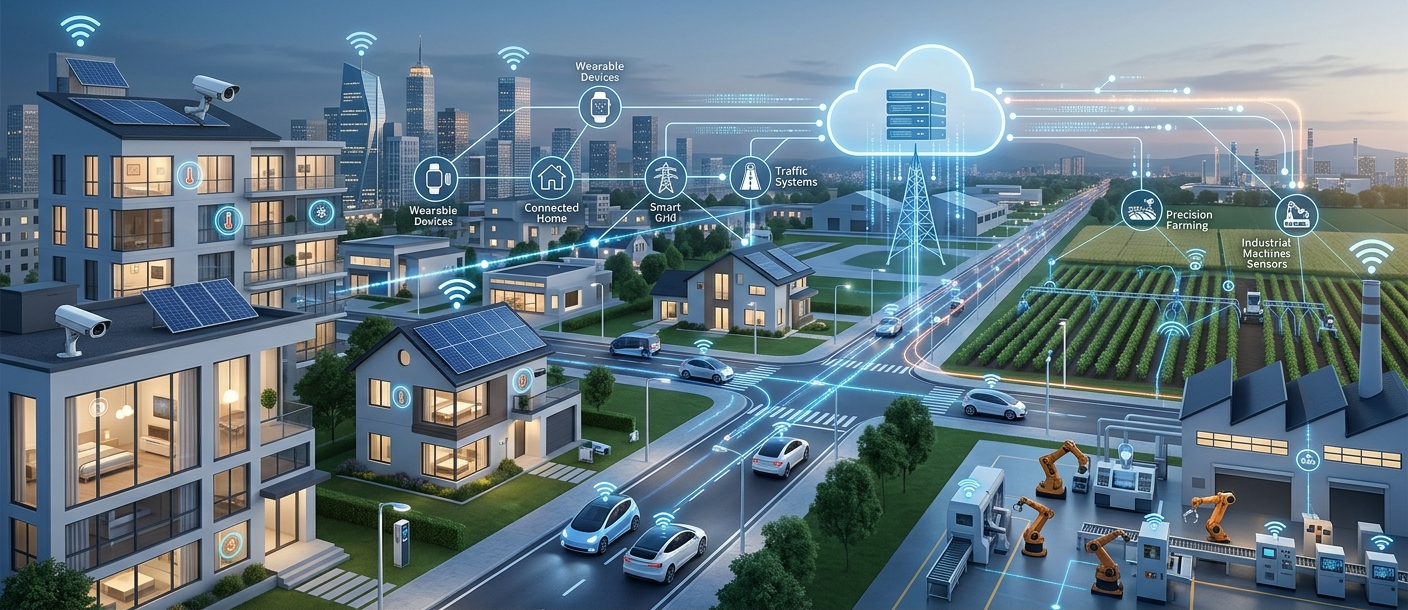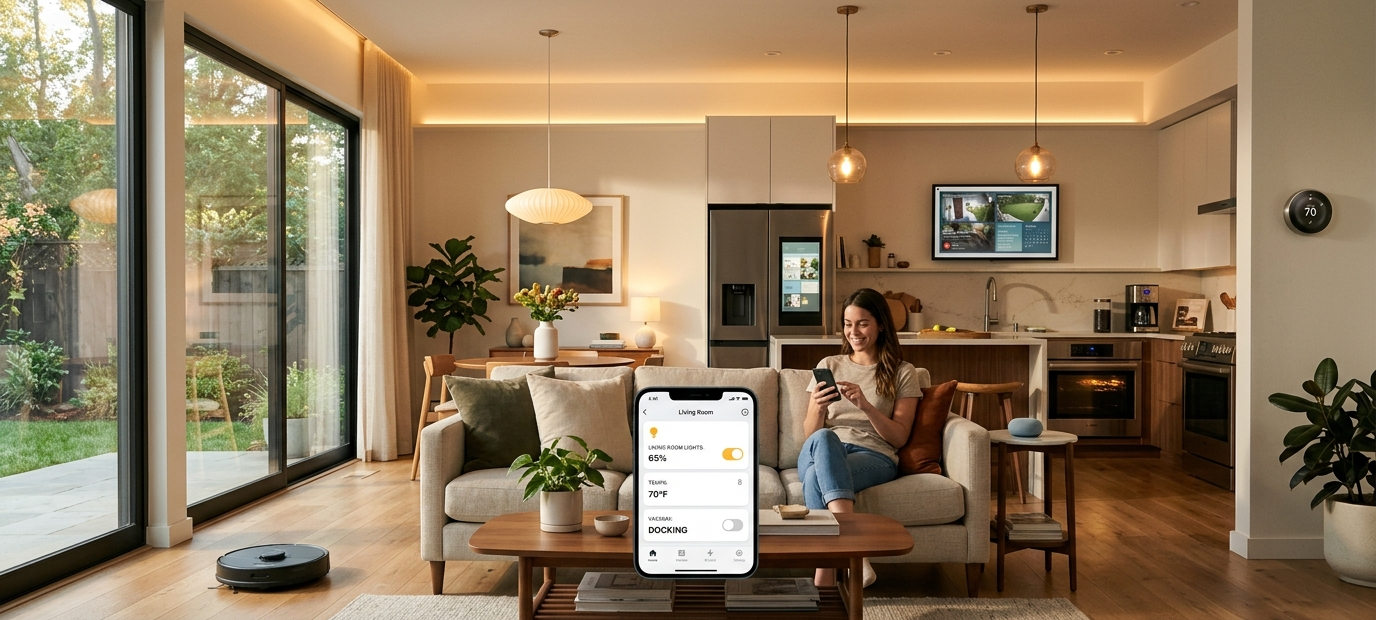
Today’s living area is experiencing a huge digital transformation. The good old days of separate walls, switches and appliances are now behind us. Today, the Internet of Things (IoT) is silently expanding the work space of physical objects and cloud software into a connected space of things to bring a new meaning to ease, comfort and security. Modern spaces are transforming into intelligent, responsive environments designed around personal human behavior by incorporating microcontrollers, sensors, wireless receivers and software into everyday household commodities.
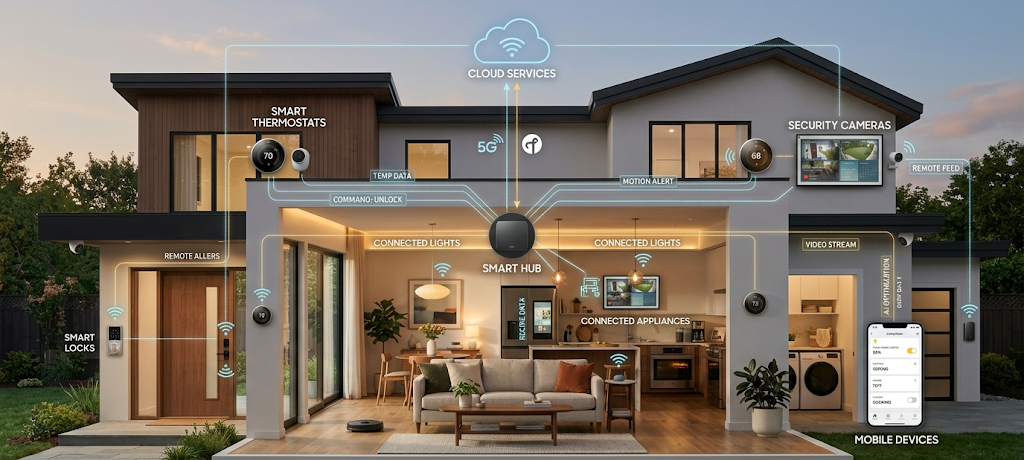
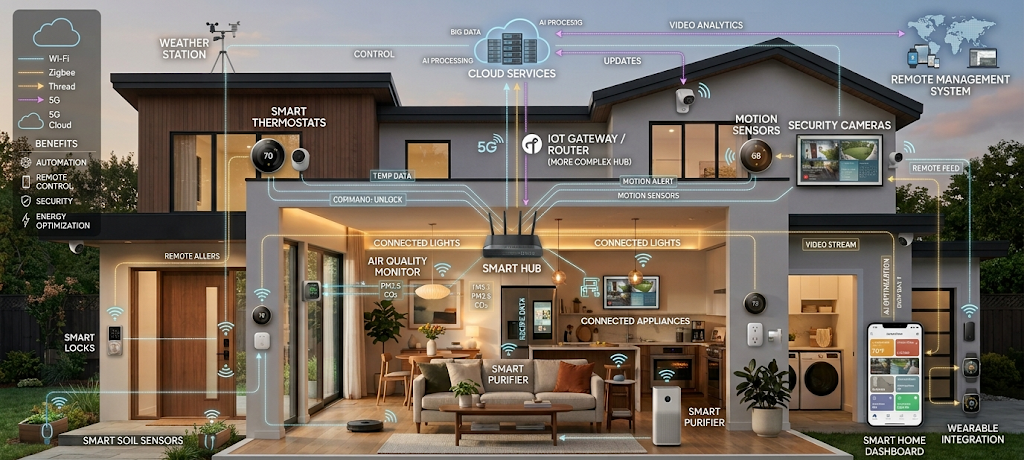
To grasp the interaction of these systems, it is necessary to view the bigger picture of home automation. By connecting everyday appliances through local networks and secure cloud servers, they make everyday life easier, eliminating the need for manual tasks. In addition to ease of use, connected smart home devices offer the chance to gain data insights about personal lifestyle management, residential energy use and environmental safety. From reducing utility costs to providing home security when away or making everyday tasks easier, there are practical examples of IoT at home that show the significant real-world value of the technology.
15 Best Examples of IoT in Smart Homes
1. Smart Thermostats
The main nerve centre of modern home heating, ventilation and air conditioning (HVAC) is the smart thermostat. Instead of using time-clocks only, IoT thermostats also include temperature, humidity and occupancy sensors to change the temperature and humidity inside a building dynamically. These smart devices can read the daily schedule, track current weather conditions and even learn the preferences of the family to schedule when to heat or cool the house, all without the need for constant manual input from the users.
The main advantage of their integration of an IoT thermostat is its ability to significantly reduce home energy waste. The device uses mobile geofences to identify when residents are in the building, and can adjust HVAC to an energy-efficient eco mode when they are not. The reverse is also true: The thermostat is able to adjust the temperature of the home when the residents return. With detailed mobile application analytics, users can track the power consumption of the home, remotely control room temperature, and get a heads-up if heating units need preventative maintenance, thus creating substantial savings on monthly electric bills.
2. Connected Security Cameras
There’s a significant upgrade when it comes to cameras connected to the Internet compared to the analog CCTV system we’ve all previously had. Today’s IoT cameras feature high-resolution video lenses, infrared night vision and built-in edge processing with artificial intelligence. Rather than capture hours of motionless video to local hard drives, these smart cameras automatically scan the physical space and upload those snippets of video to safe cloud storage spaces.
Today, connected cameras have the ability to recognize common, non-threatening actions like cars driving by or pets playing and differentiate them from more suspicious behaviors, such as someone entering private property. Advanced computer vision algorithms make this possible. The system alerts and immediately pops up a rich preview message on mobile screens when an intruder comes near. Homeowners can activate two-way audio communication to talk to guests; also, they’re able to remotely activate local sirens or broadcast live video feeds to local emergency response services, giving complete situational awareness and peace of mind no matter where they may be.
3. Voice-Controlled Smart Assistants
Voice-controlled smart assistants are intelligent central interactive points that can connect the human request to complex IoT networks. Smart speakers are built into devices that contain a set of microphones that can capture natural voice commands through background noise in an active living room. The voice assistants, which are powered by NLP algorithms in the cloud, convert language into exact actions across hundreds of third-party platforms and create a seamless and intuitive user interface for the smart home.
Voice assistants enable residents to control their whole living space without having to use several different smartphone apps to control different appliances. Users can say “Good Night” to turn off interior lights, arm exterior security monitors, lower window blinds and set morning alarms—all in a single brief command. Moreover, these smart voice interfaces provide up-to-the-minute news, coordinate family schedules, play digital audio, and even place online grocery orders, all in a seamless way that boosts lifestyle efficiency.
4. Smart Lighting Systems
Smart lighting solutions eliminate traditional light switches by substituting them with networked LED lights, smart dimmers and built-in wireless light switches. Smart lights can be controlled individually or in groups using one of a variety of low-power communication technologies—such as Zigbee, Z-Wave, or Wi-Fi—and communicate back to a central hub or mobile application to deliver fine-grained control of lighting in different areas of a home. Users can adjust brightness levels, adjust color temperature and make their own presets according to the daily human activities.
The biggest lifestyle benefit of smart lighting is that it seamlessly integrates ambient control customisation with active energy saving. Systems can be programmed to match human circadian rhythms with bright daylight colours during the morning to boost concentration, then warm amber tones at night to promote good sleep. Built-in motion detectors provide automatic shut-off in unoccupied rooms and geofencing technology prevents lights from running in the house while you’re away. Automated “vacation modes” activate the lights at random times during travel, and further harden the security.
5. Water smart leak detectors
Smart water leak detectors are very effective and low-noise IoT solutions that help protect homes from catastrophic damage caused by water leaks. These small sensors, located in areas of high risk including under washing machines, behind refrigerators, near water heaters and near basement sump pumps, monitor ambient moisture, relative humidity and temperature continuously. High-tech versions can even be mounted directly on the main lines to monitor real-time water flow and fluctuations in pipe pressure.
If an unforeseen drip, unexpected moisture increase or freeze happens, the sensor will trigger an automatic warning procedure. In addition to providing quick alerts to the mobile phone user via SMS and alerting the local alarm system, these smart detectors can directly control automatic water shut-off valves connected to the main water supply line. The integrated IoT ecosystem prevents human intervention by stopping the water inlet to a home in mere seconds should a pipe burst during a severe leak and causes tens of thousands of dollars in structural damage to the home, mold issues and loss of property.
6. Smart Door Locks
Smart door locks take modern digital access control to the front door of your home, without the physical inconvenience or security issues that come with a metallic key. These smart locks are connected via Bluetooth, Wi-Fi or keypad entry systems, and can be controlled remotely with a smartphone app, biometric fingerprint scan, key fobs or a specific set of numbers. An integrated sensor is installed on the door latch to monitor the physical position of the latch and confirm that entry points are closed and secured.
The biggest advantage to the smart door lock installation is the flexibility it offers for accessing the door without having to duplicate physical keys and the ability to revoke access when needed. For homeowners, temporary digital passcodes can be created that only work for a certain period of time during the day or that only last for one use. Detailed digital activity logs track all activities, including who unlocked the door and when. Additionally, automatic locking systems keep entryways locked automatically when people are away from the house, so there is no need to second guess and worry when you aren’t there.
7. Smart Video Doorbells
Smart video doorbells have basic functions that include alerting similar to a standard doorbell chime, high-definition video streaming, motion detection and two-way real-time audio communication. The devices are small and are installed directly outside entry points, and are connected to a mobile device or smart video display for live video when a visitor enters the porch or presses the physical call button. High dynamic range video and wide-angle lenses provide clear video in bright daylight or dark night time conditions.
Video doorbells revolutionize the front porch with a clear and convenient way to communicate with visitors without having to open the door. Real-time smartphone streaming allows homeowners to send specific directions to delivery representatives, welcome anticipated visitors and fend off unsolicited beggars from across the globe. Using advanced AI video processing, the system can classify between people entering the store, delivery packages, vehicles driving by and animals, minimizing false alarms. This instant visibility significantly cuts down on porch piracy, safeguards packages kept outside homes, and provides an extra important layer of physical security to the contemporary front door.
8. Connected Refrigerators
The Connected refrigerator takes kitchen management to the digital age, turning ordinary refrigerators into key management points for the kitchen. Advanced appliances are fitted with internal camera systems, touch screen displays, dynamic temperature sensors and Wi-Fi wireless connectivity for monitoring food inventory remotely. When the refrigerator door is closed, the internal camera instantly captures high-resolution images that enable users to get a close-up look at the food they have on hand at the grocery store on their smartphone.
Smart refrigerators go beyond mere tracking, they actively assist in streamlining meal preparation and reducing food wastage. The AI technology also monitors the expiration dates of the food items and sets reminders for the family members when perishable food is near its expiration date, and also suggests food recipes based on the available ingredients in the house. Digital whiteboards on the outside of the door panels allow family members to pin up common shopping lists, as well as leave digital notes, keep an eye on master schedules and even stream music or cooking videos, transforming the kitchen into a well-organized digital workspace.
9. Smart Robot Vacuums
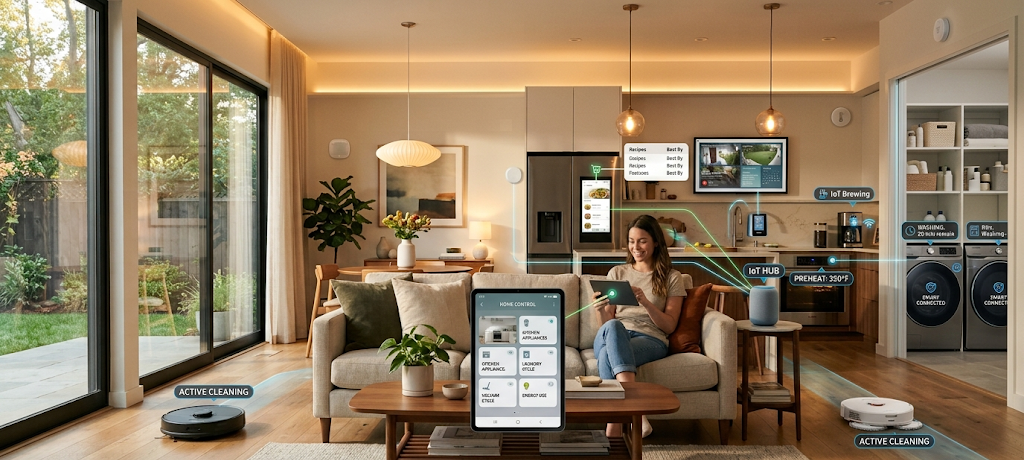
The most apparent and labor-saving IoT application in today’s homes is the smart robot vacuum. The autonomous cleaning robot includes LiDAR sensors, optical cameras, cliff detection sensors and simultaneous localization and mapping (SLAM) algorithms that work together to autonomously navigate complex home floors. While navigating through the different rooms, robot vacuums create accurate digital maps of the floors in companion smartphone apps, which enable users to program specific cleaning schedules, establish “no go” zones, and schedule targeted cleaning in areas where people are most active.
Smart robot vacuums are convenient because they can clean floors without any supervision, while the user is occupied with other tasks. These programs can automatically run the vacuum or mop when everyone has departed for the day or week, so the homeowner doesn’t have to get out of bed to do it. Modern robot vacuums are linked to home hubs and automatically return to the self-emptying dock stations to empty their dustbins, charge their battery cells and refill the clean water reservoirs. Cleaned routes are summarized in detailed push-notifications and filter maintenance reminders are sent to users, as well as alerts in case the robot comes across unexpected floor obstacles.
10. Automated Smart Blinds and Shades
Smart window blinds and shades for residential natural light and solar heat control with an automated motor. This window treatment is controlled by tiny, quiet electric motors and can be opened and closed remotely with voice commands, a mobile app, or wall switch—via wireless home networks. Users can easily angle blind slats to achieve privacy or raise and lower fabric shades to fine-tune interior lighting during the day.
Smart shades’ main benefit is that they act cooperatively with environmental factors to increase passive thermal performance. Automatic shade control for brightness and temperature severely reduces the heat load on the central air conditioning units in hot summer afternoons. On the other hand, in the winter, when the sun is cold, shades can automatically open to allow natural sunlight to warm them. Automation schedules can also be set to coincide with local sunrise and sunset, giving homes the luxury of waking up to the sun’s rays, while providing privacy during the evening.
11. Smart Washing Machines and Dryers
Smart washing machines and dryers offer intelligent automation and remote control of daily laundry tasks. Advanced appliances feature internal load sensors, water turbidity sensors, and control boards, which automatically adjust wash cycles for fabric weight, material and soil. Users can control, pause, check or delay laundry cycles directly from their smartphone apps and say goodbye to tediously having to sit and wait by laundry rooms.
Connected laundry appliances allow for improved overall resource efficiency and convenience in the home. They can automatically calculate the exact amount of liquid detergent needed for a particular wash load, preventing waste, and chemical residues on the clothes. When a wash cycle is complete, push notifications will remind users, so that wet clothes won’t stay in the drum and give off a sour smell. Additionally, intelligent dryers can download customized drying schedules for special sportswear or sensitive fabrics and optimize energy consumption by drying during off-peak hours of energy use.
12. Intelligent Smart Plugs
Intelligent smart plugs are among the lowest cost and easiest connected devices to upgrade into smart devices in the home. Designed to fit into existing wall sockets, these compact adapters act as a controlled power bridge, providing safe power for lamps, coffee makers, window or space fans, space heaters and holiday light strands. Smart plugs enable users to turn power on or off to connected legacy devices remotely using a mobile app and/or voice control through their home WiFi network.
In addition to the basic remote power switch, high-quality smart plugs are equipped with embedded energy monitoring electronics, which can measure and monitor actual power consumption and watt usage in real-time and over time. Owners can use power usage graphics in the smartphone apps to determine “vampire loads” that suck power when they’re not in use. Users can set schedules that run automatically, such as making coffee machines brew automatically every weekday morning, or space heaters for only a specific amount of time, for example, every night, providing a more relaxed way to run their daily routines and saving on unnecessary power when they are heating a space.
13. Smart Smoke/Carbon Monoxide Detectors
Smart smoke and carbon monoxide detectors transform life safety hardware to deliver modern digital alarms in the event of a home emergency. Typical alarm systems only use loud audible sirens, but these sound noisily at all if no one is in the house or if people are not at home. Smart detectors, however, are a merger of photoelectric smoke detection and electrochemical carbon monoxide detectors with wireless communications capability, allowing the detector to transmit a real-time emergency warning to mobile devices anywhere in the house.
Smart life-safety detectors also deliver easy-to-understand, audible warnings about the exact type and localized location of the hazard, e.g., “Smoke detected in the hallway” or “Carbon monoxide in the basement. In case of a false alarm, for example because of burnt kitchen toast, users can simply push a button to silence the siren from the smartphone screen instead of balancing on ladders to push the manual buttons. These detectors can be connected to other smart home systems, and can both activate indoor lighting to help people evacuate at night and notify HVAC systems to stop air movement, thereby minimizing smoke distribution.
14. Irrigation System and Sprinklers with IoT
Smart sprinkler systems and IoT irrigation controllers add data-driven efficiency to outdoor yard care, lawn maintenance and garden management. Smart irrigation controllers are replacing more simple mechanical watering timers and can be linked directly to meteorological networks around the world by Wi-Fi, making them aware of real-time fluctuations in temperature, humidity, wind speed and rain predictions. More sophisticated systems include the insertion of actual soil moisture probes into the lawn areas to determine water content in the field.
The first advantage of intelligent irrigation is the ability to do away with overwatering. The smart controller continually checks the local weather forecast and automatically skips scheduled watering times when there is significant rainfall, or weather is likely to be wet in the next several hours. Homeowners are able to tailor individual watering areas by specific plant types, soil and sun conditions throughout their home’s garden. This specific scheme supports plant health, substantially reduces residential water waste and leads to substantial reductions in water bills for the municipality in hot summer weather.
15. Smart Air Purifiers and Air Quality Monitors
These air purifiers and standalone indoor air quality monitors compliment each other to create clean and healthy indoor air. Over time, dust particles, volatile organic compounds (VOCs), pet dander, pollen, and high concentrations of carbon dioxide can adversely affect their breathing and sleeping. Smart Air Quality monitors continuously assess the quality of the indoor air and present indoor air quality indexes on mobile dashboards or embedded LED displays.
If connected to an IoT system, the air purifiers adjust their performance based on data collected by environmental sensors. When indoor pollution levels increase due to cooking smoke, pet activity, and/or outdoor pollution, the monitor automatically activates the smart air purifier to increase fan speeds and air is drawn through the heavy duty HEPA media for safe air quality to be restored. Users can check percentage of remaining filters on their smartphone, get timely reminders for changing filters, and see historical air quality information to keep the indoor air quality optimal all year round.
Overview of Smart Home IoT Examples
The following table provides an overview of the smart home IoT examples listed above.
| IoT Device Category | Key Hardware / Sensors | Primary Lifestyle Benefit | Energy / Security Impact |
| Smart Thermostats | To measure the humidity and temperature, occupancy and temp & humidity sensors are utilized. | The schedules are automatically adjusted and climate can be controlled remotely. | Reduces cooling/heating expenses up to 15% |
| Connected Security Cameras | AI Computer Vision, Infrared & Motion Sensors | The ability to view the smartphone’s activity in real time and immediately alert it. | Good resistance to forced entry and tampering |
| Voice-Controlled Assistants | Far-Field Microphones, Wi-Fi & Bluetooth | Hands free control of home automation scripts on the central system | Centralized control hub – easy handling of operation. |
| Smart Lighting Systems | Wireless Relays, Motion & Ambient Light Sensors. | Adjustable color temperatures, auto scene settings. | Reduces the amount of light required by as much as 60% |
| Water Leak Detectors | Moisture & Temperature Sensors; Flow Sensors | Instant leak alerts and automated main water line shut-off | Helps to stop catastrophic home flooding damage. |
| Smart Door Locks | Keypads, Biometric Scanners & Bluetooth | Guest enter code and guest card access systems. | Removes physical key weaknesses |
| Smart Video Doorbells | HD Video, Motion Detection & 2-Way Audio | Visiting virtually and monitoring visitors from the sidelines. | Prevents theft of packages and discourages solicitors |
| Connected Refrigerators | The internal cameras, touchscreens, and temp sensors are a great addition. | Grocery viewing at a distance, and automated recipe suggestions. | Reduces food waste and simplifies preparing meals |
| Smart Robot Vacuums | LiDAR, SLAM Mapping & Cliff Sensors | Clean floor surfaces hands-free, on programmable automated paths. | Completely automates your home cleaning tasks |
| Automated Smart Blinds | Electric Motors, Light & Temp Sensors | Automated sunlight control is linked with the day and night cycles. | Minimises the load on HVAC systems by passive solar control |
| Smart Washers & Dryers | Pressing issues of load sensors, turbidity & Wi-Fi relays. | Internet-based cycle management and automatic disinfectant dispenser. | Reduces water, detergent and power consumption |
| Intelligent Smart Plugs | Wi-Fi Relays & Power Consumption Hardware | Control and monitoring of legacy electronics devices and energy via remote control | Kills vampire usage of power from electronic devices when they are not in use |
| Smart Smoke Detectors | Photoelectric & Electrochemical Sensors | Advanced location-aware emergency notification system with room localization. | Fast deployment in Fire/ Gas hazards. |
| IoT Irrigation Systems | Wi-Fi Weather Sync & Soil Moisture Sensors | Automated watering on demand according to current weather conditions. | Increases the use of rainwater to conserve outdoor water usage by as much as 50%. |
| Smart Air Purifiers | VOC, Particle & Airflow Sensors | Automated air purification when air pollution is high indoors | Promotes better indoor air quality |
Building Your Connected Living Space
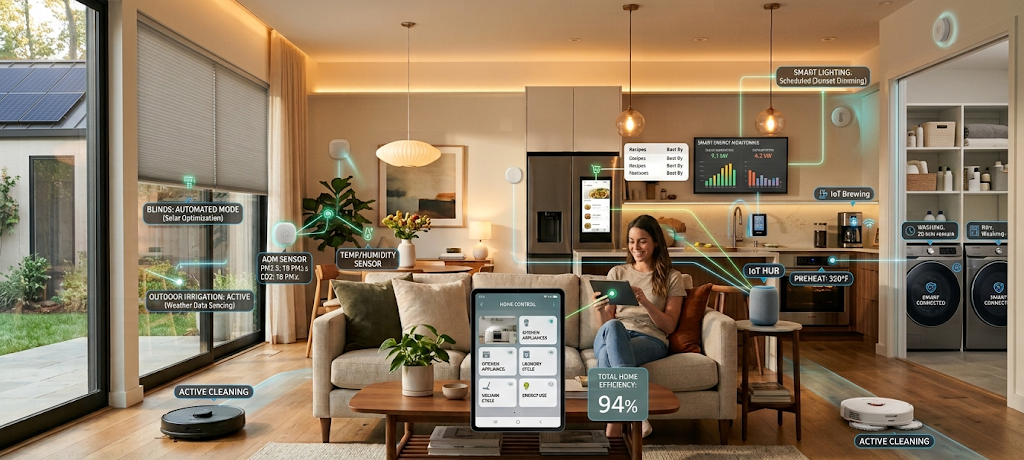
The Internet of Things (IoT) has brought a significant change in the way homeowners interact with their homes, making them more responsive and proactive. These 15 practical examples prove that smart home devices aren’t simply about the latest buzz or tech-fixation—they are about real-world solutions that save time, money, and help bolster home security and enhance the convenience of everyday living.
It doesn’t have to be all or nothing when you’re beginning your smart home. Homeowners can strategically continue to add more devices, starting with the most impactful, like smart lights, smart thermostats, or security system devices, gradually creating their own connected home network that fits their budget and lifestyle. As wireless standards evolve and device compatibility improves, the incorporation of IoT into daily life will become a more ubiquitous and essential aspect of everyday life.