Introduction
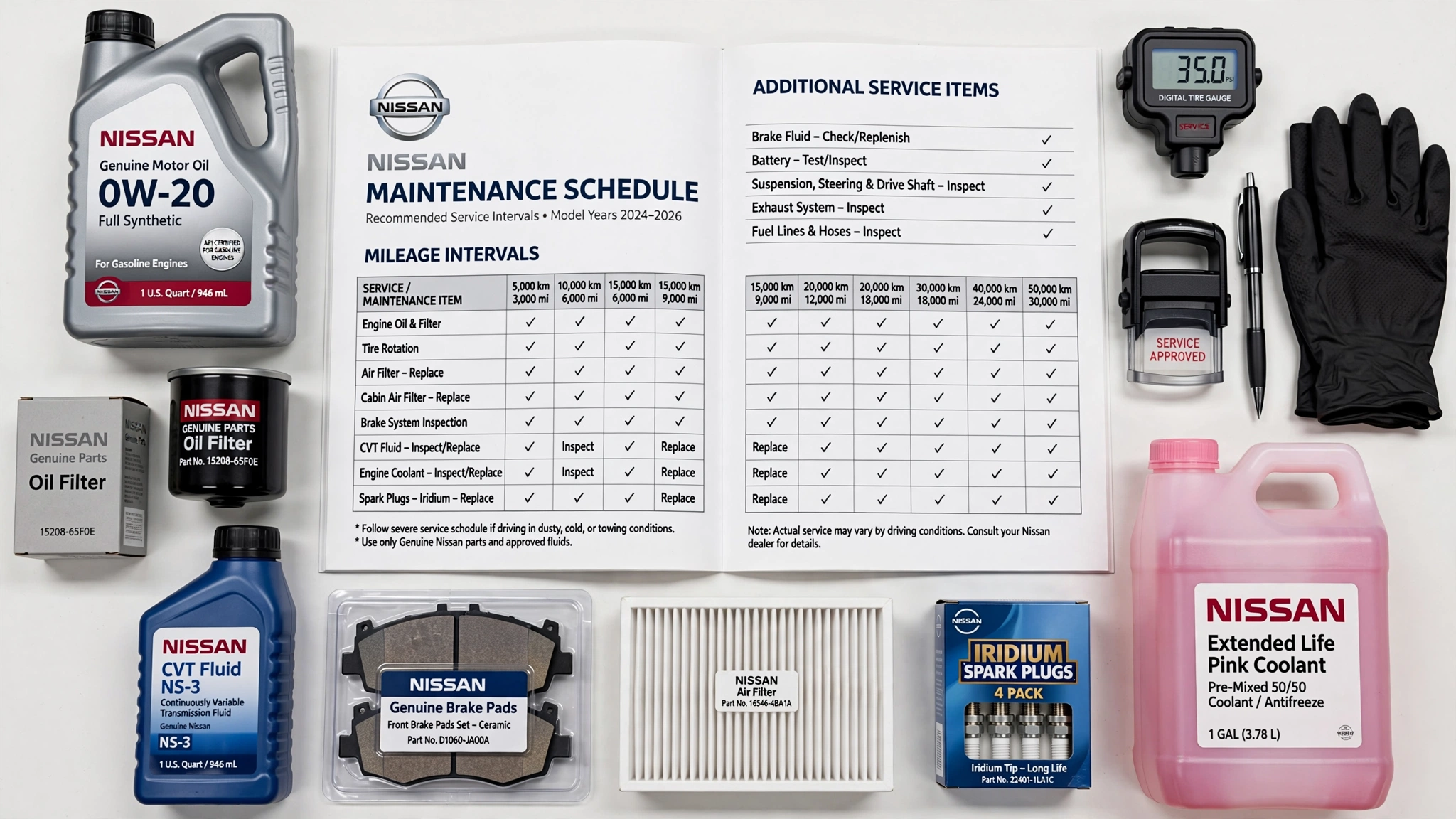
One of the most effective ways to ensure the reliability and manage the ownership costs of your vehicle over time is to follow the proper Nissan maintenance schedule. Prevents minor issues from becoming costly repairs with routine oil changes, tire rotations, brake inspections, fluid services, and filter changes. In contrast, the maintenance intervals are model, year, engine and transmission dependent so it’s always best to check the maintenance schedule for your vehicle.
If you want your Nissan vehicle to be reliable for a long time after the 150,000-mile marker, you should take proactive steps to prevent problems, rather than simply waiting for them to happen. The use of the proper fluids, early detection of warning indicators, and maintaining records of services can help prolong the life of the major components and will provide more predictable repair cost.
Nissan’s Maintenance Schedule Recommendations
This includes routine engine oil and oil filter changes, tire rotation, brake inspection, fluid checks, coolant service, spark-plug replacement, and inspection of steering and suspension parts, all of which are recommended in Nissan’s maintenance program. Depending on the individual car, this period of time will vary and owners should never use a single schedule for all Nissan vehicles.
The best way to find out is for owners to consult Nissan’s official maintenance schedule. You enter the model and year to give you maintenance information for a specific vehicle. Other factors such as driving conditions may also influence the service requirements, especially if the vehicle is driven regularly in extreme weather, in heavy traffic, for towing, or for other challenging activities.
Key Nissan Maintenance Intervals
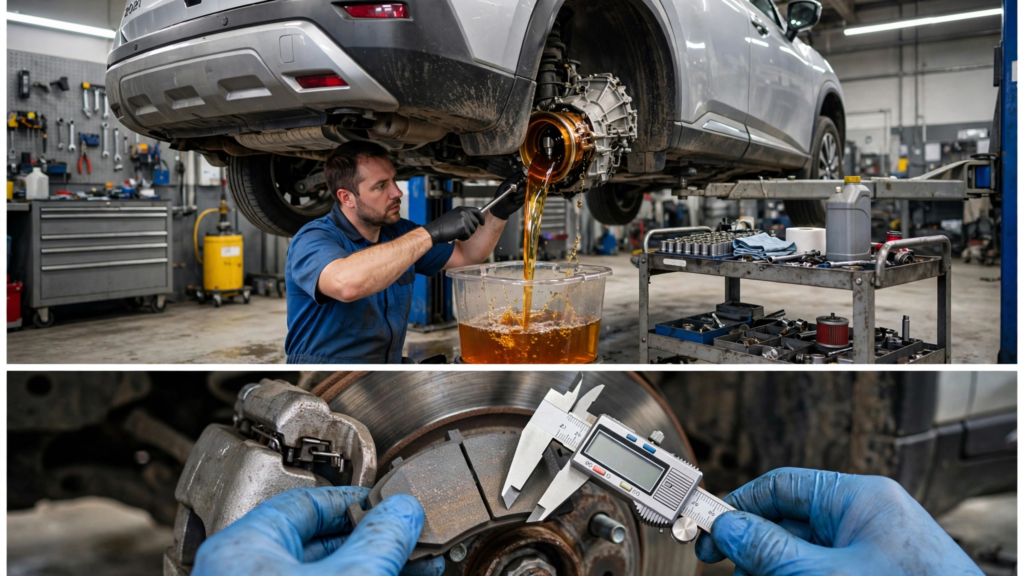
Regular maintenance should be split into routine maintenance and mileage based maintenance. It is important to monitor oil, tires, brakes and fluids regularly, and coolant and spark plugs are typically replaced less frequently. The best reliability/cost ratio occurs when you see the vehicle in between services according to the manufacturer’s schedule.
Spark plugs, transmission or CVT fluid, cooling systems, brakes, suspension and filters are areas that need special consideration with higher mileage Nissans. A maintenance appointment shouldn’t be just about changing oil. An appropriate inspection can detect worn parts in good time before they create bigger issues.
Oil Changes
The oil filter keeps out impurities and the oil keeps internal parts from rubbing and overheating. Oil can get contaminated and some of its effectiveness will be lost, so regular change is a must. The actual time period will depend on the Nissan model and engine, so owners should adhere to their vehicle’s interval, and not assume that all Nissan cars have the same interval.
Oil changes are also fairly cheap as far as engine repairs go. Dealers in the U.S. may be able to charge more than $60–$120, but most Nissan owners can expect to spend $60–$120 at an independent shop. Oil grade and specification should always be used to meet the manufacturer’s requirements for the particular engine.
CVT Fluid Service
CVT Nissans are different and need special attention: CVTs rely on the right kind of fluid to function properly. Owners need to realize that not all Nissan models have the same CVT service interval. Certain Nissan schedules call for inspections every so many miles, and replacement at specific mileages.
It is essential to use the correct Nissan recommended CVT fluid and to perform the recommended service in accordance with the correct procedure. The price for an independent CVT-fluid service is approximately $150 to $300, while dealership service might be more expensive. Reviewing the exact maintenance schedule prior to approving service can help avoid over-servicing and unnecessary maintenance delays.
Brake Service
Since brake pad and rotor life is largely attributed to driving conditions, check them regularly. Brake components are not as long-lasting when driving in the city, through heavy traffic, braking often, or driving on mountains.Brakes can wear out at a higher rate than highway driving, city driving, heavy traffic, frequent braking, or driving in mountainous areas. Owners need to be aware of unusual noises, vibration, pulling, decreased braking or warning lights.
The brake fluid should also be inspected as it can absorb water with time. If required, a scheduled brake fluid change could be necessary per the Nissan model. A brake-fluid change and a set of brake pads can cost about $70 to $150 to replace at an independent shop and around $150 to $300 to replace at an independent shop, before any rotor service.
Tire Rotation
Rotate tires to help evenly distribute tread wear and extend the life of the tire. Tire pressure should also be monitored on a regular basis because it can impact handling, fuel efficiency and tire wear if it is not properly maintained. Tire rotation is often part of the routine maintenance program that is recommended by Nissan. The intervals of the rotation may differ depending on the model.
Owners should also check tires for abnormal wear and/or damage. If there are any alignment, suspension or steering issues, there may be an uneven tread. The average tire rotation price at an independent shop is about $20–$50, while some dealers and tire shops will rotate tires as part of their other services.
Cooler and Spark Plugs.
The engine’s coolant is there to protect the engine from getting too hot, and to prevent corrosion in the cooling system. The life is dependent on the Nissan model and engine used. It’s also a good idea for owners to get a cooling system leak and hose damage check to avoid the risk of costly engine damage down the road from a cooling system leak.
Another of the high mileage service items is spark plugs. Poor fuel economy, poor running, misfires and worn plugs are possible consequences of worn plugs. While the frequency of spark plug change depends on the specific engine model, many Nissan car owners will need to think about spark plug replacement at higher mileage. Many four-cylinder models may require a replacement of about $150-$300 dollars if they are replaced by the independent-shop.
Dealer vs. independent shop cost
While Nissan dealerships may be more expensive for labor, they have technicians who are trained on Nissan vehicles, and use Nissan specific equipment and procedures. Some independent shops may offer less expensive labor than other shops, particularly for routine maintenance like oil change, brake repair, tire rotation, and fluid maintenance.
Not all of the lowest quotes are the best quotes. Request an itemized quote before granting maintenance approval; the quote should include the parts, fluids, labor and a breakdown of why each service is recommended. If it is a big repair job, check Nissan’s official maintenance schedule and compare it to the estimate to see if it is scheduled for the needed repair or if it is due.
Essential Tips to keep your Nissan reliable even past 150,000 miles
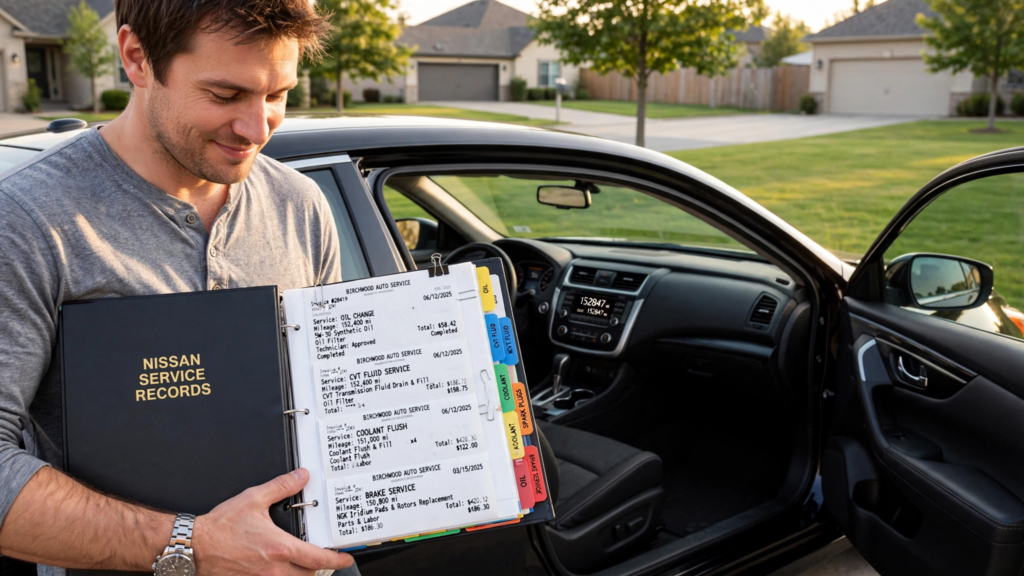
The key to maximizing Nissan longevity is to proactively maintain them, rather than waiting for a problem to arise. Document all oil changes, CVT or transmission service, coolant change, spark plugs, brake services, tire rotations and other major services. The vehicle’s resale value can be enhanced and it is easier to know what is due next with good records.
However, high mileage car owners should not neglect to take action immediately when they are alerted to any warning signs. If the engine has any leaks, strange sounds, hot engine, warning light, rough shifting, vibration or loss of performance, have it checked. While no maintenance will cure all problems, regular maintenance will minimize unnecessary problems and prolong the life of major components.
Some usual Nissan maintenance errors.
A common error is thinking that if a car is running fine, it doesn’t require maintenance. There are problems that gradually develop and eventually become apparent to the driver. Yet another error is not performing maintenance on time because of low mileage. As with other parts of the vehicle, fluids, tires, batteries and items can wear out both over time and with usage.
Owners should also not assume that all the services that a shop offers are good and should be accepted. Determine if the service is needed by Nissan’s schedule, based on the condition of the vehicle, or it is a preventative service. This can help an owner to spend money on important maintenance and not on unnecessary maintenance.
Conclusion
A correct Nissan maintenance plan ensures that all major parts of the vehicle, such as the engine, transmission, brakes, cooling system, tires and more are protected. The basics of maintenance must be performed regularly: oil changes and inspections, and also following the following requirements: CVT fluid, coolant, spark plugs, brakes etc. should be serviced as per the requirements of the specific Nissan model.
If you’re aiming for 150,000 miles and beyond, a consistency is more important than just a mileage number. Replace parts and fluids as needed, maintain detailed records of all vehicle services, perform routine inspections and deal with issues quickly. These are the habits that can save you money over the long haul in repairs, and can help keep your Nissan reliable for many years to come.