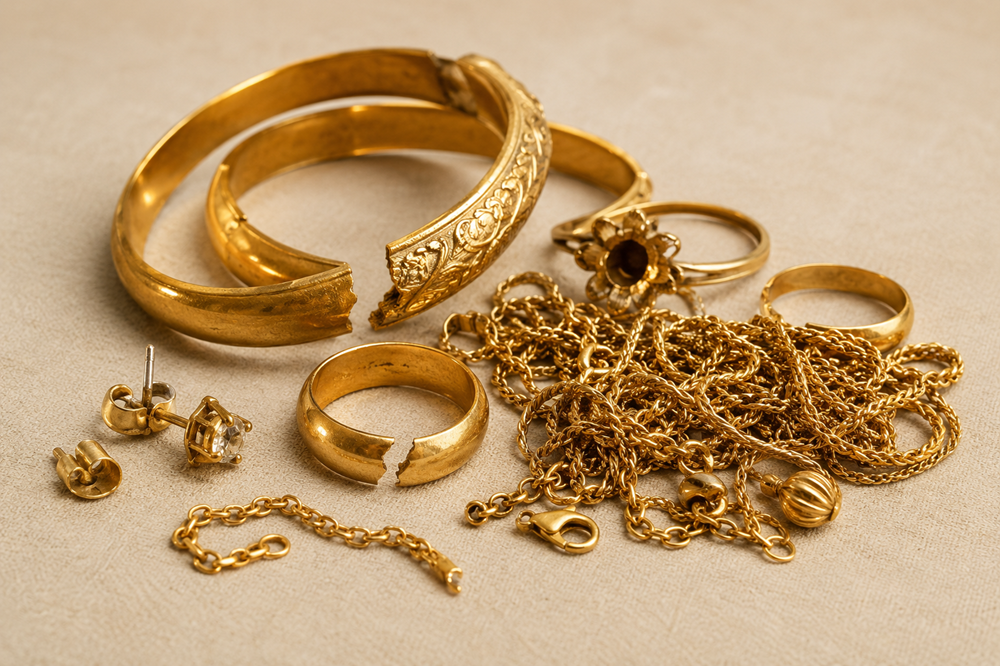
Broken or damaged jewellery often remains stored away because it no longer feels suitable for regular wear. Bent bangles, broken chains, single earrings, and worn-out rings may seem unusable, yet the gold itself can still retain significant value.
Many people delay making a decision because they are unsure how damaged jewellery is evaluated or what options are available. Understanding the process can make those decisions easier and more informed.
A gold exchange offer provides an opportunity to exchange unused jewellery into new designs while preserving the value of your existing gold. Knowing how damaged jewellery is assessed, what influences the exchange value, and what to expect during the process can help you approach the exchange better.
Does Damage Affect the Exchange Value?
Physical damage does not automatically reduce the value of your old gold. In most cases, the exchange value depends on the purity and final weight after evaluation rather than the jewellery’s appearance. Broken chains, dented bangles, damaged rings, and single earrings are generally assessed using the same process as wearable jewellery.
Many gold exchange offer programmes also accept jewellery purchased from any jeweller. Coins, gold bars, and broken pieces are commonly eligible for exchange. Original purchase bills are often not required, making the process more convenient.
Common concerns include:
- Scratches and Dents: Surface damage usually does not determine the exchange value.
- Broken or Incomplete Pieces: Single earrings, broken clasps, and damaged chains are commonly accepted.
- Jewellery From Another Jeweller: Many gold exchange offers accept gold purchased from any jeweller.
- Missing Purchase Bills: Original invoices or receipts are often not mandatory.
- Old or Outdated Designs: Design age rarely affects the gold’s assessed value.
- Different Gold Purities: Many jewellers accept multiple karat purities after proper testing.
- Small Gold Pieces: Even lightweight or broken items may be eligible for exchange after evaluation.
How Broken Pieces are Assessed
A gold exchange offer follows a transparent process to determine the value of broken or damaged jewellery. Most reputed jewellers follow similar evaluation steps.
- Purity is Tested First
A certified Karatmeter checks the jewellery’s karat purity. This provides an accurate starting point for the evaluation. It ensures the assessment is based on verified purity. The process is quick and non-destructive before melting.
- Weight is Recorded
The jewellery is weighed before the evaluation begins. Accurate weight helps determine the recoverable gold value. Every eligible piece is included during this step. Proper measurement supports fair valuation.
- Gold is Melted Transparently
The jewellery is melted to verify its actual gold content. Many jewellers perform this process in front of customers. This helps build confidence in the evaluation. It also confirms the recoverable gold accurately.
- Purity and Weight are Verified Again
The melted gold is tested once more. Final purity and weight are recorded accurately. This removes uncertainty caused by stones or other materials. The verified figures determine the final value.
- Exchange Value is Calculated
The final gold exchange offer is based on verified purity, recoverable weight, and the applicable gold rate. The valuation is explained before you proceed. This helps you understand the final amount clearly. You can then decide how to use the exchange value.
- Choose a New Jewellery Design
The confirmed exchange value can be used towards new Bureau of Indian Standards (BIS) certified jewellery. You can explore different collections before making your selection. This allows you to create jewellery that suits your current style. It also gives old gold a fresh purpose. The exchange value can be used across different jewellery collections, including rings, bangles, pendants, and a polki necklace.
What Jewellers Look for Beyond Purity
Purity remains one of the most important factors, but it is not the only aspect considered during an evaluation. Jewellers also verify the final recoverable gold weight after melting. This helps determine the exchange value accurately. They may also check the presence of stones, solder, or other materials that do not contribute to the gold value.
Some gold exchange offer programmes provide additional benefits that improve the overall experience. You can compare programmes that offer 0% deduction on the exchange value, as they may help maximise the value of your old gold.
Many also accept any karat from any jeweller and do not require original purchase bills. After the evaluation, the exchange value can be used towards a new BIS-certified jewellery design.
Unlock the Value of Broken Jewellery Through Gold Exchange
Broken jewellery can continue to hold significant value despite visible wear or damage. Having an understanding of the process helps you make informed decisions before accepting a gold exchange offer.
Comparing purity testing methods, valuation practices, and exchange benefits can also help you choose the right programme. Visiting a jewellery store allows you to receive a transparent purity assessment and understand the exchange value of your old gold. Jewellery brands like Indriya offer 0% deduction on the exchange value, helping you maximise the value of eligible gold. Once the evaluation is complete, you can choose from a wide range of BIS-certified jewellery designs. A well-planned gold exchange offer allows you to refresh your collection while preserving the value of gold you already own