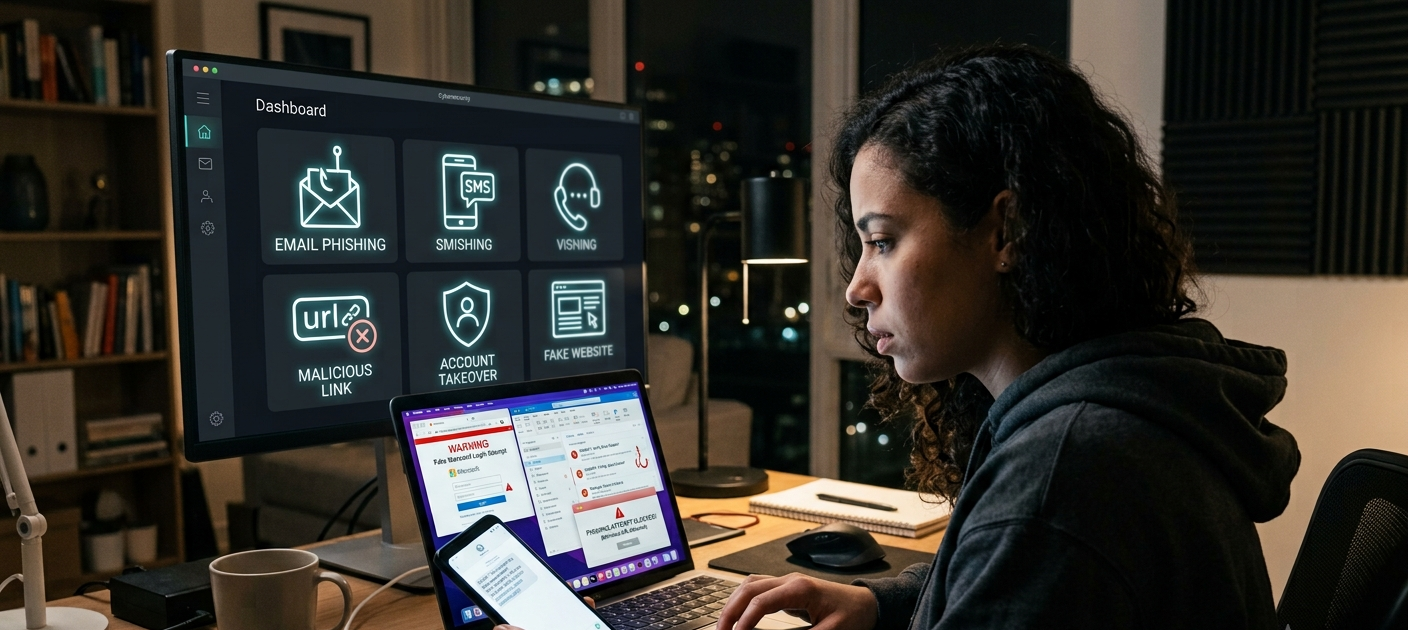
The web has restructured how we communicate, shop, work, and manage our finances. As digital actions increase so do the cybercriminals’ games they play to get at users’ info. Of which the most prevalent and dangerous is phishing which is a form of cyber attack that uses trickery for them to give out passwords, banking info, personal details, or access to private accounts. Phishing attacks may come in the form of what seems like routine emails from trusted companies, friends, or institutions which is what makes them hard to spot at first.
Phishing attacks are successful at what they do because they play into human behavior as much as technical flaws. We see that attackers use urgency, fear, curiosity, or trust to get the better of their victims which in turn prompts them into actions they would usually avoid. A person may get an email that says their account is locked, a text which is a fake reward, or a phone call from what sounds to be a bank representative. We see many faces of phishing and also the signs which put up the warning which in turn are the keys to protecting your personal and financial info online.
Before we dive into the various scams it is to know that phishing takes many forms and is always evolving. We put forth these examples of phishing attacks which show how attackers use a variety of communication tools: email, text message, phone call, fake websites to trick out individuals and organizations. By learning how these schemes play out users can become better at identifying suspicious activity and responding safely.
What Is Phishing and How Does It Play Out?
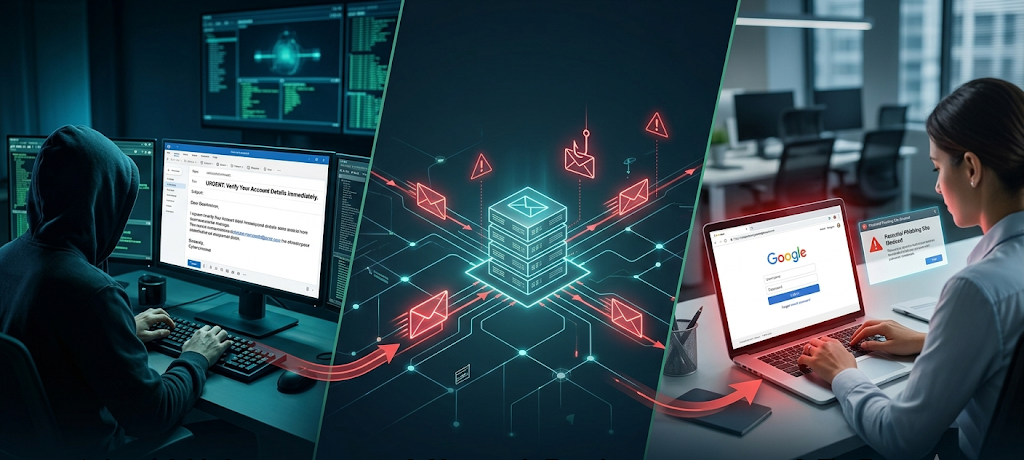
Phishing is an area of cyber attack in which criminals put on the persona of trusted individuals, businesses, or organizations which in turn tricks victims out of personal information and which also we see as a way for the bad guys to get into systems not through complex tech means but through what is called social engineering that is getting people to do what the attacker wants. What we see is that the main aim of the attacker is to get login info, financial data, ID details out of the victim or to get them to install malicious software.
A common pattern in phishing attacks is for the attacker to put together a fake email which looks the part. They may use a popular company’s brand, pass themselves off as a bank staff member, or create a phony login page that very much looks like a real site. Also the attacker puts out this email via email, text, social media, or phone. At last the goal is to get the victim to click on a link, open an attachment, or hand over private info.
Phishing has been around for a while but we are seeing an increase in advanced tactics. Today’s cyber criminals are into AI, they use authentic company logos which they obtain through data breaches and also very specific info about you which they get from social media. That is why it is more important today than ever before to be able to identify which emails are actually phishing attempts.
1. Email Phishing
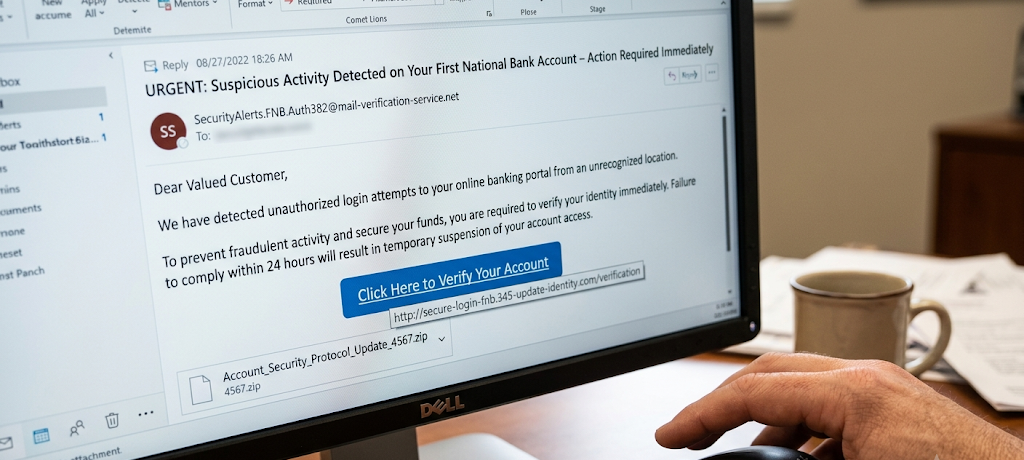
Email fraud via email is a very popular form of phishing. We see people receive emails which appear to be from what we trust like banks, online service providers, government bodies, and large companies. What is common in these emails is they create a sense of alarm or urgency which prompts recipients to react before they think through the email’s content.
A typical case of email phishing is when a user reports that their online banking account has been suspended which is a result of some strange activity. We may also see an attachment or a link in the email which is to direct the victim to a fake bank site in which we ask for your username and password. Upon collection of this info the attacker will try to use it to get into the victim’s account.
In other words we see fake security alerts from email providers or online shopping which report that your account has been accessed and that you must immediately prove your identity. The link may go to a lookalike site which is in fact to obtain your login info.
To spot email phishing users can look out for telltale signs that may include out of the ordinary sender email addresses, spelling errors, unexpected attachments, a sense of urgency in the email content, and links which seem out of place. Also, rather than to click on links in the email which the user receives, it is recommended that the user go to the company’s main website by typing in the address bar in the browser.
2. Smishing (SMS Phishing)
Smishing is an area of phishing which we see in text messages or SMS. The term smishing is a combination of SMS and phishing. What we are seeing is an increase in these types of attacks as people tend to trust what comes into their phone and will reply without thinking to check if it is a legitimate message.
In the case of a smishing attack which usually is from a delivery company what you may see is a notice that your package can not be delivered until you confirm your address which you do by clicking on a link in the message. That link takes you to a fake site which in turn will ask for your personal info or payment details.
Another is a fake bank notice which reports to customers of unusual transactions. What we see put forth by the scammer is to get the recipient to click a link or return a call right away to “sort out” the issue with their account. In fact what they are out to do is steal the victims banking info or talk the person into giving up very private info.
People can steer clear of smishing attacks by ignoring links from unknown numbers, reporting to the company’s official app or website to see if a notice is real, and to not give out personal info in response to out of the blue requests. Also it is a rule of thumb that legitimate businesses do not ask for your password or financial info via text.
3. Vishing (Voice Phishing)
Vishing is a type of phishing which uses phone calls. In this form of attack criminals play the role of trusted organizations like banks, tech companies, government agencies, or customer support which the victim may know. The attacker in vishing uses conversation and psychological tactics to get victims to give out private info.
In addition, when a victim answers to a phone call from what seems to be an employee of their bank the report may go that strange activity is noted in the account and we ask for account info which we think is for verification. While the agent may sound professional the aim usually is to get enough info out of you to use for fraud.
In another example of a similar fraud we have the fake technical support call which reports that a person’s computer is infected by a virus. It also may be the case that the criminal will get the victim to install remote access software which in turn allows them to take over the device and steal info.
To prevent vishing scams do not give out your passwords, security numbers, or banking info in unexpected phone calls. If a caller says they are from a company do not continue the call instead use the company’s info from their website or phone which is listed in one of their documents to get in touch with them.
4. Spear Phishing
Spear phishing is a personalized type of phishing which goes after a certain person, company or organization. We see that in contrast to mass email attacks which are sent out to large groups of random users, the targeted emails in a case of spear phishing are put together with details which we know of the specific target.
For instance a staff member may get an email which appears to be from their boss that is very urgent in nature which requests a payment or a very private document. The attacker may have looked at the company’s structure, the employees’ names and what they do for the company to make the request seem real.
A classic case of spear phishing is when attackers go after staff in companies they have put together detailed emails which appear to be from trusted work associates. We see in large scale data breaches that these attacks are successful because the victims do not question the authenticity of the messages.
To prevent spear phishing it is advised that individuals and businesses verify out of the ordinary requests which includes anything related to money, passwords, or personal info. Also employees should report back to the person that supposedly sent the request via a diff’rnt communication line which may be a phone call or in person.
5. Fake Invoice Phishing Scams
Fake invoice fraud schemes see criminals pass off as legitimate suppliers, businesses or service providers which in turn send out fake bills and payment requests. This type of scam mostly affects companies but also may play out at the individual level.
A typical report is of an email which has an attached invoice and reports that payment is past due. These messages put on professional language and company color which is very authentic. Should the recipient pay the invoice which is presented, the money goes straight to the attacker.
In another variation of the scam criminals are putting forward as legitimate suppliers which they have taken over and are claiming that the accounts which we had been using for payment have been transferred to different institutions. We are asked to send all future payments to these new accounts which in fact are controlled by the attacker.
To prevent fake invoice schemes, check in person. We ask that you confirm payment info via a verified contact not email only. Careful invoice inspection will save you from large scale issues.
6. Cloned Website Phishing
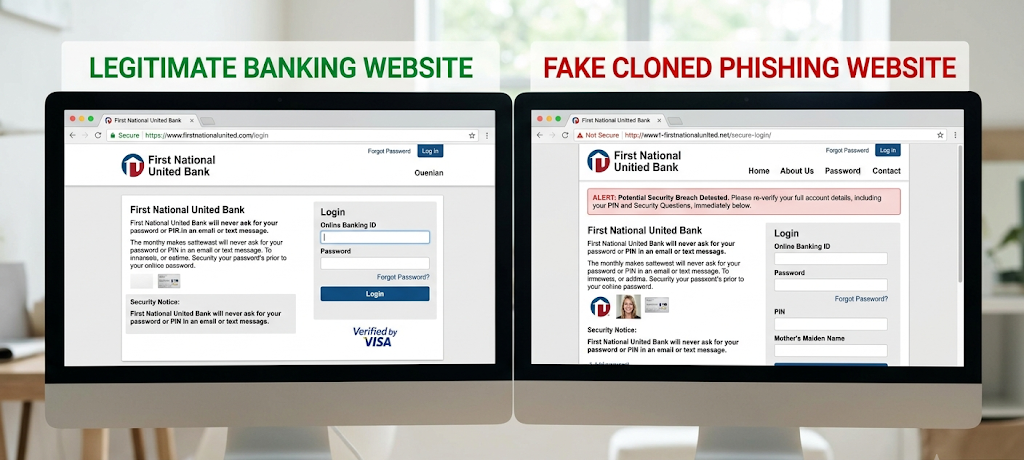
Cloned which also is a term for phished websites that very much look like the real thing. We see that these fake sites use the same or very similar logos, color schemes, layouts, and in some cases almost identical web addresses to pass as the real thing.
For instance attackers will put up a fake online banking login site which looks very similar to the official banking site. As users enter in their login and pass their information goes right to the criminals.
Online shopping platforms also see a great deal of action. Fake shops may put out very high end items at rock bottom prices to draw in customers. Once they enter payment info, attackers get that financial info.
Users must always check website addresses which are of the utmost importance before you enter any sensitive info. That said we see a lot of secure sites that use HTTPS for their encryption but which users should still be aware may not be the real deal. What we recommend is that users also look at the domain names very closely and use only what is given out to you by trusted sources which is the best practice.
7. Social Media Phishing
Socially engineered phishing on social media which is used by criminals to trick users via social networks, messaging apps, or online communities. They may run fake accounts, send out malicious messages, or put up fake promotions to collect personal info.
A typical case of such schemes is a fake give away which promises large prizes. Users may present with requests to put out login info, to fill out surveys, or to click on what turn out to be dangerous links in an attempt to claim their prize. The info which they give out is then used for identity theft or account take over.
Another issue is that of fake customer support which passes for that of popular brands. We see them reach out to people who have complained about a service and ask for private info to “solve” the issue they brought up.
Users are to check that accounts are in fact official before using them out there, also do not share out sensitive info via social media and also be careful of unknown profiles.
8. Pharming Attacks
Pharming is out to get you via phishing methods which redirect you to fake sites without you having to click on a suspicious link. What happens is that attackers change up the web address or they get into systems which control the internet traffic.
For instance a user may input the right website address of a bank but accidentally be brought to a fake version which is run by criminals. If the user provides login info the attackers get that.
Pharming attacks may go by unnoticed as in many cases the users think they are at the actual site they intended to go to. To reduce risk however, outdated devices should be left out of use and quality anti virus software should be employed and also do not enter into detailed information on which the attack could exploit you on unknown pages.
9. Business Email Compromise (BEC)
Business Email Attack which targets organizations by which the email comes from senior company members or trusted business associates. The goal of the attacker in this case is to get staff to send over money or to give out protected information.
For instance we have seen that an employee received an email which appeared to be from a company director which asked for an urgent payment. As the request was from what seemed to be a person of authority the employee did not check the info.
BEC attacks present a great financial risk which is true of large organizations that are a target for such activities. To mitigate risk companies may train their employees, use multi factor authentication, and require extra layers of approval for financial transactions.
10. Malware-Based Phishing
Malicious action in the form of phishing which distributes malware is a feature of malware based phishing. We see that attackers send out emails which may carry infected attachments or links that upon click may install malware on the host machine.
For instance in the case of a fake job application email we may see an attached resume. When the recipient opens that attachment malicious software may be installed.
To prevent malware included in phishing attempts users should steer clear of opening unexpected attachments, also it is recommended that antivirus software be kept up to date and that you download from trusted sources only.
How to Avoid Phishing Scams
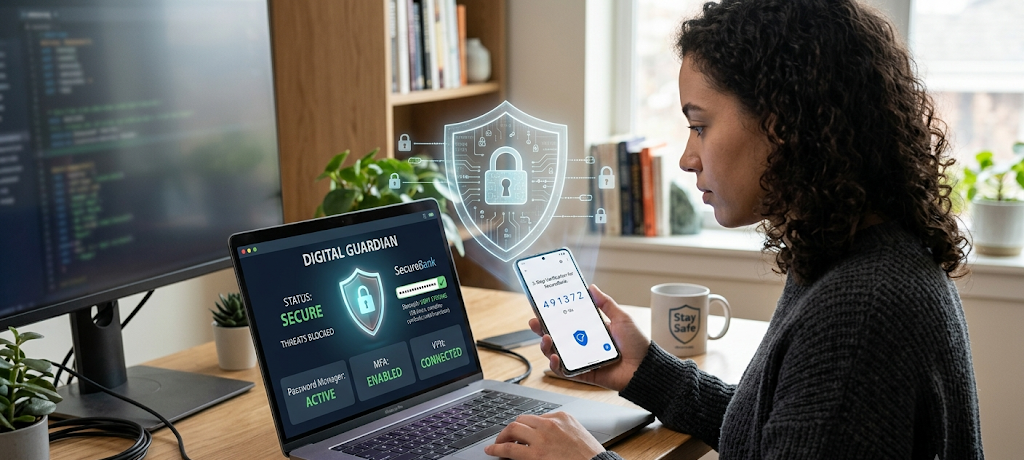
The best way to guard against phishing is through awareness and care in your online actions. Users must question any unusual emails in particular those that ask for your password, payment info, or which urge you to do something right away. It only takes a few seconds to check the info which may in fact prevent large scale security issues.
One key practice is to check the sender’s information very carefully. Cyber criminals put out email addresses which look like real ones but have very small changes. Also try to hover over links before you click they may take you to a different site than what you expected.
Using complex passwords and turning on multi factor authentication also is a good practice. If attackers get a hold of a password they still may not be able to gain access because of multi factor authentication.
Regular maintenance of your devices and software is key which is true because security updates also plug in issues that bad actors may use. Also at the top of the list for security is education which we see to be very effective at fighting phishing as informed users are less likely to be tricked by deceptions.
Conclusion
Phishing attacks are still the greatest issue in the world of cyber security which we see through their exploitation of trust and human error. We see from email and SMS phishing to spear phishing and phishing in which legitimate sites are cloned that attackers are always coming up with what has next. But what we can do is study how these scams play out which in turn gives us the knowledge to spot the warning signs and react safely.
By the means of verifying senders, eschewing suspicious links, protecting account info, and being apprised of new threats individuals may greatly reduce their risk of becoming victims. Cyber security is not only an issue of advanced technology; it also is an issue of what the average internet user does. Learning how to identify phishing attempts is a key step toward creating a safer and more secure digital environment.