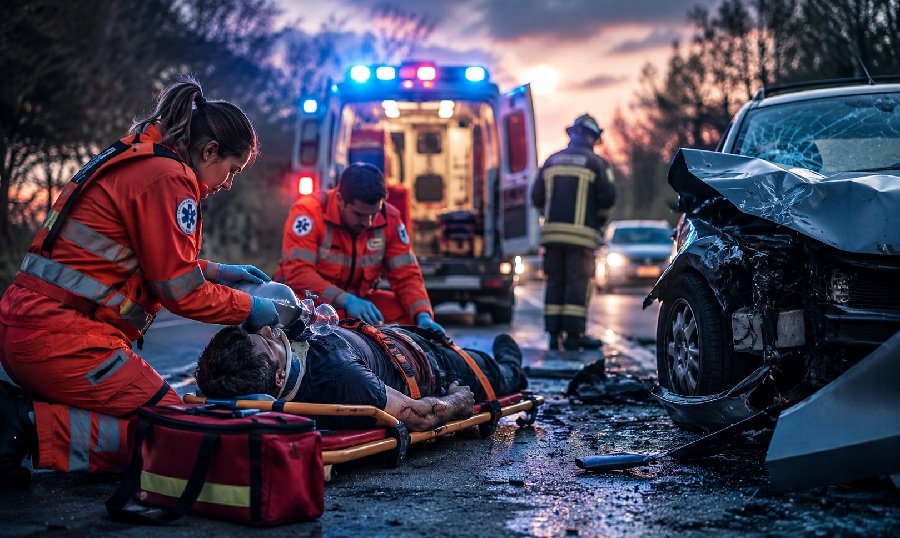
Car accidents happen at any time and anywhere, and unfortunately, cause people to lose their lives. This is why what happens during the first few minutes can make a huge difference in surviving the crash.
When someone is badly injured in a car accident, a fast emergency response can save lives, reduce complications, and improve recovery outcomes. In many situations, every second truly matters.
Why Quick Emergency Response Matters
Life and death can depend on how quickly emergency responders arrive after a car crash. In fact, a study found a clear link between slower emergency response and higher chances of death.
- When emergency help arrived just a few minutes later (1 to 5 minutes instead of under 1 minute), the chance of dying at the crash scene increased by about 58%.
- Another finding showed that when total response time increased from under 9 to 9 to 18 minutes, the risk of death increased by about 34%.
In simple terms, the longer it takes for emergency responders to arrive, the higher the risk that crash victims may not survive.
Moreover, after a serious crash, the human body can also change quickly. Shock can set in before a person even realizes how badly they are hurt. Some victims may feel okay at first because of adrenaline, only for their condition to suddenly worsen minutes later.
Not all injuries are easy to see right away. Some are obvious, like cuts, broken bones, or bruises. But others can be far more dangerous because they are initially hidden. A crash victim may have internal bleeding, head or brain injuries, trouble breathing, neck or spinal cord injuries, or other serious trauma that worsens over time.
For instance, internal bleeding may be symptomless initially, but it will eventually become fatal if not treated immediately. Similarly, a head injury may appear harmless at first, but later, swelling or pressure in the brain may develop.
That is the reason why a swift response from paramedics is so critical. While patients might appear fine, paramedics will understand what signs to detect and react promptly. Their responsibilities go beyond transporting injured individuals to hospitals. In some cases, paramedics provide immediate aid, including stabilizing victims, stopping the bleeding, providing oxygen therapy, testing respiration, and monitoring the condition of a patient.
The “Golden Hour”
Medical professionals often use the term “golden hour” when talking about traumatic injuries. This refers to the first hour after a serious accident or medical emergency.
During this period, prompt medical treatment can greatly improve a person’s chances of survival and recovery. The sooner victims receive proper care, the better the chances of preventing serious complications.
Quick emergency treatment may help:
- Reduce blood loss.
- Prevent brain damage.
- Stabilize breathing.
- Protect the spine from further injury.
- Lower the risk of permanent disability.
In many cases, even a delay of a few minutes can affect a victim’s recovery. That is why emergency response times matter so much, especially in severe car accidents where injuries can worsen rapidly.
Prompt medical attention can help victims heal more successfully and avoid long-term complications.
What Causes Emergency Response Delays?
In an ideal situation, emergency responders would arrive within minutes of a crash. But in real life, several challenges can slow them down, even when every second matters.
- One reason could be traffic congestion. On busy roads and streets, vehicles such as ambulances, fire trucks, or police cars might have trouble maneuvering amid heavy traffic, even when they activate sirens. It might not always be easy to get people driving ahead of them to move out of the way immediately.
In the same study, which analyzed data from over 654,000 people involved in road crashes, nearly half of the accidents (49.6%) occurred during rush hour, when roads are at their busiest. Sadly, 2,051 people died at the scene of the crash.
- Another important aspect that can significantly contribute to the problem is the distance between the crash site and hospital facilities or other emergency stations. Obviously, in cases where help comes from remote locations, it will take longer for professionals to arrive on the scene.
- Bad weather can be another reason. It worsens road conditions, reduces visibility, and creates a challenging environment for drivers. This way, emergency vehicles will have to drive more slowly and be careful enough not to cause any accidents.
- There can also be serious crashes involving multiple cars, which means that more than one ambulance should be used to deliver victims to hospitals. As mentioned, rescuers are prepared to handle such situations. However, when several victims are injured, providing help can obviously take longer.
The above-mentioned aspects lead to delays solely because, in the meantime, an injured person has to wait for help.
How Faster Response Helps Save Lives
When emergency teams arrive quickly, the impact on survival and recovery can be life-changing. A fast response allows medical professionals to act during the most critical stage of an injury, often before conditions become irreversible.
Quick medical care can:
- Help stop or control serious bleeding before it becomes fatal.
- Reduce the risk of brain damage caused by oxygen loss or swelling.
- Stabilize breathing when a victim is struggling to get enough air.
- Protect the spine and prevent further injury during movement or rescue.
- Lower the risk of long-term disability from untreated trauma.
In many cases, what happens in the first few minutes after a crash is more important than anything that follows. It is the window where trained responders can stabilize a patient, prevent complications, and give the body a fighting chance to recover.
This is why emergency response time is a life-saving factor that can shape the outcome of an accident long before a patient even reaches the hospital.
What Drivers Should Do After an Accident
If you witness or experience a car accident, staying calm can help emergency responders do their jobs more effectively. Some actions that should be considered when involved in an accident include the following:
- Contacting emergency services immediately.
- Giving location information.
- Switching on warning lights if possible.
- Not moving those who are injured unless necessary.
Small measures will go a long way toward saving lives until help arrives.
What Comes Next: The Emotional and Financial Impact
A serious car accident doesn’t end when the crash is over. The worst part often comes afterward for victims of accidents and their loved ones.
In terms of emotional consequences, the experience can take a toll on victims’ mental health, leaving them feeling scared, stressed, or anxious. Sleeplessness and trauma are among the issues commonly associated with an accident that leaves victims in shock. The family and close friends of the victim may also have to undergo significant changes after such an experience.
From a financial perspective, a victim may encounter various expenses. Medical bills, further treatment, and costs of therapy or rehabilitation can create additional pressure on surviving parties in the wake of an accident, coupled with lost income due to their inability to go to work and earn money.
For some families, this combination of emotional stress and financial pressure can feel overwhelming.
In situations like these, some people choose to speak with a car accident lawyer to better understand their options after a serious crash. This can be especially helpful when dealing with insurance companies, medical bills, or questions about compensation, so victims can focus more on healing and recovery rather than paperwork and claims.
For example, a worker who suffers a back injury in a crash in Nevada may need weeks of treatment and rehabilitation before they can return to their job. During that time, medical bills continue to arrive, while their regular income is temporarily reduced or completely stopped. This kind of situation can place a heavy burden on both the victim and their family, often leading them to seek guidance from a Las Vegas car accident lawyer to better understand their options.
Final Thoughts
No one expects to be involved in a car accident, but emergency response times can have a powerful impact on survival and recovery.
The sooner help arrives, the greater the chance that victims receive the care they need during those critical moments. As roads become busier and cities continue to grow, improving emergency response systems remains an important way to keep communities safe.
In emergencies, even a few minutes can make all the difference.