LinkedIn has grown to be one of the most potent business networking sites on the planet. It is used daily by recruiters, hiring managers, business owners, and industry leaders to find talent, assess candidates, and develop professional networks. However, many people who are looking for employment continue to leave their profiles unchanged after they create them.
Optimizing your LinkedIn profile can make a huge difference in visibility, recruiter interest, and opportunities, and it doesn’t take a lot of job applications to create them. Recruiters strongly favor job titles, terms, skills, and phrases from the industries they’re recruiting in. If your profile isn’t optimized for these searches, you might not show up in the results.
This post will help you optimize your LinkedIn profile, LinkedIn headline, About section, experience descriptions, skills, recommendations, and content strategy. You will also discover how to incorporate recruiter keywords into your profile to help you be located by recruiters.
Why LinkedIn Profile Optimization Matters
Many job seekers think that recruiters will come across them due to their titles or their professional experiences. In fact, LinkedIn operates quite a bit like a search engine. To find the right candidates, recruiters type in certain terms, skills, certifications, and industry jargon. Profiles with those keywords are more likely to show up in search results.
An optimized profile can make you more visible in recruiter searches, boost your professional brand, and make your value clear. It also boosts your odds of getting connection requests, interview invites, and networking opportunities. Instead of hoping for things to fall into place, an optimized profile strives to pave the way for you 24/7.
Optimizing your job search profile can lead to recruiters reaching out to you directly, minimizing the number of jobs you have to apply for. The end goal isn’t to just have a LinkedIn profile; it’s to have a LinkedIn profile that always gets the attention of the right people.
Rewrite Your Headline for Maximum Visibility
Your headline is one of the first places that recruiters will look when your profile shows up in the search results. Many users make the mistake of putting their current location or the generic phrase “Seeking New Opportunities.” These may be true, but they don’t help with discoverability.
Rather, make a headline that incorporates your professional attributes, know-how, and primary skills. Consider what recruiters might be searching for in a person who has your qualifications. Use industry-specific keywords that are relevant to your strengths and experience.
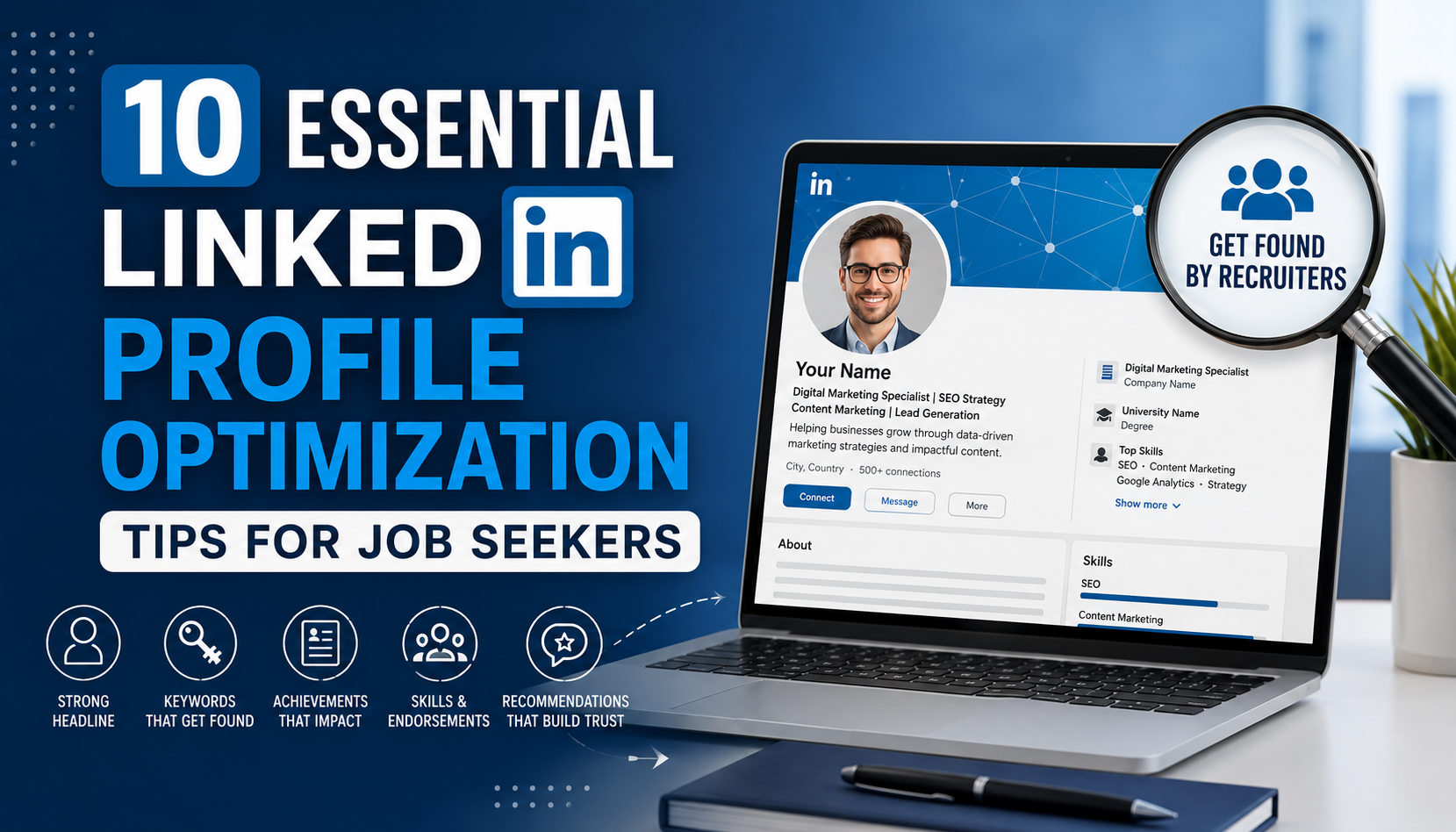
For instance, the title “Marketing Professional” can be replaced with a more specific one like “Digital Marketing Specialist | SEO Strategy | Content Marketing | Lead Generation.” This helps to create a direct message of your expertise and makes your profile more relevant in terms of keywords.
The goal of a strong headline is to make it clear to the reader who you are, what you do, and the value you offer employers. Your headline should be as specific and relevant as possible, as this will improve your likelihood of being found in recruiter searches.
How to Use Recruiter-Searched Keywords Effectively
Recruiter-searched keywords are crucial for your LinkedIn visibility. There are specific filters that recruiters can apply and keywords that they can utilize to determine the right candidate. These search patterns can be useful in optimizing your profile for a recruiter’s search.
Recruiters search for keywords that are relevant to your position and industry. Examine job descriptions for positions of interest to note common words. Consider technical skills, certifications, software platforms, methodologies, and professional skills that are mentioned in several postings.
After you’ve found the keywords that are relevant to your business, use them in your headline, your About section, your skills section, and your accomplishments. Don’t use too many keywords because it makes the profile hard to read and unnatural. The aim is to remain clear and enhance search visibility.
Having a consistent profile with relevant keywords will help it rank higher in recruiter searches and attract targeted opportunities that correspond to your career aspirations.
Develop an About Section That Sells Your Value
The About section is where you can share your professional story. Unfortunately, many users do not fill it in or type something general that doesn’t set them apart from other candidates.
The first sentence of your About section should tell a little about your professional experience, the type of work you do, your measurable successes, and your career focus. Don’t just list responsibilities; describe the value you bring and the impact of your work.
First, talk about who you are and your key strengths professionally. Include examples of achievements, special skills, and areas of expertise. Use keywords naturally throughout the text while maintaining a conversational tone. Conclude with a call to action for networking, collaboration, or professional connections.
This section allows recruiters to determine your abilities and whether or not you may be an appropriate candidate for future opportunities.
Transform Experience Bullets into Achievement Statements
It’s common for many LinkedIn profiles to include verbatim experiences from resumes. This is frequent but can lead to content that is weak in emphasis, lacking in accomplishments, and focused on responsibilities.
Rather than providing a list of daily responsibilities, emphasize measurable accomplishments and business impact. Recruiters want results because they show that you can add value to their company.
For instance, instead of using the phrase, “Managed social media accounts,” use: “Managed social media campaigns that boosted engagement by 45% and drove qualified leads to sales teams.” The quantitative results make your experience more interesting.
The accomplishments, improvements, cost savings, revenue growth, and other achievements of each position should be highlighted. This is a great way to boost your credibility and can also help you naturally add industry-specific keywords to your profile.
Use the Featured Section Strategically
One of the most underused features of LinkedIn’s profile is the Featured section. It provides the opportunity to highlight your knowledge and authority.
Portfolio projects, published articles, presentations, certifications, case studies, videos, or major professional accomplishments are all permissible. This section is your own showcase, where recruiters will be able to easily see what you’ve created.
The Featured section is a good resource for creative, technical, consulting, and marketing professionals to showcase skills and achievements. Rather than just asserting your skills, you can prove them with real-life examples.
Regularly updating this section will also indicate profile activity and professional management, positively impacting the impression recruiters will have.
Develop Credibility by Gaining Skills Endorsements
The skills section can be used to demonstrate your expertise and assist with improving your search visibility. Choosing relevant skills increases the likelihood of showing up in recruiter searches for those skills.
Consider selecting skills that are relevant to your desired career, not every skill you possess. Focus on the most common skills listed in job postings within your industry. Place the most important skills at the top of the list to get the attention of recruiters immediately.
Ask peers, supervisors, and business associates to endorse your abilities when appropriate. Endorsements don’t necessarily guarantee opportunities, but they do add credibility and social proof.
A well-designed skills section reinforces the knowledge presented throughout your profile and can assist with general keyword optimization strategies.
Request Recommendations That Strengthen Your Professional Brand
Recommendations are more credible than profile content that you write yourself. Recruiters have more confidence in your abilities when former managers, colleagues, clients, or team members speak about your contributions.
Don’t just request general recommendations; ask specific questions that encourage contacts to discuss projects, accomplishments, skills, and professional attributes. Specific feedback, rather than generic praise, provides stronger evidence of your capabilities.
For instance, recommendations that describe how you enhanced operational efficiency or achieved project success are much more useful than a simple statement that you are hardworking.
Try to gather recommendations from various work relationships, including supervisors, peers, and clients. This helps provide a comprehensive view of your capabilities.
Optimize Your Profile Photo and Banner Image
First impressions are important and are often influenced by visual presentation. Professional visuals create a strong first impression and are likely to be reviewed dozens of times each day by recruiters.
Use a well-lit, sharp headshot that is appropriate for your field of work. Your photograph should clearly show your face and convey confidence and approachability.
The banner image provides additional branding opportunities. Consider creating a banner that reflects your profession, expertise, industry, or personal brand. Your profile image and banner can complement the rest of your profile content to give your profile a professional and polished appearance.
Stay Active to Increase Feed Visibility
Even the most optimized profile can become “invisible” if it remains inactive. LinkedIn rewards users who actively interact with content and participate in professional conversations.
Share industry knowledge, comment on relevant posts, post brief industry observations, and engage in discussions related to your field. Regular activity boosts your visibility among connections and expands your professional reach.
You don’t need to post every day. Just a few meaningful interactions each week can make a difference to your presence. The aim is to stay engaged and add value through relevant content that establishes your authority.
Active profiles are more likely to receive profile views, connection requests, and recruiter attention than inactive profiles that rarely engage with the community.
Monitor and Update Your Profile Regularly
Optimizing LinkedIn is an ongoing process. Careers evolve, skills develop, and industries change. Keeping your profile up to date ensures that it remains aligned with opportunities and recruiter expectations.
Update your profile periodically with new accomplishments, certifications, projects, and skills. Refresh keywords to reflect new trends and job market demands within your industry. Update your Featured section periodically and continue building your recommendations over time.
Fresh profiles demonstrate professionalism and ensure recruiters always see the most current representation of your skills.
Conclusion
A LinkedIn profile should be used as more than just a replacement for a resume. When optimized properly, it can become an effective marketing tool that helps you attract recruiters, boost your professional credibility, and create networking opportunities.
You can increase visibility on the platform by improving your headline, adding recruiter-focused keywords, enhancing your About section, showcasing your achievements, taking advantage of the Featured section, seeking endorsements and recommendations, and staying active.
The best job seekers understand that LinkedIn isn’t just a place to add work experience. It’s an opportunity to share value, demonstrate expertise, and create opportunities. By optimizing your profile and engaging with others regularly, you can build a dependable network of career connections and professional prospects.