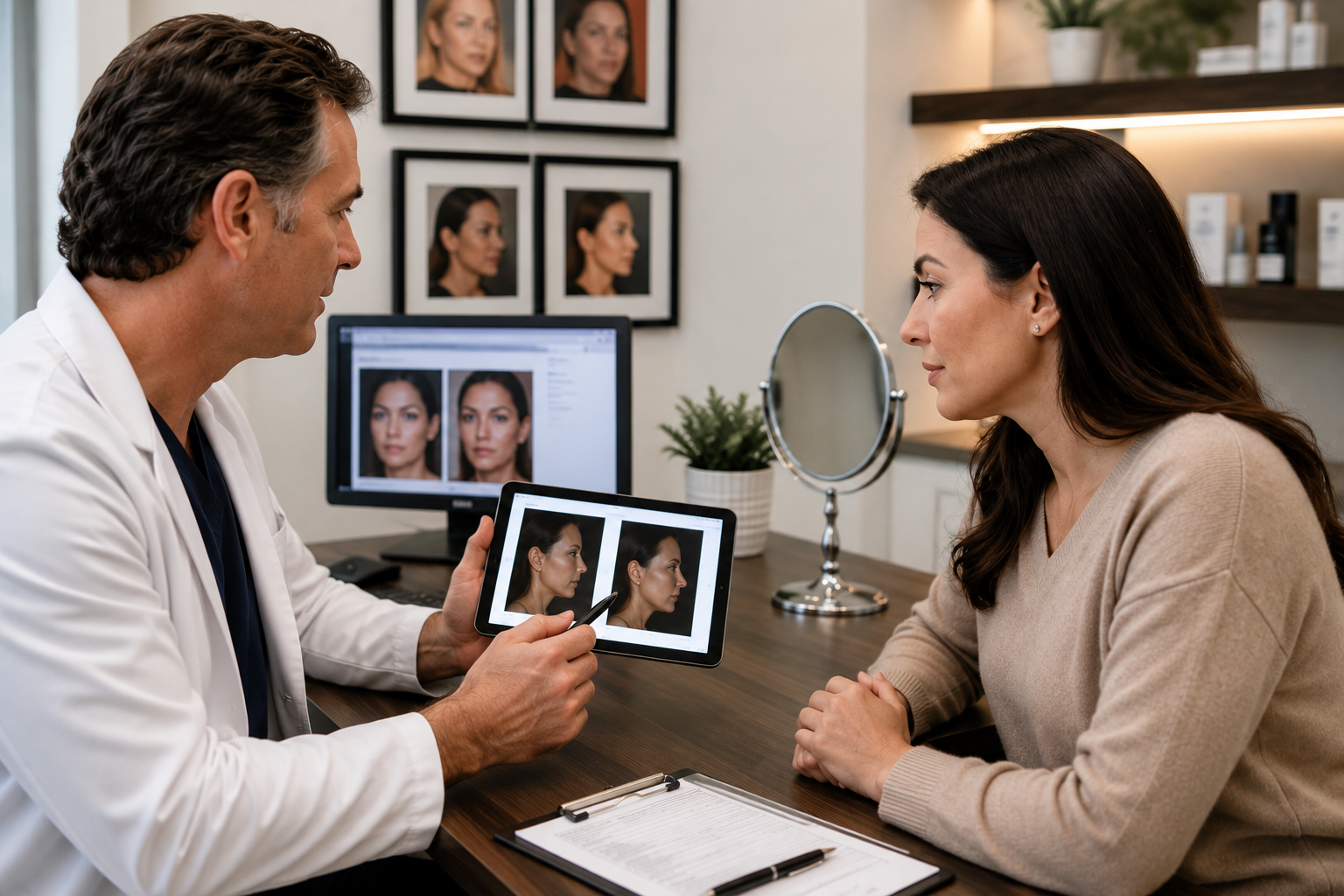
Choosing a plastic surgeon in Dallas is not just a Google search and a phone call. The city has no shortage of clinics advertising the same outcomes, the same promises, and the same stock-photo smiles. What gets lost in that noise is the fact that not every surgeon offering facial procedures has the same level of training, focus, or results behind them. Some are generalists who do facial work among dozens of other procedures. Others have built their entire careers around the face and nothing else. Knowing the difference before you book a consultation can save you a lot of time, money, and regret.
Board Certification Is the Starting Point, Not the Finish Line
A lot of patients check whether a surgeon is board certified and stop right there. It sounds like a clear yes or no answer. In reality it is more layered than that, especially when it comes to facial procedures.
General plastic surgery board certification covers the whole body. A surgeon who holds it is qualified to operate on everything from the abdomen to the hands. That is a legitimate credential, but it is not the same as a surgeon who has pursued dual certification from both the American Board of Facial Plastic and Reconstructive Surgery and the American Board of Otolaryngology-Head and Neck Surgery. Those two boards together represent a specialized training path built around one specific region: the face, head, and neck.
Earning dual certification requires completing a dedicated fellowship in facial plastic surgery after residency. It means the surgeon has spent years studying the anatomy of the face at a level of detail that general surgical training simply does not go into. For a patient getting work done on their face, that depth of specialization is not a minor footnote. It is directly relevant to what kind of result they are likely to get.
Look for a Surgeon Who Focuses Exclusively on the Face
Credentials matter. So does what a surgeon actually does with their time every single week.
A general plastic surgeon might perform a rhinoplasty on Monday, a breast augmentation on Tuesday, a tummy tuck on Wednesday, and a facelift on Thursday. Each of those procedures involves completely different anatomy, different tissue behavior, and different healing processes. That kind of variety keeps skills broad but not necessarily deep in any one area.
A facial specialist, by contrast, works within the same anatomical region day after day. They develop an understanding of how facial tissues age, how different skin types respond to incisions, and how to create results that hold up naturally over years rather than months. That concentrated experience adds up in ways that show in the work.
Dallas patients have real access to surgeons who limit their practice entirely to cosmetic and reconstructive procedures of the face, head, and neck. Not every city has that concentration of facial specialists. Finding one here is entirely possible, but it requires looking past the general practices that dominate most search results.
Common Procedures Dallas Patients Ask About
Walking into a consultation with a basic understanding of the options available makes the conversation more useful for everyone. Here is a straightforward breakdown of what Dallas patients most commonly ask about.
Facelift surgery addresses the lower face and neck, where jowling, skin laxity, and sagging are most visible with age. Modern facelift techniques work on the deeper tissue layers rather than just pulling the surface skin. That approach is what produces a refreshed, natural look instead of the stretched appearance older techniques were known for. Incisions are placed within the hairline and natural facial folds so they are not visible once healed.
Rhinoplasty, or nose surgery, can address the shape, size, and proportion of the nose relative to the rest of the face. It can also correct structural issues that affect breathing. It is one of the more technically demanding procedures in facial surgery because small changes in the nose produce noticeable effects on overall facial harmony.
Blepharoplasty, or eyelid surgery, removes excess skin, fat, and muscle from the upper or lower eyelids. The treatment area is small, but the results are striking. Correcting drooping upper lids and under-eye puffiness can take years off how someone looks without anyone being able to pinpoint exactly what changed.
On the non-surgical side, Botox and Dysport relax the muscles responsible for dynamic wrinkles like forehead lines and crow’s feet. Dermal fillers restore lost volume and smooth deeper folds, with results visible the same day. CO2 laser resurfacing treats moderate to severe wrinkles, age spots, and acne scarring. PicoSure laser treatments improve skin texture, discoloration, and sun damage. Microneedling and microdermabrasion support ongoing skin health and collagen production. These are not lesser options. For the right patient, they deliver exactly what surgery cannot.
Surgical vs. Non-Surgical: How Do You Know Which One You Need?
Most people arrive at a consultation already leaning toward a specific procedure. Sometimes that instinct is right. Sometimes a good surgeon will redirect it entirely, not to upsell, but because the anatomy calls for something different.
Evaluating the right treatment path involves looking at a few things together: the degree of skin laxity, how much volume has shifted or been lost, skin quality, what the patient wants to achieve, and what is realistic within their timeline and budget. Someone in their early forties with good skin tone and mild jowling might respond better to a combination of fillers and laser treatment than to surgery right now. Someone in their late fifties with significant sagging along the jawline and neck is likely a strong candidate for a surgical approach regardless of how they initially felt about it.
The practices that consistently produce good outcomes tend to use all available tools, surgical and non-surgical, as equally valid options. Combining anti-aging skincare, injectables, and surgery at the right times often produces results that are more natural and longer-lasting than any single approach on its own. The treatment plan should be built around the individual patient, not a default procedure that gets recommended to everyone who walks in the door.
What Natural Results Actually Look Like
Every patient says they want natural results. That phrase gets used so often it has almost lost meaning. What it actually refers to is a specific set of outcomes: a face that looks like a younger, rested version of itself, moves normally, and gives no indication that anything surgical happened.
The opposite of that, the tight, overdone, obviously altered look, comes from specific technical choices. Surgeons who focus primarily on pulling and tightening surface skin create results that age badly and look unnatural from the start. The skin ends up under tension it was not designed to hold, and the face loses its ability to move naturally.
Natural results come from working at the right depth. Repositioning the deeper structural layers of the face, rather than just the outer skin, allows the surface to drape naturally over the restored contours underneath. Careful incision placement within the hairline and the natural creases of the face means those incisions become invisible over time. And an overall philosophy that treats facial rejuvenation as restoration rather than transformation keeps results looking like the person they belong to.
Dr. Benjamin Bassichis at Advanced Facial Plastic Surgery Center in Dallas has built his practice around exactly this approach. Voted D Magazine’s Best Plastic Surgeon and recognized as a Top Doctor in America, he combines surgical and non-surgical techniques with the goal of producing results that look genuine, not done.
Questions to Ask During Your Consultation
Consultations are free and genuinely worth doing even if you are still months away from any decision. Come prepared with specific questions and pay attention to how each one gets answered.
Start with credentials. Ask exactly which boards the surgeon is certified by and whether those certifications are specific to facial surgery. Ask how many procedures of the type you are considering they perform in a given year. Volume matters. Ask to see before-and-after photos of patients with concerns similar to yours, not just the standout results from every category.
Ask specifically about anesthesia. Who administers it, and what are their qualifications? Practices that use board-certified physician anesthesiologists offer a higher standard of oversight than those relying solely on nurse-administered sedation. Ask what a realistic recovery looks like: how many days off work, when swelling resolves, and when you can return to exercise. Ask what the result will look like in five years, not just at three months post-op.
Notice whether the surgeon pushes back on anything you say. A good one will. They should be the person in the room telling you what they would not recommend and why, not just agreeing with everything and steering toward booking. Honesty during a consultation is a strong signal of what the care itself will look like.
If you are ready to have that conversation with a specialist who limits his practice entirely to the face, head, and neck, you can schedule a consultation with Advanced Facial Plastic Surgery Center in Dallas. Dr. Bassichis is double board certified, has authored more than fifty scientific publications in the field, and serves patients from across the DFW area at 14755 Preston Road, Suite 110. Whether plastic surgery in Dallas is something you are planning soon or simply exploring, the consultation itself is where that decision gets made properly.