Introduction
In most communities, environmental sanitation often is being ignored while it is one of the most crucial pillars to a healthy lifestyle. Urbanization, urban activities and consumerism have led to a significant increase in the amount of solid and liquid waste disposed daily. Unmanaged waste causes drainage blockage, contamination of water and sanitation facilities, unhygienic surroundings and outbreaks of cholera, typhoid and malaria diseases. The effective implementation of waste disposal facilities for the safe disposal of waste is therefore of great importance to conserve the environment and public health. Waste management processes, if organized, reduce the prevalence of illnesses in the community, provide improved monitoring systems and create better conditions for people in all categories of economic activity.
The significance of proper waste disposal.
Balancing man with nature depends on correct environmental hygiene systems, waste management is one of the pillars of this system; which means safe and sustainable collection, transportation, handling, processing, recycling and disposal of waste material. Waste that is not properly handled will collect in open spaces, clog waterways and provide breeding grounds for hazardous microorganisms and pests. In addition to the health risk, poor waste management can also have economic implications such as a reduction in the appeal of the tourist site, greater health care expense from outbreak of diseases, and also diminished productivity from inability to go to work because of illnesses. Effective systems, on the other hand, are useful in the recovery of useful materials, minimisation of environmental pollution, and the support of sustainable use of resources. Well-structured waste management can influence how a community is designed; how the air quality is managed; and how the people in it behave.Structured waste management can play a key role in modern development strategies because it affects the way a community is designed, the way air quality is managed, and the behaviour of the people living in the community.
Waste Segregation at Source
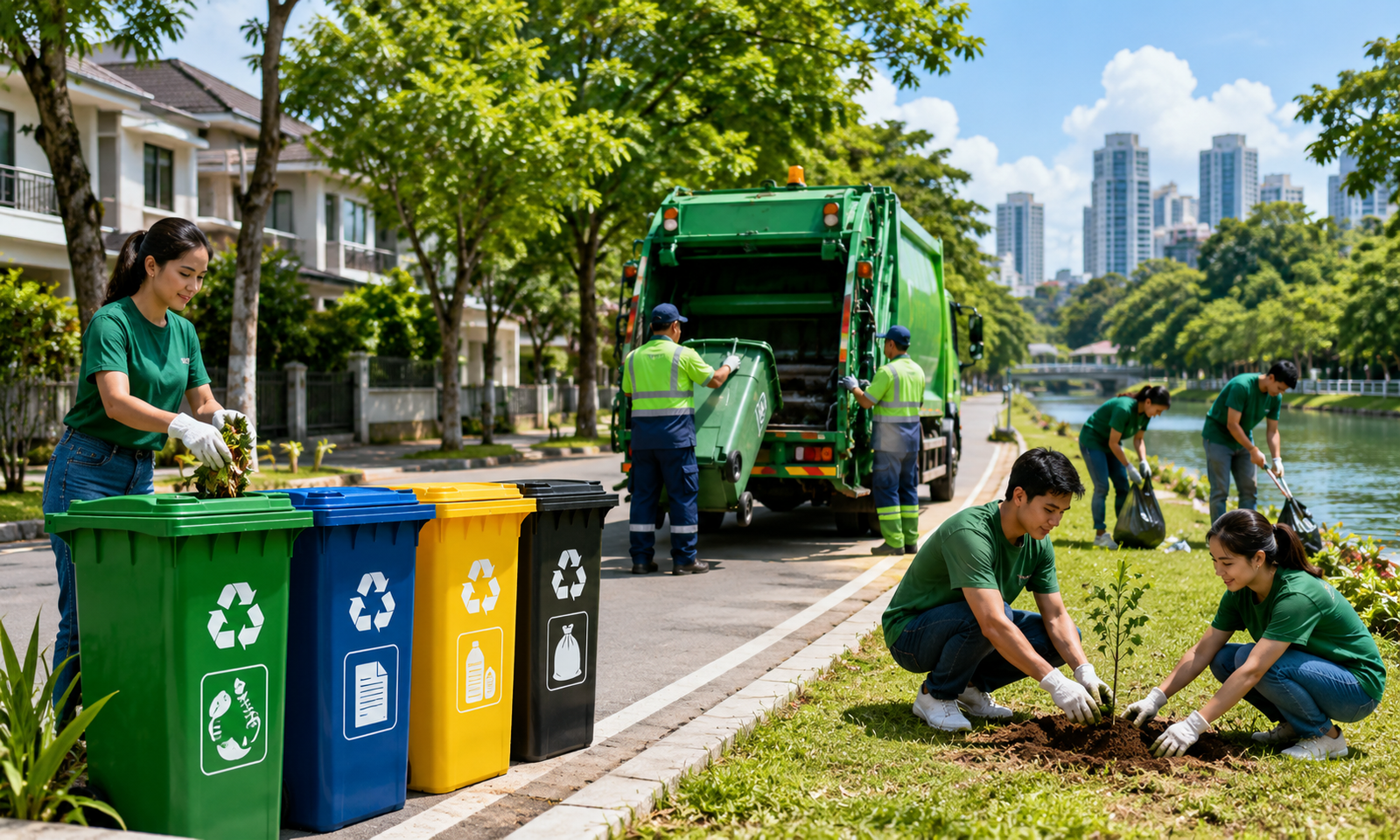
One of the most significant issues of efficient management of waste materials is segregation of waste. It’s the practice of separating waste, either into categories, such as biodegradable, recyclable and hazardous waste or into collection zones like bins. This practice, simple yet powerful, has a huge impact on effective collection and processing systems. Households and businesses which separate waste correctly, are able to make it easier for the recycling companies to process and extract usefuls such as plastics, metals and paper without contamination. Organic waste can be sent to composting or hazardous waste, like medical and chemical waste and batteries, can be processed separately so that the environment will be spared from damage. Appropriate segregation also helps to lighten the load on landfill locations, prolong their life and decrease operating expenses for landfills. To make waste separation practices consistent and compliant across the environment, teaching communities how to make use of colour coded bins and clear labelling is crucial.
Waste Collection Systems and Infrastructure
Which is the backbone of any successful sanitation program and is essential for an efficient waste collection system. Even the most suitable recycling and disposal systems are ineffective if there is no way of collecting and moving the waste. A collection system generally includes pickup services on fixed schedules via trucks, community bin services at specific curb location(s) and door-to-door service in neighborhoods. These systems will work if they are properly planned, well funded and supported by community members. Roads should be able to be reached by collection vehicles and storage areas should be created to avoid overflow and foul odor issues. Technological solutions within cities can be used to enhance efficiency and cut fuel usage, for example GPS tracking and route optimization. The decentralised collection system might be more feasible in rural areas. Consistency in collection times is vital, wherever you are, in order to avoid waste build up, deter illegal dumper use and keep the area clean and promote health for the people.
Recycling and Resource Recovery
Through recycling, used materials can be turned into new products which is very important to help minimize environmental impacts resulting from waste disposal. It not only saves natural resources, but also lowers the amount of energy used during the production of the manufactured products. Reworking enables materials like glass, aluminium, cardboard and some plastics to be processed and reused several times, cutting the need for the extraction of raw materials. Recycling also cuts back on the greenhouse gases that are emitted in the production and decomposition of waste in landfills. A large proportion of the informal sectors are involved in recycling and give jobs to thousands of people in many communities contributing to the local economies. But this is not enough, if recycling systems are to be effective, good sorting, public awareness and investment in recycling facilities are needed. It is necessary to establish collaboration between governments and the private sector to develop incentives on behalf of balanced environmental habits, for example by implementing buy-back schemes and lowering the waste tonnage charges for residents who actively participate in waste recycling.
Composting Organic Waste
Composting is a natural process that breaks down organic materials (like food waste, fallen leaves and agricultural materials) into a rich soil conditioner. It is very useful for communities, particularly in areas where cultivation takes place, since it minimizes the environmental footprint of garbage disposal while at the same time generating useful fertilizer for growing and gardening. Composting is also seen to help lower methane emissions which are usually produced when organic waste is anaerobically decomposed in a landfill. Depending upon the size of waste generation, home composting systems would be important, as also would be the community composting centres and the large composting industry. The green materials (nitrogen-rich) need to be balanced with the brown materials (carbon-rich) to promote successful composting, as well as good air circulation and moisture management. With responsible implementation and application, composting can help enhance soil fertility and contribute to sustainable agriculture and contain reliance on chemical fertilizers that can have long-term environmental effects.
Disposal of waste in a safe way.
Waste materials which can’t be recycled or composted must be disposed of safely. These include sanitary landfill, incineration with emission control systems and special disposal of hazardous waste. Contamination of groundwater is prevented through proper design/specification of liners and leachate collection systems in landfills to avoid infiltration of contaminated groundwater into the surrounding soil. Incineration, when managed carefully with control units and emissions, can result in a substantial decrease of volume for waste with simultaneous generation of energy, but with careful management of the process, not much air pollution is generated. There are special precautions and handling protocols to avoid contact with poisonous materials when dealing with hazardous waste, such as medical waste, chemical waste, etc. In addition, communities need to discourage illegal dumping and open burning, which not only lead to severe environmental degradation, but also health risks. For disposal methods to meet safety and environmental standards there is a need for effective regulation, monitoring and enforcement by environmental agencies.
The contributions made by households and businesses in reducing waste.
Households and/or businesses have a pivotal role in waste management systems’ success. When responding at the home level, people can take some simple measures, including reusing products, eliminating single-use plastics, and buying products with reduced packaging. For businesses, it is important to recognize that sustainable methods of production can be utilized, as can be done in the cases of decreasing packaging waste and having a corporate recycling program in place. Campaigns aimed at changing patterns of behavior must be run through education and awareness. They can also be hosted in schools, workplaces and community organizations where they can clean the environment and help educate people about it. By involving both individuals and organizations in waste reduction initiatives, pounds placed on the public waste system will substantially decrease and create cleaner neighborhoods, more sustainable cities. Cooperation of government departments, private sector and the public is therefore critical for long-term environmental success.
Conclusion
It is not only the responsibility of the government to deal with waste effectively but everyone in society needs to play a role in doing it. Collection, segregation, recycling, composting and disposal systems are essential for maintenance of a clean and healthy environment. Structured waste practices lead to a decrease in pollution, less body poisons in the environment and sustainable development for the communities. The long-term benefits come in the form of better quality of life, lesser health care costs, and conservation of natural resources to be enjoyed by future generations. Societies can look towards a more sustainable and environmentally-friendly future, emphasizing cleanliness and health at every level through responsible practices and efficient waste management systems.