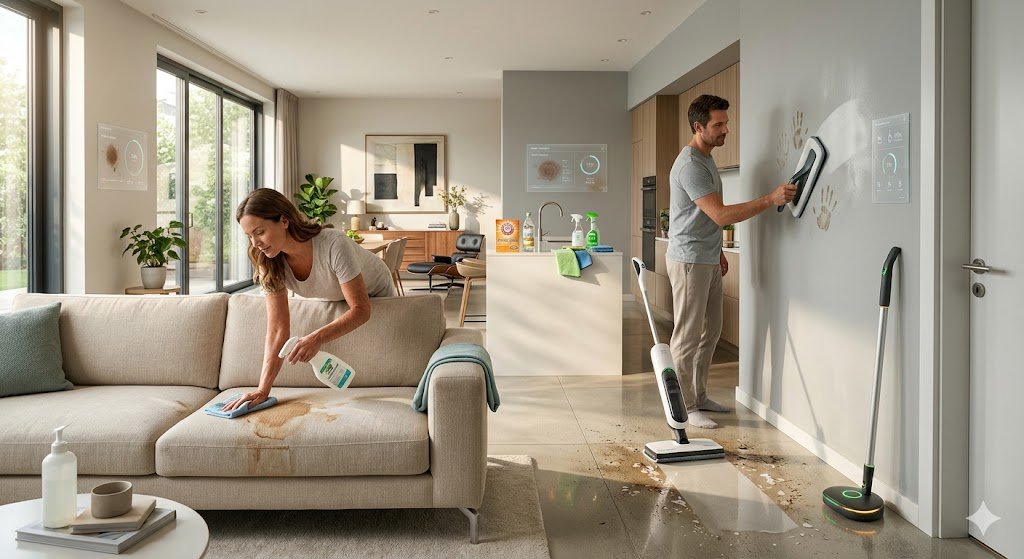
Stubborn stain removal is an important part of maintaining clean walls, floors, and fabrics in every home. In the home we find that tough stains on walls, floors, and fabrics present a challenge which is hard to overcome Stains which come from food, grease, ink, mud, or water damage are common. But with the right strategy most of these issues can be resolved without in turn damaging the surface. Also it is very important that we as homeowners learn the proper cleaning methods.
Many people tend to go straight for the harsh chemicals but what they don’t realize is that it usually does more harm than good. For instance strong bleach will fade paint or wear out fabric fibers. Also we find that with natural and more precise methods you get better results. Also using the right product in the first place saves time, effort, and repair costs. This guide goes over ten practical solutions which we have found very effective for restoring different surfaces.
How to deal with tough stains.
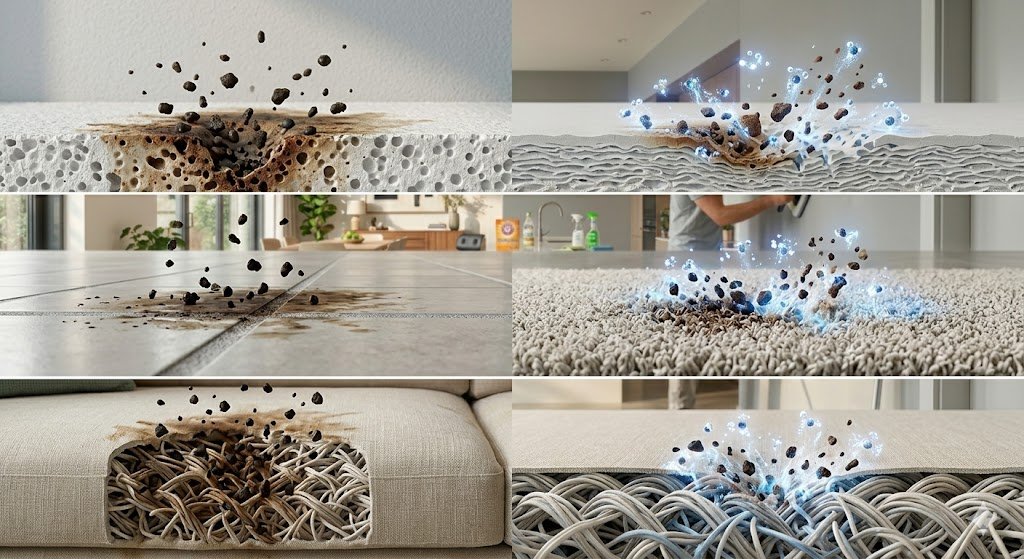
Stain removal is a difficult task when left for long periods. At first, spills are on the surface and simple to clean. But over time what we thought was a quick issue turns into something more serious. In that time the liquid has had enough opportunity to get in between molecules of fabric, grout, or paint at a deep level which in turn causes the stain to almost become a part of the material, very hard to remove.
Different stain types react in different ways. For example oil will spread out and attach to fibers, while coffee or tea stains will go right in and into the fabric. Also rust stains form chemical bonds with the surface. Thus it is first to determine what the stain is you are dealing with in order to choose the proper cleaning method.
In order to get more in depth on which cleaning methods to use try to learn how various cleaning tools do for different stains. This info also helps you to avoid damage and at the same time improve your cleaning results. You can also explore more about practical cleaning methods to better understand effective cleaning approaches.
Method 1: Use baking soda for grease and oil stains.
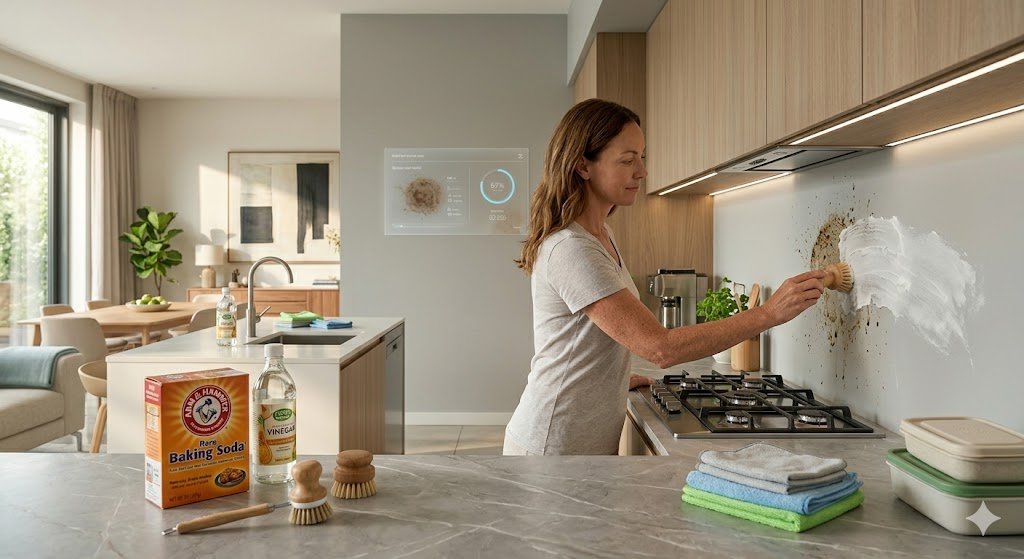
Grease issues in the kitchen are very typical and if left unattended will spread. Baking soda works best as it has natural oil absorbing properties. First out of the gate, dust the baking soda on the affected area and let it sit for 20 minutes. After which you may wipe the area clean with a wet cloth.
If you still see the stain after the first treatment try making a thick paste of baking soda and water. Apply this a second time and let it sit before wiping off. This is very effective on walls, counters, and some fabrics. Also baking soda is a safe, affordable, and non toxic option.
Method 2: Use White Vinegar for Water and Mineral Stains.
Hard at times we see that bathroom tiles, glass, and faucets have left behind by mineral deposits which over time create what we term as hard water stains. White vinegar is excellent at removing these deposits. Mix equal measures of vinegar and water into a spray bottle and apply it to the stained area. Let set for a few minutes before gently scrubbing. Vinegar also does a great job at restoring shine to many surfaces. However, do not use it on marble or granite as it may damage natural stone.
Method 3: Clean up Wall Scratches with a Magic Eraser.
Wall damage from wear can make a home look unclean which may not always be the case. Use a magic eraser for that. Just get the sponge wet a little and scrub the damaged area in a circular motion. However, do not use too much force. Otherwise, you may remove paint or create dull spots. It is also a good idea to do a patch test on an out of sight area before cleaning visible surfaces.
Method 4: Tackle Fabric Stains with Dish Soap.
Dish soap does a great job at removing food and grease stains from fabrics. First wipe the stain to remove excess liquid. Then put a little bit of dish soap on the area and gently rub in. Allow time for a few minutes before rinsing with cold water. Avoid hot water at first because it may set the stain. This method works well on clothing, upholstery and curtains.
Method 5: Get rid of carpet stains with Hydrogen Peroxide.
Carpet stains from coffee, wine, and juice are a challenge to remove. Hydrogen peroxide does a great job at lifting them out. Do a patch test first though as some fabrics may bleach with it. Apply a few drops of solution to the stain and allow it to sit for around 10 minutes. Then wipe it with a clean cloth. If needed, repeat the process. Mixing hydrogen peroxide with dish soap can also improve results.
Method 6: Clean out tile grout with baking soda paste.
Tile grout will over time collect dirt and see color changes. For cleaning mix baking soda with water to make a paste. Apply this to the grout lines and let sit for 15 minutes. After which apply a gentle scrub with a toothbrush. Rinse with warm water. Regular care helps prevent mold and keeps tiles looking fresh.
Method 7: Get Rid of Ink Stains with Rubbing Alcohol.
Ink will spread if proper treatment is not applied. Alcohol based rubs do an excellent job at breaking down ink. Use them on a cotton ball and gently blot the stain instead of rubbing it in. Continue to blot until the ink transfers onto the cloth. Then rinse the area with clean water. Also note that some materials may react differently so do a test first.
Method 8: Use corn starch for fresh spills.
Cornstarch is great for absorbing fresh spills before they become permanent stains. Cover the spill completely and leave for 30 minutes. Afterwards you may vacuum or brush it out. Sometimes a second clean is required. This method is also great for oil based spills.
Method 9: Tackle Rust Spots with Lemon Juice.
Rust forms as a result of metal which has been in contact with moisture for a long time. Lemon juice is a natural element that breaks down rust. Apply it to the stain directly and let it sit for a few minutes. Then do a gentle scrub with a cloth. For tough stains add a pinch of salt. Avoid over scrubbing delicate surfaces.
Method 10: Use organic stain remedies.
In the case of organic stains like food, pet accidents, and bodily fluids you will want to use enzyme cleaners. These break down the material at a molecular level. Apply the product as directed and let it sit. You may blot or rinse the area. Enzyme cleaners also do well at removing odors in addition to visible stains.
Conclusion
Stubborn stains are a thing of the past. We have what it takes to clean walls, floors, and fabrics properly. Each technique works best for certain types of stains which is why proper identification of the issue is key. Through use of these practical clean-up methods you will keep your home more healthy and free of damage and repair work. A routine cleaning schedule and prompt action on spills will ensure most marks disappear before they become permanent.