Introduction
While it’s crucial for small businesses to get new customers, keeping existing customers is sometimes even more valuable. Repeat customers are more likely to spend more, make referrals and are easier to serve because they’ve been exposed to and accepted your brand. In some markets, it can be an uphill battle and keeping customers can be the difference between staying afloat and failing. Companies that are more interested in the sale tend to forget that they have the potential to create a long-term business relationship, where customers will keep coming back to them for even more sales.
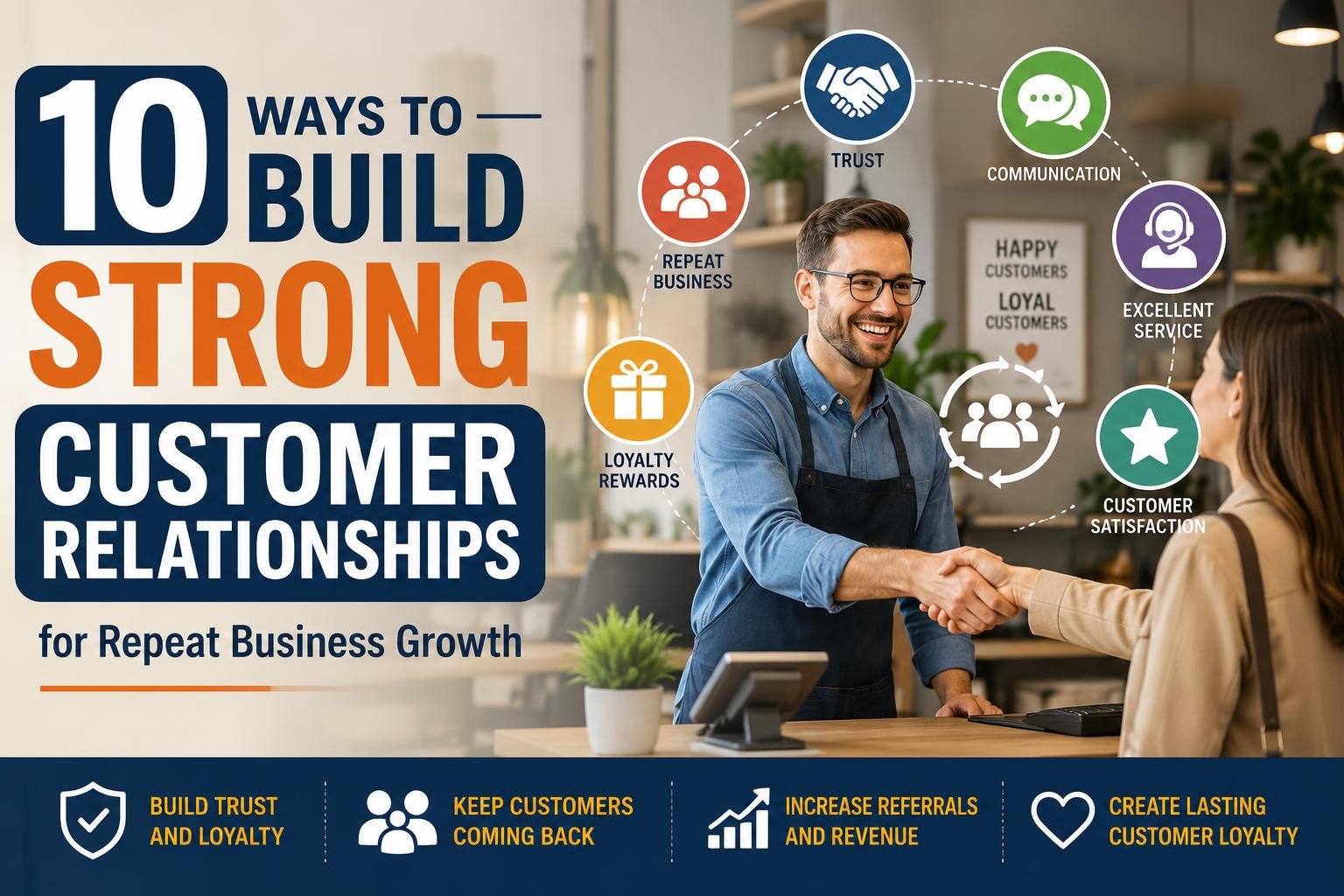
Customer relationships are established on trust, consistency and caring for customers’ needs. Consumers will choose to purchase from companies in which they feel connected, particularly if they have options to choose from. From retail shops to professional services, online or local businesses, you can achieve better profitability and reputation by building meaningful customer relationships. Here are ten effective strategies to forge customer bonds and support the repeat business growth through trust, loyalty and great customer experiences.
Customer relationships are essential for businesses to thrive.
There is much more to customer relationships than just the transaction. They are the relationship that continues between a business and its customers throughout the customer journey. By making customers feel valued and appreciated, they will be more likely to continue using the company, return for future purchases, and refer others to their services. This loyalty not only gives a consistent stream of income, but also lowers the expenses of continually targeting new consumers.
Strong relationships not only drive sales, but they also offer much insight into your customer’s preferences and expectations. Companies that listen to customers can know what they need to do as a business to get better, how to create new products and services that better satisfy customers, and how to meet new market demands. Businesses that focus on building relationships have a competitive edge over those that just do transactions as customers’ expectations are still increasing.
1. Establish a Relationship of Trust and Loyalty.
Trust and loyalty are one of the key elements of customer retention. Consumers must be sure that any business will keep their promises. Businesses earn trust by communicating honestly, by offering good products, services and by responsibly dealing with problems. Loyalty is developed when customers have favorable experiences with a company that happen over and over again and are at least as expected.
Trust is a process that does not occur instantaneously. It needs to be done regularly over a period of time. The pricing, policies, delivery schedules, and limitations of the services should be clear to the businesses. Don’t commit to delivering what you don’t have in order to gain the purchase. Honesty is valued by the customers, even if the information is not good. Through this, companies build trust and reliability and attract customers to come back and stay loyal for years.
2. Communicate Clearly and Consistently
Effective communication is one of the most powerful ways to boost customer relationships. Customers expect to be treated with informativeness, respect and value during all interactions they have with a business. When it comes to communication, it is essential to avoid misunderstandings, boost confidence and streamline the customer experience. Whether it’s an email, a social media message, a phone call, a messaging application or a meeting together, it’s important that everything is consistent.
Prompt information to customers on orders, appointments, change in services, promotions, etc. When customers have questions, answering them promptly will convey that you are a professional and that you are listening to the customer’s question. It’s also a good idea to avoid jargon and use any language that your customer can understand. Regular communication fosters familiarity and trust, and can make customers feel a part of the brand. As time goes on, these benefits help to build customer satisfaction and retention.
3. Produce Consistent Quality of Service.
Consistently delivered reliable experiences bring customers back to businesses. It is difficult to build loyalty with one time exceptional service but it can be achieved over a long period of time with consistent quality over the years. Customers expect uniformity in the quality of professionalism, products and customer service they receive on each of their interactions with a business.
Businesses should set their standards of service and train their staff accordingly to ensure uniformity. Processes need to be documented and monitored regularly, even in busy periods maintaining quality of the process remains in high order. Frequent service decreases the anxiety and improves customer trust. If the customers are certain that they will get what they have ordered from the business, they will be much more inclined to stick to the business and keep buying rather than going to the other businesses.
4. Remain Open-minded and Flexible about Ideas
Feedback from customers can be an important source of information that can be used to make improvements to the operations of a business and to enhance relationships with customers. Customers like to be heard and their concerns respected by businesses. Giving feedback is a sign of ongoing improvement and indicates to customers that they are valued.
Surveys, reviews, social media, email and face-to-face conversations are all ways that businesses can gather feedback. But a mere collection of feedback is not sufficient. The actual value lies in looking at the information and then appropriate action. Customers feel that their ideas are being used and valued when they see that they are making a difference. Such a feeling of engagement builds loyalty and enhances the chances of repeat custom.
5. Personalize Customer Experiences
Personalization enables consumers to be treated as individual customers instead of just a transaction. Today’s consumers are increasingly demanding a deeper understanding of their preferences and experiences that are customized to them from businesses. Personalization no matter how small the efforts can make a significant difference.
Customer names, purchases, preferences, and past interactions can be remembered, allowing for personalized customer interactions. Customers will feel valued by personalized recommendations, special offers and follow-up messages. Customer relationship management (CRM) systems are one of the technologies that can help businesses keep track of the relevant information they need and provide more valuable experiences. Personalization is a sign of attention to detail and fosters deeper emotional bonds between customers and the brand.
6. Deal with Problems and Complaints Professionally
All business has its share of failures, and there will be some wrong steps from time to time. It isn’t what the problems are, its how they are dealt with that often makes for customer loyalty. People realize that things can go wrong and know that if anything does, they will be dealt with quickly, fairly, and professionally.
Businesses should always remember to listen, accept the complaint and refrain from being defensive when dealing with complaints. Means being sincere in your apologies when appropriate, and make practical suggestions to make negative experiences positive ones. Businesses that convey a dedication to problem solving, even if their customers never face a problem, can gain more loyal customers than those who do face problems but don’t believe that the business cares about them. Resolution of complaints is a reflection of accountability and builds customer trust.
7. Reward Loyal Customers
Customer loyalty programs can be a very effective way of promoting repeat business and building customer relationships. Reward will give tangible incentives for staying with a business and people like being rewarded for their continued support. Discounts, exclusive offers, points programs, referral programs, and special events are just some of the many options available for loyalty programs.
The best loyalty schemes are simple, relevant and easily understood. It is important that customers can readily appreciate the benefit that they are getting from engagement. In addition to monetary incentives, businesses can also offer their loyal customers special thank-you letters or even access to new products and services. The act of these gestures strengthens a good attitude towards the brand and helps in sustaining customer retention.
8. Be Trustworthy and Fulfill Commitments
Among the most important factors that cultivate customer trust is the reliability. Customers expect to be certain that a business will keep promises made in terms of delivery time, service, product price and after-sales service. As well as making a difference in their own lives, every fulfilled promise adds to their credibility; a broken promise can undo years of relationship development.
From the start, businesses will need to be realistic about their expectations and will need to communicate proactively if circumstances change. When there are delays or issues, let customers know right away, this shows respect and professionalism. The value of reliability, in terms of predictability, is hugely appreciated by customers when buying a product or service. Consistent performance is one of the major factors that compel customers to come back again.
9. Connect with Customers Beyond the Sale.
Customer relations shouldn’t end once a sale is made. Continuous engagement helps to ensure connections are maintained and the businesses are at the top of the client’s mind for future needs. Keeping customers connected leads to more opportunities to build loyalty and promote repeat purchases.
Engagement after the sale can involve a follow-up email, educational information, newsletters, social media communication, customer appreciation programs, and valuable information. So the idea is to deliver ongoing value and not to constantly sell and sell. If customers feel that the business wants them to be successful and happy not just for the sale, they will be more inclined to stay loyal to the company.
10. Iron out the Kinks in the Process
The first step to good customer relationships starts from within. To ensure that all employees are aware of the significance of customer satisfaction and that they actively help to create positive customer experiences, it is essential to have a customer-centric culture. Relationship building becomes part of the business with the needs of customer as a priority.
This culture is extremely important to create and make it happen with leadership, which is done through setting clear expectations and offering proper training. Staff should be given control over resolving customer issues and decisions that can improve customer satisfaction. A customer-focused culture fosters uniformity in all interactions and helps ensure that customers get amazing experiences from any interaction with the organization.
Assessing the effectiveness and efficiency of customer relationship activities
Establishing good customer relationships means that you need to continually assess your strategies to make sure they are having a positive effect. It is essential for businesses to track important metrics like customer retention, repeat purchase frequency, customer satisfaction ratings, referral rates, and customer reviews. The metrics can give you insights into the customer’s perspective of the business and what improvements might be necessary.
By regularly analyzing, companies can pinpoint what is working and what isn’t, and be able to anticipate and address weaknesses before they turn into big issues. CRM is not a quick or short-term solution, it’s an investment. Continually testing and improving their methods for building relationships can give companies a competitive edge over keeping customers and gaining long-term sustainable growth.
Conclusion
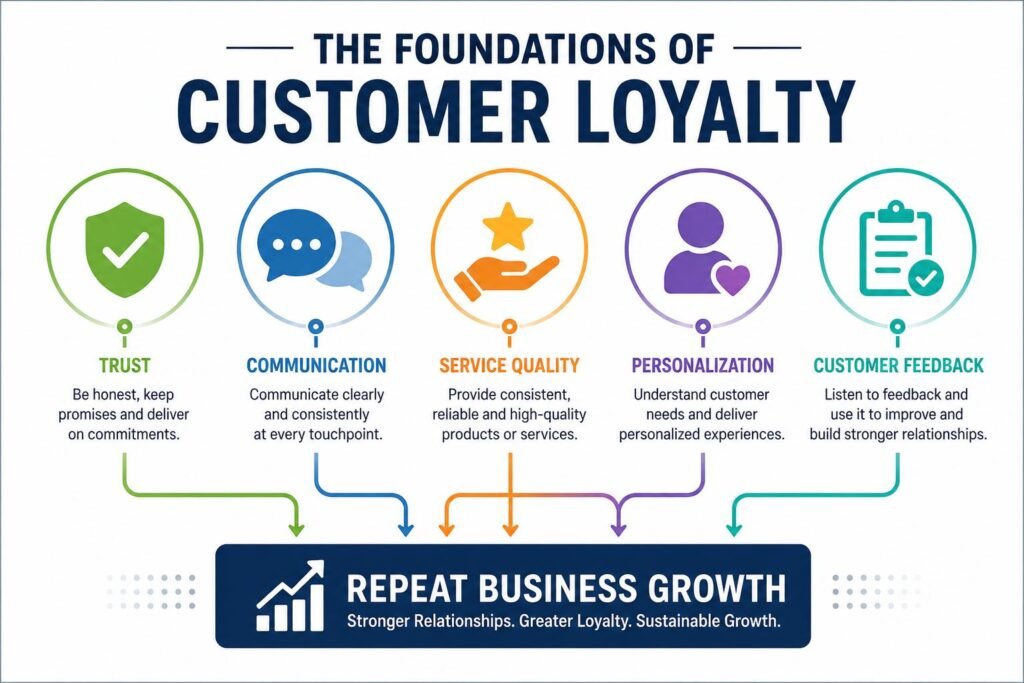
A solid customer base is vital to customer support and lasting profitability. Although it’s important to get new customers, retaining existing customers can generate even more value as loyal customers will make repeat purchases, referrals and build greater trust. Companies that have a strong sense of communication, reliability, service quality, personalization, and customer feedback play a vital role in building loyalty with their customers.
The ten strategies in this article are practical ways to build customer relationships and to help grow repeat business. Building trust, ensuring consistency, addressing issues effectively, and fostering a customer-centric approach are key strategies that enable small businesses to forge customer loyalty and support long-term success. In this competitive world, companies that focus on a relationship instead of just a transaction are much more likely to be successful and prosperous for the long term.
Get more well researched information about Build Strong Customer Relationships here.