Introduction
The management of waste now poses one of the most urgent environmental problems for many community, city, and ecosystem sectors worldwide. Everyday actions create enormous amounts of “waste” that can, if not managed appropriately, have long-term negative impacts on water, air quality, soil, and public health. Many of these problems are caused by improper waste disposal practices that involve practices like dumping waste in open areas, burning plastics, and dumping untreated sewage into water bodies. They can appear fine in the short term but in the long-term they increase pollution and environmental degradation.
Raising awareness about wrong disposal practices is crucial as most of the environmental damage occurs within the household/community level. Where people comprehend the effects of their activities they are more likely to make more viable and safer choices for human health and the environment.
Making common mistakes when disposing of waste.
Open Dumping of Waste
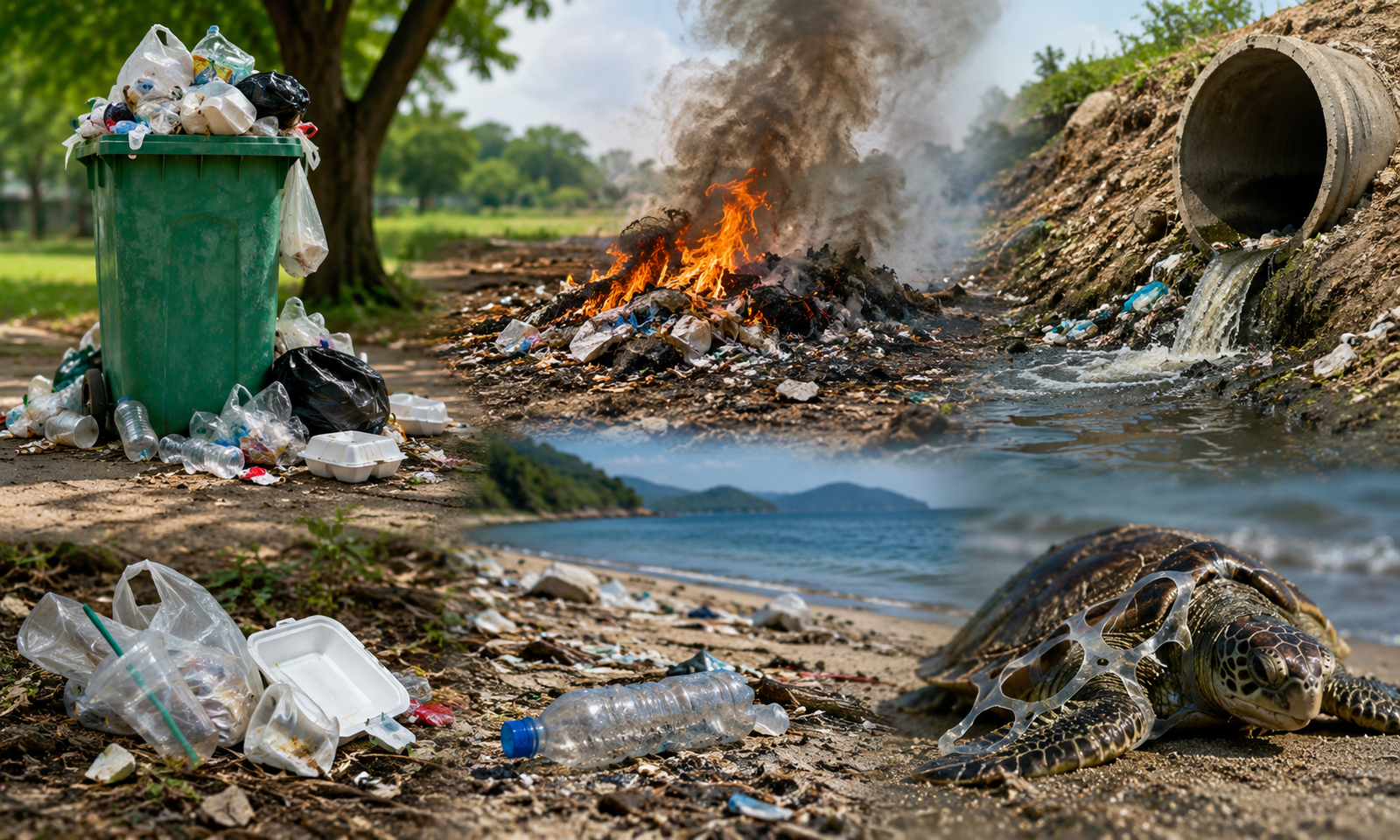
Open dumping is one of the most common environmental problems that occurs when households, businesses or sometimes even entire communities dump waste in unregulated spaces like empty spaces, water channels and roadsides. It is common particularly in communities without adequate waste collection mechanisms. This can seem like a straightforward issue—garbage build-up—but can ultimately cause serious environmental damage. Open dumps will lure rats, flies, and mosquitoes that carry and transmit disease like cholera, malaria, and typhoid fever. Also, waste can give off bad smells and toxic gasses such as methane, that lead to global warming. At open dumps, plastics and non-biodegradables can take 100 years to degrade into microplastics that end up in soil and water sources.
Plastics and Solid Waste burning.
Burning of plastics and other solid waste materials is also a bad habit associated with poor waste disposal practices that poses danger. Waste is often incinerated, particularly in communities without formal collection services, as a cheap method of disposal and to make the material more compact to handle. But the way this is accomplished emits poisonous chemicals into the air such as dioxins, furans and carbon monoxide, which are extremely damaging to human health. Exposure to smoke from burning plastics over an extended time can of course result in respiratory problems, asthma and long-term damage of lungs. Open burning is highly problematic from an environmental perspective, due to the emissions released in the air and to air pollution. It also exposes valuable recyclable materials that are ideally suited to be used again, but are instead lost and result in a greater need for raw materials and further threatens natural ecosystems.
Improper Sewage Disposal
Inadequate sewage management is also a significant source of contamination of the environment, particularly in urban dense centers. Wastewater when discharged directly into rivers, drains or open land without treatment will contain harmful pathogens, chemicals and organic waste, which will pollute the environment. This causes waterborne diseases to be more common in communities and risk sources of drinking water to be contaminated. In regions where the sanitation system is of low quality, diseases like dysentery, cholera, hepatitis can rapidly spread. Also, untreated sewage lowers dissolved oxygen concentrations that can cause fish and other aquatic plants and animals to die. In the long run, it may destroy biodiversity and harm the natural equilibrium of ecological systems which require clean water sources to exist.
Poorly managed landfills & mixed wastes disposal.
Another frequent error is the handling of all types of waste, not differentiating it through segregation into the landfill. Biodegradable wastes, recyclable wastes and hazardous wastes are difficult to effectively treat or recycle when they are mixed. This contributes to high levels of pollution, and inefficient waste disposal and management systems. However, when hazardous waste (including batteries, chemicals, and medical waste) is not stored away from the ground and soil, it can release toxins into the soil and ground water. This pollution may remain for years, and be harmful to agricultural production and health. In addition, poorly designed landfills are incapable of effectively disposing of leachate, which can leach back into the surrounding environment and result in long-term ecological harm.
Severe impacts to the environment and to human health
The impact of poor waste management is far beyond surface level pollution. Environmentally, these practices are responsible for the pollution of air, water and soil, resulting in a reduced biodiversity and a negative impact on climate stability. The use of gas produced by decomposing organic waste in open dumps is an example: the methane gas emitted is a powerful greenhouse gas which speeds up global warming. Likewise at sea, plastic waste is a direct threat to marine life, since animals may confuse plastic litter with food and endanger their health and/or life due to this. When the law is an agricultural site, the soiled soil impairs the capability of agriculture, posing a risk to food security in numerous areas.
Health-wise, communities that have to deal with untreated garbage have a higher risk of infectious diseases, respiratory issues, and chemicals poisoning. However, children and vulnerable people are particularly vulnerable because their immune systems are not as strong and they come into closer contact with environments contaminated. Also, lack of movement of water around waste disposal sites makes it easier for disease carrying insects to breed and spread malaria and dengue fever. The environmental and health effects are significant, making it a pressing need to enhance waste management systems and promote public awareness.
Tips for safer alternative to disposal of waste material.
Waste Segregation at Source:
Waste segregation at the source is one of the best methods of minimising damage to the environment. This includes the ability to separate biodegradable, recyclable and hazardous waste before disposal. This simplifies the efficient and safe processing of material by communities’ waste management systems. The biodegradable waste can be composted, the recyclables can be sent to reprocessing and the hazardous materials can be kept apart from the waste to avoid contamination. Promoting the practice helps to decrease waste that ends up in a landfill and pollution in the environment.
Recycling and Composting Practices
Managing waste sustainably involves recycling and/or composting. Recycling can provide for the recovery of valuable resources like paper, glass and plastics re-use, which minimises the use of raw resources and energy. However, composting transforms the organic waste and turns it into nutrient-rich fertilizer that can enhance soil health by adding nutrients and minerals to the soil. They not only help to alleviate the strain on landfills but also foster a circular economy by recycling materials. Recycling schemes are associated with better public health and cleaner environments in communities, and these communities often benefit from being invested in.
The efficient treatment of sewage and environmental policies.
The appropriate treatment of sewage is an essential element to the protection of water quality and public health. Contemporary treatment plants can help eliminate dangerous microorganisms and pollutants from wastewater prior to their re-entry into the environment. Smart investment of the sewage network is the need of the hour to seize the threat of sewerage contamination in natural water sources for Government and Local Authorities. Other than that, implementation of environmental law cements compliance of industries and households to safe waste disposal methods. The public education campaigns also help to raise awareness among the public about the risks associated with sewage disposal and promote responsible practices at the community level.
Conclusion
To wrap up, collective action between individuals, communities and governments is required in tackling the issue of inappropriate waste management practices. Open dumping, burning plastics, and improper sewage disposal are all examples of bad disposal practices that are environmentally and health-damaging. The bad habits not only pollute air, water and soil but also cause and spread diseases and affect ecosystem degradation. But when people and governments are educated, the correct infrastructure is provided, and sustainable solutions such as reusing, composting and separating waste are embraced, significant damage can be mitigated. Waste disposal is the first step towards having a cleaner and healthier environment on which all humans and future generations depend, and each and every one of us has a part to play in it.