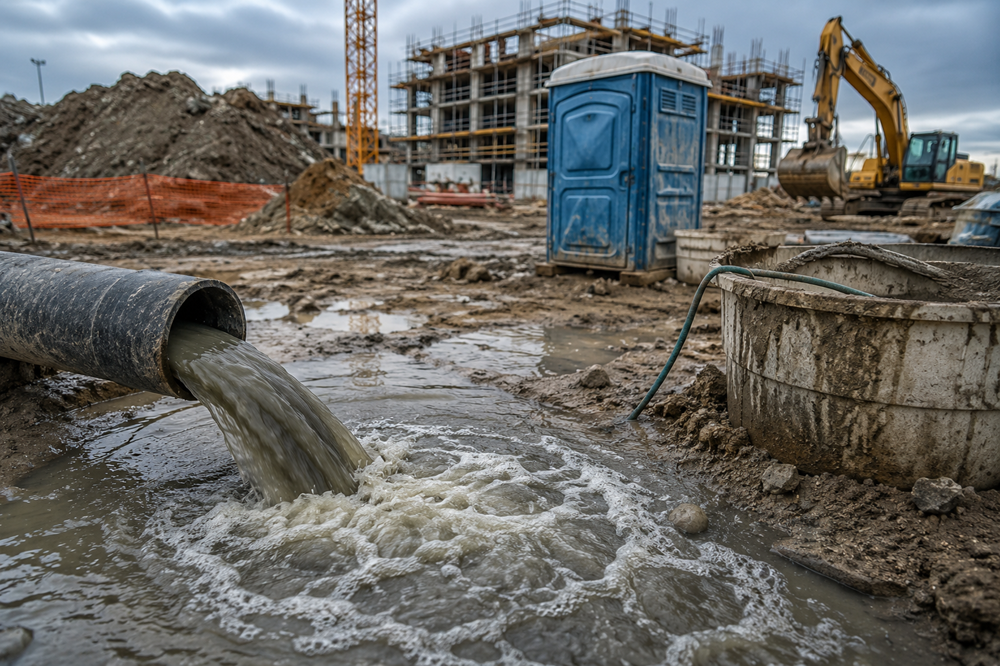
Wastewater disposal on construction sites requires careful planning because site conditions change throughout a project. Workforce numbers rise and fall, welfare facilities may move, access routes can alter and permanent drainage may not be available until later stages.
Where sites are not connected to mains drainage, wastewater must be stored and removed through suitable collection methods. Waste can include grey water, black water, septic tank waste and grease trap waste from site welfare or catering facilities.
Without the right arrangements, construction sites can face tank overflows, odour issues, unusable facilities and operational delays. This guide outlines common wastewater challenges and explains how to prevent and manage them through planning, regular servicing and appropriate disposal.
Understanding Wastewater on Construction Sites
Construction sites can produce several wastewater streams, each with different disposal requirements. Grey water usually comes from sinks, showers, wash stations and welfare units. Although it does not contain toilet waste, it still requires controlled disposal.
Black water comes from toilets and foul waste systems and must be collected safely due to the hygiene risks associated with sewage waste. Septic tank waste is common on sites without mains drainage, where tanks need emptying at suitable intervals to prevent overfilling and disruption.
Grease trap waste may be produced where temporary kitchens, canteens or catering units are used. Regular grease trap cleaning helps prevent blockages, odours and waste build-up. Where wastewater is linked to plant, equipment or site processes, it must be assessed and classified correctly before removal.
Limited or No Connection to Mains Drainage
Many construction sites begin work before permanent drainage systems are installed. Others are in remote or developing areas where mains drainage is unavailable. Welfare facilities may then rely on septic tanks, cesspits or temporary holding tanks.
If storage capacity is not monitored, tanks can fill faster than expected. Once tanks are full, toilets, showers and wash facilities may become unusable, affecting worker welfare and interrupting site activity.
Regular septic tank emptying through construction wastewater services helps prevent these problems. A planned collection schedule helps maintain tank capacity and reduce emergency call-outs. On busier sites, collection frequency may need to increase during phases with larger workforces or longer working hours.
Fluctuating Wastewater Volumes
Wastewater volumes on construction sites are rarely consistent. During early works, a site may have a small team and limited welfare requirements. As the project develops, worker numbers can increase sharply.
Temporary accommodation, additional toilets, more wash stations and extended working hours all increase wastewater output. Wet or muddy conditions can also increase use of washing facilities.
The main risk is underestimating wastewater production during peak activity. Planning should account for workforce numbers, tank capacity, site hours and seasonal conditions, with flexible collection arrangements that can be adjusted as requirements change.
Difficult Site Access
Wastewater disposal relies on safe and practical access for tanker vehicles. Common access problems include narrow entrances, temporary roads, uneven ground, soft surfaces, restricted turning areas, steep gradients and congested delivery zones.
Remote sites may present further challenges, particularly where welfare units are positioned away from main access routes. Poor access can delay wastewater collection or require alternative arrangements.
Access should be considered when locating septic tanks, holding tanks and welfare facilities. Where access is restricted, specialist waste removal tankers may be required.
Preventing Overflows, Odours and Hygiene Problems
Poor wastewater management can quickly lead to loss of hygiene control. Overfilled tanks, blocked systems, delayed collections and poorly maintained grease traps can create odours, leaks and contamination risks.
These problems can affect worker welfare, nearby businesses, local residents and the wider site environment. Regular monitoring helps reduce this risk, especially on high-occupancy sites or where welfare facilities are heavily used. Grease traps should also be cleaned at planned intervals.
Waste Classification and Compliance
Wastewater disposal is subject to legal responsibilities. Construction businesses have a duty of care to manage waste correctly, use suitable carriers and maintain the right documentation.
Grey water, black water, septic tank waste, grease trap waste and process-related wastewater may require different handling and disposal routes. Industrial wastewater can include both non-hazardous and hazardous elements.
To determine whether wastewater is hazardous and assign the correct waste code, businesses should refer to WM3 Technical Guidance. This supports correct classification and helps companies meet their Duty of Care under the Environmental Protection Act. Waste transfer records should also be retained.
Emergency Wastewater Removal
Even well-managed sites can experience unexpected wastewater issues. Tanks may fill sooner than forecast, drainage systems may fail, welfare facilities may be used more heavily than planned or weather conditions may disrupt activity.
Emergency wastewater removal can be required for septic tanks, grey water, black water and other site wastewater streams. Rapid response helps maintain welfare facilities and reduce disruption, particularly on remote sites where delays can be harder to resolve.
However, emergency response should not replace planned servicing. The preferred approach is to combine scheduled collections with access to urgent removal when site conditions change.
Managing Wastewater Across Multiple Sites
Contractors operating across several locations face another challenge: consistency. Each site may have different tank sizes, welfare arrangements, workforce numbers, access limitations and disposal requirements.
A centralised wastewater management plan can reduce missed servicing, overfilled tanks and unnecessary call-outs by arranging collections around occupancy, tank capacity and project phase.
Final Thoughts
Wastewater disposal on construction sites presents operational and compliance challenges. Limited drainage access, changing wastewater volumes, restricted tanker access, odour control, emergency removal and waste classification all need to be managed carefully.
For sites relying on septic tanks, holding tanks, welfare units or temporary facilities, regular collection helps maintain suitable site conditions, reduce disruption and keep welfare facilities available throughout the project.
Author: Craig Pennington, Group Head of Transport at Universal Tankers