Introduction
Agricultural pests have always been one of the biggest problems in crop production affecting crop yield, quality and income of farmers globally. The presence of pests on farms, if not managed properly, can be transmitted to other areas in a few days and can cause destruction and food shortages. Knowing what to do is key to becoming a sustainable farmer. Today’s farming movement is focused on balanced farming methods, which integrates various techniques instead of just chemicals. The likely combination of these is known as pest control strategies and can assist farmers to minimise losses whilst ensuring good soil health and environmental safety. The following links provide further understanding of these resources: Farming for Gains shares more information on pest control strategies, detailing practical strategies for managing pests. This article will delve into some of the most effective pesticides pest control strategies that every farmer should be aware of, biological, cultural, mechanical and chemical, etc. as well as the importance of early detection in the prevention of significant crop losses.
Earlier identification of pest infestation
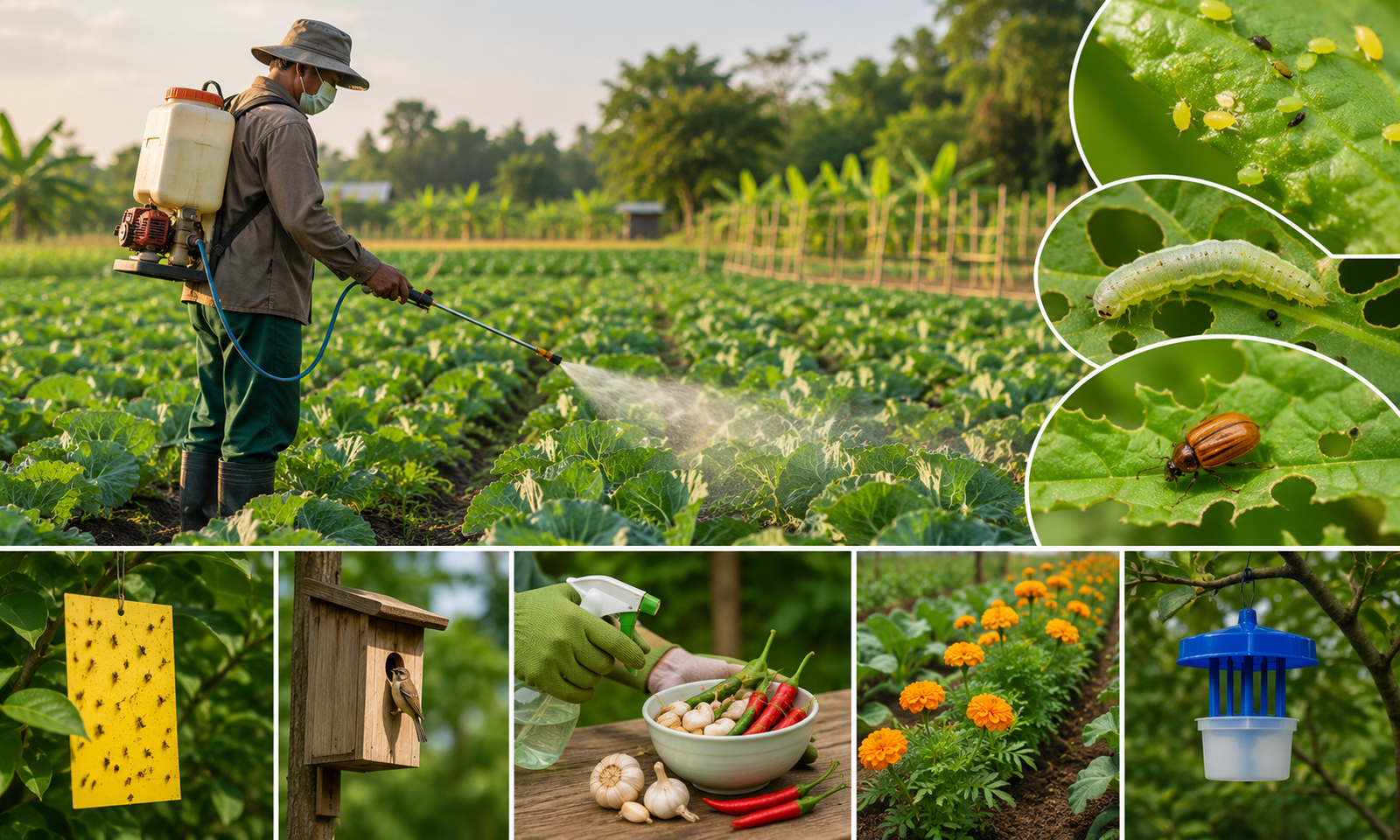
One of the most important strategies in controlling pest populations is to detect them early in their infestation so farmers can take action before they become intractable. Farmers need to be on high alert and every day check their crops for signs of stonefruit rust disease including: damaged leaf tissue, discolored foliage, wilting leaves, holes in the stems and unusual insect activity. Each pest causing the symptom will leave a range of symptoms behind, therefore understanding what threats are present to each crop is vital in effectively diagnosing five likely causes of each symptom. Insects such as chewers may leave behind holes in leaves; however, if the pest is a sucker that sucks the plant’s sap, the leaves may be curled up and turn yellow. Pheromone traps, sticky traps and field scouting can also help in early detection of pests. Observation should be a regular part of a farming programme and particularly important when crops are at a critical early stage, such as planting and early growth. Early pest detection minimizes the impact of pest infestations, and results in more effective, economic and farmer-friendly pest management solutions for long term productivity.
Biological Pest Control Methods
Biological control is an environmentally and biologically sound solution, utilizing organisms to treat pest problems. This way, one introduces or encourages natural enemies or parasites or pathogens which could aid the control of harmful pests without harming crops. As an example, ladybugs are popular because they feast on aphids, and some kinds of wasps can parasitise dangerous insects including caterpillars. Bacteria, fungi and viruses are microbial agents that may also be used in a targeted approach to eliminate and infect pests. A major benefit of biological control is the ability to maintain ecological balance in the farm ecosystem, thereby minimizing the possibility of pest resistance that can occur under chemical pesticides, which is typically a major challenge. It also helps to ensure soil biodiversity, leading to greater long-term sustainability on farms. Getting it right, of course, depends on a knowledge of pest life cycles and the environment. Biological controls, if used properly in all aspects of pest control, can greatly decrease the need for synthetic chemical use and vegetative production systems.
Plano’s Cultural Pest Control Practices
Cultural control methods are those techniques that change agronomic practices to provide an environment that is not conducive to survival and reproduction of pests. These practices are preventive and provide a basis for sustainable agriculture. Crop rotation is one of the most effective cultural practices is to rotate crops by season, which kills pests that may be in the soil. Raising different crops together (intercropping) can also leave pests confused and make the spread of the pests less. Crop residues, weeds and unswept areas are breeding grounds for pests which should be removed whenever appropriate. Rushing to start planting and harvest also can minimize exposure to high tides of pests. Also, choosing varieties which are resistant to pests helps to reduce pest infestations. They are cost effective and environmentally friendly, and are thus important elements in integrated pest control. Pest pressure is significantly lowered and farm resilience improved with substantial cultural practices if implemented consistently to their fullest.
Mechanical and physical of pest control
Mechanical/physical pest control is the physical or mechanical elimination or removal of pests by hand or physical methods. It can be effective in small-scale farms or on a small-scale basis when the pest is still under control. Mechanical approaches such as hand picking, removing affected plant tissues and trapping commonly can help decrease pest populations with minimal chemical inputs. Pests can be kept from accessing host plants by the use of barriers including nets, fences and crop barriers. There are also numerous methods of trapping insects and monitoring pest activity, such as using light traps and sticky traps. Soil tilling in some situations may lead pest species to being exposed to predators or to extreme environmental conditions thus lowering the pest’s survival rates. Mechanical methods may be labour intensive, but they are very effective when using them in conjunction with other pest control methods. They also deliver immediate results and reduce the need to apply pesticides in agriculture, and thus play an important role in promoting environmentally friendly and food-safe agriculture.
Chemical pest control and responsible use.
Chemical pest control is the technique of using pesticides to rapidly kill and/or inhibit pest numbers. This is a highly effective approach, but is necessary to be approached carefully to prevent environmental damage, pest resistance and human and animal health risks. These are modern pesticides that are targeted at a specific pest; however, improper use or abuse can create significant ecological imbalance. Farmers are encouraged to adhere to the recommended dosage instructions, use chemicals only when necessary and switch from one type of pesticides to another to prevent development of pesticide resistance. Always use protective equipment! It’s also important to apply pesticides at the right time; in the early stages of infestation, applying pesticides when they might have the smallest amount of chemical deposited on the soil. Chemical pest control is one of the lesser preferred methods of pest control and should be a last resort when implemented as part of a comprehensive pest control program. This balanced method works well to safeguard crops and reduce the adverse effects on soil fertility, water quality and beneficial organisms found in the ecosystem.
Integrated Pest Management (IPM) Approach
Integrated Pest Management (IPM) is an all-encompassing strategy that uses multiple approaches to pest management that will provide long-term weed suppression. Rather than an all or nothing approach, IPM promotes using one or more of the following approaches as needed: biological, cultural, mechanical and chemical. The aim is to control pests without causing economic injury to plants and in a way that will be non-hazardous to the environment. IPM starts with precise monitoring and diagnosis, and preventive actions like crop rotation and habitat control. Biological or Mechanical controls are implemented first; depending on the level of pest build-up, Chemical controls are implemented as needed. This decision-making process helps to ensure pesticide resistance is not developed; also helps to keep expenses and improve ecosystems. IPM is one of the most advanced pest management techniques, focusing on sustainability and precision. IPM practices typically lead to higher yields and lower costs of production for farmers, and also promote sustainable soil health practices, making it an important component of modern, good agricultural practices.
Conclusion
To ensure high agricultural productivity and food security, it is crucial that the farmer can make use of effective pest management. Agriculturalists who grasp and employ a blend of pest management techniques have the potential to safeguard their crops against harm and minimize financial losses. Each is equally important towards limiting the numbers of pests in their own way because of things such as early detection, biological solutions, cultural, mechanical, and chemical methods. However, the best achieved and lasting benefit is achieved through combining these methods and applications into a comprehensive system like Integrated Pest Management. Implementation of effective and carefully thought out pest control measures allows farmers to keep their production systems healthy while limiting and preventing environmental impact. In conclusion, creating a responsible pest management strategy not only benefits agricultural production, but also plays a vital role in ensuring the sustainability of farms for future generations.