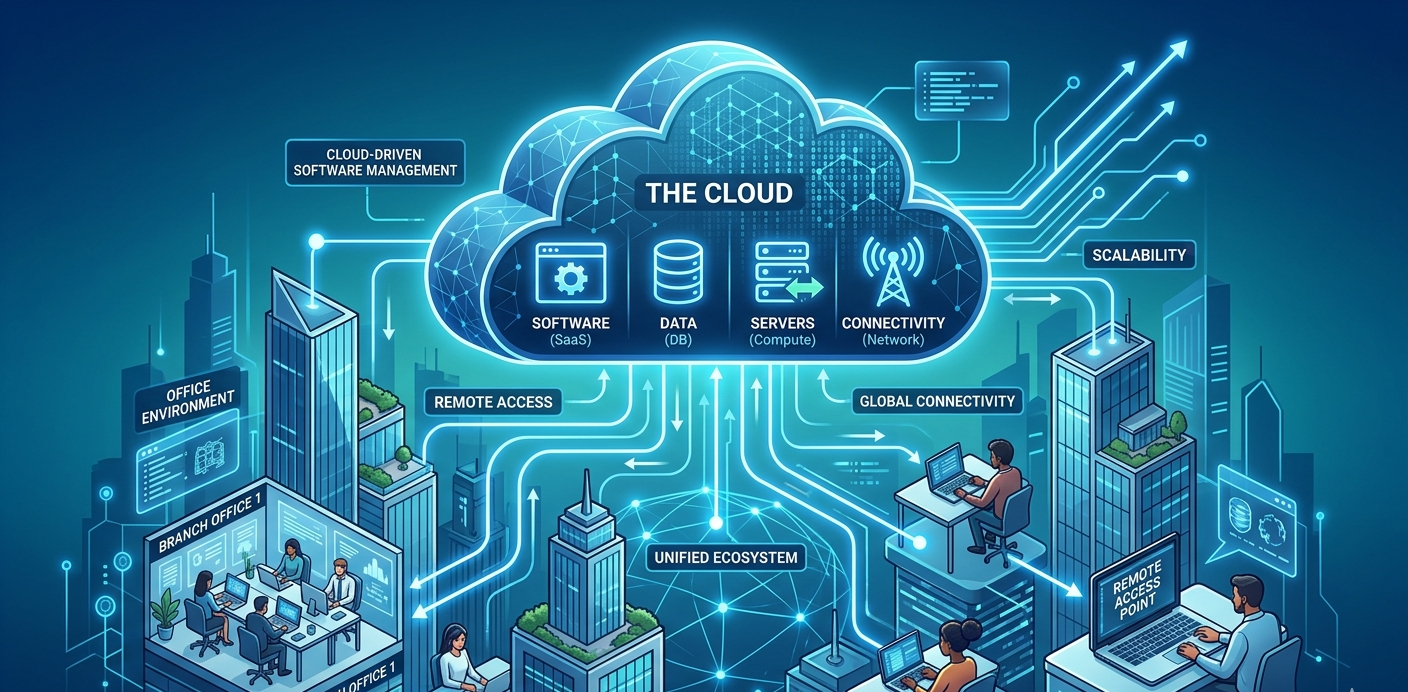
In the present day’s digital economy businesses are seeing to it that they innovate and bring to market solutions at an ever increasing rate. What we have seen is that traditional IT software management which hinged on on premise infrastructure and very manual deployment is very much on the way out. The growth of cloud computing has really turned the table as to how organizations develop, deploy and maintain software. We see now an unprecedented flexibility, cost efficiency and scalability which in turn allows companies to stay competitive in a constantly changing tech space. This article looks at the future of IT software management in a cloud dominated world. We look at the benefits of cloud based deployment, subscription models, remote access, scalability also we look at how the role of IT managers is evolutionizing.
Grasping Cloud Computing in IT Software Management
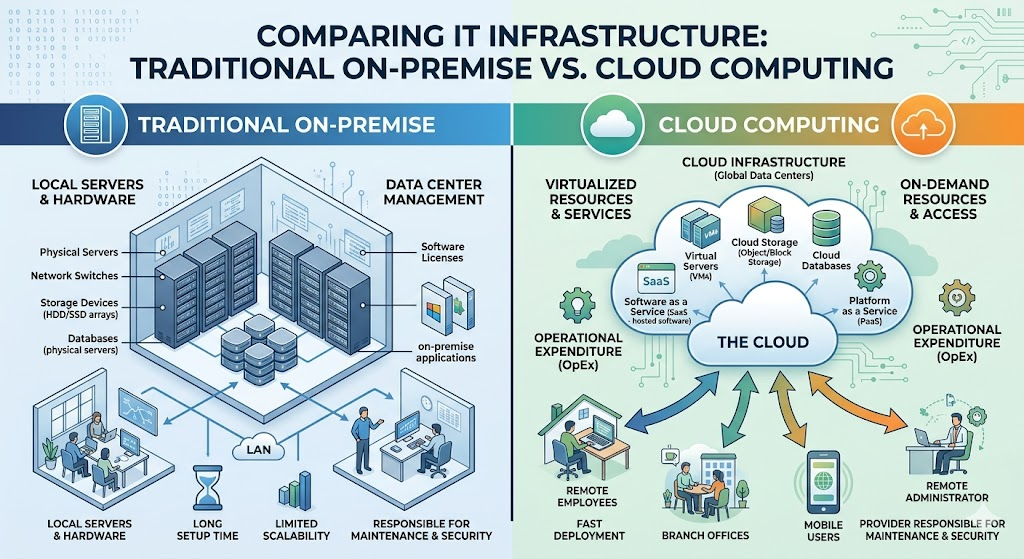
Cloud computing is a service model which delivers services out of the internet, which includes services like servers, storage, databases, networking tools, software, and analysis instead of physical infrastructures near your own business. Also in terms of software management, what we see with cloud is that it breaks away from the past models of IT setup and into more flexible and ever changing solutions. Also companies which have cloud based platforms like Amazon’s Web Service (AWS), Microsoft’s Azure, and Google’s Cloud Platform are able to report that they are able to roll out software at light speed, do almost automated system updates, and have real time access to how their systems are performing.
In the field of IT software management one of the key benefits of cloud computing is that it separates software from physical hardware which in turn allows IT teams to put focus on strategic initiatives instead of routine maintenance. We see this approach which also happens to reduce operating costs, done away with the need for large on site servers and which in turn enables quick innovation. As organizations adopt more cloud based solutions they are able to put in place modern software management strategies which in fact improve workflow, increase efficiency and in the end better business agility.
Also in that cloud computing is a base for emerging techs like artificial intelligence, machine learning, and Internet of Things we see. We also report that software management teams may use these techs to predict system failure, to improve performance, and to put out tailored experiences to end users. Also it is in the case that cloud computing does not just take the place of traditional IT infrastructure; it in fact changes how businesses go about software management.
Cloud-Based Software Deployment
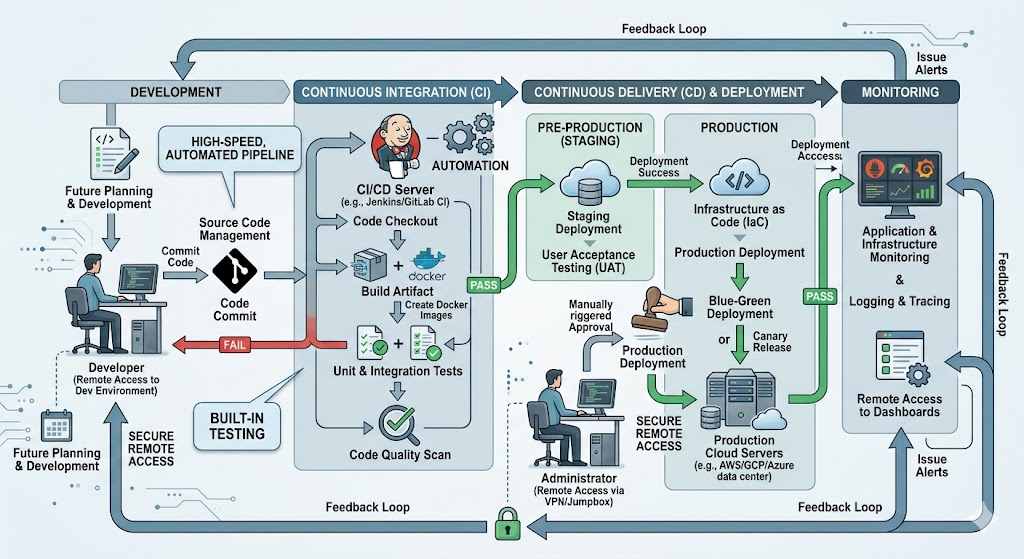
In the past software deployment was a very time consuming process which included extensive installation procedures, manual config of systems, and co-ordination between many different departments. Cloud computing has improved this by means of the internet based delivery of software. Today apps can be put into use in minutes as opposed to days or even weeks which is a result of automated deployment tools and platform as a service (PaaS) solutions.
Cloud based deployment has many benefits. For one it provides uniformity which in turn eliminates issues of inconsistency between development, testing and production systems. Also we see that it supports CI/CD practices which in turn allows IT teams to put out frequent and safe software updates. Also cloud deployment improves access which means users may access apps from any device with an internet connection which in the same time reduces our dependence on office based infrastructure.
Another large benefit we see in the cloud is in the area of disaster recovery and backup. We report that which comes with included automated backup systems and geographically diverse data centers. This makes application performance through hardware failure or cyber attack very high. That level of performance was hard to achieve with traditional software management which is what makes cloud based deployment a main element of what is today’s best IT practices.
Scalability and Flexibility in Cloud Environments
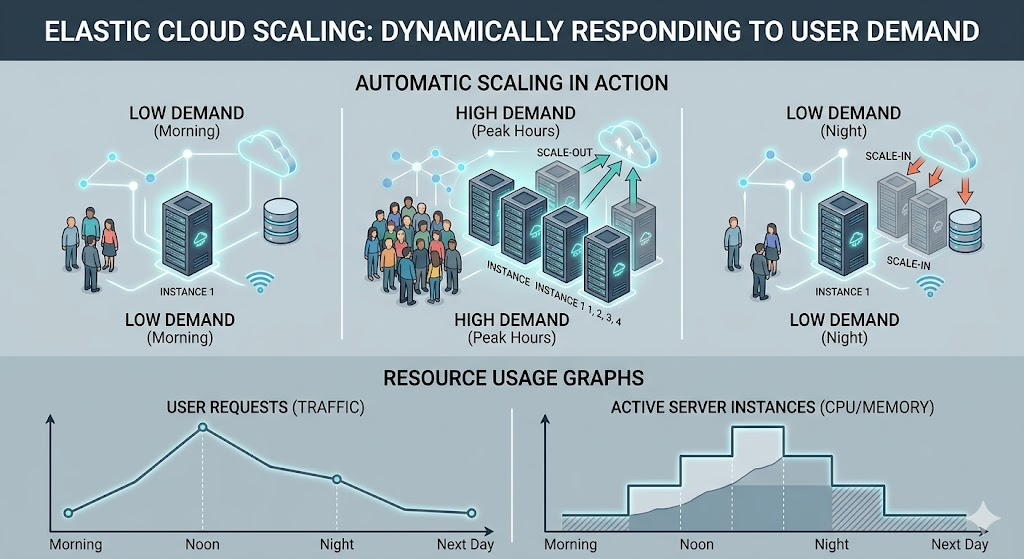
In terms of what is most transformational about cloud computing it is the issue of scalability. In the past traditional IT systems made it a point for companies to try and guess at peak use times and purchase extra hardware which in turn led to either underutilization of resources or capacity issues. What we see in cloud based environments is that companies are able to scale resources up or down as demand changes.
Scalability reports many benefits. For example, we see that ecommerce platforms are able to deal with large surges in traffic at the time of sales events without issue. Also, in the case of SaaS companies they are able to change their resources based on user action which in turn is to better manage cost and improve operation. Also cloud scalability supports innovation which also reports that IT teams are able to play around with new features or services out of the existing infrastructure.
Flexible resource allocation also supports multi-tenant environments in which many applications or departments use the same cloud infrastructure at the same time which at the same time still maintain separate and secure spaces. Also this feature reduces redundancy, maximizes efficiency, and supports growth for all size organizations.
Remote Access and Collaborative Software Management
In today’s cloud centered world remote access is a must; it is not a luxury. We see through the global movement to hybrid and remote work that access is key. Employees and IT teams are using remote in to access applications, databases, and development environments from any location which in turn is what is breaking down geographical and time zone barriers.
Cloud systems also support real time collaboration. Teams can work at the same time on the same projects, see changes in real time and resolve issues from any location. We see in project management software, code repositories and virtual desktops which are hosted in the cloud that which is made possible for organizations to maintain the same level of productivity during disruptive events. Also remote access which is made easy by the cloud which in turn simplifies compliance and audit. With central cloud based environments IT managers are able to monitor activity, put in policies and secure that they are meeting security standards.
In the area of software management we see faster issue resolution, more efficient roll out of updates, and we have better support for end users. Also we see that with remote access and cloud hosted tools IT teams transform from a reactive issue to a proactive innovation force.
Subscription Models and Cost Efficiency
Subscription based pricing has transformed software acquisition. In the past traditional software licensing required large upfront investments in software which in turn stretched budgets and limited access to key tools. With the advent of cloud computing we see flexible subscription models, what is commonly known as Software-as-a-Service (SaaS), in which companies pay for what they use or per user which in turn has reduced capital expenditure.
These models present consistent costs, easy budgeting, and simplified licensing. We see that it is easy for organizations to scale subscriptions up or down as per need which in turn aligns expenditure with true use. Also cloud providers take care of software updates, security patches and maintenance which in turn allows IT teams to put effort into strategic tasks instead of routine administration.
From a strategic standpoint subscription models foster innovation. We see which companies put out new products via the subscription model as a way to test the waters before full scale implementation thus promoting flexibility and growth. Also we note that the issue of high up front cost is removed for start ups and small players which in turn is to say that which large companies do not usually play in is now a field they can compete in which also has the effect of equalizing the tech playing field and breaking down barriers to entry.
The Evolving Role of IT Managers
In the cloud age we see that which of the IT managers’ roles has changed. In the past their focus was on hardware maintenance, software installation, and troubleshooting but today’s IT managers are into performance tuning, security issues, and strategic planning.
Performance in terms of which we track cloud resources, see to it that applications run at optimal performance, and which also includes anticipation of what the system will require. In that regard we see IT managers using analytics dashboards, automatic alerts, and AI based insights to achieve high performance and also to avoid down time. As for security we see that in multi tenant cloud environments which host shared sensitive data, security is key. Here IT leaders put in place encryption protocols, multi factor authentication, access controls and at the same time are made aware of the ever changing cyber threats.
Beyond the technical aspects of the job IT managers function as business enablers. We see them advise leadership on software adoption, implement modern software management practices, and see to it that tech and business goals are aligned. In terms of balance between what is achievable now and what we may achieve in the future the IT manager’s role is to enable organizations to fully realize the value of cloud computing.
Security Considerations in Cloud-Based Management

Security is still a primary issue in cloud based software management. As we see more of our applications and data move to cloud systems we also see an increase in what these systems present to attack: data breaches, insider issues, misconfigurations. As cloud use increases so does the responsibility of IT managers to put in place strong security frameworks which protect sensitive info.
Key strategies put forth are identity and access management (IAM), encryption, continuous monitoring, and compliance. Also we see that cloud providers do a great job at infrastructure security which includes automated threat detection and remediation tools. What businesses must do is to pair these with internal policies, staff training, and regular audits in order to have a secure environment.
Also in that regard we see that which organizations adopt cloud environments are presented with solutions which in turn enable them to meet requirements of standards like GDPR, HIPAA, and ISO which the former may have had trouble with on their own. Thus it is of great import that we see security focused software management practices put in place which in turn build the trust of customers, partners and regulators and at the same time enable innovation and growth.
Case Studies: Cloud Based Software Management Success
In many sectors we see which companies have adopted cloud computing to transform their software management. For example in finance we see the adoption of cloud platforms for real time trading systems and secure management of large data sets which also includes support for scalability and compliance. In the retail field we note that companies have put in place cloud based inventory solutions which offer real time stock updates, predictive analytics, and multi location synchronization.
Healthcare facilities use cloud based electronic health records (EHRs) that are accessible to authorized staff across different hospitals and clinics, which in turn improves patient care and reduces admin burden. In each of these implementations we see that it is the adoption of cloud based solutions which not only improves operational efficiency but also enhances service delivery and in the end gives businesses a competitive advantage.
Preparing for the Future: Present Day Software Management Practices
In the coming years we will see the shift towards cloud first models, automation, and intelligent analytics in software management. Organizations that adopt present day modern software management strategies will see improved resource allocation, better security, and great success in innovation.
Automation is at the core of what we do which includes the use of AI for monitoring, automatic testing, and CI/CD pipelines which in turn reduce manual work and human error. We also see growth in the use of edge computing, blockchain, and augmented reality which will in turn open up new fronts in cloud based software management.
Also in regard to IT teams they will be putting more of their effort into predictive maintenance and proactive performance management. Through analysis of use patterns and system metrics we see that which is going to be used to identify trends which in turn will help to see off outages and to put forward great user experiences. Also it is the combination of cloud scalability, subscription based models, remote access, and smart oversight which is to put organizations in position to do well in every digital marketplace.
Conclusion
Cloud computing has transformed the IT software management space, we see great flexibility, scale, and performance from it. Whichever company shifts to the cloud in terms of application and infrastructure deployment, which goes with the pay as you go models, remote delivery, and implements strong security practices see that they perform better in the face of market changes, that they reduce their OPEX and at the same time foster an innovative culture. Also what we are seeing is that the role of the IT manager has changed to that of a strategic player which is also very much into performance tuning and proactive security issues which in turn see that the tech we put in place is a support to the company’s bottom line.
In the future businesses that adopt modern software management strategies will see great success in which they will use cloud platforms as not just tools but as engines which fuel growth and innovation. As industries transform in this cloud dominated world the ability to put out, scale, and secure software will be the base of what makes or breaks them.