The digital communication ecosystem is shifting from a centralized and rigid communication infrastructure to decentralized, intelligent and hyper-responsive communication ecosystems on a global scale. The next decade will see a transformation in the very foundations of the internet as high-speed connections, localized computing and autonomous management all come together. It’s not an upgrade to technology, it’s a shift in the way data is seen, understood and used by all industries within the economy. The trajectory of network technologies is becoming more about minimizing latency and optimizing data flow, for a new generation of real-time applications and services from the massive 5G to the granular level of the Internet of Things (IoT).
Introduction of 5G and the future of 6G.
The current networking revolution has been powered by the introduction of 5G NR (New Radio), which provides a blend of Enhanced Mobile Broadband (eMBB), Ultra Reliable Low Latency Communications (URLLC) and Massive Machine Type Communications (mMTC). In contrast to the previous generations, 5G will have the capacity of up to one million devices per km², which makes it the indispensable infrastructure component of smart cities and industrial applications. But the industry is already thinking about the next generation of wireless technology, 6G, which will combine terahertz (THz) frequencies and artificial intelligence with the physical layer of the network. The advances will likely allow holographic communication and a “digital twin” of an entire city, which will require a rethinking of how to deal with electromagnetic spectrum and signal interference in increasingly congested airspace.
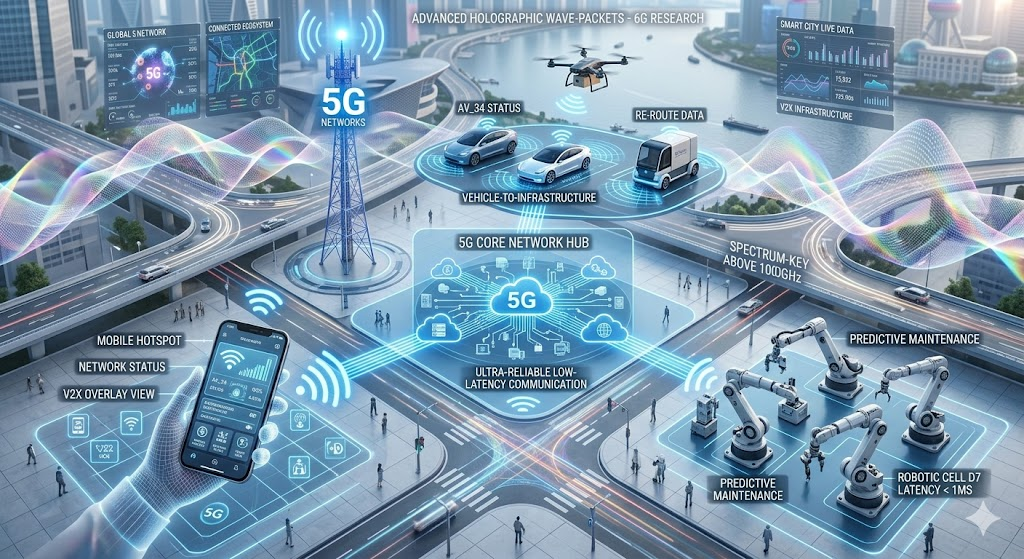
Edge Computing and Decentralized Architectures
With the increasing number of end-users devices producing massive amounts of data, the old approach of relaying all information to the centralized data center, located in the cloud, has emerged as a major challenge. Edge computing helps overcome this by shifting the processing of data and its storage nearer the point of data generation, such as a factory floor sensor, a self-driving car, or a medical device on a person’s body. Near real-time response times are possible because the data is processed at the “edge” of the network, meaning that it is close to where it is needed. This decentralisation is also encouraging development of ‘Fog Computing’ which enables multiple layers to be deployed across the LAN, conserving bandwidth and ensuring the privacy of sensitive data is maintained while delivering better performance from the end-user.
Enhanced networking and intent-based systems with AI.
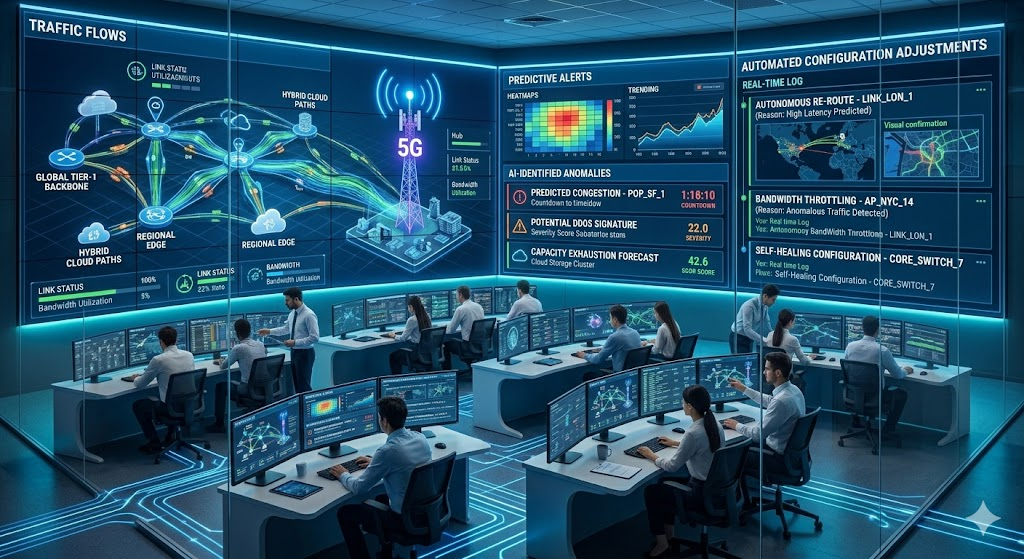
In today’s intricate multi-cloud and hybrid landscape, manual network management is simply no longer capable of handling it, prompting the introduction of AI-powered networking and AIOps (Artificial Intelligence for IT Operations). These systems leverage machine learning algorithms to process vast amounts of network data in real time, enabling them to anticipate and proactively address issues before the user even experiences a slowdown. Intent Based Networking (IBN) goes one step further, enabling an admin to establish a high level business intent, such as prioritizing video conferencing traffic in the executive suite, and then the network takes the administrator’s intent and translates it into the specific configuration changes made across all routers and switches. This move away from the reactive to proactive management approach helps minimise the risk of human error – the primary source of network downtime in large-scale enterprise environments.
The Internet of Things (IoT) in Industrial Contexts.
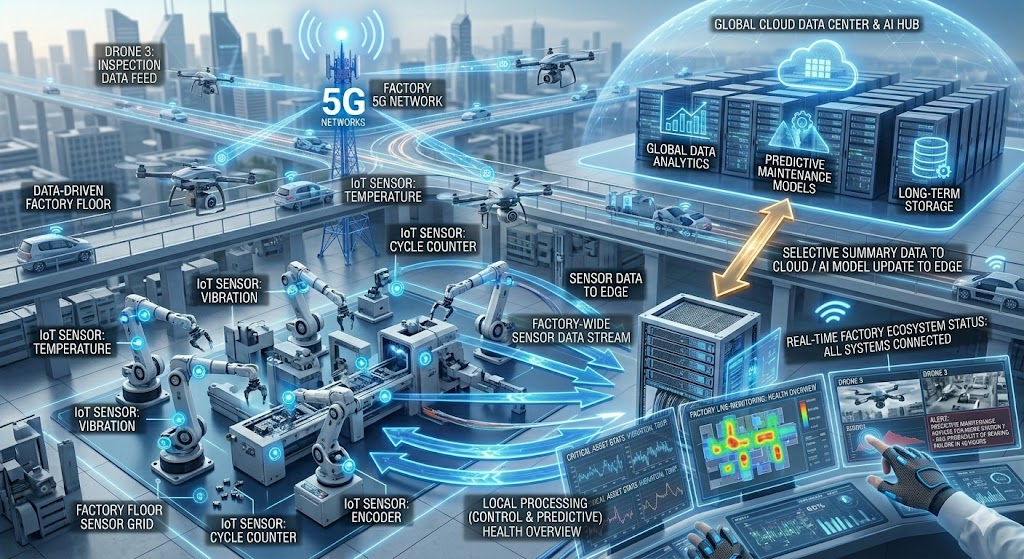
The IoT has gone beyond consumer gadgets and is now a sophisticated network of sensors and actuators across the industrial space, known as the Industrial Internet of Things (IIoT). Over the next few years, we’re going to begin to see the implementation of “Massive IoT,” a network of billions of low-power devices that will monitor the environment, supply chain logistics, and the integrity of the structure in real time. What’s challenging for the future networks is that they have to deal with a variety of protocols and power use from these devices, and also ensure the data they produce is secure from the beginning. With these increasingly autonomous devices, they will increasingly demand “Narrowband IoT” (NB-IoT) and other LPWAN technologies for long-range connectivity without a need to waste battery power, and effectively will make the physical world a searchable, programmable interface for developers and business analysts alike.
Quantum Age and Zero Trust Cybersecurity.
Network architecture is shifting from a perimeter-based approach to security to a Zero Trust Architecture (ZTA) model as they are becoming increasingly distributed and complex. The Zero Trust Architecture (ZTA) model is replacing the perimeter-based approach to security in more and more distributed and complex networks. To effectively support Zero Trust, all transactions must be continuously authenticated and access granted at the lowest level. No device or user can be trusted by default, whether or not they are on the network. In addition, the advent of quantum computers with the ability to crack existing encryption methods is accelerating the need for Post-Quantum Cryptography (PQC). These sophisticated cryptographic techniques will need to be incorporated into the standard protocols of future network systems in order to safeguard sensitive data from “harvest now, decrypt later” attacks and ensure the privacy of everyday users and the intellectual property of businesses is protected in a post-classical computing era.
Businesses, developers, and everyday users implications.
When it comes to networking, companies’ attitude is changing from IT cost center to a major source of operational agility and customer experience. Now developers have to create ‘network-aware’ apps that can adapt their behavior according to the bandwidth and latency of the edge node they are connected to. These trends are the internet experience every-day users are having: high quality content, augmented reality, smart home automation, and seamlessly integrated into one. In the future, the digital and physical realms will become increasingly intertwined, with the progress of 5G, AI, and edge computing, making it a hyper-connected society that is more efficient, more responsive, and more integrated than ever before in human history.
Summary of Key Trends
| Trend | Core Technology | Primary Benefit | Target Audience |
| Connectivity | 5G / 6G | Ultra low latency and high density | Smart Cities, Industrial AI |
| Architecture | Edge Computing | Localized processing and speed | Autonomous Vehicles, Healthcare |
| Management | AI/Intent-Based | Make your website automatically optimized and repaired. | Enterprise IT, ISPs |
| Security | Zero Trust & PQC | In a distributed world, robust protection has to be established. | Government, Finance, Privacy |
The path of the evolution of networks is obvious – the future is fast, intelligent and closer to the user. These new trends are driving a new generation of stakeholders to think about the network as a learning machine, ready to respond to the needs of the data-driven global civilization.