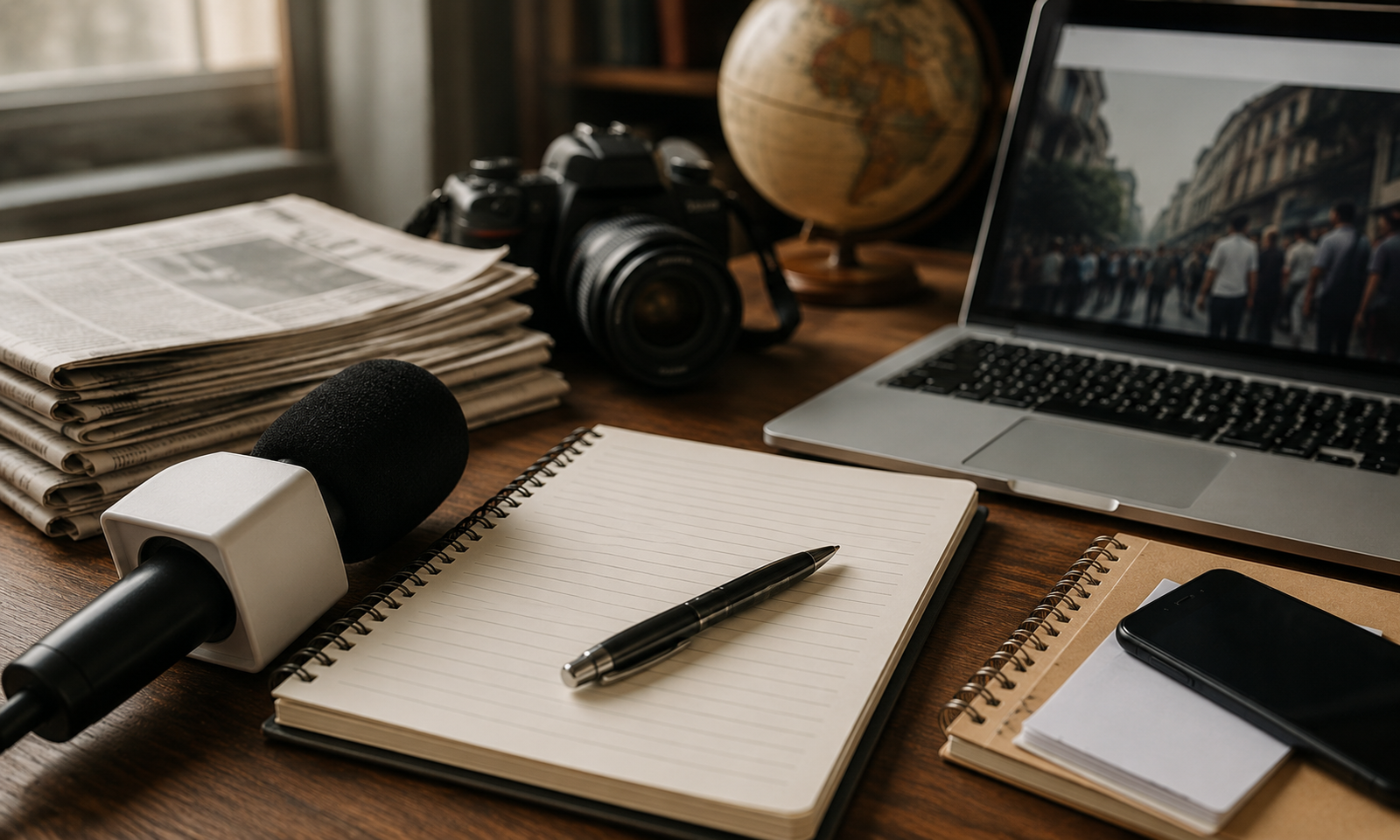
Photojournalism is a combination of narrative and documentation. Images can affect the public’s perception of war, politics, suffering, social change, and historical events in a way that words alone can’t always achieve. Photojournalism is not about creativity for the sake of branding or design, as in commercial photography, but about a larger public responsibility: telling the truth. This means that every photograph taken has the potential to shape how we see the world, evoke emotion, and even inform political decision-making. Given this, ethics are not only essential in photojournalism but indispensable.
The camera has traditionally been considered a tool for truth, but images can be misleading if they are misinterpreted, manipulated, or framed in an exclusionary way. In the digital era, with manipulated images easily circulating on social media, the need for ethical discipline is more critical than ever. A grasp of the ethical responsibilities of photojournalists ensures trust in society and the integrity of our visual media. For those who aspire to become photographers, proficiency in technical skills is only half the battle. Understanding how to navigate the delicate balance between truth, objectivity and human dignity is what makes a good photographer a good photojournalist.
The Principles of Ethical Photojournalism
Trust underpins photojournalism. The public expects news photos to be as true to life as possible. If this trust is violated, then the reputation of the photographer and the media organisation is damaged. Honest photojournalism involves a responsibility to tell the truth in taking, editing, and publishing images. It means refraining from tweaking reality to emphasise a point or earn an award.
It all starts with the photographer’s perspective. Moral choices affect the photographer’s placement, subjects, and framing. Every decision affects the narrative. For example, a photograph of a protest taken from one angle might look peaceful, but from another angle, it might look violent. Both might be technically accurate, but context is crucial. Ethical photojournalists recognise they have an impact on the public and must try to represent events accurately and fully.
And ethics apply to human relations. People are not just compositional subjects; they have dignity, privacy, and stories. Recognising these facts is fundamental to journalism.
Truthfulness: A Photojournalist’s Virtue
Truth is the most important element of photojournalism. The role of a photojournalist is to report, not create or fabricate, events. That means not staging or creating situations, misleading framing, or image manipulation that changes the truthfulness of the image. Although simple manipulations, such as adjusting exposure and cropping, are acceptable, image manipulation, such as removing or adding elements, is not.
The Danger of Digital Manipulation
Today’s editing software makes it easier to manipulate images. These software applications enhance technical aspects of images but can also alter reality. Cropping to remove distractions, adding smoke to a fire, or altering the colour dramatically may enhance the image but diminish its truthfulness. Journalists have lost their jobs for using manipulated photographs because of the loss of trust.
Student photojournalists should establish an editing code of ethics. Any edit that alters the meaning of an image should be avoided. Clarity, not change. Editing ethically maintains the truth and provides the viewer with a picture of the event as close to reality as possible.
Avoiding Staged Photography
Perhaps the most sinful thing a journalist can do is stage a photograph. It undermines truth to ask subjects to repeat gestures, move, or pose. Though documentary portraiture might involve posing, news photography should be unposed. Viewers expect that what’s happening in the image is real, and this must be upheld.
Staging also distorts the historical record. Many years later, these images could be used as proof of an event. If the images were staged, it’s misinformation.
Accuracy in Visual Storytelling
Being accurate in photojournalism is about more than just telling the truth. It includes providing context, captions, and other information. Misleading images can be created by powerful images without context, just as much as by false images.
Context Matters
An image of a crying child could represent sadness, fear, tiredness, or happiness. In the absence of context, viewers may draw wrong conclusions. Captions that are accurate provide context about what has happened, where, and why it’s significant. Responsible photojournalists collaborate with editors to make captions as accurate as possible.
Context is also about timing. Using an outdated photo as new can be misleading and create misleading stories. This is an increasing problem on the internet, where old images are commonly re-used during breaking stories. Photojournalists need to check the date and location.
Verification Before Publication
In journalism, verification is as important to photos as fact-checking is to text. The photojournalist needs to verify details of the event, the identity of who is in the image, and that the images align with the story. Failure to identify properly can be damaging, particularly in the context of crime, conflict, or political unrest.
Verification is good for the subject and the journalist. It guarantees that the published material is of public informational value.
Objectivity: Being Fair and Impartial
Objectivity in photojournalism is about attempting to report events without letting your own feelings, biases, or opinions interfere. It may be impossible to be entirely objective because photographers have to make subjective decisions, but they should strive for fairness and honesty.
Recognizing Personal Bias
All photographers have subjective experiences, opinions, and cultural viewpoints. This can affect what they see and what they photograph. Responsible photojournalists need to recognise these biases and strive to keep them from distorting the story.
For instance, photographing political rallies while favouring one candidate over others can influence which photos are chosen. Selecting only the most appealing shots of one candidate and the least appealing of the other is unbalanced. Journalism should be fair, even when reporters don’t agree with what they cover.
Balanced Representation
Objectivity also requires presenting events from various perspectives. For example, in social conflict, showing the plight of one group may skew the story. Good photojournalists strive for more complete representation, so viewers can grasp the realities.
Even-handedness does not require false equivalence, but rather truthful presentation of reality.
Respect for Human Dignity
Photojournalism frequently deals with vulnerable subjects, such as victims of crises, families of the deceased, those wounded by war or civil unrest, or marginalised communities. When photographing these scenes, care and respect must be exercised.
Privacy and Consent
While legal consent may not be needed in public scenarios, ethical consent is important. The ability to photograph doesn’t always equate to the right to photograph. When photographing intimate scenes, like hospital wards or grieving families, photographers need to ask whether publishing the image is in the public interest or exploitative.
In particular, consent is crucial for photographing children or vulnerable people. Being mindful of boundaries preserves dignity and avoids re-traumatisation.
Avoiding Exploitation
Human suffering is often the subject of strong images, but photojournalists should not sensationalise it. Photographs should not exploit. So it’s important to think about how people are represented and whether the portrayal perpetuates stereotypes or objectifies the person.
Journalists should consider whether the image engages the audience and adds to their knowledge or just elicits a response to gain attention.
The Ethical Challenge of Graphic Content
News stories frequently contain violence, tragedy, and disaster. These decisions become more complex with graphic images.
Public Interest vs Sensitivity
Graphic images can show the reality of violence, crime, or tragedy and are valuable for raising public awareness. But they can also cause distress and demean the victims. Responsible photographers should consider the public good and potential harms.
Editors can sometimes be involved, but photographers need to take their concerns into account. Truth-telling does not mean victim shaming.
Warning and Responsible Publishing
Where graphic images are used, publishing responsibly involves providing warnings and careful placement. This is considerate of audiences and important for journalism.
Responsible publishing involves recognising that impact should come through truth, not surprise.
Long-term Reputability in Photojournalism
Photojournalists live by their credibility. You can be technically proficient, but it takes credibility to build a career. Lack of trust is hard to regain.
Following Professional Codes of Ethics
Bodies such as the National Press Photographers Association have codes of ethics that include truth, accuracy, and respect. These guidelines assist in making decisions in high-pressure situations.
Learning about standards helps students understand the industry and make better decisions.
Accountability and Transparency
Journalists, even ethical journalists, make mistakes. What matters is accountability. If a mistake is made, it should be corrected as soon as possible and transparently. Covering up errors makes things worse.
Transparency also means being descriptive. If an image was cropped or edited to improve clarity, it’s important to say so.
Social Media Ethics
News images are viewed differently on social media. Images now circulate quickly, with little or no explanation. This increases the risk of misunderstanding.
Today’s photojournalists must consider the big picture. They need to anticipate how images will be distributed, misused, and abused online. Self-discipline ensures that risks are considered and the information remains accurate beyond its original context.
Speed is a major challenge. Media organisations seek timely content, but this can be flawed. Responsible photographers put verification ahead of speed, knowing they can’t trade quality for speed.
Conclusion
Photojournalism is more than just storytelling. It’s a public record, a historical record, and a potent form of journalism that influences society. With that power comes responsibility. Truthfulness makes photographs true. Accuracy gives information and context. Objectivity ensures impartiality and fairness. The treatment of subjects safeguards dignity and humanity.
For emerging photojournalists, ethics doesn’t limit their creativity; it enables it and gives it substance. The best images are not the most spectacular. They are the most trustworthy. In the age of visual information, photojournalism is trusted. By adhering to ethical guidelines, individuals will not only improve their own practice and careers but also society as a whole.