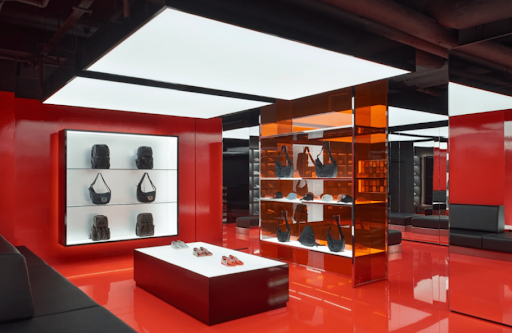
London’s retail scene has never been more unforgiving. Footfall is harder to earn, and customers arrive already having browsed the same products online before they ever step outside. Yet certain shops across the city consistently pull people in, hold them there, and send them away genuinely satisfied. The difference rarely comes down to product range. It comes down to how the space feels the moment someone walks through the door. Retail design in London is no longer simply about looking attractive — it is about creating something the internet cannot replicate, no matter how good the photography is.
Shopfronts Are Losing Conviction
Something uncomfortable is happening along London’s high streets. Shopfronts have grown timid. Pale interiors, cautious signage, window displays that show everything and communicate nothing. The shops that actually stop pedestrians are the ones that commit to a clear point of view. Selfridges has understood this for generations — its windows provoke and disorient before they ever invite. Smaller independents on Redchurch Street manage the same effect with far more modest resources. The lesson has nothing to do with the budget. A shopfront designed to appeal to absolutely everyone will, without fail, compel almost no one.
Dead Zones Are a Choice, Not an Inevitability
Every retail floor has them. Those awkward rear corners and side alcoves where customers rarely bother going, and stock quietly gathers dust. Most retailers accept this as an architectural fact of life. Skilled designers treat it as a problem worth solving. The better independents across London place a deliberate draw deep within the floor — a striking fixture, something interactive, a place to sit — so customers are pulled through the space rather than skimming its edges. This single decision changes the character of a visit entirely. Products that once went unnoticed suddenly get handled, considered, and bought.
Most Retail Lighting Is Quietly Forgettable
The default approach in most London shops is uniform brightness, with a handful of spotlights aimed at key products. It works in the most basic sense. It is also almost entirely without atmosphere. Retail design in London changes character entirely when lighting is treated as a storytelling tool rather than a utility. Certain fragrance boutiques in Covent Garden are genuinely dark inside. That darkness is not an oversight — it manufactures a sense of discovery that no brightly-lit room can produce. Shadows communicate luxury in ways that even the most considered product display cannot. Once that is understood, the standard over-lit retail box starts to look less like a sensible default and more like a missed opportunity sitting in plain sight.
The Detail Retailers Keep Overlooking
Scent gets some attention in retail conversations. Acoustics rarely do. The sound of a shop — how it echoes, what it plays, the quality of its quiet — shapes how long people stay and how they behave while they are there. Hard flooring bounces sound in ways that make a space feel cold and transactional, even when the visual design is genuinely beautiful. Good retail design accounts for what customers hear and feel beneath their feet just as deliberately as what they see in front of them. These are the invisible layers that make a space feel genuinely expensive rather than simply looking it. Most shoppers cannot name what is different. They just know something is.
Conclusion
Retail design in London is working under real pressure. Competition is relentless, customer expectations have been shaped by some of the finest spaces anywhere in the world, and the margin for a forgettable experience has effectively disappeared. The retailers managing this well are not always the ones with the deepest pockets. They are the ones who treat every inch of their floor as a considered decision rather than a default arrangement. They think about what a customer hears, not just what they see. They design for the person who almost walked past, not just the one already convinced. That is the gap between a shop someone remembers long after leaving and one they forget before they have reached the end of the street.