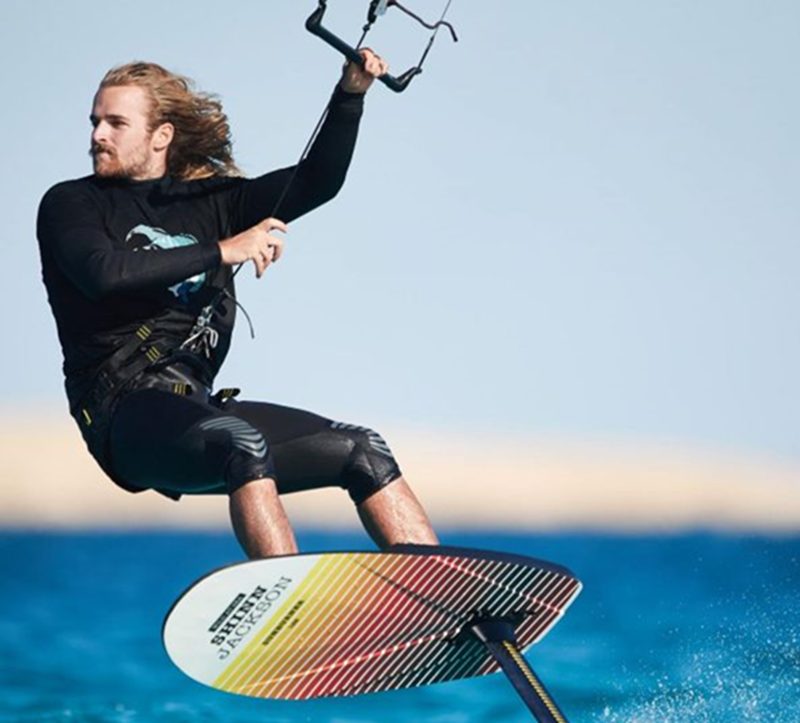
Kitefoil is about a completely different feeling on the water. In short, there is a hydrofoil under the board, and at some point, you simply stop riding on the water – you rise above it. And this is a completely different experience.
The main advantage of kite foil is that you can ride when the wind is weak. Where regular kitesurfing foil kites no longer “pull”, the foil still works. Well, the movement itself is different: without constant rustling on the water, smoother. This is actually what makes kitefoiling addictive.
How it all happens
At first, nothing magical happens – you just try to ride and keep your balance. But as soon as speed appears, the foil starts to lift the board. And here you either catch your balance or fall immediately.
The feeling when you “rise” for the first time is difficult to compare with anything. It’s like you’re sliding, but without contact with the water. The main difficulty is control. Foil is very sensitive: if you shift your weight a little incorrectly, you either fly too high or dive back down.
That’s why everyone starts the same way: short runs, lots of falls, constant stops. Often at first, it’s not even about riding, but just about understanding how it reacts. This stage is exactly what defines a typical kite foil beginner experience.
And yes, training on land is not a myth. It really helps, although it looks a little strange from the side. It’s often part of a kite foiling for beginners program.
About equipment
The worst thing you can do here is to buy gear at random. To start, it’s better to take a wider and more stable board – basically the best foil board for beginner type of setup. It forgives mistakes, and there will be enough of them at the start.
With kites, the same story – it all depends on the weight and wind conditions. Therefore, it’s more logical not to guess, but just go to a school or rental and try different options.
Many do this: first, a few sessions on rented equipment, and only then buy your own.
About learning
Of course, you can learn to kite foil on your own. But it takes longer. It’s easier with an instructor – they immediately tell you what you’re doing wrong. And you don’t waste several sessions on the same mistakes. This is why dedicated kite foil lessons are usually the faster way to progress.
Usually, everything progresses gradually: first kite control, then balance, then short climbs above the water, and then, more or less, normal riding. This whole process is what people mean when they talk about learning to kite foil. If you want to progress faster and avoid common mistakes, taking foiling lessons is a smart place to start. Nothing super complicated, but you don’t get into it “all at once”.
What’s really important at the start:
- don’t rush;
- don’t push yourself to exhaustion – fatigue has a strong effect;
- don’t ignore the base;
- listen to someone who knows how, not everyone around you;
- be ready to fall a lot.
More details about equipment and training options are available here: https://kiteboardingasia.com/kitefoil/.
Now kitefoiling is no longer just a “new thing”. For many, it’s a separate riding format they switch to for a long time. And if you don’t have high expectations, then it’s much easier to get into it than it seems from the outside.