Table of Contents
- Understanding the Basics of Rigging Equipment
- Assessing Load Characteristics
- Types of Rigging Equipment
- Considering Environmental Factors
- Compliance with Safety Standards
- Regular Inspection and Maintenance
- Training and Expertise
- Conclusion
Understanding the Basics of Rigging Equipment
Rigging equipment is the backbone of safe, efficient lifting operations across numerous industries, including construction, manufacturing, and shipping. The right gear determines not only how effectively a load can be moved, but also the protection of workers and property. Whether you’re moving a delicate machine or a massive steel structure, selecting the proper equipment for each scenario is essential for maintaining workplace safety and compliance. For specialized needs, products like synthetic slings Fort Smith can provide both strength and flexibility, adapting to the demands of diverse environments.
A comprehensive understanding of rigging basics, such as equipment types, material characteristics, and load dynamics, forms the foundation for all successful lifting applications. Failure to match equipment to the application may lead to serious accidents, downtime, or even structural failure. Taking time to evaluate the specific requirements of your project, from lifting heavy machinery to delicate crates, can lead to substantial improvements in efficiency and safety.
Assessing Load Characteristics
Accurately assessing the load to be lifted is a critical first step. This assessment should include the load’s weight, shape, dimensions, and center of gravity. Knowing these factors enables informed decision-making when choosing rigging hardware and sling arrangements. If the load is unevenly balanced or presents challenging angles, specialized configurations may be required to avoid shifting that can compromise safety.
Overlooking even minor load details increases risk. Exceeding equipment ratings or an unforeseen shift in the center of gravity can result in catastrophic accidents. To avoid such hazards, always consult manufacturer guidelines and leverage engineering expertise when needed. Further guidance can be found in reputable publications, such as OSHA’s training requirements, which offer best practices based on industry-wide standards.
Types of Rigging Equipment
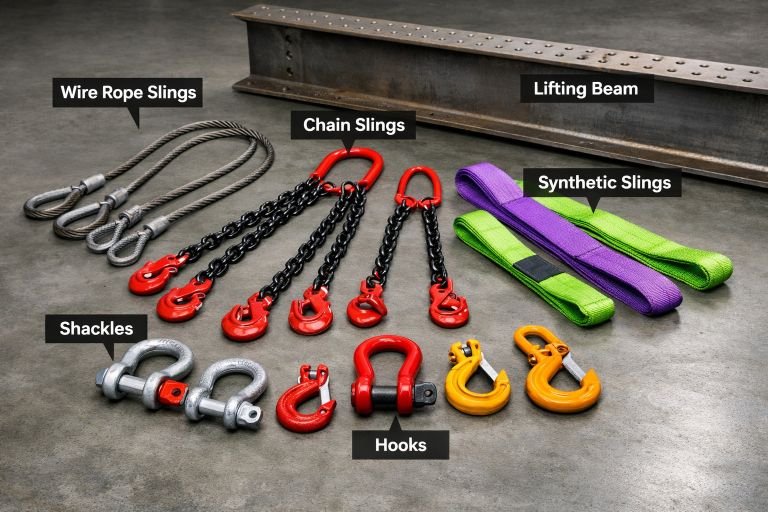
- Slings: These versatile lifting aids come in several common types. Wire rope slings stand out for their strength and durability, making them suitable for the heaviest loads and abrasive environments. Chain slings offer both flexibility and excellent resistance to extreme temperatures and corrosive environments. Synthetic slings, available in a range of weaves and materials, are lightweight and exceptionally gentle on finished surfaces, making them an ideal choice for glass, painted assemblies, or sensitive machinery.
- Shackles: These connectors play a significant role in joining various elements of the rigging system. Different designs accommodate different shapes and lifting angles. For example, bow shackles are preferred for multi-leg slings, while D shackles serve single-line loads. Choosing the correct shackle is vital to prevent misalignment and enhance load stability.
- Hooks: Hooks attach loads to the lifting mechanism and are available in various styles, including latch hooks and sorting hooks. The working load limit (WLL) and closure mechanism must match the task at hand to prevent unintentional release or deformation during use.
Considering Environmental Factors
Lifting environments are rarely uniform, and factors such as extreme temperatures, chemical exposure, and weather conditions can influence equipment selection. Chain slings are ideal for high-temperature or corrosive environments due to their resilience. In contrast, synthetic slings absorb shock better and should be used where equipment must remain lightweight or where loads have sensitive surfaces.
Continuous exposure to harsh chemicals can degrade the integrity of some materials, making it essential to verify the compatibility of the chosen rigging components with the operational environment. Industry resources, such as LegalClarity’s guide to OSHA rigging standards, provide insight into effectively handling environmental challenges.
Compliance with Safety Standards
Rigging operations are regulated by organizations such as the Occupational Safety and Health Administration (OSHA) and the American Society of Mechanical Engineers (ASME). All equipment must meet the specific requirements for load limits, inspection intervals, and operational procedures. Adhering to these standards reduces liability, ensures safety, and enhances operational stability. Documentation and certification of all rigging hardware should be maintained and readily available for review.
Regular Inspection and Maintenance
Rigging equipment is subject to wear and tear, even under optimal use. Routine inspections help identify damage, such as frayed slings, bent hooks, cracked shackles, and corrosion. Defective equipment should be removed from service immediately to prevent accidents. Maintenance routines, such as lubricating chains, checking connections, and properly storing slings, help extend equipment life and uphold safety standards across all lifting operations.
Training and Expertise
Proper training is the cornerstone of safe rigging. Personnel must understand equipment handling, load calculation, and industry safety protocols. Comprehensive training programs develop the hands-on skills necessary to spot potential hazards, make informed decisions about rigging configurations, and respond effectively to emergencies. Companies should invest in ongoing education to keep workers up to date with the latest standards, technologies, and safety practices.
Conclusion
Choosing the right rigging equipment for heavy lifting applications is complex and requires attention to load characteristics, environmental conditions, and regulatory compliance. By prioritizing the proper selection, routine maintenance, and employee training, industries can ensure efficient, safe, and incident-free lifting operations. Smart investment in rigging equipment and personnel expertise translates into productivity, legal safety, and peace of mind, no matter the scale of the project.