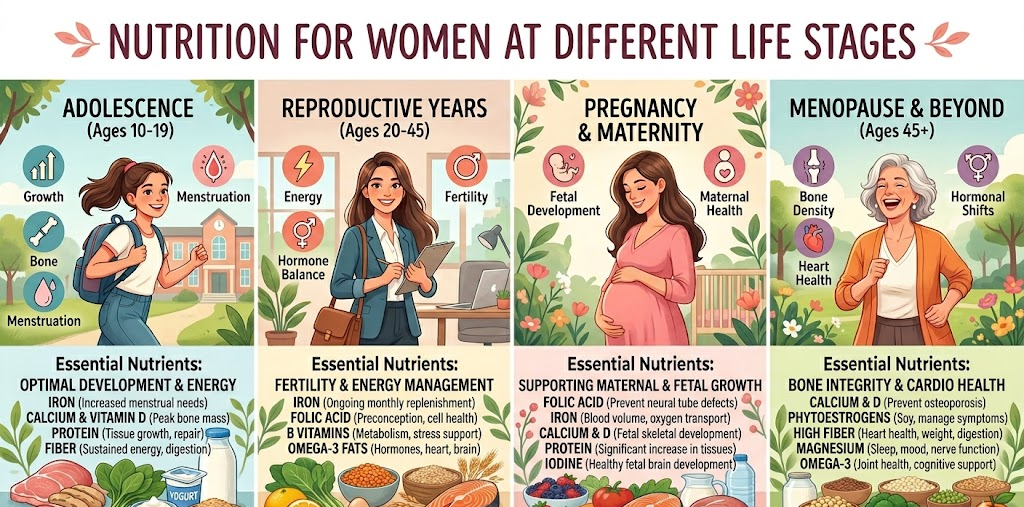
Nutrition has become a characteristic aspect of the health journey of every woman, as it contributes to various factors such as development and energy levels, reproductive health, and aging. Although general dietary guidelines can cut across the board, nutritional guidance for womenchange considerably in various phases of life. Nutrition guide for women can result in smarter choices that contribute to long-term wellness and prevention of diseases.
When trying to find good advice on nutrition and its needs in relation to women, one must always remember how the needs change during adolescence, reproductive years, pregnancy, and during menopause. The different stages are characterized by unique challenges and opportunities to establish a robust base towards health.
The Importance of Tailored Nutrition for Women
Women undergo hormonal changes, menstruation, pregnancy, and menopause, all of which influence nutritional needs. A balanced diet is not only about keeping at the right weight; it is about the best intake of nutrients that are vital to the body like iron, calcium, folic acid, and vitamins.
Inability to satisfy these needs may lead to fatigue, weakening of bones, fertility problems, and chronic illnesses. Conversely, a nutritious diet improves energy, provides mental sharpness, boosts immunity, and improves general health.
Nutrition Guide for Women
Eating in the Teens (Ages 10–19)
Adolescence is a decisive period of development characterized by physical growth, hormonal changes, and the start of menstruation. During this stage, nutritional requirements are very high.
Important Nutrients for Teenagers
Iron: The onset of menstruation leads to a significant rise in the iron requirement. Iron helps to produce hemoglobin that carries oxygen in the blood.
- Sources: Lean meats, beans, spinach, fortified cereals.
- Risk of deficiency: Anemia, dizziness, fatigue.
Vitamin D and Calcium: During the adolescence stage, the development of bones is optimal and as such, calcium and vitamin D are vital in forming strong bones.
Protein: Protein helps in muscle building
- Sources: Eggs, fish, poultry, legumes, nuts.
Healthy Eating Tips for Adolescents
- Promote balanced diets containing fruits, vegetables, whole grains, and proteins.
- Limit sweets and processed food.
- Encourage regular meals to sustain energy levels and concentration.
The Reproductive Years (Ages 20–45)
In the reproductive years, women are usually busy with a number of tasks and failing to remember proper nutrition is easy. Nevertheless, this phase needs regular nutrition to maintain energy, hormonal regulation, and reproductive health.
Essential Nutrients
Iron: Continued menstrual periods indicate a continued loss of iron.
- Daily requirement: Greater than that of males.
- Tip: To increase the absorption of iron-rich foods, combine them with vitamin C.
Folic Acid: Folic acid is essential prior to pregnancy since it prevents neural tube defects in the early development of the fetus.
- Sources: Green leafy vegetables, citrus fruits, beans, fortified grains.
B Vitamins: These vitamins aid in the production of energy and brain functions.
- Sources: Whole grains, eggs, dairy, meat.
Healthy Fats: Omega-3 fatty acids are known to control hormones and maintain heart health.
- Sources: Walnuts, flaxseeds, fish.
Lifestyle Considerations
- Eat well even when you are in a hurry.
- Hydrate to aid metabolism and skin well-being.
- Do not take too much caffeine and alcohol.
Nutrition During Pregnancy
Pregnancy is a period in the life of a woman that is among the most nutritionally demanding. The body needs additional nutrients to take care of maternal health as well as fetal growth.
Increased Nutritional Needs
Folic Acid: Important during early pregnancy to avoid birth defects.
- Recommended intake: Higher than for non-pregnant women.
Iron: Helps to raise blood volume and avoid anemia.
- Importance: Limits the risk of preterm birth.
Calcium: Essential in the formation of the bones and teeth of the baby.
- Risk: When inadequate, the body can take calcium out of the bones of the mother.
Protein: Promotes tissue growth and development.
- Sources: Legumes, lean meats, dairy.
Iodine: Helps the brain to develop in the fetus.
- Sources: Seafood, dairy, iodized salt.
Good Pregnancy Diet Advice
- Take small, frequent meals to control nausea.
- Have a variety of nutrient-rich foods.
- Avoid foods that are dangerous, e.g., unpasteurized food.
- Consult with healthcare providers prior to taking supplements.
Nutrition Guide for Women at Menopause (Ages 45+)

Menopause results in hormonal changes which may affect metabolism, bone density, and heart health. Dieting is useful to control symptoms and minimize health risks in the long term.
Key Nutrients
Vitamin D and Calcium: Menopause reduces bone density, predisposing one to osteoporosis.
- Examples: Dairy products, fortified foods, sunlight.
Phytoestrogens: Phytonutrients that could act to balance hormones.
- Sources: Flaxseeds, soy products.
Fiber: Promotes digestion and weight management.
- Sources: Fruits, vegetables, whole grains.
Magnesium: Assists in sleep, muscle tone, and mood.
- Sources: Nuts, seeds, green foods.
Managing Menopause through Diet
- Lower salt levels so as to control blood pressure.
- Limit sugar and processed foods.
- Stay physically active to keep bones and hearts in shape.
Common Nutrition Issues Across All Stages
Even though the needs of each stage are different, there are issues that are common throughout the life of a woman.
- Iron Deficiency: Menstruation and pregnancy put women at risk of iron deficiency. It is important to consume iron-rich foods regularly.
- Calcium Deficiency: The lack of calcium may cause weak bones and fragility to fractures in the future.
- Poor Dietary Habits: Fast foods are not always accompanied by the required nutrients; dependency on them is likely to occur in busy lifestyles.
- Dehydration: Water is often overlooked, but it is essential for digestion, circulation, and maintaining temperature.
Preparing a Balanced Diet for Long-Term Wellness
A balanced diet that is sustainable is important to the fulfillment of nutritional needs at all stages.
Elements of a Healthy Diet
- Fruits and Vegetables: Contain vitamins, minerals, and antioxidants.
- Whole Grains: Provide energy and fiber.
- Lean Proteins: Promote muscle and tissue health.
- Healthy Fats: Promote heart and brain health.
Practical Tips
- Pre-plan meals to eliminate unhealthy options.
- Read food labels to know about nutritional content.
- Practice portion control.
- Eat diverse foods to ensure a wide nutrient intake.
Supplement Use
Whole foods are the main source of nutrients, but in case of gaps, supplements may be used. These may be necessary:
- During pregnancy (folic acid, iron).
- When there are dietary restrictions (e.g., vegetarian diets).
- In older women whose absorption of nutrients is low.
Important Note: Never take any supplement without consulting a healthcare provider to avoid overdose or other reactions.
Hydration and Its Effect on Health
Water is a necessity at all stages of life.
Proper Hydration Advantages
- Aids in digestion and absorption of nutrients.
- Regulates body temperature.
- Improves skin health.
- Enhances energy levels.
Daily Recommendation: Aim for at least 6–8 glasses of water per day, based on activity and climate.
Conclusion: Final Thoughts on Nutrition Guide for Women:
Women do not have a one-size-fits-all approach to nutrition since their bodies transform considerably during life. Starting with the quick development of adolescence to the hormonal fluctuations of menopause, there are certain nutrients needed at each stage to stay healthy and avoid disease.
With the knowledge of those changing needs and making wise food decisions, women can sustain their energy, preserve their bones, improve reproductive wellness, and increase their overall quality of life. A proactive nutrition strategy today is the foundation for a healthy future.