Introduction
In the current financial era, your credit rating will either open the door or just close the door. It could be a loan, an apartment you are renting, or even some job opportunities you are seeking, but one thing always comes into consideration, your credit score. However, there are a lot of individuals who are not aware of what credit score is, how it is determined, or how to build and maintain a good credit score.
A credit score is not merely a number, it is a great indicator of your financial ability. It is what lenders, landlords, and even some employers use to determine your responsibility in spending money. Regrettably, the ignorance on how credit functions can result in wrong financial choices that can take years to redress.
With the continuous growth of a credit-based economy, it is crucial to know how to build and maintain a good credit score to gain financial independence and stability. The right knowledge can save you a lot of money whether you are new in the financial field or are attempting to overcome the mistakes of the past.
The article will describe how a credit score is calculated, what a credit score is, and why it is important in our daily financial life. It will also give you practical steps to follow to enhance your credit worthiness and to prevent most of the common pitfalls and to be in control of your financial future.
What is a Credit Score?
A credit score is a figure that indicates your credit worthiness. Simply put, it indicates to lenders the probability of you repaying borrowed funds on time. This score is normally pegged on your credit history-how you have managed your credit accounts like loans, credit cards among other financial obligations.
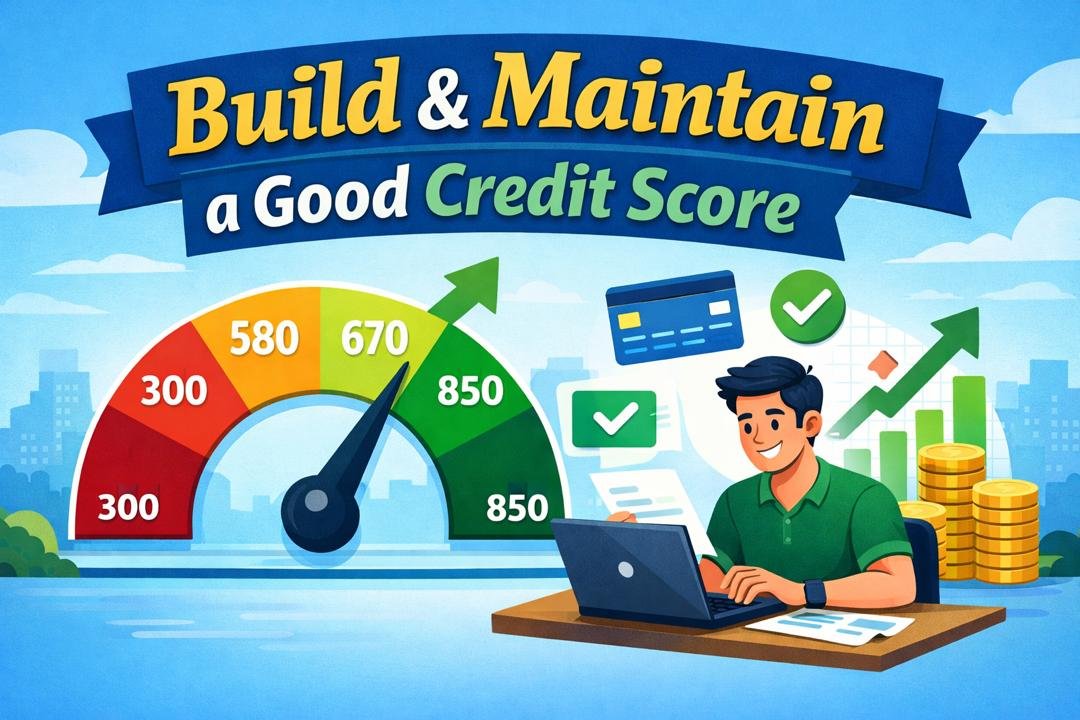
Fair Isaac Corporation (FICO) is one of the most commonly used scoring systems that usually have a range of 300-850. The better your score the more credible you will seem to lenders.
In the following is a rough breakdown:
- 300–579: Poor
- 580–669: Fair
- 670–739: Good
- 740–799: Very Good
- 800–850: Excellent
How is a Credit Score Determined?
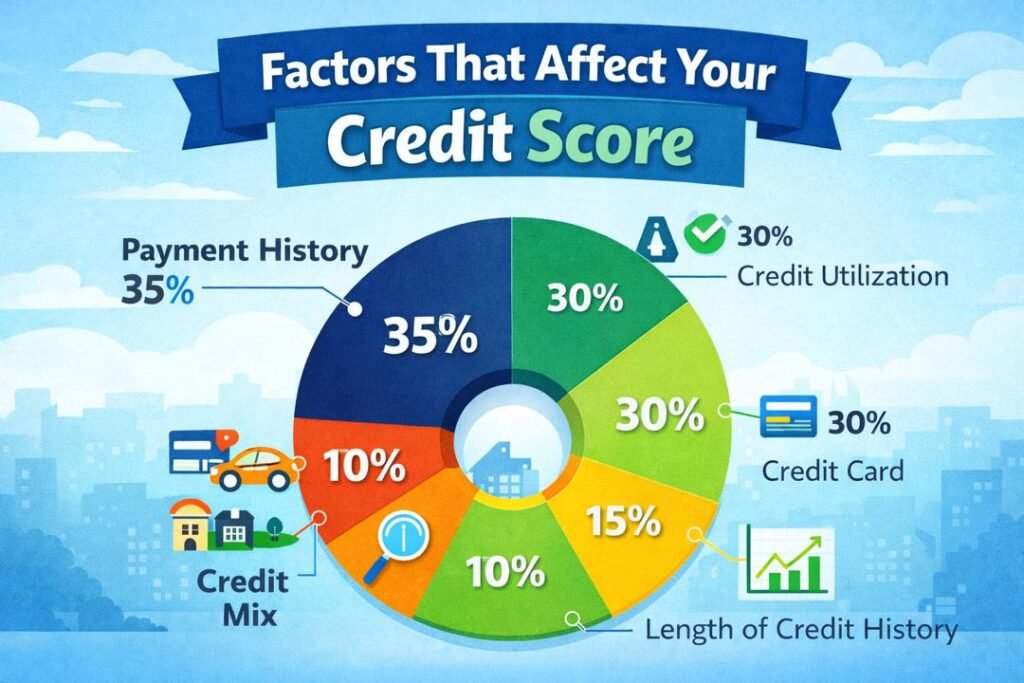
Credit score is not just a random number, it is computed on a number of factors which are important. The first step to a better score is to understand these components.
1. Payment History (35%)
This is the greatest factor. It monitors your timeliness in paying bills. Late payments, missed payments or defaults might bring your score down a great deal.
2. Credit Utilization (30%)
This is the proportion of the available credit that you have in use. To illustrate this, with a credit limit of ₦100,000 and a usage of 80,000, your utilization rate is 80% that is considered high.
Experts suggest that you should only use up to 30%.
3. Length of credit History (15%)
The longer your credit history is the better. The lenders will favor borrowers who can demonstrate a track record over a period of time.
4. Credit Mix (10%)
It can be beneficial to have various kinds of credit, including loans, credit cards, and mortgages.
5. New Credit Inquiries (10%)
Every time you apply for credit, a “hard inquiry” is recorded. A lot of questions within a short time frame may lead to you being seen as economically unstable.
What is The Importance of Your Credit Score?
The value of your credit score is important in your financial life. It has a lot more impact than your capacity to get money on loan.
1. Loan Approval
Your credit score will be used by the banks and other financial institutions to determine whether to approve your loan application. The higher score the better you have a chance of approval.
2. Interest Rates
Although you may be rated to get a loan, your rating is what will get you the interest rate. Having a good score can save you thousands in the long run.
3. Housing Opportunities
Before renting out property, landlords normally check credit scores. The low score can restrict your choice of houses.
4. Employment Opportunities
Other employers look into credit reports when hiring people, particularly those with financial responsibility.
5. Financial Confidence
Good credit score provides you with leeway and assurance to make significant financial choices.
Get to Know More about Credit Scores.
To get a deeper insight into the impact of your financial habits on your score, you may use this useful resource on credit score, which can shed some more light and give real-life examples.
How to take real actions that will increase your credit score.
You can never achieve a high credit score in a few days, but a series of habits can have a huge impact in the long term.
1. Pay your Bills on Time.
This cannot be overemphasized. The most important factor in your credit score is timely payments.
Tip:
Reminder or computerized payments to prevent time loss
2. Reduce Your Debt
Excessive debt can have a detrimental effect on your score. Pay emphasis on debts, particularly those with high-interest rates.
Strategy:
- Begin with high interest debts (avalanche method)
- Or settle smaller debts hastily as an incentive (snowball method)
3. Maintain Low Utilization of credit.
Do not use your credit cards to the maximum. High utilization can be detrimental to your score, even though you might pay off your balance later.
Ideal Rule:
Keep your credit usage and utilization less than 30% of what you have.
4. Do not apply for unnecessary credit.
All credit applications will lead to hard inquiry. A lot of questions in a short time will reduce your score.
Only apply for credit when necessary.
5. Maintain Old Accounts
Sealing old credit accounts will make your credit history shorter and limit the amount of credit you have.
Although you may not use an old card regularly, it can be beneficial to keep it open to score better.
6. Oversee Your Credit Report.
Mistakes on your credit report will have a bad influence on your score.
Review your report frequently and contest any mistakes.
7. Establish Credit when you are Starting Fresh.
In case of no credit history, you can begin by:
- Obtaining a collateral credit card.
- Taking small and manageable loans.
- Hacking into an authorized user of another account.
Credit Reporting errors
Minor financial practices can be long-term. These are some of the mistakes to be avoided:
1. Missing Payments: A single missed payment will deduct a lot of points.
2. Using the Credit Cards to their maximum: Expenditure of excessive credit that you have indicates danger to creditors.
3. Number of Accounts Closed: This decreases your credit history and usable credit.
4. Ignoring Debt: You can end up in collections over unpaid debts which have a devastating effect on your credit.
6. Toogoo Much Credit: The repetitive use implies money scarcity.
How Long Does It Take to Build Good Credit?
It is a long process to establish a good credit score.
- Short-term improvements: 3–6 months
- Moderate improvements: 6–12 months
- Excellent credit: 1 -3 years or longer.
Discipline and patience are important.
Nigeria and the World in terms of Credit Score
Credit scoring systems are still in their early stages in countries such as Nigeria, but are gaining even greater significance. To determine the dependability of borrowers, credit bureaus gather financial information.
Systems such as those of the United States and Europe are more developed worldwide, however, everywhere the principles are the same:
- Pay on time
- Manage debt responsibly
- Establish a good credit record.
The Long-term benefits of having a good credit score.
Good credit score is not only beneficial in terms of loan approvals. It generates long-term economic benefits:
- Lower interest rates
- Would have easier access to credit.
- Better housing opportunities
- Increased financial security
- Greater negotiating power
Conclusion
Learning how to build and maintain a good credit score is one of the most significant procedures that you can undertake in the path to financial stability. Not only a number, but an indicator of your financial routines and discipline.
Through paying your bills on time, having a good debt management and not accumulating unnecessary credit applications, you can slowly create a good credit profile. Although it might be a long process, it is rewarding. A high credit rating provides you with increased access to financial resources, less stress, and assures you to pursue your long-term target without uncertainty.
Furthermore, one should always keep in mind that good credit is a continuous process, not a one-time experience to achieve this. The financial practices should be carried out and re-examined on a regular basis to achieve success in the long run. Life situation might vary, like your income, expenses or financial obligations, but training your discipline in your credit behavior will keep you on track.
In addition, financial literacy is essential in maintaining good credit score. The better you are informed on how credit works the more you will make better choices on borrowing, repayment and general money management. By making time to learn and keep up to date, you will avoid the expensive errors and enhance your financial situation.
Finally, credit score is a potent financial instrument. It can be used to your advantage and it can assist you to unlock opportunities and fulfill personal goals and to create a safe financial future.
Get more well researched information about on to build and maintain a good credit score here.