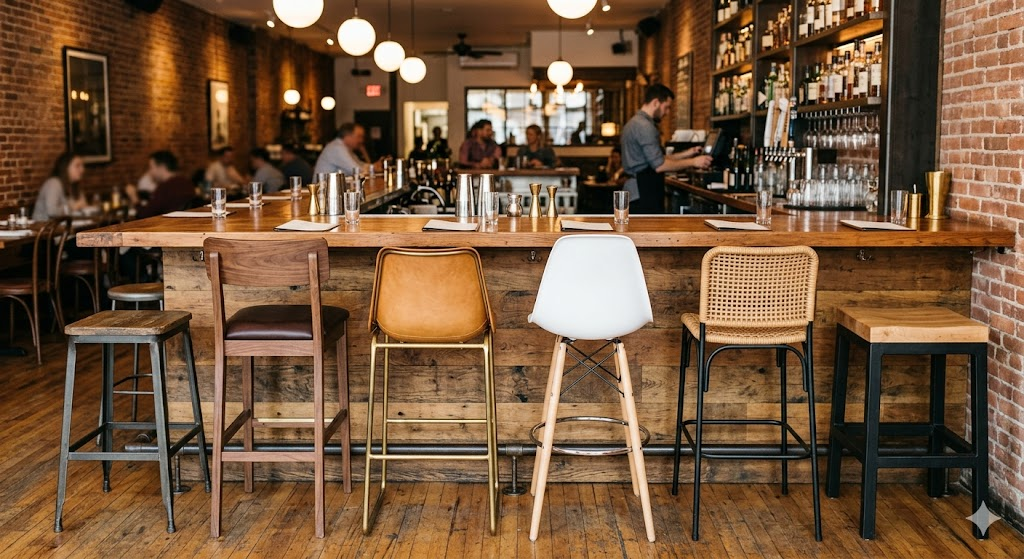
Seating is instrumental in the overall experience of any restaurant space and quietly serves its purpose. Bar stools, specifically, have to find the perfect balance of comfort, strength, and aesthetic quality. If the height itself or the material is not appropriate, it can disturb customer comfort and space flow. It can be difficult to figure out what fits best with styles and specs varying widely. Insights on how height, material, and weight limits interact can assist in devising a more functional and engaging arrangement.
Understanding Height Requirements
Well, a seat height that certainly gives guests the chance to experience proper dining comfort. Choosing the right restaurant bar stools starts with matching the stool height to the counter or bar for a more comfortable seating experience. There should be enough legroom between the stool and the counter, but not too much.
Bar heights are usually between 40 and 42 inches, and counter heights are typically 36 inches. The other difference is the height of the seats; bar stools tend to have 28 to 30 inch high seats, and counter stools tend to have 24 to 26 inch high seats.
Materials for style and durability
The material you choose significantly affects the durability and ease of cleaning of your stools. Metal stools are durable, simple to clean, and, therefore, a suitable option for busy restaurants. Wood stools provide warmth and a more classic appearance but do tend to need maintenance to prevent scratches and moisture damage.
Plastic selections are often frail and will most certainly alternate patterns, serving the interior layout. Textured seats are comfortable but require extra cleanings in certain fast-paced dining venues.
Weight Capacity Considerations
The weight capacity affects both safety and durability. Read the rating—nearly all commercial stools fall between a 250 to 300 pound rating. But some other places possibly need stools with high weight capacities for every person to sit comfortably on.
Purchasing seats according to the specifications of a manufacturer and the requirements of a buyer may preserve them for years. Keep an eye out for any rickety frames or loose fits to prevent mishaps and ensure everyone’s safety.
Design and Comfort Features
Extra back support will make it more comfortable for customers to lounge for a bit longer. Footrests help you position your feet properly, improve your posture while working, and lessen foot fatigue. Particularly in confined spaces, swivel seating makes it easier to enter and exit. Arm rests can be a little more comfortable, but they also add bulk, so make sure you have enough room.
Space Planning and Arrangement
The well-utilized spaces are successfully given a comfortable feel by this design. Since each stool must have a personal space as well as a space for movement, it is always best to sit well apart from other stools. To prevent crowding and to make it easier for guests and servers to move around, place stools six inches apart.
When choosing the size and quantity of stools, the dining area’s space also aids in striking a balance between appearance and feel. Additionally, cozy sets work well with a variety of kitchen layouts and larger gatherings.
Maintenance and Cleaning Needs
A clean seat makes for a more hygienic and comfortable experience. They are handy as they can easily be wiped down with a cloth. For example, for wooden stools, you want non-abrasive solutions so as not to damage the finish.
Additionally, an upholstered seat may need a lot more spot cleaning and vacuuming than you might want to do because it attracts stains and crumbs. Selecting stools according to their requirement saves your time and keeps your place a lot healthier throughout the day. Materials that last mean less replacement.
Conclusion
While appearance is an important consideration when selecting restaurant barstools, there are also a few functional qualities you should pay attention to. What really gives it special importance is high-quality material, and what it bears little concern with is comfort, safety, and fashion. A properly made decision results in a better food experience for the diner and easier service for the staff. By doing the proper research on stool features, a restaurant owner can have a functional yet great-looking stool in place for years to come.
