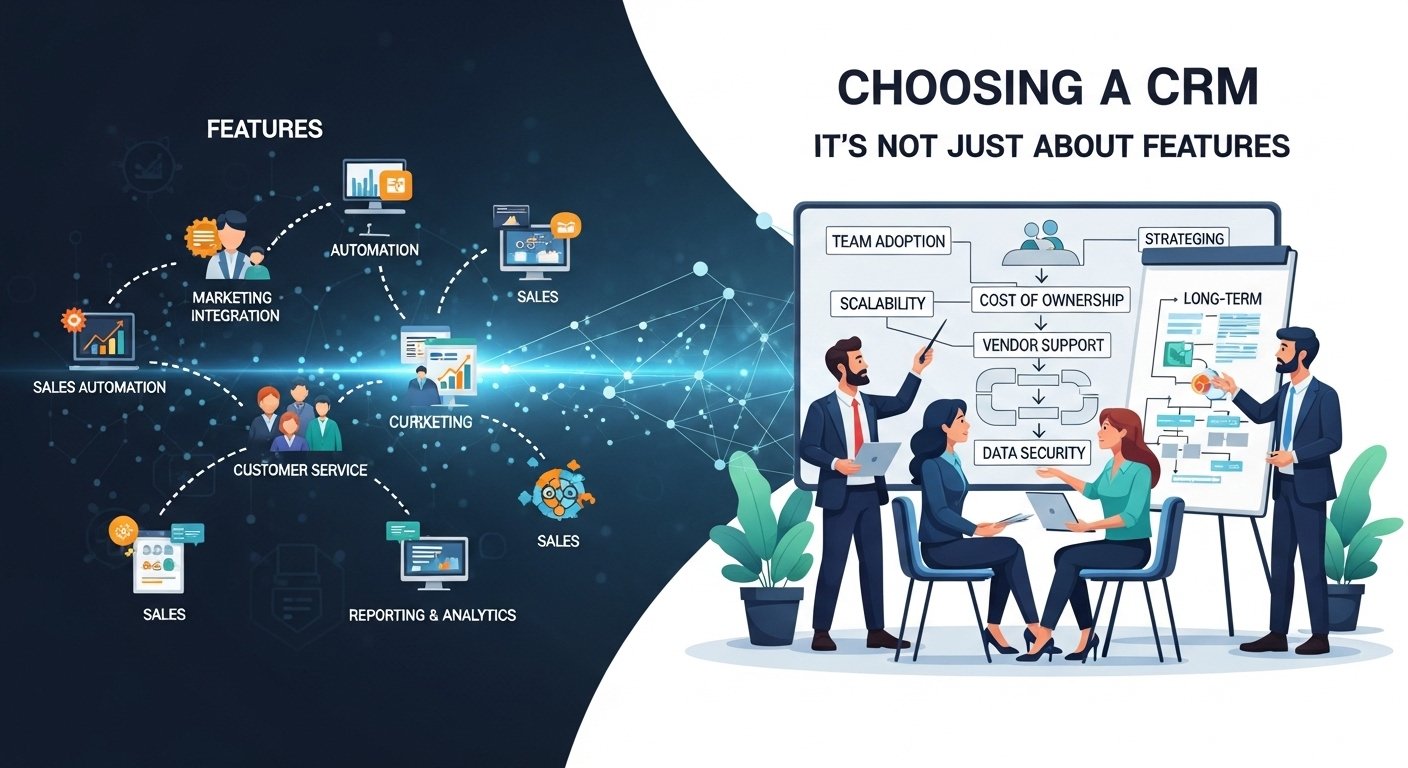
Choosing the right CRM is not just about features. Pricing plays a big role, especially if you are running a small or growing business. But here is the thing; CRM pricing is not always as simple as it looks.
In this guide, we break down the pricing of Zoho CRM and Odoo CRM in a clear and simple way. You will see what you are really paying for, where extra costs can come in, and which one gives better value for your business.
Understanding How CRM Pricing Works
Before we compare both tools, it is important to understand how CRM pricing usually works.
Most CRM platforms use one or both of these models:
- Per user, per month: You pay for each person using the system.
- Modular pricing: You pay for only the features or apps you want.
Both Zoho CRM and Odoo CRM use these models, but in different ways.
Zoho CRM Pricing Overview
Zoho CRM follows a clear, structured pricing model: you pay per user, per month, and each plan includes a fixed set of features.
Zoho CRM Plans
Zoho CRM typically offers five plans: Free, Standard, Professional, Enterprise, and Ultimate.
Free Plan
The free plan supports up to 3 users, making it suitable for very small businesses or startups. It includes basic lead and contact management, simple workflows, and mobile app access, but comes with limited features, no advanced automation, and no in-depth reporting. It’s best for getting started and testing CRM.
Paid Plans
Standard: entry-level paid plan with sales automation, reports, and dashboards.
Professional: adds workflow automation, inventory management, and stronger reporting.
Enterprise: includes advanced customization, Zia AI, multi-user portals, and advanced automation.
Ultimate: top tier with advanced analytics, data preparation, and high-level reporting.
Read Also: Why Every Business Needs a Sales and Marketing CRM
Strengths and hidden costs
Pricing is predictable and offers strong value at lower tiers, with many features included. However, some advanced capabilities require higher plans, and certain integrations may need extra subscriptions (e.g., Zoho One or other Zoho apps)
Odoo CRM Pricing Overview
Odoo uses a modular pricing model, unlike Zoho CRM, so you pay only for the apps you use.
Free plan
Odoo has a free option, but you can use only one app for free (CRM can be that app). It includes basic CRM features such as lead tracking and pipeline management, but has no advanced features and limited scalability.
Paid plans and structure
If you need more than one app, you’ll need a paid plan. Pricing varies by number of users, number of apps, and hosting (Odoo Online, Odoo.sh, or on-premise). Charges are typically per user, per month, plus app costs, though Odoo often bundles all apps at a fixed per-user price, covering CRM, Sales, Accounting, Inventory, HR, and Marketing.
Strengths and hidden costs
Odoo is flexible and can support an all-in-one business system, but costs can rise with more users. Customization may require developers, and implementation, hosting, and maintenance can add extra expenses.
Zoho CRM vs. Odoo CRM: Direct Pricing Comparison
Now let’s compare both side by side in simple terms.
1. Entry Cost
Zoho CRM has a free plan and low-cost paid plans while Odoo CRM is free for one app, but paid once you expand
2. Pricing Simplicity
Zoho CRM has easy to understand pricing tiers while Odoo CRM’s pricing depends on apps, users, and setup
3. Value for Money
Zoho CRM offers many features within each plan while Odoo CRM offers full business suite but may cost more
4. Scalability Cost
With Zoho CRM, you upgrade plans as you grow while with Odoo CRM, you add more apps and users
5. Customization Cost
Zoho CRM’s customization is built into higher plans while Odoo CRM may require technical help
Recommendations
Choose Zoho CRM if:
- You want simple pricing
- You are focused on sales and customer management
- You want a quick setup without technicalities
- You are a small or medium business
Choose Odoo CRM if:
- You want an all-in-one system for your business
- You are ready to invest in setup and customization
- You need more than just CRM (like accounting and inventory)
- You have technical support or developers
Conclusion
Both Zoho CRM and Odoo CRM are strong tools, but their pricing models are very different.
Zoho CRM is simple, predictable, and easier to start with. You know what you are paying for, and you can grow step by step.
Odoo CRM is flexible and powerful, but pricing can become complex as your needs grow. It works best for businesses that want to manage all operations in one system.
In the end, your choice should depend on how you plan to use the CRM and how much control you want over your costs.
If you require additional or advanced setup in Zoho Mail, kindly reach out to an authorized Zoho Partner in Nigeria; Droidedge Consulting.