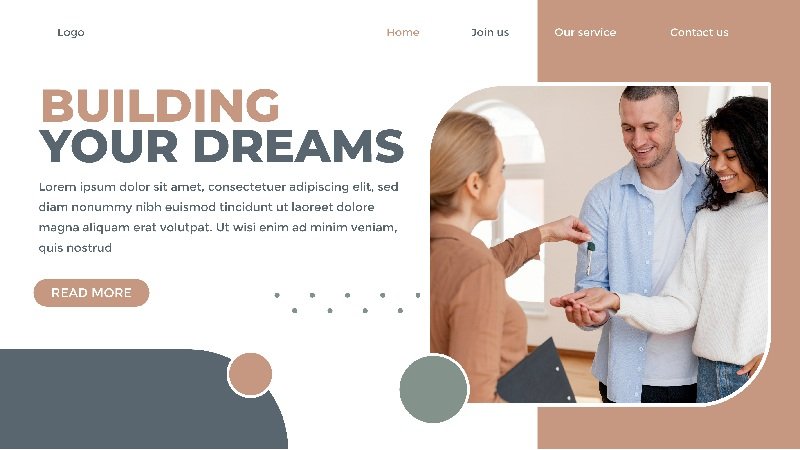
A landing page is a special type of web page designed to encourage visitors to perform a specific action. This action might be signing up for a newsletter, downloading a guide, registering for a webinar, requesting a consultation, or purchasing a product.
Unlike a regular website that contains many pages and different types of information, a landing page focuses on one clear goal. Users usually arrive there after clicking an advertisement, search result, email link, or social media promotion.
The main purpose of a landing page is simple: convert visitors into leads or customers.
Why Businesses Use Landing Pages
A landing page is an effective tool for improving marketing results. Because the page is focused on a single offer, it removes distractions and guides the visitor toward one specific action.
For example, if someone searches for “buy apartment in Kyiv” and clicks an ad, they expect to see a page that directly offers apartments for sale. If instead they land on a general homepage where they must search through menus and categories, many users will simply leave.
Landing pages solve this problem by matching the visitor’s expectation with a clear, relevant offer.
Another advantage is the attention ratio. In a well-designed landing page, the number of clickable elements is minimal, often leading to a ratio close to 1:1 — one page, one goal. This focus greatly improves conversion rates.
Landing pages are also perfect for A/B testing. Because the page has only one objective, it becomes easier to test different headlines, layouts, or calls to action to determine which version performs best.
Essential Elements of a Landing Page
An effective landing page typically includes several key components.
Primary headline
The headline is the first element visitors notice. It must quickly communicate the value of the offer and encourage users to continue reading.
Supporting headline
Sometimes a short subheading is used to clarify the main message or add more context to the offer.
Unique value proposition
Visitors need to understand why your product or service is better than alternatives. The content should address the user’s needs and clearly explain the benefits.
Visual elements
Images, graphics, or videos help visitors better understand the offer and create an emotional connection with the product.
Call-to-action (CTA)
A CTA button invites the visitor to take action — for example “Register”, “Download”, or “Buy Now”. This element should be highly visible and easy to understand.
Lead form
Many landing pages include a form where users provide contact information. The form should remain simple, usually requesting only essential details such as name, email address, or phone number.
Trust indicators
Testimonials, customer reviews, logos of well-known partners, or statistics help increase credibility and encourage users to trust the offer.
Types of Landing Pages
Not all landing pages serve the same purpose. Depending on the goal, different formats may be used.
A click-through page encourages visitors to click a CTA button and move to the next step, such as a checkout page.
A lead capture page collects user information through a form, often offering a resource like an ebook or free consultation in exchange.
A squeeze page is a minimalist version designed mainly to collect email addresses.
Finally, sales landing pages focus on presenting a product in detail and guiding the visitor toward purchase.
What Happens After the Landing Page Is Built
Creating the page is only the first step. To generate results, traffic must be directed to it through marketing channels such as paid search advertising, social media campaigns, email marketing, or content partnerships.
Businesses often combine several channels to reach their audience and maximize results.
How to Build a Landing Page in 2026
Today landing pages can be created quickly using website builders or custom development. However, effectiveness depends not only on speed but on strategy, design, and technical performance.
Many companies start with simple tools but later move to more professional solutions when they need better customization, performance optimization, and scalability. Development teams such as https://itground.no focus on building landing pages that combine strong design, clear conversion structure, and modern web technologies.
Conclusion
A landing page is one of the most powerful tools in digital marketing. By focusing on a single goal and removing distractions, it helps businesses turn visitors into customers more effectively.
When designed thoughtfully and supported by the right promotion strategy, a landing page can become a key element of any successful online campaign.