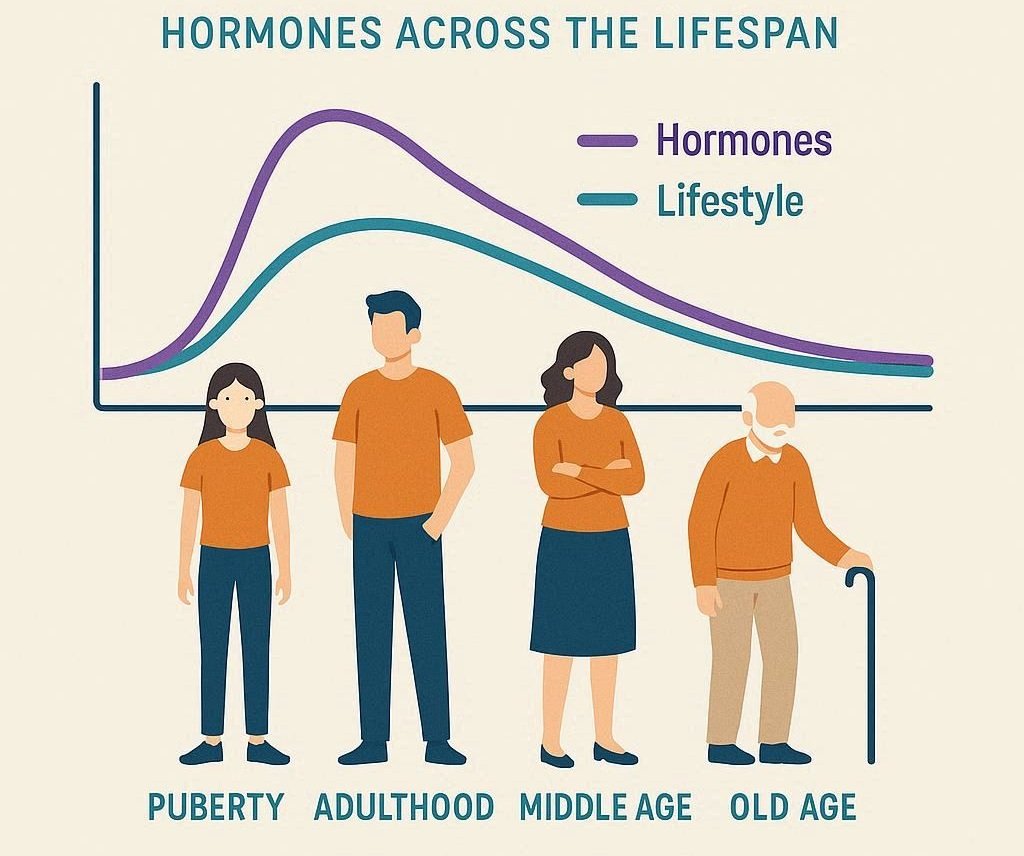
Hormones are key in controlling the growth, development, metabolism, reproduction and emotional well being in life. As the needs of the body change, so does endocrine system, as the dramatic changes of puberty are replaced by the slow hormonal changes of aging. Such transitions in the hormones are natural processes of human biology, but they can be characterized by obvious physical, emotional, and psychological changes in quality of life.
Knowledge of lifespan hormonal variations helps people to define what is normal, predict changes, and make sound decisions that promote a healthy aging process. Some of these hormonal changes can be fast but some are slow and take decades to develop and influence the way the body works at various stages of life.
This article gives an overview of all the hormonal changes during the ages of puberty to adulthood and old age. We describe the major changes e.g. menopause and male hormonal aging, the impact of these changes on physical and emotional well-being as well as the necessity of balance and adaptation with the age.
The Endocrine System and Hormonal Regulation throughout the Life
Endocrine system consists of a system of glands which produce hormones and release them into the blood to control the functions of the body. There are major endocrine glands that are the hypothalamus, pituitary gland, thyroid, adrenal glands, pancreas, ovaries and testes. The glands collaborate with each other and regulate the level of hormones by the means of feedback.
Hormones are chemical signals, which cause tissues and organs to develop, heal, hold energy or react to stress. Even though the production patterns of hormones change with age, the endocrine system is very active in life hence constantly regulating hormones to suit physiological requirements.
The impact of the hormonal transitions is determined by the genetics, lifestyle, health status and environmental factors. Although all these changes are universal, the time and extent of changes in hormones differ depending on the individual.
Puberty Hormonal Changes
Puberty is the first significant hormonal transition in life and the transition of the body between childhood and sexual maturity. It begins at this point by activating the hypothalamic-pituitary-gonadal axis which triggers the release of reproductive hormones.
In women, the estrogen and progesterone levels increase resulting in the secondary sexual characteristics, breast growth and the start of menstruation. The higher the testosterone in males, the more muscle growth, deepening of the voice, and production of sperm.
Growth hormone and insulin-like growth factor also rise up in the puberty and this leads to rapid growth in height and skeletal development. Such hormonal variations are beneficial to physical growth and development but also to emotional sensitivity and behaviour.
Due to the fluctuations in hormones, mood swings, increased emotional reactions and alteration of sleep patterns are common during puberty. Even though they may be difficult, these changes are a normal aspect of the development process and they generally level off as one grows to adulthood.
Stability in Hormones during early adulthood
Stable hormone levels are usually observed in early adulthood. Hormones of reproduction, metabolism and hormones of stress usually have an optimal range, which promotes physical performance, fertility and emotional regulation.
In females, estrogen and progesterone control the reproductive health and menstrual cycles. Testosterone levels in men enhance muscle mass, bone density and sexual functioning. Thyroid hormones ensure efficient metabolism and insulin controls the level of glucose in the bloodstream.
At this phase, hormonal balance promotes vitality, strength and rest. Nonetheless, this stability is destabilized by lifestyle factors (chronic stress, poor sleep, and inadequate nutrition) which cause early hormonal imbalances.
Hormonal Changes in Midlife
Midlife is a stage of gradual hormonal change as opposed to abruptness. Hormone level does not become dysfunctional yet, but there start to be slight changes which interfere with metabolism, energy level, and emotional state.
Menopause: The levels of estrogen and progesterone can start to vary in women a long time before menopause. Such swings may lead to disrupted menstruation cycles, mood swings and changed sleeping patterns.
Testosterone levels in men reduce gradually with age. This progressive transformation is linked with the progressive decrease in muscle mass, metabolic rate, modifications in energy and mood. Male aging happens with a hormonal shift, the process is commonly known as andropause, which is characterized by a drop in testosterone and the effect thereof on the body.
Compared to female menopause that comes within a specific duration, andropause comes slowly and is very individual.
Hormonal Changes in Women Menopause
Menopause is an ordinary biological process that signifies the termination of reproduction ability in women. It is characterized by the permanent disappearance of menstruation and is caused by decreased ovarian activity and a decrease in the amount of estrogen and progesterone activity.
It takes place at midlife and can be preceded by a period called perimenopause when hormone levels change in an erratic manner. The typical physical symptoms are hot flash, night sweats, sleeping problems, and body composition alterations.
Cognitive and emotional transformations can also take place. The changing levels of estrogen may influence mood, memory and stress. Menopause is a normal aging process; however, it has different impacts on people.
The body becomes used to a reduced level of estrogen post menopause. The long-term effects on the human body are hormonal changes that can affect the bone density, heart conditions, and overall metabolism, thus lifestyle support and monitoring of health become more significant.
Hormonal Aging in Men: Andropause
Andropause is a term that is used to describe the alterations in male hormone levels associated with their age and most commonly the decreasing production of testosterone. As opposed to menopause, andropause does not imply total hormone non-production but a gradual reduction throughout the course of time.
The symptoms that relate to andropause may comprise the lack of vitality, reduction in muscle tissue, alterations in libido, mood swings and gaining fat on the body. These alterations evolve gradually and could be conditioned by the lifestyle, the state of health, and heredity.
Testosterone is also important in keeping body bones, muscles, production of red blood cells and even emotions strong. The decreasing levels can cause physical and mental alterations in men, which can impact the quality of life.
Perceptualizing of andropause can normalize aging of male hormones and promote proactive health behaviours that can enhance life energy and strength.
Changes in Hormones in late adulthood
The health and functions are still influenced by the hormonal shifts as people get older. There is a decrease in the levels of growth hormone and this leads to decreased muscle mass and reduced tissue repair. The activity of thyroid hormones can also be reduced, which will influence the energy level and metabolism rate.
The insulin sensitivity reduces with age, which poses the risk of glucose imbalance. The regulation of stress hormone can be impaired towards the regulation of immunity and illness recovery.
They are normal changes that occur with the process of aging, and healthy lifestyle decisions can mitigate their effects. Exercise, proper nutrition and reduction of stress help maintain the endocrine system and healthy aging.
Emotional and Psychological Impact of hormonal changes
The presence of hormones is a considerable part of the mood and cognition regulation, and emotional stability. Emotional reactions, stress levels, and clarity of mind may be affected by hormonal variations during various life periods.
Quick or random hormone changes during puberty and midlife could predispose them to being emotional. Later in life, the hormone levels can influence motivation, memory and mood due to decreased hormone levels.
The identification of hormonal nature of emotions changes contributes to the diminishment of stigma and promotes individuals to seek assistance in case of necessity. Hormonal health is interconnected with emotional well being throughout the life span.
Physical Health and Hormonal Changes
Hormonal changes impact various body systems, which are skeletal, cardiovascular, and metabolic health. Estrogen and testosterone maintain bone density and they reduce as one grows older, exposing them to the risk of fracture. The hormonal alterations also affect the cholesterol levels, blood pressure, and the body fat distribution.
The mass and strength of muscles diminish with age as there is a decrease in the activity of anabolic hormones. The mobility and independence can be impacted by these changes unless these changes are resolved with the help of physical activity and nutrition.
Awareness of hormonal changes will help people to take several preventive measures to contribute to physical well-being and functional longevity.
Promoting Hormonal Health in Old Age
The effects of hormonal changes are avoidable but they can be addressed through lifestyle modifications though they are inevitable. Exercise aids in hormone sensitivity and in metabolic wellness. Sleep is sufficient to control hormonal cycles, and to boost recovery.
A healthy diet is a source of the building blocks of hormone production and control. The stress management methods promote the decrease in the excess hormone secretion of stress as well as safeguarding the endocrine equilibrium.
The doctorly advice can also be useful on major hormonal changes. It is possible to monitor the health indicators of hormone dependence to intervene in time and to provide individual assistance.
Conclusion
The lifespan variations in the hormones are manifestations of the continual response of the body to growth, reproduction, and aging. Hormones have a role in determining physical health, emotional well-being, and the quality of life through the dramatic changes of puberty, the gradual changes of midlife and old age.
The knowledge of these changes aids people to acknowledge normal changes, act in advance to problems and contribute to life-long health. Realizing the presence of hormones at all ages, people will be able to experience the aging process in a more conscious, strong, and self-confident way.