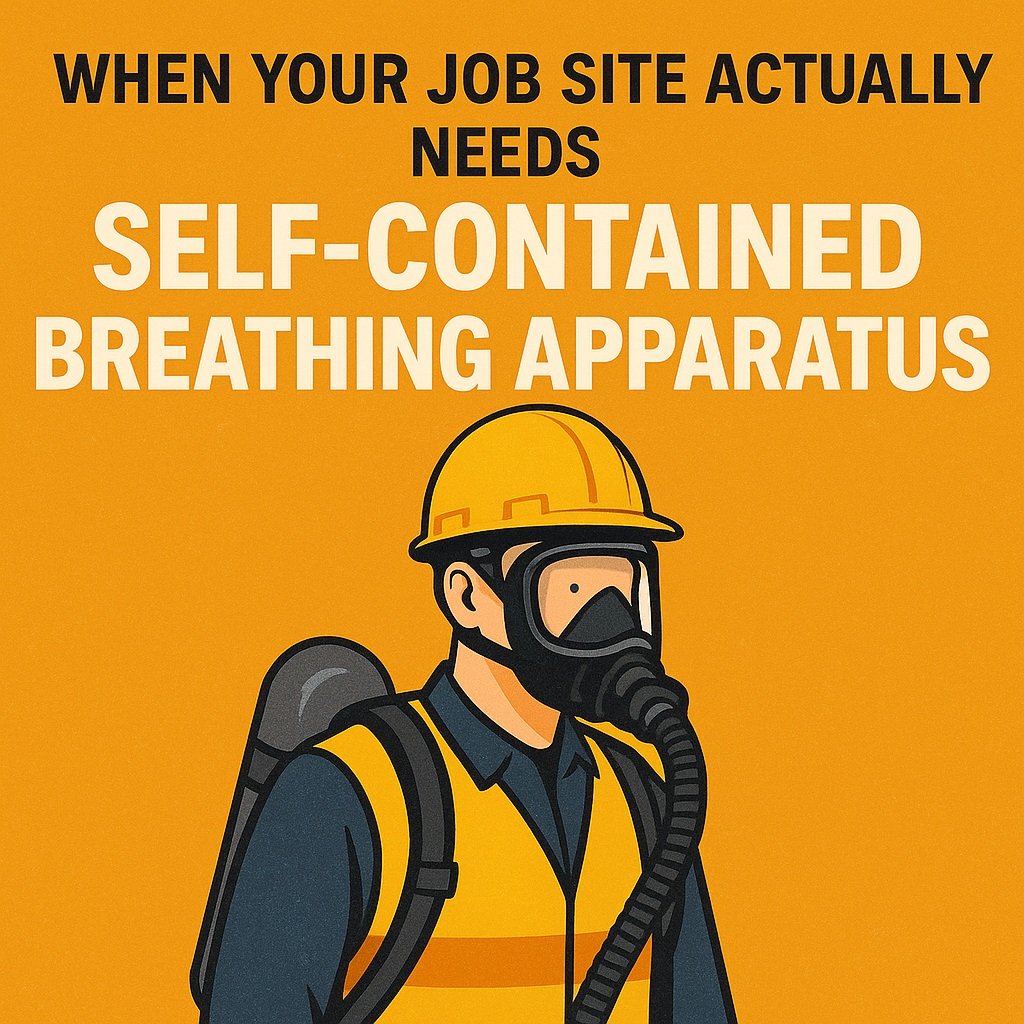
Let’s face it: most work sites do not truly require self-contained breathing apparatus (SCBA). Most places can get away with dust masks, half-face respirators and if really in need, full-face air-purifying respirators. There is a gradation where such options become insufficient and SCBA are required, but determining that gradation and if it’s reached is more than regulatory compliance. It’s a matter of whether workers go home at the end of their shift.
At the same time, many safety professionals never determine that SCBA are necessary until after someone almost gets injured or fails an OSHA inspection. SCBA are expensive, training takes time and often, supervisors think that better ventilation systems or higher rating filters will suffice. Sometimes they do. Oftentimes they do not.
How to Determine Immediately Dangerous Atmospheres
OSHA has defined an atmosphere for which SCBA are necessary – IDLH, or Immediately Dangerous to Life or Health. An IDLH atmosphere is one that renders air purifying respirators ineffective due to either being too low in oxygen or with such high levels of contaminants that even the best filter would succumb within a matter of minutes.
The lack of oxygen is something people don’t always understand. The earth’s atmosphere has approximately 20.9 percent oxygen; anything below 19.5 percent is OSHA-deficient and dangerous. One does not need to be in some crazy industrial effort to experience this; confined spaces, tanks that previously held inert gases, even small, poorly ventilated areas where combustion occurs may drop beneath this level. But the key to remember is that air purifying respirators cannot create oxygen from an atmosphere without enough oxygen in the first place, that’s not how they work.
Confined Space Entry Requirements
Confined spaces are places that require SCBA in many situations and defined spaces by OSHA are tanks, vessels, silos, manholes, pits, spaces that are not meant for continuous occupancy with limited means of egress and entry. Atmospheric testing is required before entry; if there is oxygen deficiency or flammable gases greater than 10 percent of their lower explosive limit or toxic substances above IDLH levels, supplied air is necessary.
For facilities that regularly work in these conditions, investing in a quality industrial SCBA is part of baseline safety requirements, not a rental every once in a while. The testing part is where companies tend to cheap out – assuming based on previous entry or visual analysis that spaces have not changed. That kind of assumption kills people every year.
Chemical Spill and Emergency Response
A tank truck accident; a storage tank rupturing, when these situations happen, the response team going into those hot zones needs SCBA. There is not an option for cartridge-based respirators because too many unknowns exist, levels could surpass IDLH levels and the environment is changing as materials move, spread, or degrade in combustion, etc.
Any industrial facility that houses hazardous materials needs an emergency action plan and respiratory protection during spill response. Therefore, even if your daily operations do not require SCBA, your emergency plans might. The fire department responding to onsite fires with their own gear may not cover your needs; site-specific needs may require personnel to know the workings of the location and which materials are present from inside out.
Fires/Situations Where Combustion Occurs
This may seem like common sense, but it extends past firefighting into any situation where combustion occurs. This includes structure fires, obviously, but also industrial fires involving metals, chemicals or materials producing toxic combustion products as well as, arguably, smoke generation.
Smoke from burning plastics or treated woods create IDLH situations almost immediately; where people assume their sprinkler systems or active suppression methods exist within their sites, therefore no SCBA are needed for ‘firefighting’ situations – this cannot be relied upon. Yes, suppression systems fail. Even if they do not fail, people need to go back into assess damage, see that everything is out and start cleaning up under an atmosphere generated by combustion products.
High Concentration Chemical Environments
Certain activities in manufacturing generate airborne concentrations of specific contaminants that exceed what any filter can handle, spraying paints (isocyanates), chemical manufacturing processes where leak-producing concentrations jump suddenly – these qualify as IDLH situations depending on how high concentrations get (and they get higher).
The tricky part is that some of these situations are borderline IDLH; a well-ventilated paint booth may be fine with a supplied-air respirator linked through an airline system, but if the ventilation system fails or workers are trying to get in on start-up or shut-down with higher-than-usual volumes encountered quickly enough to assume drastic measures need to be taken, but SCBA are the only answer, for independence sake, they’re necessary here; expensive for maintaining equipment when it may be infrequent, but a legitimate solution nonetheless.
No Ventilation Could Work
Engineered controls are the preferred first step for respiratory hazards when respiratory hazards exist at all, but sometimes they cannot exist properly enough to account for what needs to happen: underground work, deep excavations and extensive interiors within ships or larger equipment sometimes pose issues where decent ventilation may not provide sufficient quality air to make it worth it.
This especially applies for mines as SCBA (and self-rescuers – relative technology) are standard in those situations, but construction and industrial maintenance tasks sometimes expose workers to similar conditions as a passing fancy. Therefore, it’s up to assess whether work can be organized to eliminate need for air protection – or if supplied air is more than necessary for proper air quality to do the job right and safely.
Determine Through Testing and Enumeration
None of this means anything unless atmospheric testing has been properly conducted before work begins, OSHA recommends testing an atmosphere before confined space entry and it’s done by a qualified person through calibrated equipment by measuring oxygen, flammable gases and toxic substances, in that order, because flammable gases and then toxic will kill you much faster than lowered oxygen, which essentially means suicide unless you’re an idiot who knows they’re going into such a situation.
Results determine respiratory protection requirements, the numbers are glaringly clear: below 19.5 percent oxygen or above the IDLH level of any other substance? You need supplied air, end of story; there is no wiggle room in those numbers whatsoever. What happens too frequently is companies test atmospheres thinking they’re good with borderline results and somehow convince themselves they’ll get additional measures through additional ventilation means. Sometimes they do, it depends, but they need tested conclusions as opposed to assumptions to qualify safety.
Cost Assessment Nobody Wants to Have
SCBA systems are not cheap, from several thousand dollars per unit to annual maintenance costs to cylinder testing every couple of years to relative quarterly training (at minimum), it becomes hard for small businesses who might need SCBA once or twice a year if at all ever – it makes it very difficult for small businesses to convince upper management that this money would be worth it when there’s such low probability of such having to happen.
But here’s where the reality check comes in: should there be any kind of violation related to confined spaces, it’s thousands of dollars (and that’s just basic violation); should there be a willful violation, it’s more than $150K easily, and if anyone gets hurt, major problems exist (even criminal charges on top of civil liability). Equipment suddenly starts looking cheap when registered through this lens.
Some companies do this through rental programs or local mutual aid facilities; this can work for those who truly infrequently need such endeavors, but this creates response time issues if emergencies arise; having your own equipment puts it right there in front of you when you need it – maintained per your standards, with your trained people able to use it professionally instead of stumbling at the start through borrowed equipment/unknown settings.
Training Fit Testing Requirements
Getting the equipment is only half the battle; OSHA requires fit testing each year for tight-fitting respirators, and that includes SCBA personnel who must be trained how to don and doff equipment properly, check it’s in working order reliably without any problems amidst urgent situations when low alarms sound personnel must know what do if they go off or else something didn’t work right while they’re using it.
Training must occur both yearly, and then a record must be kept anytime equipment changes for any reason, the assignment changes, the equipment changes somehow, from initial exposure throughout continued work, which means you’ll have a person donning SCBA for the first time since months ago in the moment and that’s not okay for anyone when proper air resources could mean the difference between life and death.
The fit testing also hits people like a brick wall because it’s personal; facial hair interferes with seals so anyone who needs an SCBA has to be clean-shaven within the seal area – with respect to weight changes, dental maintenance, scarring injuries, the fit could change and require retesting over time meaning there’s an ever-increasing standard, for someone who hasn’t gotten tested because they’ve lost weight recently now has new components. It’s a program, and not a task accomplished with one check box filled out once along the way.
Determine If Your Site Actually Needs SCBA
So how does a site determine whether it actually needs SCBA? It all starts with a comprehensive hazard assessment, identify every action that could produce IDLHs or oxygen deficient levels, this includes routine operations but also unexpected maintenance tasks and action during emergency response so it’s all inclusive as such documentations should be so based upon atmospheric testing already done, and then fill in gaps where necessary to support findings with actions required already established due to testing results above.
Consider confined spaces, not just permit-required confined spaces, but those confined spaces which fit the definition, consider what could go wrong during chemical handling based upon errors made elsewhere, what your emergency response plans already say without accounting for anticipated respiratory plans, what your already existing ventilation systems provide under truly anticipated foreseeable circumstances – and then make a hard assessment needing hard answers as opposed to convenience assessments advocating and avoiding consideration feasibility.
Substantial Difference Borders Are Clear
At minimum you want SCBA for certain tasks, that’s fine too, and maybe not as general-purpose equipment; that’s fine too but making a determination based upon hazard exposure assessments for accurate hazard exposure assessments instead of cost assessments is far more feasible than assessed convenience, and it’s even more feasible than assessed convenience because when someone can’t breathe anymore, having something readily available isn’t optional, it should never have been, so avoid suckers from getting into that situation in the first place.