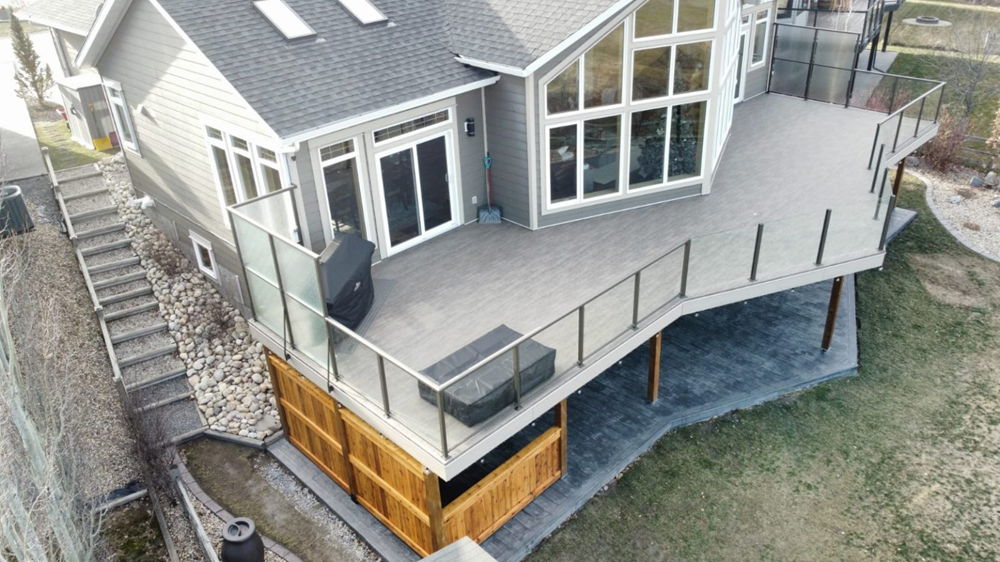
For Calgary homeowners, the dream of a perfect outdoor living space often centers on a beautiful, functional deck. It’s a place for summer barbecues, quiet morning coffees, and making memories. Yet, this dream is constantly tested by one of the most demanding climates in North America. Choosing the right decking material isn’t just an aesthetic decision; it’s a battle against the elements. The team at Deck King wants to help you make your dreams a reality! We are a Calgary deck contractor with our solid customer base in Calgary and surrounding areas.
Navigating Decking Choices in Calgary’s Dynamic Climate
The decking market offers a dizzying array of options, but for Calgary, the decision typically boils down to a classic showdown: the natural allure of traditional wood versus the engineered resilience of modern composite materials. Each brings distinct advantages and disadvantages to the table, and understanding these is crucial for any homeowner looking to make a lasting investment. This guide will dissect these choices, placing them directly in the context of our city’s unique weather patterns.
Why the Right Deck Material Matters for Your Outdoor Living Space
Your deck is an extension of your home, a significant financial investment that should provide years of enjoyment, not become a source of annual chores. The right material will not only withstand the weather but also align with your lifestyle, budget, and desired level of maintenance. It dictates how much time you spend enjoying your deck versus working on it. In Calgary, where the building season is short and the elements are harsh, making an informed decision from the outset is paramount to long-term satisfaction.
Calgary’s Climate Gauntlet: Understanding the Unique Challenges for Decking Materials
Building a deck in Calgary means preparing for a year-round assault from Mother Nature. The climate here isn’t just about cold winters; it’s a relentless series of extreme tests that can degrade, warp, and destroy inferior materials.
The Freeze-Thaw Cycle and Its Destructive Power on Decking
One of the most damaging phenomena in Canadian winters is the freeze-thaw cycle. Moisture from melting snow or rain seeps into the pores and small cracks of decking materials. When temperatures plummet overnight, this water freezes and expands, widening those cracks. This repeated process, common during Calgary’s spring and fall, acts like a tiny jackhammer, progressively breaking down the structural integrity of porous materials, especially wood.
Chinooks and Rapid Temperature Swings: Impact on Material Stability
Calgary’s famous Chinooks can cause temperatures to swing by more than 20 degrees Celsius in a matter of hours. While a welcome relief, these rapid shifts in weather conditions force decking materials to expand and contract dramatically. Wood, being a natural material, is particularly susceptible. This constant movement can lead to warping, cupping, and checking (splitting), weakening the boards and loosening fasteners over time.
Intense UV Exposure: Sun Damage from Summer Rays to Winter Glare
With its high elevation and numerous sunny days, Calgary exposes outdoor structures to intense ultraviolet (UV) radiation. This isn’t just a summer problem; sunlight reflecting off snow in winter doubles the exposure. UV rays break down the lignin in wood, causing it to fade to a silvery grey, dry out, and splinter. For unprotected composite decking of older generations, it can cause colours to fade and the plastic components to become brittle. Modern, fade-resistant materials are essential.
Heavy Snowfall and Ice Accumulation: Weight, Moisture, and Removal Challenges
Calgary is no stranger to heavy, wet snow. A deck must be able to bear significant weight for extended periods. As this snow melts, it creates a constant source of moisture. Furthermore, the removal of snow and ice poses its own risks. Metal shovels can easily gouge and scratch softer wood surfaces and even some composite materials, while certain de-icing salts can be corrosive or cause discolouration.
Seasonal Moisture and Its Impact: Rain, Melt, and Humidity
Beyond the dramatic events, consistent seasonal moisture from rain and snowmelt creates the perfect environment for mould, mildew, and rot. Any material that absorbs and retains moisture becomes a breeding ground for these destructive organisms. This is a primary cause of deck failure, leading to spongy boards, structural weakness, and an unappealing appearance, making moisture resistance a critical property for any Calgary deck.
Contender One: Wood Decking – Natural Beauty Under Calgary’s Scrutiny
For decades, wood has been the go-to material for decks, prized for its classic look and natural feel. However, its organic nature is also its greatest weakness when facing Calgary’s climate.
Common Wood Decking Types for Calgary: Pressure-Treated and Cedar
The two most common wood choices for Calgary homeowners are pressure-treated (PT) wood and cedar. Pressure-treated wood is affordable and chemically treated to resist rot and insects, making it a popular budget-friendly option. Cedar offers a richer, more beautiful aesthetic with natural resistance to rot and pests. Both options provide the authentic wood experience many desire.
The Allure of Natural Wood: Aesthetics, Texture, and Initial Appeal
There is an undeniable appeal to natural wood surfaces. The unique grain patterns, the rich colours, and the warm feel underfoot are hard to replicate. A well-maintained wood deck can be a stunning addition to any home, blending seamlessly with the natural landscape. This initial aesthetic appeal is what draws many homeowners to choose wood.
Wood’s Inherent Vulnerabilities in Calgary’s Climate
Unfortunately, wood’s organic composition makes it highly vulnerable. It absorbs moisture from snow and rain, causing it to swell, and then shrinks as it dries under the intense sun or in dry Chinook winds, leading to warping and splitting. It is susceptible to rot and mildew in damp conditions and fades and splinters under UV exposure. These are not possibilities; they are eventual certainties in Calgary without diligent upkeep.
The Realities of Wood Deck Maintenance in Calgary
To combat these vulnerabilities, a wood deck demands a rigorous maintenance schedule. This means annual cleaning, sanding, and re-staining or sealing to protect it from moisture and UV damage. This isn’t just a suggestion; it’s a requirement to prolong the life of the deck and prevent it from becoming a safety hazard. This ongoing commitment of time, effort, and money is the true cost of a wood deck.
Contender Two: Composite and PVC Decking – Engineered for Calgary’s Resilience
In response to the shortcomings of wood, a new class of materials has emerged. Composite and PVC (vinyl) decking are engineered from the ground up to offer superior performance and minimal maintenance.
What is Composite Decking? Blending Wood Fibers and Recycled Plastics
Standard composite decking is a hybrid material made from a blend of wood fillers (like sawdust) and recycled plastic. This combination offers the look of wood with enhanced durability. High-performance composite decks, like those from industry leader Trex, are “capped” with an extra layer of durable polymer shell that provides superior resistance to fading, staining, and moisture damage.
The Rise of PVC/Vinyl Decking: Advanced Plastic Polymers
Taking engineered performance a step further, PVC decking, also known as vinyl decking, contains no organic wood material at all. Made from 100% polyvinyl chloride, these boards are completely impervious to moisture. This eliminates any possibility of rot, mould, or mildew growth from within the board itself, making it an extremely durable option for wet climates.
How Composite and PVC Decking Tackles Calgary’s Climate Challenges
These engineered materials are designed to directly counter Calgary’s weather. Their dense composition and protective caps prevent water absorption, rendering the freeze-thaw cycle virtually harmless. They are dimensionally stable, so they won’t warp or split during rapid temperature swings. Advanced capping technology provides excellent UV protection, ensuring colours stay vibrant for decades. Their hard-wearing surfaces resist the scratches and scuffs that come with daily use and snow removal.
The Calgary Showdown: Head-to-Head Comparison for Homeowners
When choosing the right material for your deck, it’s essential to compare the contenders across the factors that matter most to Calgary homeowners: durability, maintenance, aesthetics, and overall value.
Durability and Lifespan: Which Material Lasts Longer in Alberta’s Environment?
In Calgary’s environment, wood’s lifespan is entirely dependent on maintenance. A well-cared-for cedar deck might last 15-20 years, while a pressure-treated wood deck may begin to show significant wear in 10-15 years. In contrast, high-quality composite and PVC decking come with 25 to 50-year fade and stain warranties and can realistically be expected to last that long or longer. They do not rot, warp, or splinter, giving them a decisive advantage in longevity.
Maintenance Demands: Comparing Time, Effort, and Cost
This is where the difference is most stark. A wood deck requires annual sanding and staining, a weekend-long project costing several hundred dollars in materials or significantly more for professional service. Composite and PVC decks require only occasional cleaning with soap and water to remove surface dirt. This low-maintenance reality frees up homeowners’ time and eliminates recurring costs, tipping the scales heavily in favour of engineered materials.
Aesthetic Appeal and Design Flexibility: Natural vs. Engineered Looks
While wood offers a natural, authentic beauty, its aesthetic is singular. Modern composite and PVC decking have made huge strides in replicating the look of real wood. They are available in a vast array of colours, textures, and grain patterns, from exotic hardwoods to traditional cedar. Options like multi-width decking allow for sophisticated home design possibilities that are difficult to achieve with traditional lumber, offering greater design flexibility.
Initial Cost vs. Long-Term Value: A Calgary Homeowner’s Investment Perspective
Initially, pressure-treated wood is the least expensive option upfront. Cedar is more expensive, often approaching the cost of entry-level composite decking. High-performance composite and PVC decking represent the highest initial investment. However, when factoring in the recurring costs of wood maintenance over the deck’s lifespan, the total cost of ownership for a composite or PVC deck is often lower. It’s an investment in a worry-free outdoor space.
Beyond the Deck Boards: Complementary Elements and Crucial Considerations
A successful deck project involves more than just the surface. The supporting elements are just as critical to the longevity, safety, and overall aesthetic of your outdoor space.
Railings and Accessories: Completing Your Calgary Outdoor Space
Railings are a crucial safety and design feature. While wood railings are an option, they carry the same maintenance burden as a wood deck. Many Calgary homeowners opt for low-maintenance alternatives like aluminum or composite railings. Aluminum is particularly well-suited for the climate, as it is strong, lightweight, and will not rust or corrode, providing a sleek, modern look that complements any decking material.
Environmental Impact: Sustainability in Decking Choices
Sustainability is an increasingly important factor for homeowners. While wood is a renewable resource, leading composite brands often have a strong environmental story. Many, such as Trex, are made from 95% recycled materials, including reclaimed wood and plastic film. This diverts millions of pounds of waste from landfills each year, making it an eco-friendly choice.
Warranty and Peace of Mind: Protecting Your Investment
The warranty offered by a manufacturer is a statement of confidence in its product. Most wood decking comes with a limited warranty, if any, against rot. In contrast, leading composite and PVC brands offer extensive warranties, often 25 years or more, that cover fading, staining, and performance. This provides homeowners with invaluable peace of mind.
Installation Considerations: DIY vs. Professional Deck Builders in Calgary
Proper installation is critical for any deck to withstand Calgary’s weather, especially regarding frost footings and proper ventilation. While a simple wood deck can be a DIY project, the specialized tools and techniques required for composite and vinyl decking often make professional installation the better choice. Experienced Calgary deck builders understand local building codes and can ensure your deck is built to last.
Crowning the Calgary Weather Champion: A Definitive Verdict
After examining the evidence and pitting the materials against Calgary’s relentless climate gauntlet, a clear winner emerges. While wood decking offers undeniable natural charm, its inherent vulnerabilities to moisture, UV radiation, and temperature swings make it a high-maintenance choice that is ultimately outmatched by the local weather.
The true Calgary Weather Champion is high-performance, capped composite and PVC decking. These materials are engineered specifically to conquer the challenges that cause wood to fail. Their near-impermeability to moisture defeats the freeze-thaw cycle, their stability withstands Chinook-driven temperature shifts, and their advanced UV inhibitors resist fading from the intense sun. By eliminating the need for annual sealing and staining, they offer a superior long-term value and, most importantly, give Calgary homeowners more time to simply enjoy their outdoor living space. Investing in a composite or PVC deck is an investment in durability, peace of mind, and a beautiful backyard oasis built to last.