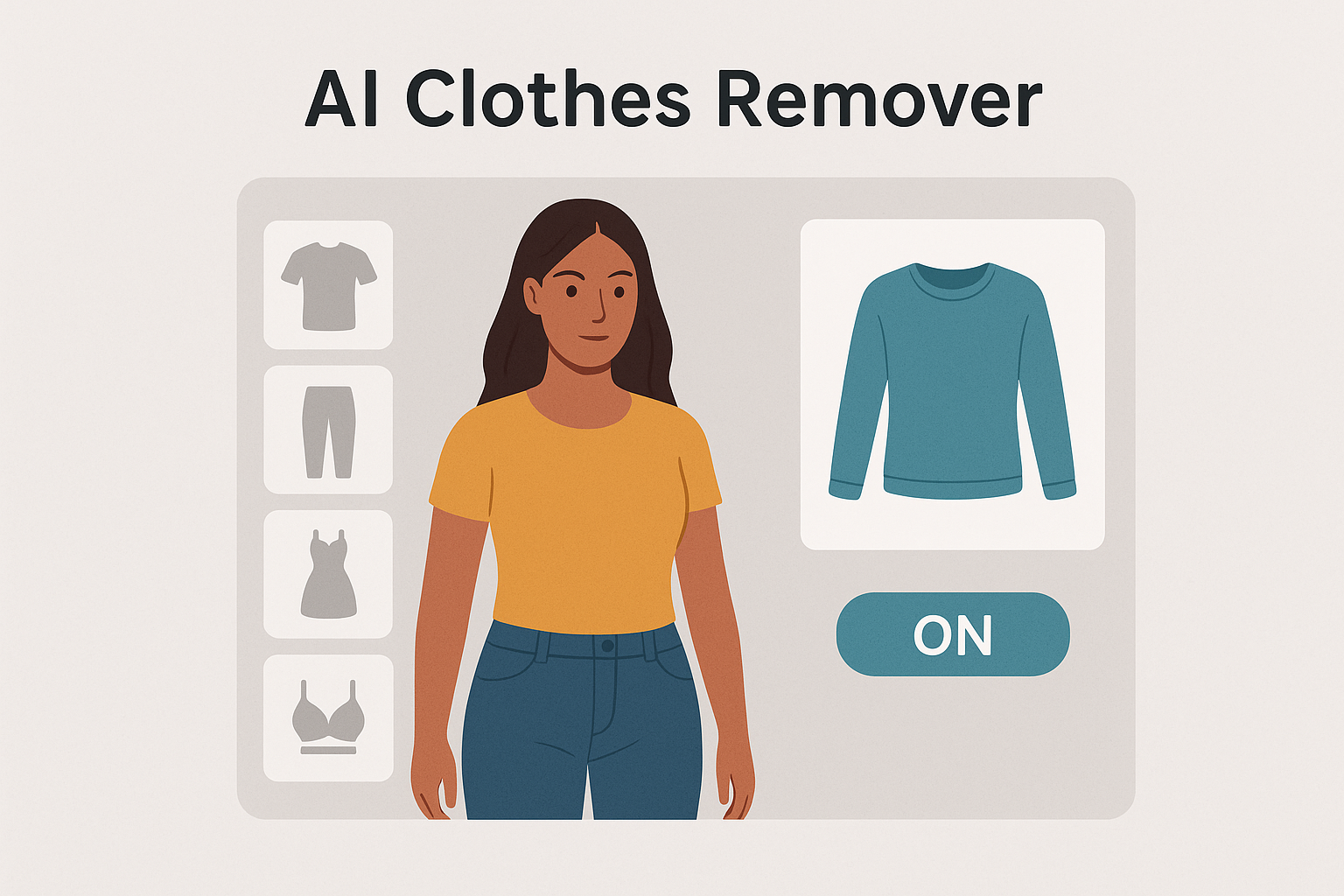
The AI Clothes Remover is a term that people tend to look up on in the constantly changing environment of digital fashion. It could be a mere search, which could lead to an idea of something scandalous, however, in the real world, most users are venturing into virtual try-on technology- a groundbreaking innovation meant to transform the online shopping experience without compromising on the privacy and dignity of the users. To tackle the increasingly intertwined fashion and artificial intelligence, it is vital to understand the possibilities, advantages, and morality of such systems.
The Search Trend of the AI Clothes Remover
Trends in search are deceptive. When people enter AI Clothes Remover, they tend to seek the tools that would enable them to see clothes on the body or on the models online, instead of the invasive material. It has been driven by the emergence of e-commerce and online fashion retail that has triggered interest in virtual try used to map outfits onto the body of an individual to give the illusion that one can try on clothes prior to purchasing.
Such searches indicate interest in AI-fashion technology and are not aimed at infringing privacy. In reaction, companies and developers are developing responsible tools that will be used to have ethical virtual try-on experiences where consumer convenience is prioritized without violating dignity.
What is Virtual Try-On Technology?
Virtual try-on (VTO) is an artificial intelligence-enabled tool that gives customers the opportunity to test how clothes, accessories, and even make-up would appear on their body, without putting on them. These systems allow simulating a realistic fitting experience by combining computer vision, 3D modeling and augmented reality.
The main features of the VTO technology are:
- Simulation of realistic clothing – Covers clothing on the body of a user in an accurate manner.
- Different ways of outfits – Allows to test out different sizes, colors and styles.
- Body measurements mapping – It makes use of AI to approximate the size of a user and tailor the fit of clothing.
- Cross-platform usability – Can be used on mobile apps, web-oriented applications and AR-mirrors in retail stores.
These features will enable VTO to make informed purchase choices and minimize returns and encourage a more sustainable fashion shopping strategy.
The Virtual Try-On Systems Functionality
Virtual try-on is not a magic in itself but is based on advanced technology to be safely and correctly operated. The process is simplified and outlined below:
Shape Estimation and Body Scanning
The users either post a photo or use a live feed camera. The AI analyses the main points and dimensions of the body, such as height, shoulder, and length of limbs. Even sophisticated systems respond to various postures making clothes look natural at all angles.
Clothing Mapping
When the figure is set, the AI superimposes clothes features on the frame of the user. Algorithms take into account cloth texture, fall and elasticity to make clothes look real. There are platforms that are real time such as adjusting the sleeve length or switching the colour immediately.
3D Rendering
To experience the full immersion, some of them create a 3D character of the user. This avatar is able to turn, move and to imitate natural postures. The outcome is a realistic preview which assists consumers to evaluate fit, style and coordination.
Interactive Features
The contemporary VTO systems tend to feature such things as mix-and-match outfits, virtual accessories, and size suggestions. Other sites even recreate the reaction of clothes to movement so users can learn the comfort and ease.
When these steps are properly integrated, virtual try-on technology will help enter the gap between online shopping and physical one.
Privacy and Ethical Concerns.
Among the factors that make searches of AI Clothes Removers a cause of concern is the lack of understanding of the purpose of the technology. Conscientious VTO in place provides stringent privacy security:
- Data encryption – Personal pictures and measurements are encrypted both when being transmitted and stored.
- Temporary storage – A majority of platforms store images temporarily without permanently storing them.
- Anonymized avatars – 3D representations tend not to utilize actual features of a face, and instead concentrate on the form of the body.
- Consent-based usage – End-users will be asked to give a specific approval prior to any data processing.
These standards are adhered to by ethical virtual try-on platforms, such as AI Clothes Remover, They also avoid abuse by ensuring the user control and confidentiality, and yet, provide realistic and enjoyable shopping experience.
Debunking Myths on AI Clothes Remover.
It is a term that is apt to misinterpretation. The virtual try-on technology does not do the following:
- It does not draw nude pictures, or delete clothes in photos.
- It does not monitor personal information to advertise without one.
- It is non-dignity and non-safety breaching because all of the processes are aimed at the user’s boundaries respect.
Rather, VTO systems provide a secure and moral method of trying outfits online and replacing trials and errors with a precise display.
The Advantages of Virtual Try-On Technology of Ethics.
Virtual try-on is not a new phenomenon; it provides both buyers and sellers with the real benefits:
Better Confidence in Shopping.
Virtual trial will enable the customers to visualize the fit, color, and style of clothes, which will decrease the chance of feeling regretful about the purchase.
Fewer Returns
There is always a high rate of returns made in online shopping as the fit is bad or the style has been misjudged. VTO saves retailers and consumers time and money by creating the most accurate simulation of clothing, which minimizes unwarranted returns.
Sustainable Fashion
Reduced returns imply a reduction in shipping and packaging waste products, which also makes the fashion industry more eco-friendly.
Accessibility
Virtual try-on becomes an opportunity to the people who are not convenient to visit physical stores because of mobility issues or location, or they are otherwise time-constrained.
Personalization
AI will be able to offer personalized suggestions that will be specific to the body shape, favored styles, and prior purchases, which will enhance a more captivating and personalized shopping experience.
A case of Choosing Responsible Tools of Virtual Try-On.
Although VTO technology is robust, not every platform is so ethical. Solutions sought by the users ought to focus on:
- Open privacy policies.
- Verbal permission regarding image processing.
- Safe manipulation of information and encryption.
- Non-invasive and realistic visualization.
Reliable applications, such as AI Clothes Remover, are concerned with ethical and responsible virtual try-ons. By utilizing trusted sources, the users will be able to experience the advantage of AI-powered fashion without losing safety or dignity.
The Future of Fashionable AI Ethics.
The virtual try-on technology originates in the growth of AI in ethical practices. Here, future systems may:
- The more precise body measurements with the help of AR and depth sensors.
- Include AI stylists suggesting outfits based on occasions.
- Offer digital try-on experiences, whereby a user can share and compare appearance with friends.
- Improve sustainability indicators, such as the carbon footprint estimates per outfit.
All these innovations prove that AI in fashion can be functional and responsible and that the technological development process can be balanced with ethical concerns.
Conclusion
Although the term AI Clothes Remover may initially be frightening, it is more of a show that the cyber try-on is a technology that people are interested in, that enables the fashion industry to become more ethical and safe because of online shopping. These platforms allow consumers to make informed buying choices through mapping garments to digital mapping of the human body without violating their privacy and dignity.
Convenience, personalization, and ethics are going to live together in the future, and AI Clothes Remover is a responsible AI solution that will establish this. By realizing the nature of these tools, users are able to embrace the digital fashion without fear because they will know that digital try-on is not breaking the boundaries but it is about viewing outfits.