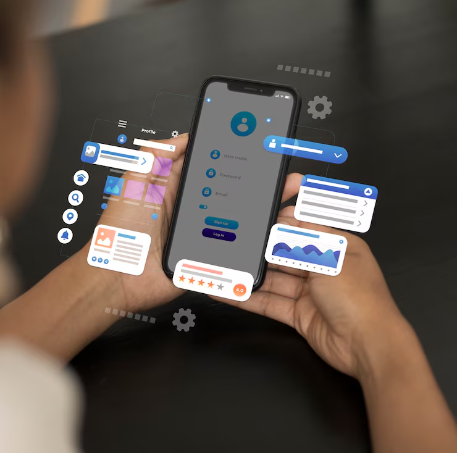
Mobile app development has revolutionized the way we interact with technology, transforming our daily lives by putting the world at our fingertips. From shopping and social networking to health monitoring and entertainment, mobile applications have become an integral part of our digital ecosystem. This article delves into the evolution of mobile app development, explores current trends, discusses challenges faced by developers, and looks at future prospects.
The Evolution of Mobile App Development
The journey of mobile app development company in Dubai began in the late 1990s with the advent of smartphones. Early mobile applications were basic, offering limited functionality such as calculators, calendars, and simple games. However, the launch of Apple’s iPhone in 2007 and the subsequent introduction of the App Store in 2008 marked a significant turning point. The App Store provided a platform for third-party developers to distribute their applications, leading to an explosion of innovative apps.
Google followed suit with the Android Market (now Google Play Store), and the competition between these two giants spurred rapid advancements in app development. The introduction of more powerful smartphones, improved mobile operating systems, and enhanced developer tools further accelerated the growth of the mobile app industry.
Current Trends in Mobile App Development
1. Artificial Intelligence and Machine Learning
AI and ML have become integral to modern mobile apps, enhancing user experiences through personalized recommendations, voice assistants, and advanced analytics. Apps like Siri, Google Assistant, and Amazon Alexa leverage AI to offer intelligent solutions to users.
2. Augmented Reality (AR) and Virtual Reality (VR)
AR and VR technologies are transforming the way we interact with apps. From gaming and entertainment by game development company to education and real estate, AR and VR provide immersive experiences. Apps like Pokémon Go and IKEA Place have demonstrated the potential of these technologies.
3. Internet of Things (IoT)
IoT integration allows mobile apps to control and communicate with smart devices. Home automation apps like Google Home and Apple HomeKit enable users to manage their smart homes from their smartphones.
4. Blockchain Technology
Blockchain is being incorporated into mobile apps for secure transactions and data management. It is particularly prevalent in finance and healthcare sectors, where data security is paramount.
5. 5G Technology
The rollout of 5G networks promises faster data speeds and lower latency, enhancing the performance of mobile apps. This will enable more robust applications, including those that rely on real-time data processing and streaming.
Challenges in Mobile App Development
1. Device Fragmentation
With a plethora of devices running on different operating systems and screen sizes, ensuring compatibility and optimal performance across all devices is a significant challenge for developers.
2. Security Concerns
Protecting user data and ensuring app security is a critical concern. Developers must implement robust security measures to prevent data breaches and cyberattacks.
3. User Experience (UX) Design
Creating an intuitive and engaging user experience is crucial for app success. Developers must balance functionality with simplicity to ensure a seamless user experience.
4. Performance Optimization
Ensuring that apps run smoothly without draining device resources requires careful optimization. This includes managing memory usage, battery consumption, and loading times.
5. Regulatory Compliance
Adhering to regional regulations and industry standards, such as GDPR for data protection, is essential. Developers must stay updated with changing laws to ensure compliance.
Future Prospects of Mobile App Development
1. Increased Focus on Privacy and Security
As data breaches become more common, the emphasis on privacy and security will intensify. Developers will need to adopt advanced encryption techniques and secure coding practices.
2. Growth of Wearable Apps
With the increasing popularity of wearable devices like smartwatches and fitness trackers, the demand for wearable apps will continue to grow. These apps will offer more personalized and real-time data tracking.
3. Expansion of mHealth Apps
The healthcare sector will see a surge in mobile health (mHealth) apps, providing remote monitoring, telemedicine, and health management solutions. These apps will play a crucial role in improving healthcare accessibility.
4. Advancements in AI and ML
AI and ML will continue to evolve, offering more sophisticated and context-aware applications. Predictive analytics, natural language processing, and image recognition will become more prevalent in mobile apps.
5. Rise of Progressive Web Apps (PWAs)
PWAs offer the benefits of both web and mobile apps, providing a seamless experience across different devices. They are fast, reliable, and can work offline, making them an attractive option for developers.
Conclusion
Mobile app development company in Austin has come a long way, evolving from simple applications to complex, AI-driven solutions. The industry continues to grow, driven by technological advancements and changing user needs. While developers face challenges like device fragmentation, security concerns, and UX design, the future holds exciting prospects with the rise of 5G, wearable apps, and advanced AI capabilities. As mobile technology continues to evolve, so too will the possibilities for innovative and impactful mobile applications.