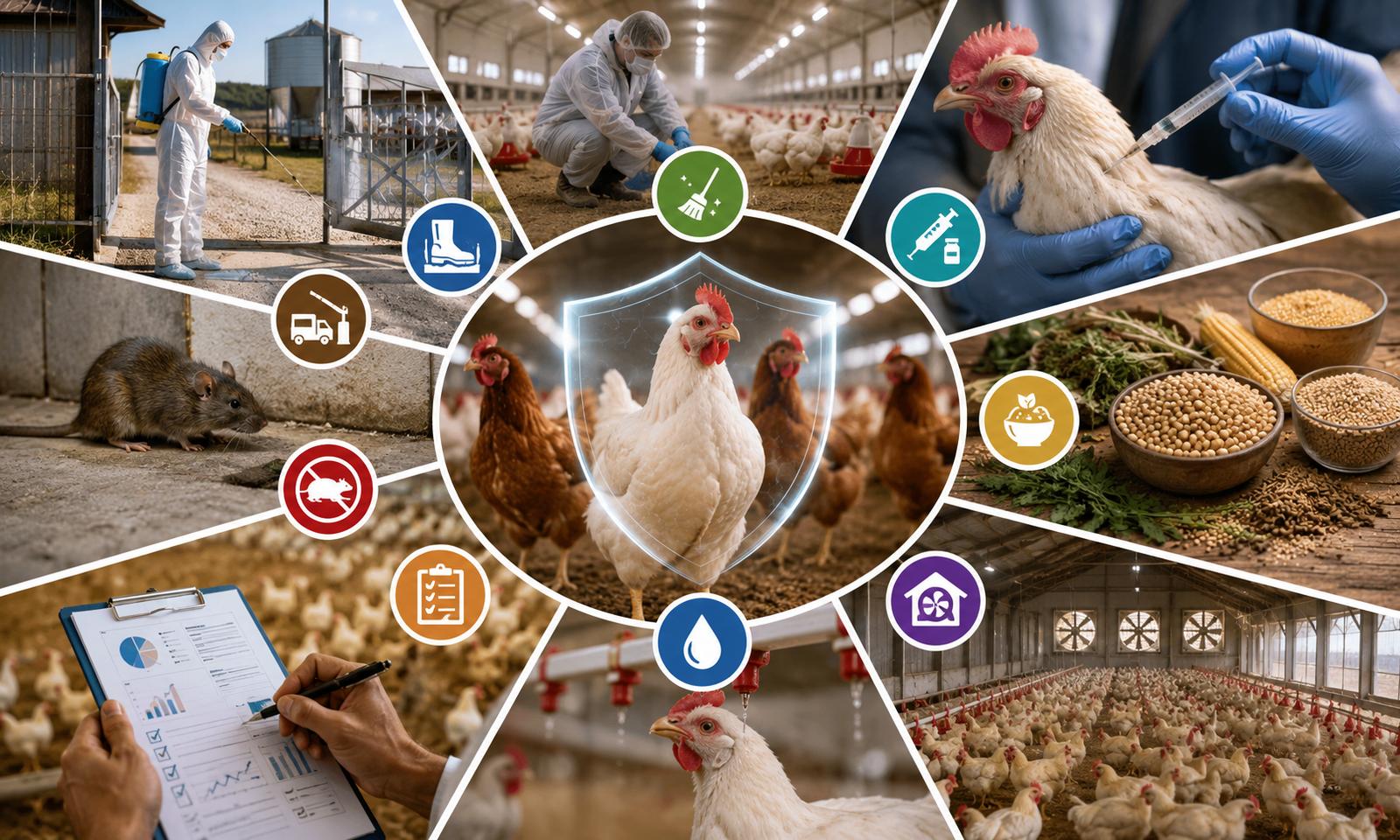
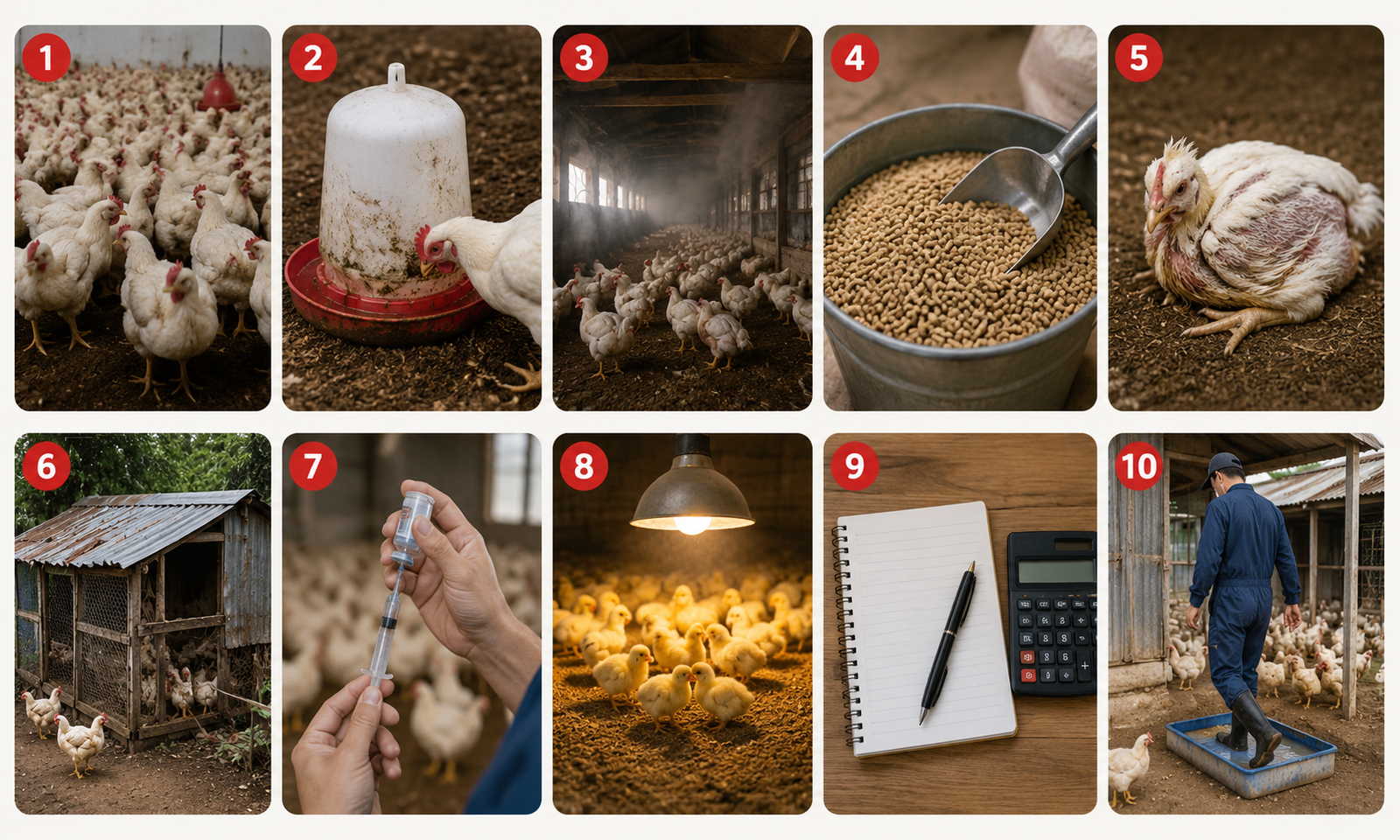
While it is still one of the most profitable agricultural operations in the world, adopting the best feeding management practices is a key component in achieving success in poultry farming. Feed is one of the major production components of poultry and hence efficient feeding strategies are necessary to extract the optimum growth potential, egg production, and profits. A right balance of energy, protein, vitamins, minerals and clean water is necessary to ensure optimum performance and health in birds. Sub-optimal management of feeding programs can result in low egg production, poor growth rates, outbreak of diseases, and unnecessary financial losses for farmers.
These good practices in poultry nutrition and feeding will help poultry farmers to optimize feed conversion rates, minimize wasting, and boost their profitability. It is important to understand the needs of birds for good nutrition at all stages of development whether they are raised for meat or as layers for egg production. The following smart feeding practices greatly increase the productivity of the poultry with a view to effective management of feed costs by the farmers.
A sound nutrition program is essential to success in raising poultry. Poultry increase their body weight quickly and need to maintain daily intake of nutrients which helps them to grow their body, immune system, and productive responsibilities. If any essential nutrient is deficient or out of balance, growth, egg production and flock health will all suffer.
Scientific food formulation is used for modern poultry production to ensure proper nutritional requirements of the birds at various stages of their production. With established feeding regimes, farmers are able to apply their proven feeding combinations to achieve better weight gain, good bird health and higher profitability. Knowing the feeding management principles helps the producers to reduce feed losses and utilize the resources effectively.
Poultry producers can seek advice and best-practice advice from internationally recognised resources and guidance on the modern approaches to poultry nutrition and feeding.
- Use High Quality Feed Ingredients.
The quality of the feed feeds affect the performance of the poultry. Low quality feed may be deficient in essential nutrients, be contaminated or may contain insufficient digestible nutrients. Inferior feeds may result in high feed intakes but inadequate nutrient intake for good growth and production.
Farmers should be sure to obtain feed from the quality manufacturers or carefully prepare in-house feed according to its formulation. Maize, fish meal, wheat bran, soybean meal and vitamin-mineral premixes should be fresh and have no mold, toxins and spoilage in them; or in the case of soyabean meal, the stock should have a high protein content.Maize, fish meal, wheat bran, soya bean meal and vitamin mineral premixes should be free from mold, toxins and spoilage and, in the case of soya bean meal, should be a high protein meal. Although high-quality feed can seem a costly venture, the production loss from low-quality feed can cost more in the long term and be detrimental to the performance of the flock.
- Calculate the daily feed intake
The nutrient content needs vary by the stage of poultry production. A higher protein requirement is needed to promote rapid growth while a higher calcium requirement is necessary for improvements in egg shell strength in mature layers. Avoiding even the smallest errors in feeding the birds with wrong feed will cause a minimum of nutritional deficiencies and a loss in productivity.
Starters are formulated for the youngest chicks, growers are higher in protein for adolescent birds and are lower in protein for the efficient production of meat in the broiler. Specially formulated layer mash or pellets that have high calcium and phosphorus levels are needed. When increasing the nutrient content of a feed based on age and production targets, birds will only benefit if they are given the feed’s nutrients in the optimal amounts throughout their life.
- Create regular feeding plans and routines
One of the most neglected components of raising poultry management is consistency. Feed birds best often, daily. Feeding irregular schedules may bring stress, can cause loss of feed consumption and adversely impact performance.
A system of feeding brings consistency to dogs’ eating habits. In a broiler operation, feed is offered in an unrestricted manner and in a layer operation, scheduled feeding programs can be used. Feeding in a timely manner aids in even consumption, and helps to ensure good growth and egg production.
- Make sure fresh water is always available
Quite often, water is called the forgotten nutrient and it indeed is because it is so vital to the body for digestion, metabolism, temperature regulation, and transport of nutrients. Water consumption by poultry birds is high and a breakdown of this water supply can easily impact productivity.
Water tanks/bons required to be cleaned from time to time in order to avoid any growth of bacteria, algae and organic matter. Consultable, do watch/have fresh, clean water for animals at all times. Proper water management is additionally crucial during hot weather when water intake is significantly increased, leading to more birds being lost for health and productivity purposes.
- Minimize feed losses
Loss of feed in production adds to the cost and lowers the profit margin. With improper feeder positioning, overstuffed feeder and equipment damage, repeated feed losses can be substantial. To prevent birds from scratching, spilling or fouling feeders, they must be handled properly.
Feeders should be located at a suitable height where the feeder can gain easy access to the cage with minimal amounts of spilled feed. Only top up the feeders to desired heights to avoid spilling feed causing litter in the feeders. Feed equipment is effectively used and cost is not wasted due to regular inspection and maintenance work.
- Follow the feed recommendations for your young animals.
Mash feed is not as popular as pellet feed in many poultry production systems for a number of reasons. The feeding density, homogeneity of ingredients and absence of waste are being increased by Pelleting. Pellets are more readily eaten by birds as there is less energy undertaken in the process and they can less easily choose what part of the pellet they eat.
Pelleted feed is often used in many commercial broiler operations to enhance feed conversion ratios and to encourage the faster growth rate. The price of pellet feed is deductible to a lesser degree than the price of mash feed, but the elasticities in performance often outweigh the increased costs.
- Regularly observe feed intake.
Feed intake monitoring, when done properly, can give a lot of information about the health and performance of the flock. Acute decreases in feed consumption can be due to injuries, sickness, feed quality, environmental stress, or problems in rearing or management. With timely detection, farmers can rectify problems before they get in the way of major production losses.
Daily intake records can be used to assess feed efficiency and to ensure the records are kept to compare actual performance to production targets. A consistent monitoring system also provides an opportunity to find ways for feeding programs to be optimized and overall profitability enhanced.
- Use additional Starter Gel Controls
Commercial feeds are usually balanced, but under some production conditions supplementations may be necessary. Vitamins and minerals are involved in the overall health and well-being of birds, reproduction, skeletal development, and immune control.
Nutrient needs might be raised during stressful events, during recovery from sickness, while traveling, after vaccination and if there are extreme weather changes. During these periods, proper vitamin and mineral supplementation will help to maintain production and flock resilience. Farmers should seek the advice of nutritionists on the most appropriate supplementation programmes for their farms.
- Change Feeds Gradually
It can be difficult to change feeds abruptly, which should be avoided because it may interfere with digestion and the feed might be rejected. A gradual change over 3 – 4 days works well with poultry birds. Sudden dietary changes could lead to digestive upset or stress which could impact growth or production.
Farmers would be wise to gradually replace parts of old and new feeds or switch to a different feed supplier to obtain a gradual change. Under this rationale, birds are able to adapt with less need for setbacks to performance and less disruption to nutrient intake.
- Take up Food Additives judiciously
Feed additives are increasingly employed in the present poultry industry to boost performance and support healthy production. Nutrients digestibility and gut health may be enhanced with the use of probiotics, prebiotics, enzymes, organic acids, and other nutritional supplements.
Feeds additives must be properly selected and applied for them to be effective. Scientifically proven products should be targeted to specific production challenges and should be recommended to the farmers. Feed additives can help increase the efficiency of feed conversion ratio, help promote resistance to disease, and play a role in general productivity.
- Organise Feeding Programs on environmental conditions.
The nutritional needs of poultry are greatly affected by environmental factors. Feed intake decreases with high temperatures and energy requirement rises with cold temperatures. Considerations of seasonality and environment stressors to adjust feeding programs.
Farmers can offer feed during cooler times of the day during hot weather to promote consumption. In addition to the reduced feed consumption, nutrient density can be raised when birds reduce feed consumption because of heat stress. Production levels can be maintained with the use of different feeding strategies when conditions change.
- Store a copy of feeding and production data.
Good records are vital in assessing the performance of feeding schemes. It is hard to find strengths, weaknesses and opportunities for improvement if there’s no reliable data to know. Production records are used to monitor feed efficiency, growth, egg production and profitability in farms.
Producers can ensure that records are kept for feed purchased, feed consumed, weight of birds, birds that have died and egg production enables informed management decisions. These recordings are recorded regularly, enabling trends to be identified and contributing to ongoing practice development in feeding. As time goes on, data-driven management leads to increased productivity and improved financial results.
How to keep feed costs in check and not lose performance.
The cost of the feed is the single biggest cost of poultry operations, and is therefore a significant component of cost control for poultry producers. But there should be no compromise on nutrition when reducing the feed unit cost. The best way to do this is to enhance feed efficiency instead of just buying a lower price feed.
Overall, farmers can control costs by reducing feed wastage, buying feed in bulk if possible, ensuring feed is carried out as much as possible and closely tracking feed conversion. However, an economic strategy can prioritize nutrient supply requirements and not only ingredient costs to result in better long-term economics. Efficient feeding management makes sure that every kg of feed supplies value-added growth and productivity in the bird.
Conclusion
Smart feeding methods to monitor the nutritional requirements of the birds and manage the production cost effectively are essential for successful production. By adopting sound management and effective nutrition and feeding practices farmers can achieve better growth rates, enhanced egg production, improve bird health and feed conversion efficiency. Every choice made about the ingredients in their feed, as well as when and how it is given, can help or hurt flock performance, just as can how much feed they access and how much is wasted.
Taking these 12 smart feeding steps will help the poultry producer to optimize yield and profit, while producing healthy, high performing flocks. Indeed, good nutrition isn’t just a cost of production, it’s an investment that can literally make or break a poultry operation and its success and possibility of sustainability.