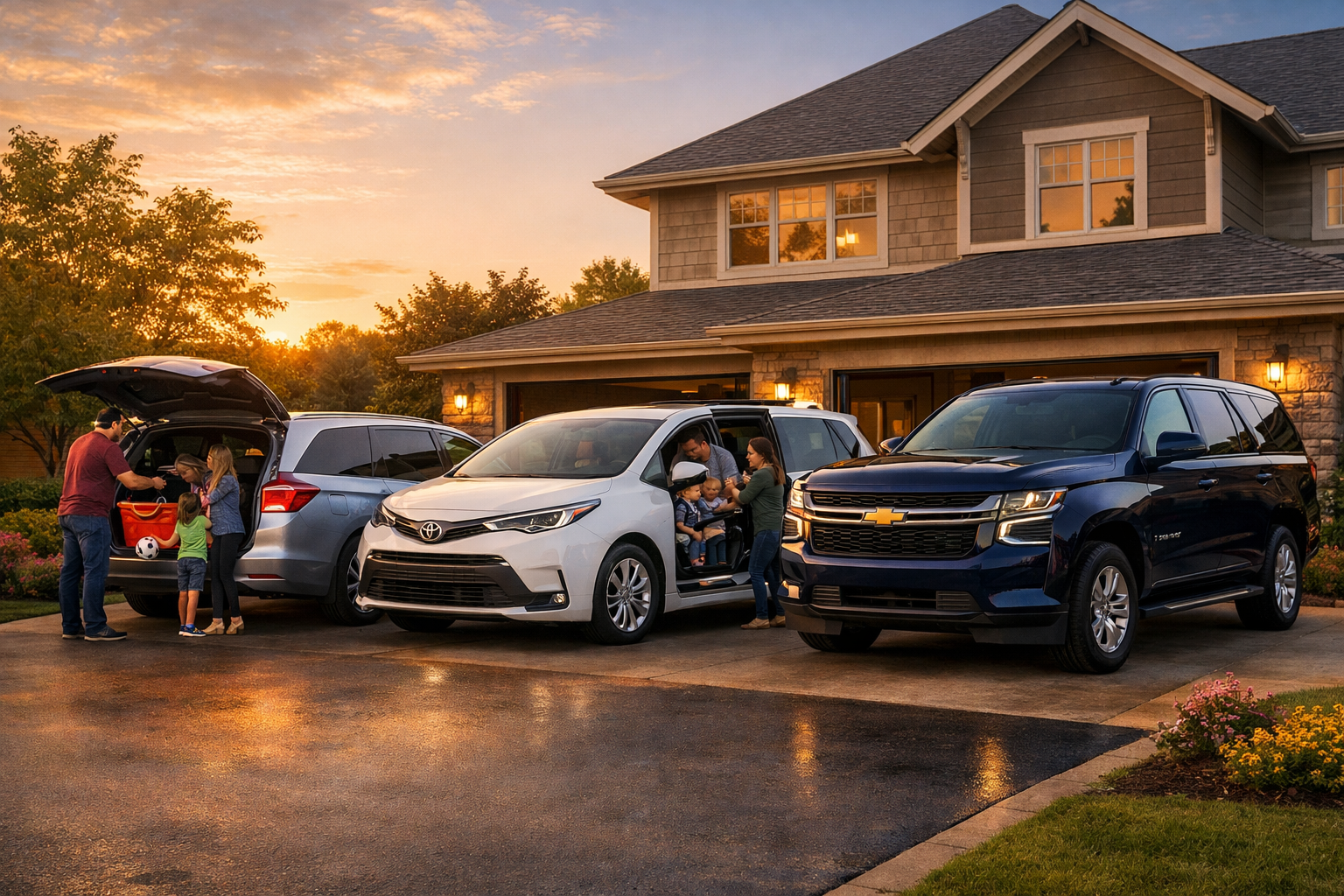
Safety, space out, comfort, and affordability.
Best Family Cars 2026 are at an all‑time high in terms of diversity. In 2026 the family car market is at an all-time high in terms of diversity which we see in the SUVs, minivans, and hybrids that have distinct benefits. Some families are after great fuel efficiency and a green option, others are after maxed out seating and cargo space.
We look at the top family friendly cars which this article puts in the spot light. We’ll look at models which do best in child safety, boot space, third row seating, fuel economy and maintenance affordability which in turn will help you find a car that does well in terms of practicality and long term value.
Safety First: Protecting that which is most important to you.

Safety is still the base which families consider when choosing cars. We see in today’s cars an array of advanced driver assistance features which include adaptive cruise control, lane keeping assist, and automatic emergency breaking. These tech features play a role in reducing accident risk and they also give peace of mind during daily commutes or long trips. The 2026 Honda CR-V and Toyota RAV4 do very well in this area which makes them good choices for parents that want that extra layer of security.
Crash test ratings are a must. We see that models like the Hyundai Palisade and Toyota Grand Highlander do very well in independent safety tests. What we find is that they have reinforced structures, multiple air bags, and child seat compatible features like ISOFIX anchors which in turn provide the max protection. Also families should look at what is easy to use, wide rear doors and sliding systems which improve child seat installation. Safety is not just about the tech in the car it is also in the design choices which put the focus on the care of children and passengers at all times.
Another often ignored element of safety is visibility. In the case of the Subaru Ascent and Volvo XC90 we see great out the window visibility which in turn reduces blind spots and which also makes it easier for parents to handle in tight parking situations or at busy intersections. Also we see that these cars are equipped with 360 degree camera systems and parking sensors which in addition to the other features help to prevent small accidents which may otherwise be very costly and stressful. For families with teen drivers which are still gaining confidence behind the wheel, these safety features also serve as an extra layer of protection.
Space and Practicality: Space for All and All Things.
Families tend to do better with cars that have room for strollers, grocery bags, sports equipment, and luggage at the same time. The Honda Odyssey and Toyota Sienna do very well in this area which we note for their large cargo areas and flexible seating options. They also have folding third row seats which we see as a plus for when you need extra storage, and the sliding doors which make getting in and out a breeze for kids. Also these cars are very much into the parents’ lap who have small children that require easy in and out access.
SUV’s also present that extra layer of practicality. The Chevrolet Tahoe and Ford Expedition which can seat up to eight people are great for larger families. In the mid-size segment we see the Hyundai Santa Fe and Kia Sorento which balance out space inside with easy maneuverability, perfect for family life in the city. Boot space and innovative storage solutions are still very much a factor in practicality. Features like cup holders, under floor storage, and split folding seats may be small but they do make the daily routine a little easier for busy families.
Practicality also is a matter of adaptability. In the case of the Chrysler Pacifica Hybrid we see families which have the option of running on electric or gasoline power which in turn gives them eco-friendly commute options as well as the ability to do long distance travel. Also the Mazda CX-90 which is a more styled choice does not sacrifice in the area of practicality which in turn appeals to families that want a balance of looks and function. In the end what practicality comes down to is a car which grows with the ever changing needs of family life.
Comfort and Technology: Making Each Trip Pleasant.
Comfort is of the essence in long distance driving and daily travel. The Hyundai Ioniq 5 and Ford Mustang Mach-E have quiet interiors, practical seats which are a pleasure to be in and top tier infotainment systems. Large touch screens which support Apple CarPlay and Android Auto keep the kids amused, also we see multiple USB ports and wireless charging which see to it that devices don’t die out during the trip. Tech features which turn the car into a mobile center which keeps the kids entertained and parents at ease.
Traditional go to cars like the Honda Pilot and Toyota Grand Highlander which focus on climate control and seating comfort in all rows. They have features like tri zone climate control, heated seats and large sunroofs which improve the drive. Also we see in the Lincoln Nautilus or Rivian R1S which balance top of the line finishes with family oriented functionality thus appeal to families which are after both comfort and style. Comfort is not just for the rich it is also about seeing that every passenger, from the little ones to grandmas, has a great ride.
Technology also plays a role in lessening parental stress. Things like voice activated control, rear seat entertainment systems, and driver alert features enable parents to pay less attention to driving when which they can be attending to their kids’ needs. In some cars like the Tesla Model Y and Volvo XC90 Recharge we see very high level of connectivity which allow parents to check in on their vehicles at a distance and in fact preprogram cabin temp before they leave the home. Also these features make family travel a much more pleasant experience.
Fuel Economy and Running Costs: Savings in the long term.
Fuel economy is a top issue for families at this time of increasing fuel prices. We see in the Hyundai Ioniq 9 and Kia Sportage Hybrid models great performance and low running fees. Also they put out less of a carbon footprint which in turn plays into the green goals of the modern family. For those that log many miles in their SUV the savings from electric and hybrid options play out very well over time.
Maintenance cost is a key issue. Models like the Toyota RAV4 and Honda CR-V are known for their dependability and low service fees. Also they have wide range of parts which means families won’t see out of the blue repair bills. As for resale value which is also a factor in the big picture of affordability we see that Toyota Sienna and Honda Odyssey do very well in that aspect. Picking a car that has the same price to run will help families to budget better and avoid unexpected charges.
Families also see to it that they look at what insurance will cost which does vary by what kind of vehicle you have. Minivans report to have lower premiums than do large SUVs which in turn makes them a better choice for budget conscious homes. Also it is reported that EVs may be eligible for government incentives or tax breaks which in turn reduces the total cost of ownership. By looking at fuel, maintenance, insurance and resale value parents can make better financial decisions which in the end will benefit the household.
Best Picks for 2026: Curated Choices.
Family Car Type Key Strengths
Honda Odyssey Minivan, features include sliding doors and child friendliness.
Toyota Sienna — Minivan that also offers a hybrid option and great resale value.
Chevrolet Tahoe – Full size SUV Large cargo, 8 passenger seating.
Hyundai Palisade – Medium SUV Safety features, premium comfort.
Kia Optima – Midsize SUV Affordable, efficient, versatile.
Honda CR-V – Compact SUV that in terms of Reliability and fuel economy does very well.
Ford Explorer – Full size SUV Towing capacity, family space.
Hyundai Ioniq 9 Electric SUV – Large range, eco-friendly.
These in 2026 we have the cars that do it all safety, practicality and affordability. We see here that each type of vehicle brings to the table what it does best, which may be the great ease of use in a minivan, the look and space of a full size SUV, or the green appeal of hybrids and EVs. It is up to the family to think through what they need now and into the future.
Final Thoughts: Selecting the Right Fit.

Selecting the best family car is a balance between many factors. For large families we see value in the Chevrolet Tahoe and Ford Expedition. At the same time eco conscious parents are going for the Hyundai Ioniq 9 or the Kia Sportage Hybrid. Also in the minivan category the Honda Odyssey is still the best in terms of convenience which we see especially with young kids. Each of these options bring something different to the table, but in the end the choice is based on your family’s lifestyle and what you see yourself needing in the long term. A car that is great for a family of four may not be what you need as that family grows, so it is important to plan ahead.
A fine choice in family cars is more than just transport they are trusted companions for school runs, vacations, and the every day. It is important that families test drive a few options, look at seat arrangements, and think about what they will need in the future before they decide. By which we mean safety, space, comfort, and value for your money, parents can put together a purchase which supports your family’s growth and adventures for years to go. The right car becomes a part of the family story which includes road trips, milestones, and shared experiences, which we argue is the most meaningful investment a parent will ever make.


This article helped me gain a better understanding of the topic.
Excellent post. It was detailed enough to be useful but simple enough that anyone could follow along.