Introduction
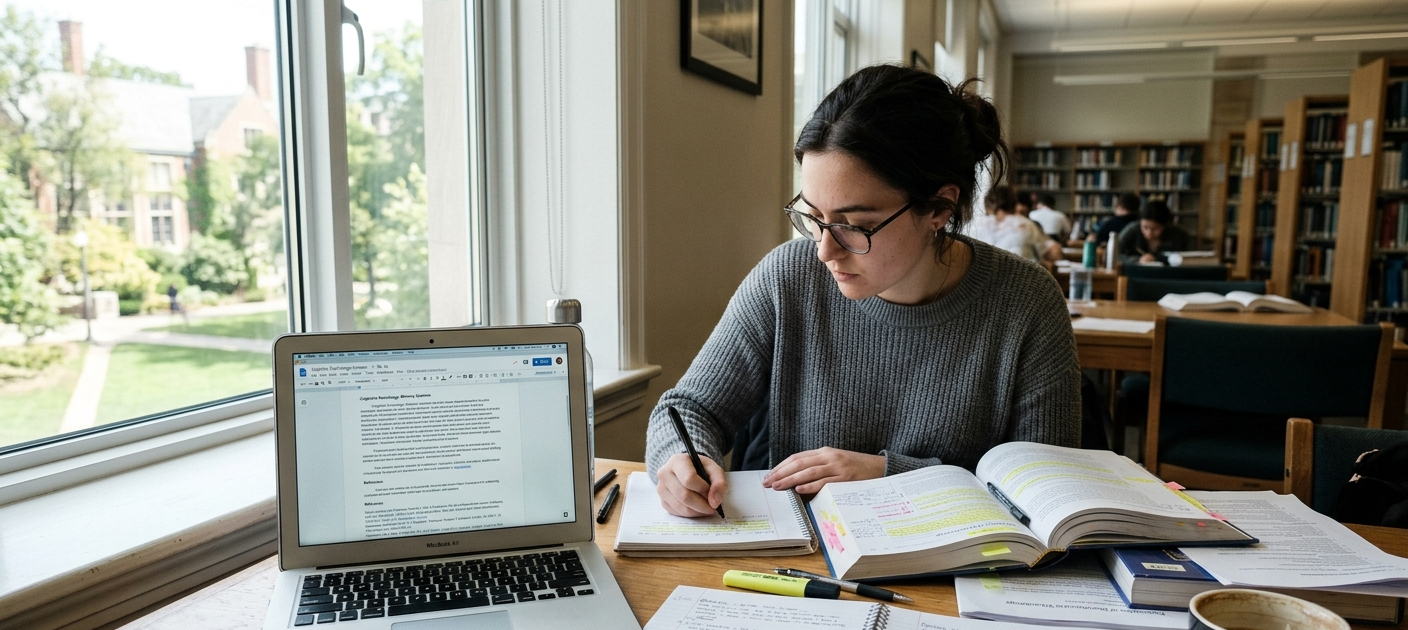
Plagiarism in the world’s schools, colleges and universities has grown into one of the most serious academic issues. With access to online info at our fingertips many students do so without meaning to or at intentional — they copy content which they do not give proper credit for which in turn hurts their academic reputation and may result in penalties like reduced grades, suspension or expulsion. What we put forth to avoid plagiarism is that it is not just a way to avoid punishment but also a step toward fostering intellectual integrity, growing critical thinking skills, and learning to present in your own voice.
We break down what plagiarism is exactly, how to properly rephrase info, and we also put forth the best free resources students can use to check originality before they submit, which in turn gets our students’ work of high quality, authentic academic value that meets institutional marks.
True meaning of plagiarism in academic writing
Plagiarism is when you use out of someone else’s ideas, words, research results, or creative works which you do not attribute to that person and pass off as your own. It presents in many forms which include copying out text verbatim from a source without using quotation marks, not to cite reworded ideas, handing in another student’s work, or even reusing your own past work without permission (self-plagiarism). In academic settings plagiarism is a breach of ethics because it does not represent a student’s true effort and understanding of a topic.
Also institutions such as universities and secondary schools take it very seriously as it goes against the principles of fair play and healthy learning. With the introduction of digital tools like Turnitin which easily identify similarities between what students submit and what is available online, in journals, and in academic databases it is even more so important for students to understand what originality is and how to properly credit the work of others in their writing.
Common Forms of Plagiarism
Plagiarism does not always present itself in clear terms, and many students do it without even realizing. We see the most in direct plagiarism which is the copy and paste of text from a source without citation or quotation. Also we have what is known as mosaic plagiarism which is when a student changes out some words or restructures sentences from a source but still presents the same overall idea. This type is also hard to pin down but is still a form of academic theft. Also we see accidental plagiarism which results from students forgetting to cite their sources or not understanding citation rules.
And we have self plagiarism which although not as talked about is when a student turns in the same work for different assignments without permission. By being aware of these forms of academic misconduct students may be more alert to the easy way in which they may break academic rules, which is a particular issue in the rush to complete assignments and the heavy use of online material which is easy to copy without proper note taking and reference.
How to reword effectively and avoid plagiarism.
Paraphrasing is a very effective way to avoid plagiarism which at the same time is a concept which is very much misinterpreted by students. What we mean by proper paraphrasing is that you read the material, you understand it, and then you put it into your own words which still convey the same meaning. It is not sufficient to just use synonyms for a few words or change the sentence structure a little bit. That is still plagiarism. What we are after in a good paraphrase is that it reflects your own understanding and writing style at the same time that it gives credit to the original author through citation.
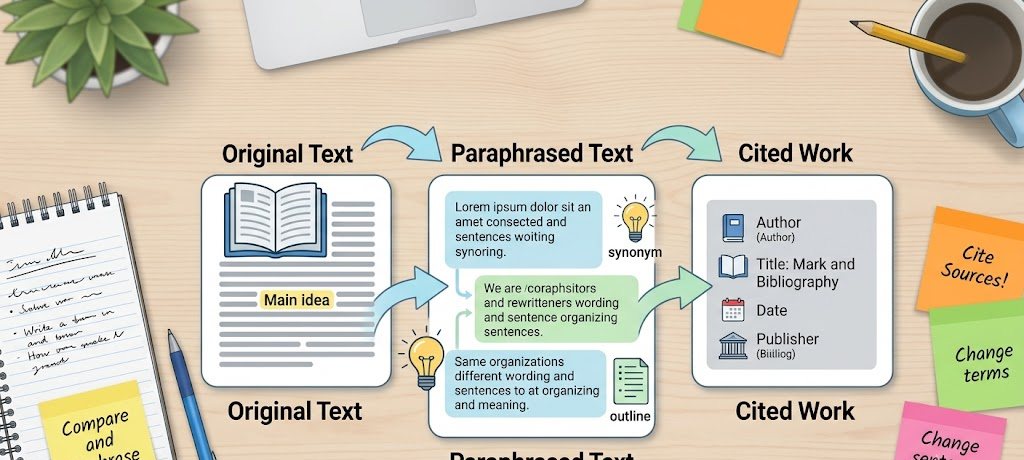
Also students can improve their paraphrasing skills by turning away from the original text as you re-write, by condensing main ideas from memory and then back to the source to check accuracy. Also it is very important to learn how to use a combination of paraphrasing and citations in putting together great academic work. As a resource for understanding what is unique in a submission and how detection systems determine similarity is the work that Turnitin does which also puts into perspective the fact that what really matters in writing is to have good practices in place and not to try and outsmart the detection tools.
Effective Techniques for Strong Paraphrasing Skills
Developing solid paraphrasing skills is a result of practice and intentional effort. A useful approach is the “read, cover, write, check” which has a student read a passage, cover it up, write out their version, and then compare the two for originality. Also we see that breaking down complex sentences into simpler ideas before reworking them in a natural flow is very effective. Also students should put in the work to understand the content of the text as they go beyond memorizing the word choice, what is key is that they get the meaning which in turn will improve reexpression.
Also put into practice changing sentence structure, using various transition words, and playing with the tone which in doing so will help present a very original take on the topic. Also it is to be noted that even when you do a great job at paraphrasing, citation is still required as the thought is the original author’s. By using these strategies students do away with accidental plagiarism and at the same time improve their academic writing skills, clarity, and confidence in research based assignments.
Role of plagiarism tools in academia
In the present era of education plagiarism detection tools are a big part of upholding academic integrity and fair play among students. These tools which we have at our disposal scan in on submitted material and out of a very large base of online resources, academic journals and past input from students they identify similar material. Turnitin is one of the most used of these which puts out similarity reports that help teachers determine the originality of a student’s work. Also these tools are not to be used as a means of punishment but as a guide for students to improve their writing and citation.
A high degree of similarity does not in fact mean plagiarism; it may also include material which has been properly quoted or referenced. By familiarizing themselves with how these systems work students are encouraged to focus on originality instead of trying to get around the system. At the end of the day these tools are to support learning not to take the place of it and students that use them in a responsible way can see great improvement in the quality of their academic work.
Free resources for students to check originality.
Before submission of their work, students have at their disposal many free tools which they may use to improve the quality of their writing. Grammarly, which is one such tool presents a limited version of a plagiarism checker which puts out which parts of a paper may be duplicate and also puts forth suggestions for improvement. Also of great use is Quettext which gives out a very clear report of what is similar in the paper and which helps the user to identify what may have been left out in terms of citation. Also from Small SEO Tools we have a free plagiarism checking service which is good for very basic academic writing.
Also students may use Google Search as a means to do manual check up of phrases which may have been used without proper authorization. While these tools are of great help, they are not a substitute for good writing practices such as paraphrasing and proper referencing. Rather they should be used as a last step in the process to see that all sources have been put in the right place and that the work in question does in fact present independent thought. By using these tools consistently students may build up their confidence and produce high quality academic work which in turn meets the standards of the institution.
Building Strong Research and Writing Habits
Avoiding plagiarism is a practice that goes beyond the use of tools or rewording of sentences; it is an issue of instilling in students from the start of the research process strong academic practices. Students must learn to take effective notes which they can tell apart from their own thoughts which they put forth. Also, as they write they should keep a close track of sources which in turn makes correct citation an easier task later.
Also at issue is the early planning of assignments which in large part can do away with last minute stress which in turn fails to push them toward passing off someone else’s work as their own. Also by reading a wide range of material and looking at many points of view students may develop their own arguments rather than put forth what one source says. By and large, as these practices are built up students see the risk of plagiarism go down at the same time which in turn also improves the quality of their academic work which is in turn more analytical, original, and intellectual.
Academic Integrity and Responsible Scholarship
Academic integrity is a set of principles which include honesty, fairness, and responsibility in the academic setting. It is a foundational element that which students present work as a true reflection of their understanding and effort. When students do not engage in plagiarism they are not only abiding by the rules but also are respectful of the work of others. This respect is key in the development of trust within academic communities.
Responsible research and presentation of material includes putting forth one’s own ideas and to that end critiquing present knowledge. Also it prepares students for the professional world which values honesty and originality. By upholding academic integrity a student builds out their credibility and sets the stage for a successful academic and professional life which in turn presents an image of discipline and ethical thought in all of their communication and research.
Conclusion
In the academic world it is a must for students to develop skills which prevent them from plagiarism. This goes past the issue of punishment and instead cultivates original thought, critical analysis, and responsible academic conduct. That which is put forth include what is considered to be plagiarism, how to rephrase material properly, and the smart use of available resources students may see great improvement in the quality of their work.
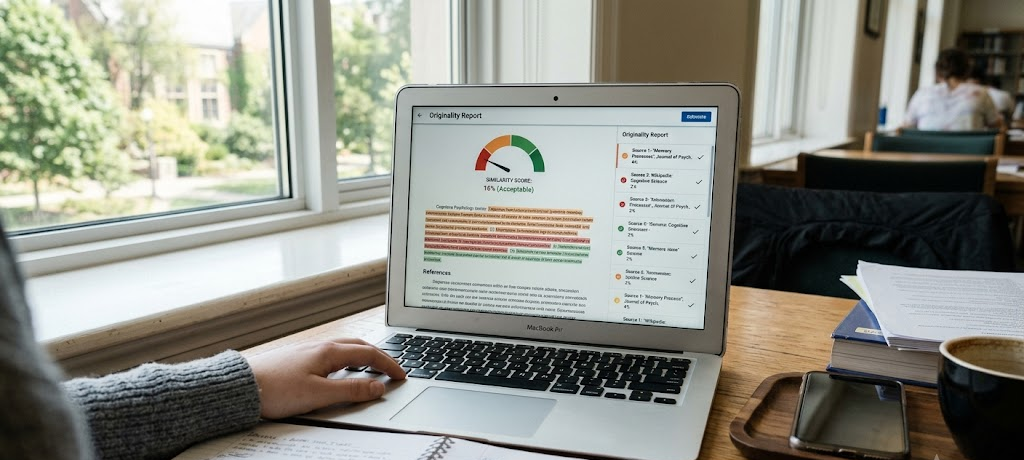
We see platforms like Turnitin which play a role in promoting academic integrity by which they present what areas need work, also we have free online tools which provide support in checking originality. But in the end the most key element is the student’s dedication to honest learning and proper research practices. When students put into play good writing practices along with ethical awareness they are more likely to put forth authentic, high quality academic work that stands out and gains the trust of their peers and professors in any academic setting.



There is definately a lot to find out about this subject. I like all the points you made
There is definately a lot to find out about this subject. I like all the points you made
Yazınız için teşekkürler. Bu bilgiler ışığında nice insanlar bilgilenmiş olacaktır.
bu konuda bu kadar net bilgiler internette malesef yok bu yüzden çok iyi ve başarılı olmuş teşekkürler.
Hi there to all, for the reason that I am genuinely keen of reading this website’s post to be updated on a regular basis. It carries pleasant stuff.