Introduction to the Basics of a Computer System
A computer system is one of the most vital technologies in today’s society being used in education, business, communication, entertainment, healthcare, science and the government. Whether it’s a smartphone, laptop, or even a big server that international organizations rely on, all digital devices use the fundamental principles of a computer system. It might appear to be complex to understand computers when you are a beginner, as there are numerous parts that come together behind the scenes, but the groundwork is straightforward. A computer system consists of hardware, software, information, and users that are used to receive information, process it, provide useful output, and store information for later use. Students, professionals and everyday users benefit from understanding the basic working of computer systems and the role technology plays in daily activities through the study of computer systems.
Different elements interact together and complete a task to answer the question “What Is a Computer System? A computer system is not just a physical computer on a desk or in a bag, it’s everything that makes it work. The devices used for receiving input, processing it, producing output, and storing it are: input devices, processing devices, output devices, and storage devices. A computer system is an organized system in which each system component performs a particular function, and the loss of a significant system component can impact other components. These relationships form a good basis for anyone starting to learn computing.
What Is a Computer System?
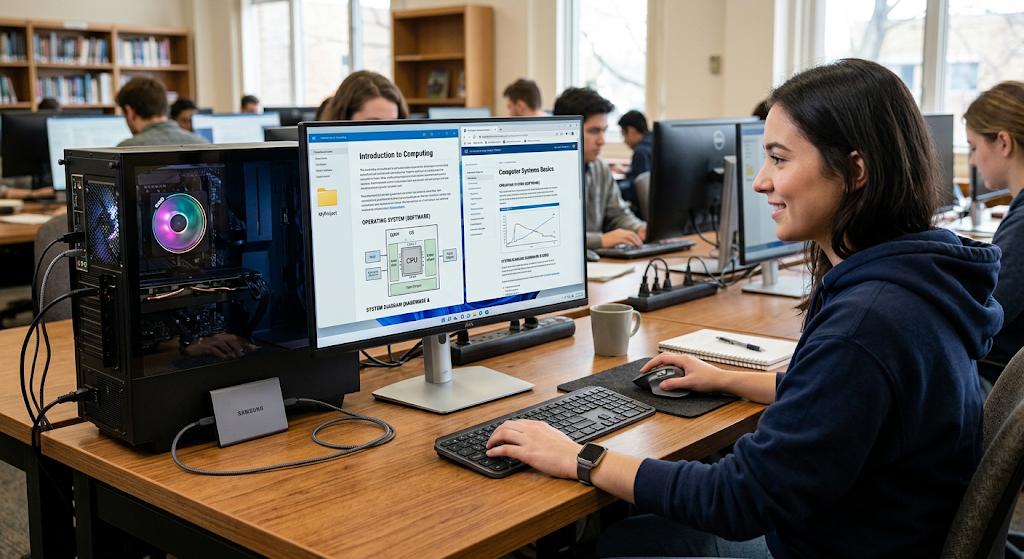
A computer system is an electronic system that receives data, executes instructions on the data, generates information which has meaning, and stores the output for future retrieval. Made up of hardware (physical parts) and software (programs that operate the hardware). The hardware components are the physical components of a computer system, including the keyboard, monitor, processor, motherboard, memory, and storage devices. The software components are the programs that run on the computer, such as operating systems and applications. When hardware and software are combined, they work together to provide a fully functional environment for the user to accomplish various tasks, including writing documents, accessing the Internet, processing and analyzing information, designing, communicating with others, and managing complex operations.
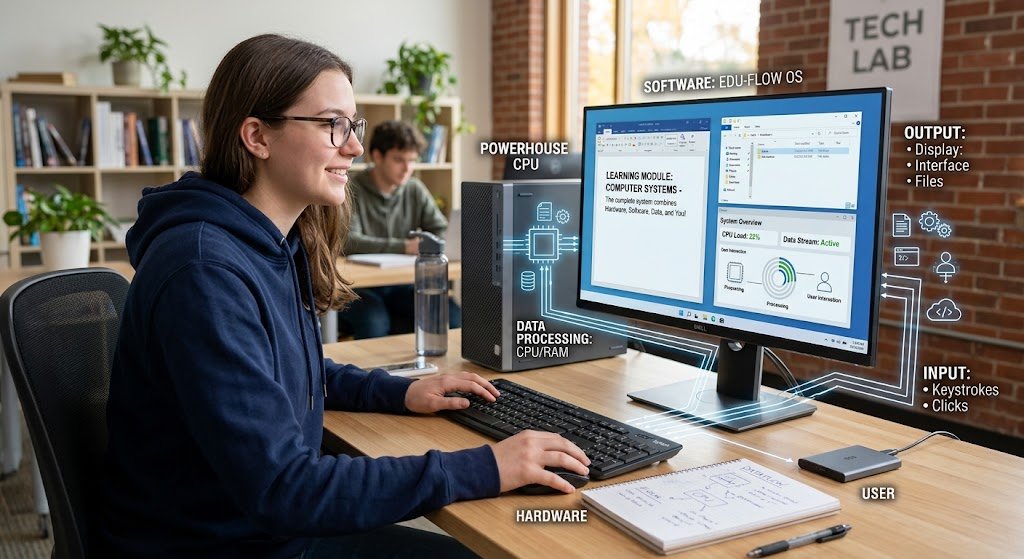
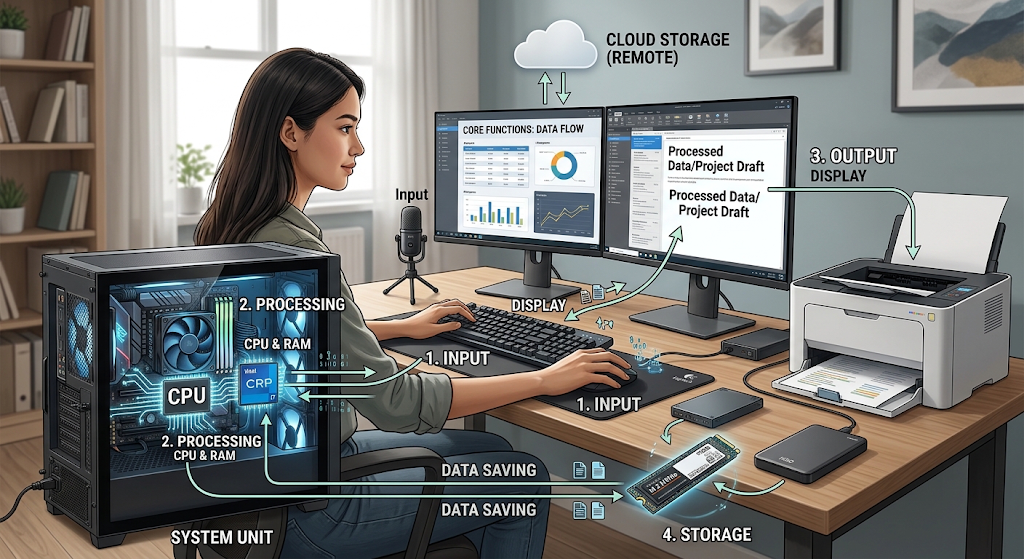
A computer system has a cycle of basic operations: Input, Processing, Output, and Storage. In modern computers it occurs many millions or even billions of times per second. The processes used to make technology work are the same whether it’s somebody’s personal laptop or a high-performance computer system used for scientific research.
The computer system can also be considered as a problem-solving tool. Humans give instructions and information to the computer, and the computer executes the instructions and information with accuracy and speed. Computers, however, are not self-thinking machines; they execute software instructions developed by the computer programmer. The success of the computer system is contingent upon the quality of the hardware, software, and the users’ instructions. The combination enables computers to perform simple tasks, including calculating numbers, as well as complex tasks, like controlling industrial machines, analyzing large volumes of data and assisting in artificial intelligence applications.
The Four Core Functions of a Computer System
Input: Data and Instructions Entered into the Computer
Input is the first major function of a computer system. Input: The data and instructions that are entered into a computer for it to carry out a particular function. A computer system would not be able to perform any action or process any information without inputs. Input is given by the user using various devices such as keyboards, mice, touchscreens, microphones, cameras, scanners and other special equipment. An example is when a student enters a text into a computer using a keyboard, the words he/she enters are entered by the computer as an input to the computer that is ready for computation.
Input Devices are the medium of communication between man and computer. They are used to enable people to interact with digital systems through the transfer of information from physical actions to electronic signals that can be understood by the computer. A scanner is used to transform printed information into an electronic file, and a microphone is used to convert spoken words into digital information. The modern computer system provides sophisticated ways of interacting with a computer, including face detection, voice control, and motion sensors, which make it even easier and faster to interact with the computer. The more accurate and high quality the input is, the more accurate and high quality the output produced by the computer will be.
The input function is significant because computers cannot do anything without whatever information they are given. When wrong or incomplete information is input into a computer-based system, the output could also be wrong or incomplete. The principle is known as “garbage in, garbage out,” and this simply means that the output produced by a computer is as accurate as the input that is fed into it. Thus, users need to supply accurate data and employ the right input devices to make the computer system do its job efficiently.
Processing: Transforming Data into Information
Processing is the second major task performed by a computer system and involves changing raw data to information that is useful. The main purpose of this function is performed in the Central Processing Unit (CPU) which is sometimes referred to as the brain of the computer because it controls and manages most of the operations. Data that is put into a computer undergoes calculations, comparisons, logic, and other operations in order to accomplish a task as the computer follows instructions from software programs.
Processing function occurs in the computer by means of its processing unit, memory storage and system software. The CPU has certain sections of great significance like the Arithmetic Logic Unit and the Control Unit. The Control Unit coordinates the activity of various components of the computer and the Arithmetic Logic Unit performs mathematical calculations and logical comparisons. All these are used jointly to enable computers to perform tasks rapidly and accurately.
Processing speed is one of the factors that help to determine the efficiency of a computer system. The modern processor can process vast quantities of data in a blink of an eye and can operate several applications, edit videos, analyse data, and even for advanced computing operations. But it’s not just about processing power: Additional aspects like memory capacity, storage speed and software efficiency also have an impact on the performance of a computer system.
Output: Presenting Results to Users
What are the results presented to users?What are the results presented to users?
The third function of a computer system is output, this is showing the processed information in a way that people can understand. Once data is processed in a computer, the output of the processing is expressed in the output devices. Many types of output devices are monitors, printers, speakers, projector and digital display. When a user creates a document, for example, the text that appears on the screen is an output that results from the computer system.
Output is the ability to do things with the computers as they help others. When it comes to computers, an instruction can be executed thousands, thousands of times inside the computer without any output, or the person using the computer will never see or use any results. There are different situations for which different types of output are appropriate. A monitor gives visual information, a speaker gives audio information and a printer gives physical paper copies of information.
Information presentation is the key factor in the effectiveness of output. The purpose of modern computer systems is to enhance the user experience by giving them high-quality displays, realistic sounds, and interactive interfaces. The output function makes information from a computer useful and comprehensible to the user, whoever the user may be, whether watching a video, analyzing business information or getting medical results.
Storage: Storing Data for Later Use
The fourth major operation of a computer system is storage, where data and information are stored to be retrieved at a later time. Storage is essential for computers since users would like to store files, such as documents, applications, photos, videos, and other files, for later use. Storage devices allow information to remain available even after a computer has been turned off.
There are two types of computer storage, primary and secondary. Primary storage, like Random Access Memory(RAM), temporarily stores data that the computer is using. RAM is used for rapid retrieval of information which is lost when power is removed. Secondary storage devices (hard drives, solid-state drives) can hold data even if the computer is shut off, and are used for long-term storage.
Today, storage technology has developed a lot, and with it the ability to store huge amounts of information, which enables users and organizations to store a vast amount of information. Cloud storage services have also revolutionized data storage and retrieval by enabling users to store files in the cloud and retrieve them from various devices. Storage is very important in computer systems as it helps to protect and store valuable information whenever it is required.
Main Components of a Computer System
Hardware Components
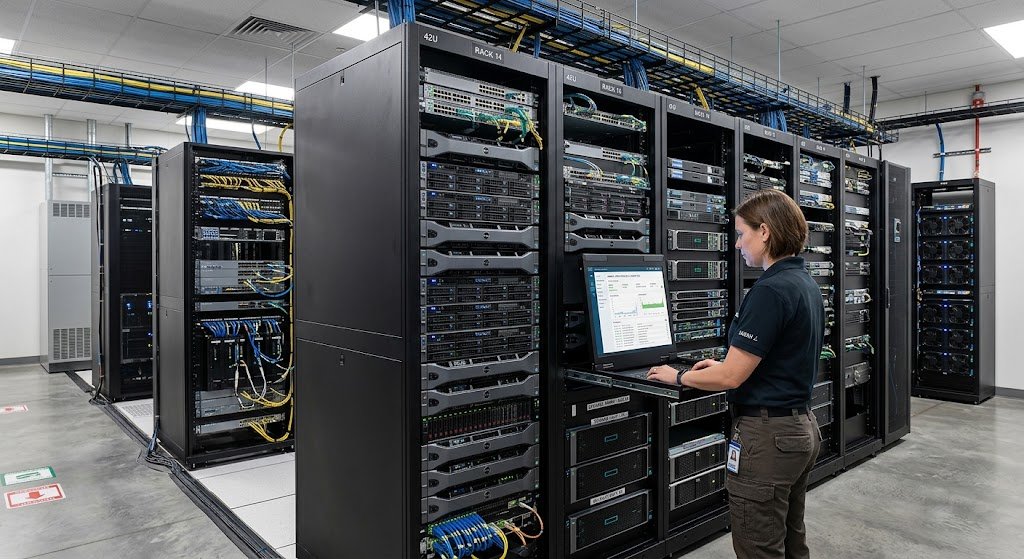
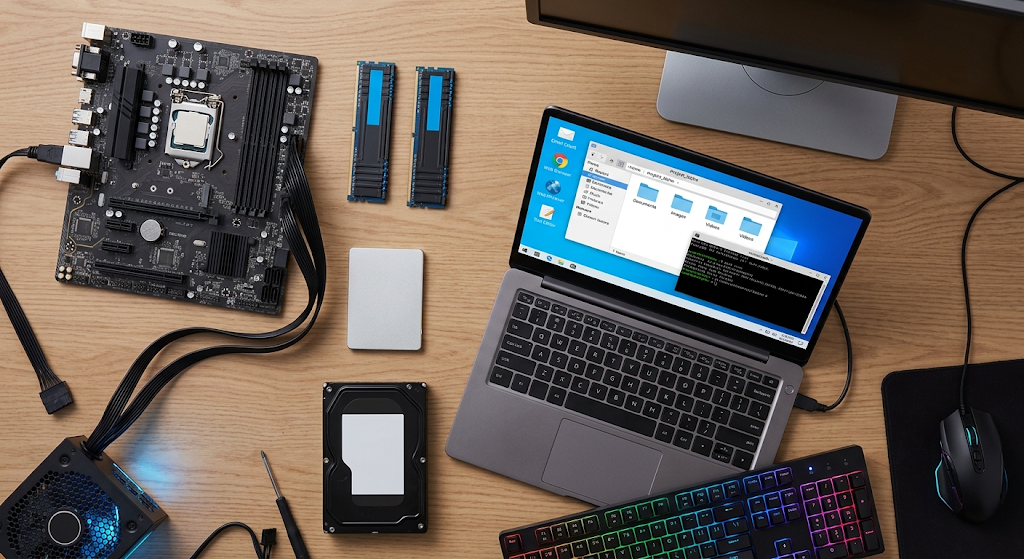
The components or parts of a computer system that can be physically seen and touched. These components collaborate to enable the computer to receive input, process information, generate output and store data. The main hardware parts are the motherboard, microprocessor, memory, storage devices, input devices, output devices.
The main circuit board where various hardware components connect to each other, and they communicate. The memory is used for temporary storage of the active tasks, and the processor is used for computations and computer control. Input/output devices communicate with the user and the computer, and storage devices store files and programs.
There are various kinds of hardware products that serve various functions. A computer used for school activities might not need as much power as a computer used for video editing, scientific research or engineering simulations. The selection of the suitable hardware is based on the computer system functions.
Software Components
Software: The instructions and programs used to control the operation of computer hardware. If there were no software, hardware parts could not take action. There are two types of software: system software and application software.
Examples of system software are operating systems like Windows, macOS, and Linux. These programs control the computer’s resources and execute programs. Application Software are the programs they are used for a specific application (word processor, web browser, graphics program, communication tools, etc.).
As software continues to evolve, it enhances computer systems with new functionality, improved security, and greater efficiency. The more technology develops, the more complicated things can be done via software and the more enjoyable the experience.
How a Computer System Works Together
The working of a computer system is dependent on the constant interaction of hardware and software. Input devices relay commands to the computer when the user takes some action, as when opening a document. The processor then decodes the instruction and fetches the information from storage, executes the software instructions and sends the output to an output device.
This process occurs very rapidly, and usually is not noticed by users while the complex operations occur within the computer. Each click, keystroke, or voice command sets off a chain of electronic operations that include multiple components. These tasks are valuable tasks for computers to be able to do correctly and in a timely fashion.
It is important for the user to have an understanding of how a computer system works in order for the user to make better decisions when he/she selects devices, troubleshoots, and responsibly uses technology. Computers have become a medium that are needed in education, work and personal life, so basic computer knowledge is no longer just for the technology professionals.
The Importance of Computer Systems in Today’s World
The computer revolution has revolutionized the ways in which people communicate with one another, learn, do their jobs, and solve their problems. Computers are used in schools for digital learning and research, in businesses for operation and customer service, and in research laboratories for advanced discoveries. Nearly all industries rely upon computer technologies to boost efficiency and productivity.
With the emergence of new technologies like artificial intelligence, cloud computing, automation, and more, the significance of computer systems is increasing. These developments are based on the underlying principles of computer systems, such as input, processing, output and storage. An understanding of these basics will help users to comprehend the impact of technology on daily life.
Conclusion: Building a Foundation in Computer Knowledge
A computer system is a combination of hardware, software, data and users that collaborate to accomplish a beneficial activity. Input, processing, output and storage are four fundamental aspects of computers that show how computers can take in information, manipulate it into something meaningful, communicate with the user, and store the information. These functions are essential for programming beginners to move on to more complex aspects of computing.
Computers may look complicated but they are not.Even though modern computers look complicated, they are not. All computer systems rely on the components they rely on. Today, computer systems are still tools integral to the modern world, whether their purpose is in education, business, entertainment or scientific research. Students and everyday users will have the confidence to use technology effectively and be aware of the digital world around them with a fundamental understanding of computer systems.