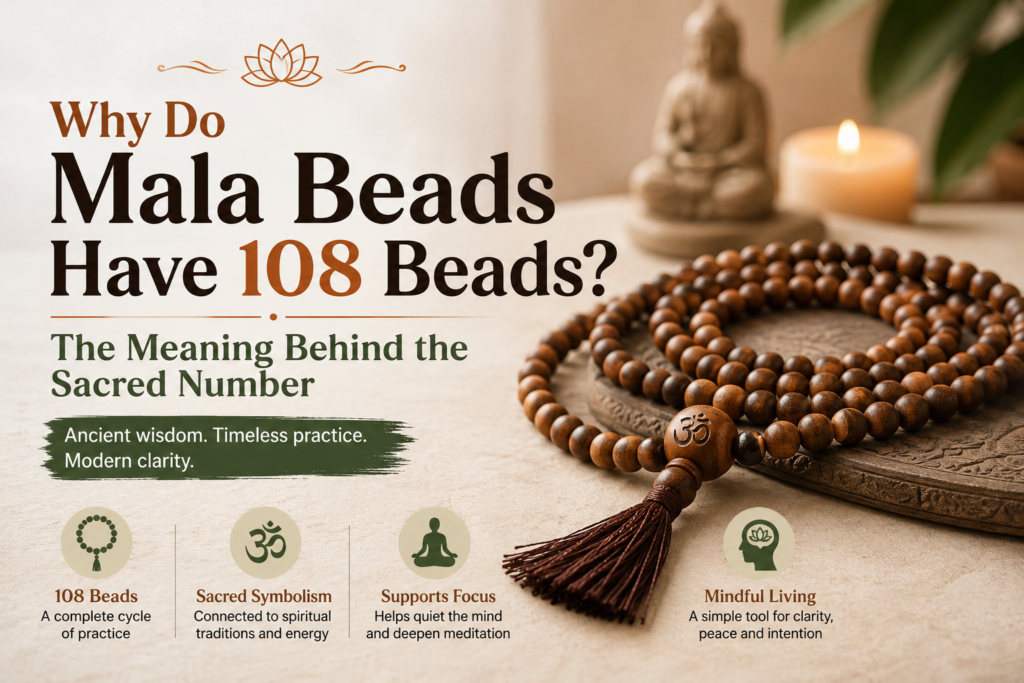
Mala beads may look like a simple strand of beautiful beads, but their design carries centuries of meaning. Used in Hindu, Buddhist, yogic, and mindfulness traditions, a mala helps the hands count while the mind settles. The classic full mala contains 108 beads, plus one larger guru bead that marks the beginning and end of a meditation cycle.
The number 108 is not chosen for decoration. It has been treated as sacred because it appears in spiritual texts, energy teachings, mantra practice, and traditional views of the cosmos. Practically, a mala quietly gives focus a rhythm. It turns repetition into discipline and makes stillness easier to approach.
This guide explains why mala beads have 108 beads, how the number became meaningful, and how this ancient structure continues to support mental clarity in modern life.
What Mala Beads Are Used For
Mala beads are counting beads used during mantra, prayer, breathwork, or quiet reflection. The word mala comes from Sanskrit and is often translated as “garland.” Traditional malas are made from sandalwood, rudraksha seeds, tulsi wood, crystal, or gemstones, each carrying cultural or symbolic associations.
In practice, the user holds the mala and moves through one bead with each repetition of a mantra or intention. The hands stay engaged, which gives the mind a gentle anchor. Instead of checking a timer or counting mentally, the practitioner follows the strand until the round is complete.
A full mala usually includes 108 counting beads and one guru bead. The guru bead is not counted like the others. It creates a pause, inviting gratitude, reflection, and respect for the practice. Many malas also include a tassel, often seen as a symbol of connection and completion.
In modern wellness spaces, people may describe resources on mala beads, 108 beads, meditation practice tools, and mindful living in practical terms. Still, the deeper purpose remains the same: to help attention return to the present moment.
Why 108 Is Considered Sacred
The number 108 holds meaning in several spiritual systems, which is why no single explanation fully defines it. Its power comes from layers of interpretation built over time.
In yogic philosophy, 108 is often connected with wholeness and inner alignment. Some teachings describe 108 energy channels meeting at the heart center, making the number a symbol of the journey inward. Repeating a mantra 108 times can represent a complete cycle of devotion, focus, or self-study.
In Hindu tradition, there are commonly said to be 108 Upanishads, ancient writings that explore consciousness, reality, and spiritual knowledge. In Buddhist traditions, 108 may represent desires, mental states, or obstacles that practitioners work through on the path to awakening.
Together, these meanings make 108 feel complete. It suggests a full journey, not a random count.
How 108 Beads Shape Meditation Practice
A mala turns meditation into a steady, bead-by-bead experience. This is useful for beginners who struggle with wandering thoughts. Rather than trying to force the mind into silence, the practitioner has a clear action to repeat.
A typical practice is simple:
- Begin at the bead next to the guru bead.
- Repeat one mantra, prayer, or affirmation per bead.
- Move the bead gently between the fingers.
- Continue until the guru bead is reached again.
- Pause before ending or turning the mala around.
This rhythm matters. One hundred eight repetitions are enough to create depth without making the practice feel endless. The number gives structure, so the mind does not need to decide when to stop. It can simply follow the path laid out by the beads.
Over time, this structure supports discipline. The practitioner learns that focus is not a single perfect state. It is a return. Each bead becomes another chance to begin again.
The Guru Bead and the Art of Pausing
The guru bead is often larger or visually different from the other beads. In traditional practice, it represents the teacher, divine guidance, or the source of wisdom behind the path. Reaching it signals that one full cycle has been completed.
Most practitioners do not cross over the guru bead. If they wish to continue, they turn the mala around and move in the opposite direction. This small gesture creates respect for the cycle and prevents the practice from becoming mechanical.
The pause at the guru bead is valuable even for people who use malas in a nonreligious way. It creates a moment to notice how the mind and body feel. It asks the practitioner to slow down before moving on.
In a busy life, finishing one thing often means rushing to the next. The guru bead teaches that completion deserves awareness.
Historical Practice and Modern Mindfulness
Mala practice has deep roots, but it remains useful because the human mind still wrestles with distraction, worry, impatience, and restless thought. A mala offers a simple method for returning to steadiness.
In devotional traditions, malas have long supported the repetition of sacred names and mantras. In Buddhist practice, they may assist compassion-based chants or meditations. In yoga, they may be used with breath, intention, or seasonal rituals.
Today, many people use mala beads outside formal religious settings. Some choose a morning mantra to set their attitude for the day. Others use a mala during stressful moments, evening reflection, or gratitude practice. The beads can serve as a bridge between ancient wisdom and everyday emotional balance.
Why the Beads Help the Mind Focus
The mind often needs more than an idea to stay present. It benefits from sensation. Mala beads provide touch, rhythm, and repetition, all of which help attention settle.
Each bead gives the fingers a task. Each mantra gives the mind a sound or meaning to hold. Each repetition gives the breath a chance to slow. When thoughts wander, the practitioner can return to the bead in hand without frustration.
This is why malas remain powerful meditation practice tools. They do not promise instant peace. Instead, they support the conditions that make peace more likely: patience, repetition, and gentle awareness.
Regular mala practice may help with:
- Building a consistent meditation habit
- Calming mental noise
- Strengthening attention
- Creating emotional space before reacting
- Connecting daily routines with personal intention
Choosing a Mala With Intention
There is no single perfect mala for everyone. The right one is often the strand you feel willing to use regularly. Comfort matters. So does the meaning you connect with its material, color, weight, and texture.
Wooden malas often feel simple and grounding. Rudraksha beads are associated with spiritual discipline and protection. Sandalwood is valued for its soft scent and calming feel. Gemstone malas are often chosen for qualities people associate with specific stones, such as courage, compassion, clarity, or stability.
When selecting a mala, consider how it feels in your hand, whether the bead size suits your fingers, and whether the design supports your intention. A practice object should invite use, not intimidation.
Carrying the Meaning Forward
Mala beads have 108 beads because the number carries spiritual depth, symbolic completeness, and practical wisdom. It connects the personal act of meditation with larger ideas of wholeness, discipline, and inner awakening.
Yet the meaning of 108 is not only ancient. It becomes real in the moment you use the beads. When you repeat a mantra, follow your breath, and return from distraction, the sacred number becomes an experience rather than a concept.
A mala teaches that clarity is built gradually. Not all at once. Not through force. Bead by bead, the mind learns how to come back.
Whether you use mala beads for prayer, mindfulness, stress relief, or intention setting, the 108-bead structure offers a timeless path into presence. Each round becomes a quiet ceremony of attention, reminding you that peace is not distant. It is already close enough to hold.