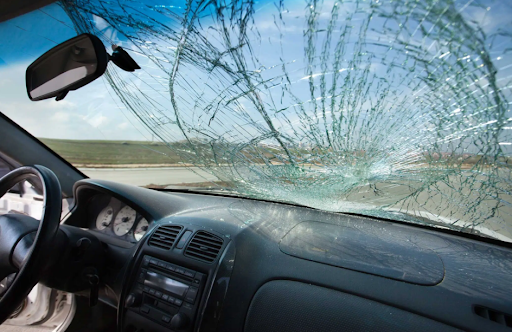
A small chip in the windscreen is one of those things drivers mentally file under “sort it later”. It does not stop the car from running. It does not trigger a warning light. So it waits — through cold mornings, motorway runs, and car washes — quietly getting worse while nobody pays it much attention. By the time it becomes impossible to ignore, auto glass repair is often no longer an option. That gap between when repair is possible and when it is no longer viable is much shorter than most people realise.
Why Chips Spread the Way They Do
Glass does not crack randomly. There is a specific mechanical reason why a chip from a loose piece of grit turns into a crack that travels halfway across the screen. When a stone strikes laminated glass, it creates a pressure point where the layers are no longer bonded. The glass around that point is already holding internal stress from the manufacturing process — toughened and set under tension during production. Every thermal cycle, every door slam, every pothole adds to that stress. The damaged point cannot distribute it the way intact glass does, so the crack follows the path of least resistance. That path usually leads directly into the driver’s eyeline.
What the Resin Actually Does
There is a common misconception that glass repair is essentially cosmetic — filling a hole so it looks better. That is not what is happening. The resin used in professional repair is injected under vacuum pressure, which pulls air out of the damage before the resin enters. Once cured under UV light, it bonds chemically with the surrounding glass rather than simply sitting in the void. The repaired area regains much of its original tensile strength. It is not invisible in every lighting condition, but structurally, the glass behaves far closer to its pre-damage state than most drivers appreciate. That distinction matters when the windscreen is doing its actual job.
The Roof and the Airbag Connection
Most people do not know that the windscreen bears a significant portion of the load when a vehicle roof is compressed in a rollover. The glass is bonded into the frame with structural adhesive, and that bond — combined with the laminated glass itself — is load-bearing. A screen that has been weakened by unrepaired damage, or one that was replaced without the adhesive being fully cured before the vehicle was driven, contributes less to that structure than it should. The same applies to passenger airbags, which are designed to deploy against the windscreen and use it as a backstop. Auto glass repair that restores the integrity of the glass is not a minor maintenance task — it is directly connected to how the vehicle performs in a serious collision.
When Repair Is No Longer Possible
The window for repair closes based on several factors that have nothing to do with how the damage looks. A crack that has reached the edge of the glass cannot be repaired – edge cracks compromise the bonded seal and require full replacement. Damage that sits within the driver’s primary vision zone — a roughly hand-sized area directly ahead — is not eligible for repair under UK standards because even a well-executed repair leaves minor optical distortion. Contamination matters too. A chip that has collected dirt, water, or polish over weeks becomes much harder to repair cleanly. Auto glass repair works best when the damage is fresh, dry, and away from the edges.
Sensors, Cameras, and the Overlooked Complication
Many current vehicles mount forward-facing cameras directly behind the windscreen for lane assist, emergency braking, and speed sign recognition. These cameras are calibrated to work through the optical properties of a specific piece of glass. A crack in or near that zone affects how light passes through to the sensor — introducing distortion the system was not calibrated to handle. Even after repair or replacement, those systems require recalibration before they can be trusted. It is a step that is frequently skipped and one that leaves drivers with safety systems that appear to be working but are operating on inaccurate data.
Conclusion
Auto glass repair is one of those repairs that shrinks in scope the earlier it is addressed. A chip caught within days stays a chip. Left for weeks, it becomes a crack. Left further, it becomes a replacement job — and with modern vehicles, a recalibration job on top of that. The glass does more structural and technological work than most drivers give it credit for, and treating minor damage as a minor inconvenience tends to be an expensive assumption over time.