There is a specific kind of frustration that comes with a bathroom that looks clean but never quite feels it. The tiles are scrubbed. The surfaces are wiped down. And still, the grout lines sit there — grey, slightly grim, resistant to everything. That experience is pushing a quiet but real shift in how Australians are approaching bathroom renovations. Bathroom wall panels in Australia are not winning in marketing. They are winning because tiled bathrooms have a set of persistent problems that nobody ever solved — they just accepted them.
The Thing About Grout Nobody Admits
Grout is not just a cosmetic issue. It is a structural one. Grout is porous by nature. It absorbs moisture, soap residue, and airborne bacteria continuously. Sealing it helps for a while. Then the sealant wears, and the absorption starts again. What most homeowners do not realise is that the darkening of grout over time is not just surface staining — it reflects what has been happening beneath the surface for years. Panels remove this entirely from the equation. Not because they hide the grout, but because there is no grout to hide.
Where Tiles Actually Fail
The surface of a tile is not where moisture damage begins. It begins behind the wall. When grout cracks — and it does, eventually, because buildings move and grout does not flex — water finds a path. It travels behind the tile, behind the waterproof membrane if one was installed, and into the wall cavity. This can continue invisibly for a long period before any external sign appears. By that point, the damage is typically far beyond a regrout. Bathroom wall panels in Australia installed as a continuous surface with sealed joins leave almost no viable entry point for water. The protection is structural, not just superficial.
What the Installation Process Reveals
One of the more overlooked aspects of panels is what their installation process exposes about tiled bathrooms. In many panel installations, particularly over existing tiles, the renovation team never removes the original surface. That decision gets made because the existing tiles are structurally sound — they are just dated or damaged in appearance. The fact that this is possible tells you something important. The tile substrate is usually fine. It was never the wall that failed. It was always the grout and the joints. Panels address exactly that without disturbing anything underneath.
How Australian Conditions Specifically Matter
Australian homes experience a temperature and humidity range that puts real pressure on bathroom surfaces. Coastal homes deal with salt air. Homes in Queensland or the Northern Territory experience persistent high humidity. Inland homes face significant temperature swings between seasons. These conditions are not what most European tile systems were originally designed around. Bathroom wall panels, particularly those manufactured or specified for Australian conditions, account for thermal expansion and contraction in ways that rigid tile and grout systems simply cannot. This is not a minor technical detail — it directly affects how long a bathroom holds up without requiring maintenance.
Design Flexibility That Changes the Brief
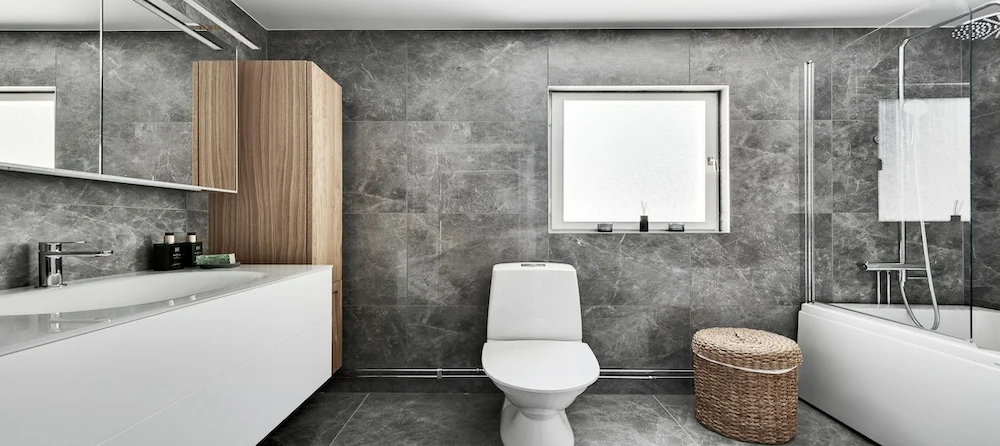
Designers working on bathroom renovations with panels describe a different kind of conversation with clients. With tiles, the brief starts with size, colour, and grout colour. With panels, the brief opens up. Continuous surfaces can be used to create visual effects that tile grids interrupt — a marble-look panel running floor to ceiling without a single break reads entirely differently than the same pattern in tile format. Bathrooms that previously felt busy or chopped up visually become calmer and more resolved. This matters especially in compact bathrooms where visual noise is the main enemy of a sense of space.
Conclusion
Bathroom wall panels in Australia are gaining ground not because of a trend cycle but because they solve problems that tiles have never cleanly resolved. Moisture vulnerability behind the wall, grout degradation, the visual interruption of continuous surfaces, and the particular demands of Australian climate conditions — panels address all of it in a way that a better tile or a more expensive grout simply cannot. The renovation industry is catching up to what the problems always were. Panels just happen to be the answer.