Why a Good Diet Matters for Your Bird
Bringing home a pet bird is exciting. But many new owners are not sure what to feed them. The right food keeps your bird active, bright, and healthy.
A poor diet is one of the most common reasons pet birds get sick. Birds need the right mix of nutrients to grow strong feathers and stay full of energy.
The good news is that feeding a bird is not hard once you know the basics. This guide breaks it down in simple steps. By the end, you will know what to offer and what to avoid.
The Main Parts of a Healthy Bird Diet
A balanced diet gives your bird energy and supports a strong body. Birds need more than just seeds to stay well.
Pellets as the Daily Base
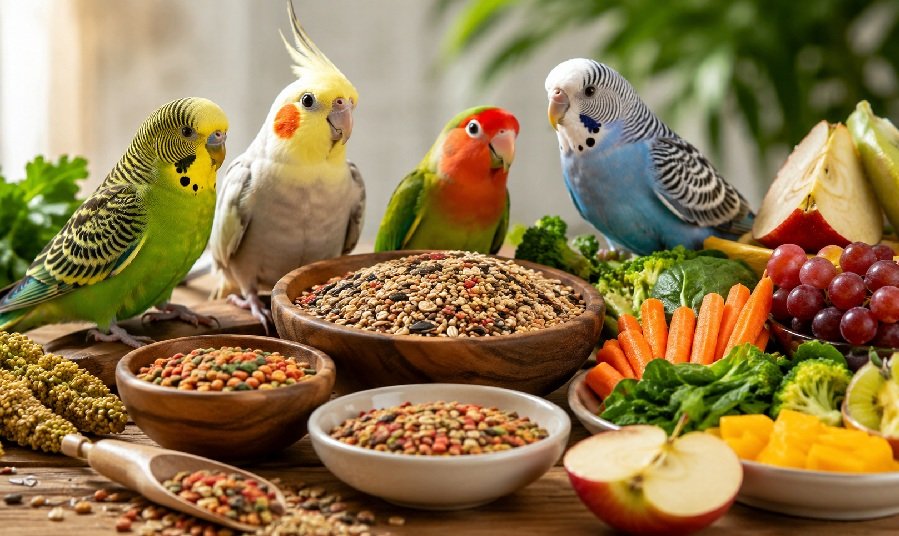
Pellets are made to give birds steady nutrition. They mix grains, vitamins, and minerals into one easy food.
Many vets suggest pellets as the main part of the diet. They help avoid the gaps you get from a seed-only routine.
Pick a pellet size that fits your bird. A small finch needs tiny pellets, while a parrot needs larger ones. Look for pellets without added dyes or sugar when you can.
Fresh Fruits and Vegetables
Fresh produce adds vitamins and keeps meals interesting. Birds enjoy the color, texture, and taste.
Good options include apples, carrots, leafy greens, and berries. Wash everything well and cut it into small pieces.
Offer fresh food daily, but remove leftovers after a few hours. This keeps the cage clean and safe. Try new fruits and veggies slowly so your bird can get used to them.
Foods That Add Variety and Joy
Birds are smart and curious. A little variety keeps them happy and busy.
Seeds and Nuts in Small Amounts
Seeds are fine as a treat, not a full meal. They are high in fat, so too many can lead to weight gain.
Nuts also make a nice reward during training. Use them in small amounts to keep your bird motivated.
A good rule is to keep treats to a small part of the daily diet. The bulk of meals should come from pellets and fresh food.
Safe Treats and Foraging Fun
You can hide food in toys to copy how birds search in the wild. This keeps their mind active.
Foraging also reduces boredom and stress. A busy bird is usually a calm and content bird.
Simple foraging ideas include wrapping a treat in paper or hiding it in a toy. Watching your bird solve the puzzle is fun for both of you.
Foods You Should Never Give
Some everyday foods are harmful to birds. Avocado, chocolate, caffeine, and salty snacks can be dangerous.
Never share food from your plate without checking first. What is safe for people is not always safe for birds.
When in doubt, leave it out. A quick search or a vet call can save your bird from harm. Keep these foods well away from your bird’s reach.
Fresh Water Every Day
Clean water is just as important as food. Birds drink often and also use water to stay fresh.
Change the water at least once a day. Wash the bowl to stop germs from building up.
If your bird bathes in its water, swap it out more often. Clean water keeps feathers and skin healthy.
Building a Simple Feeding Routine
A routine helps your bird feel safe and settled. Try to feed at the same times each day.
Offer pellets in the morning and fresh food during the day. Keep treats small and special.
Watch how much your bird eats. Changes in appetite can be an early sign that something is wrong. Tracking meals helps you spot problems early.
Final Thoughts
Feeding a pet bird is simple when you focus on balance. Use pellets as the base, add fresh produce, and keep treats light.
Avoid harmful foods and always provide clean water. These small habits make a big difference over time.
Brands like Birds Jungle share helpful tips and quality supplies to make bird care easier for new owners. With the right food and a little routine, your bird can enjoy a long and happy life.